ABA Therapy in Rural Michigan: Closing the Access Gap in Ionia County
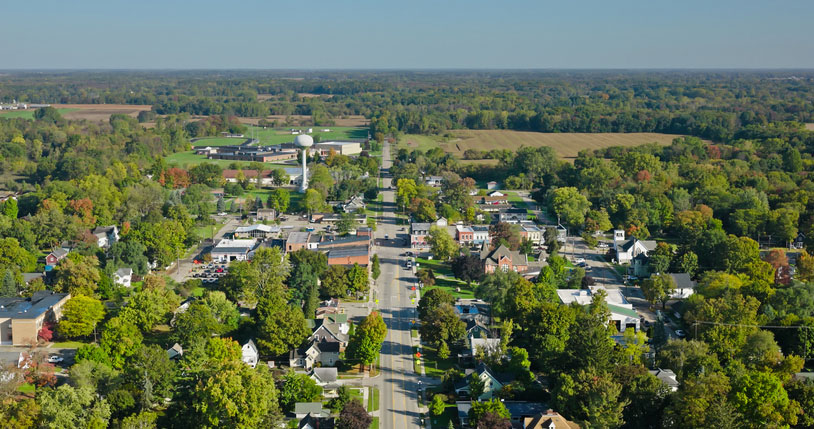
If your child has an autism diagnosis and you don’t live near a major city, finding ABA therapy can feel nearly impossible. But access is growing, even in rural Michigan. Right Door for Hope, Recovery and Wellness in Ionia County has expanded its ABA services to meet real community demand, and it’s a sign of a larger shift happening across the state.


When Right Door for Hope, Recovery and Wellness broke ground on an expansion of its Belding location in November 2016, something important was being acknowledged: the demand for ABA therapy in rural Michigan was real, significant, and not being met.
Right Door, formerly known as Ionia County Community Mental Health, had launched ABA services for children and young adults with autism out of a four-room facility. The board expected modest demand. What they found instead was a waitlist and a community hungry for services that, until recently, families had to travel hours to access.
That gap between need and access is something families across rural Michigan know firsthand. And understanding why it exists, and what’s being done about it, matters for every parent navigating an autism diagnosis outside the major metro areas.
The Rural ABA Access Gap in Michigan
Michigan has made meaningful strides in autism coverage. But like many states, Michigan faces provider shortages in rural counties, according to workforce distribution data and regional service reports. Legislation alone doesn’t automatically translate into available providers.
ABA clinics and therapy centers have historically concentrated in and around Detroit, Grand Rapids, Lansing, and Ann Arbor. If you’re in a county like Ionia, Montcalm, Isabella, or Mecosta, the nearest qualified provider might be an hour away on a good day.
That’s not a minor inconvenience for families. ABA therapy is most effective when it’s consistent and frequent. Intensive early intervention programs often recommend 20 to 40 hours per week for some young children, though treatment intensity varies based on individual assessment. Ask any parent whether they can sustain that schedule with a two-hour round trip, and you already know the answer.
Michigan has expanded coverage and provider infrastructure in recent years, though access gaps remain in rural areas. Right Door’s expansion is one example of a community-based response to a structural gap that state insurance mandates alone can’t fix.
How Right Door Changed the Picture in Ionia County
The groundbreaking on November 21, 2016, brought together Right Door’s Board of Directors, Triangle Associates, the United States Department of Agriculture, and Montcalm Care Network. That partnership mattered. According to local reporting at the time, the USDA provided substantial loan financing matched by locally derived funds to make the expansion possible.
That kind of public-private collaboration is exactly what rural access requires. There’s no single funding stream that makes rural mental health infrastructure viable. It takes a local commitment backed by federal support.
The expanded Belding location added six treatment rooms, up from the original four, along with a dedicated children’s play zone designed to support interactive behavior practice and motor skill development. The space matters. ABA isn’t therapy that happens at a desk. It involves naturalistic environments, movement, play, and structured activities that require room to work.
The growth Right Door had already seen before the expansion tells you something about the unmet need. According to the organization’s 2015 Annual Report, the number of individuals and families served rose from 2,353 in 2013 to 2,806 in 2014. That’s meaningful growth for a rural community mental health organization, and the four-room facility simply couldn’t keep pace.
What ABA Therapy Actually Looks Like
If you’re a parent new to ABA, it helps to understand what your child is actually doing during therapy, especially in a community-based clinic setting like Right Door.
ABA, or applied behavior analysis, is a therapeutic approach grounded in the science of learning and behavior. It identifies specific behaviors, the situations that trigger them, and the consequences that maintain them. From there, therapists develop structured interventions to build helpful skills and reduce behaviors that interfere with learning and daily life.
In practice, a session at a clinic like Right Door might look like structured table work on communication skills, play-based activities designed to build social interaction, or practice routines that help a child develop independence with daily tasks. The play zone included in Right Door’s expanded space isn’t a perk. It’s a functional part of the therapy environment.
For families in rural communities, having this kind of facility nearby doesn’t just mean shorter drives. Consistency and intensity are strongly associated with better outcomes in ABA programs, indicating that proximity to a qualified provider carries real clinical weight.
How to Find ABA Therapy in Rural Michigan
If you’re in Ionia County or the surrounding region and looking for services, here’s where to start.
Right Door reports offering behavioral health services in the Belding area, including autism-related supports. You can reach them directly to ask about current availability, intake processes, and what insurance they accept.
Beyond Right Door, a few practical steps can help families in rural Michigan locate ABA providers.
Start with your insurance. Michigan’s Act 100 (2012) requires certain state-regulated health plans to cover autism spectrum disorder treatment, including applied behavior analysis when medically necessary. Call your insurer directly and ask for a list of in-network ABA providers within your region. One important note: self-funded employer plans regulated under federal ERISA law may not be subject to Michigan’s state coverage mandate, so it’s worth confirming what applies to your specific plan. Coverage requirements have historically focused on individuals under age 18, though the law has been amended over time. Families should confirm current eligibility criteria with their insurer.
Contact the Michigan Department of Health and Human Services. Families enrolled in Medicaid may have access to home-based ABA services that come to you, which is a practical option when clinic-based providers are scarce in your area.
Ask about telehealth for parent training. A growing number of ABA programs offer remote coaching for parents and caregivers. Telehealth parent coaching can supplement in-person services, though comprehensive ABA typically involves direct therapy components.
Check with your local Intermediate School District (ISD). ISDs across Michigan often have connections to autism specialists and can point you toward regional resources, school-based services, and provider networks you might not find through a basic search.
Frequently Asked Questions
What is Right Door for Hope, Recovery and Wellness?
Right Door is a community mental health organization based in Ionia County, Michigan, formerly known as Ionia County Community Mental Health. It provides mental health and behavioral health services including autism-related supports, serving residents across rural west-central Michigan.
Does Michigan require insurance to cover ABA therapy?
Michigan’s Act 100 (2012) requires certain state-regulated health plans to cover autism spectrum disorder treatment, including applied behavior analysis when medically necessary. Coverage requirements have historically focused on individuals under age 18, though the law has been amended over time. Families should confirm current eligibility criteria with their insurer. Note that self-funded employer plans regulated under federal ERISA law may not be subject to Michigan’s state mandate.
Why is access to ABA therapy harder in rural areas?
Most ABA providers have historically established clinics in urban and suburban areas where population density supports the business model. Rural communities often don’t have enough credentialed providers nearby, which means families may face long drives or waitlists. Community-based expansions like Right Door’s are part of the ongoing effort to close that gap.
How many hours of ABA therapy does a child with autism typically need?
It depends on the child’s age, the severity of their symptoms, and their individualized treatment goals. Intensive early intervention programs often recommend 20 to 40 hours per week for some young children, though treatment intensity varies based on individual assessment. A qualified BCBA will evaluate your child and recommend an appropriate approach based on their specific profile.
Is ABA therapy only for young children?
No. While ABA is best known as an early intervention approach, it’s effective across the lifespan. Right Door’s services are available for both children and young adults, reflecting the reality that behavioral support remains valuable well beyond early childhood.
Key Takeaways
- Rural access gaps are real — Michigan faces provider shortages in rural counties, and state insurance mandates alone don’t solve the problem. Local infrastructure matters.
- Public-private funding made it possible — Right Door’s Belding expansion was made possible through USDA financing matched by locally derived funds, illustrating the model that makes rural mental health services viable.
- Consistency drives outcomes — Consistency and intensity are strongly associated with better ABA results. Having a qualified provider within a reasonable distance has real clinical weight for your child’s progress.
- Know your insurance coverage — Michigan’s Act 100 provides legal backing for ABA coverage, but ERISA-exempt self-funded plans may not comply. Confirm current eligibility criteria directly with your insurer.
- Explore all access points — If clinic-based services aren’t available near you, home-based Medicaid options, telehealth parent coaching, and your local Intermediate School District are all practical starting points.
Ready to explore ABA programs in Michigan and beyond? Whether you’re a parent researching options or someone considering a career in applied behavior analysis, there are programs designed to meet you where you are.