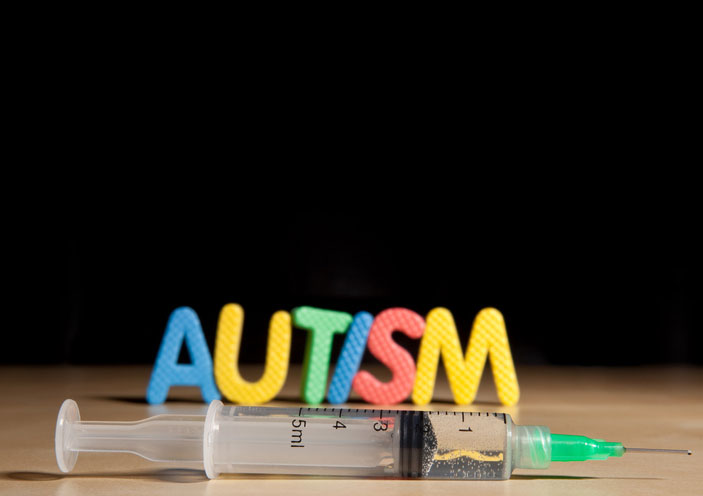
What is The Future for ABA Therapy if Vaccines Become The Prime Suspect For ASD?
ABA therapy’s future is under real pressure in 2025. Federal leadership is questioning decades of established vaccine science, threatening autism research funding, and targeting the Department of Education. But ABA is built on evidence, and that scientific foundation is its strongest defense. Here’s what’s at risk and what the ABA community can do about it.


ABA is a field that offers treatments for dozens of different physical and mental conditions. But if there’s a single disability it’s most associated with, it’s the treatment of Autism Spectrum Disorder (ASD).
According to the CDC, about 1 in 36 children in the United States has been identified with Autism Spectrum Disorder. As experts in one of the most widely researched and evidence-based therapies for ASD, ABAs are the healthcare professionals most involved with caring for that population.
So most ABAs are tuned in to the troubling developments surrounding the appointment of Robert F. Kennedy, Jr., as Secretary of Health, and are wondering what they can do about it.
If a Debunked Theory Becomes Mainstream, Could Treatment Also Suffer?
Long before he became a candidate for president and then Secretary of Health, RFK Jr. was widely known for his fixation on common childhood vaccines as the primary cause of ASD. This is despite decades of research showing no association between the two. A small number of early studies suggested a link, but those findings were later discredited or retracted. For more on this, see our overview of whether the autism-vaccine connection is a myth.
For ABA therapists, causation is often a secondary consideration. Using the ABCs of ABA, they focus on the antecedent, behavior, and consequences for actions taken today, not years past.
As a scientifically-validated treatment for ASD, ABA has been shown to work regardless of what the underlying causes of the condition may be.
But here’s the rub: if the concept of scientific validation is dismissed, could ABA fall prey to the same sentiment that propelled the anti-vaxx movement?
In the near term, the concern is that focusing on vaccines as the cause of autism long after the theory has been debunked could upend other scientifically validated courses of treatment, including ABA. There’s also growing concern in the ABA community that research into new behavioral treatments and other potential causes could be defunded.
Many ABAs are also likely to be impacted by the gutting of the Department of Education, which oversees IDEA (Individuals with Disabilities in Education) mandates that govern autism treatment in schools.
Could This Put the Autism CARES Act in Jeopardy?

Most ABAs are familiar with the federal Autism CARES Act, first passed in 2004, which helped kick-start the demand for applied behavior analysts. The most recent renewal authorizes more than $5 billion in funding over the life of the program through CDC, NIH, and the Health Resources and Services Administration (HRSA) to:
- Support autism prevalence tracking and trends
- Fund early intervention programs
- Provide education for healthcare professionals, including ABAs
- Family support services
- Research into ASD causes, diagnosis, treatment, and prevention
Autism CARES was just renewed in December of 2024. The concern now is that the oversight, distribution, and direction of those funds are in the hands of someone who may disregard the evidence compiled over decades by ABAs and researchers.
Kennedy’s language around individuals experiencing ASD will also give ABAs pause. The Secretary has made controversial statements suggesting severe neurological impairment in people with the condition, a claim that any ABA with direct treatment experience can easily refute. Patients are people, with their own thoughts, hopes, and ideas. A range of different severity levels makes autism a complex diagnosis, but the vast majority of people with ASD can have full and meaningful lives with scientifically-proven treatment.
Kennedy also routinely misstates information around prevalence and rates of occurrence.
This tendency to see the condition in simplistic terms isn’t just bad news for research and treatment. It also tends to diminish the patients themselves. ASD is hardly the end of everything for those individuals. But if society sees them as profoundly and permanently damaged, many of their opportunities may disappear.
An Anti-Science Ideology Can Only Be Fought With More Science
Reports indicate the CDC is planning to study the long-since debunked links between vaccines and autism. Taken together with reports of proposed job cuts at both CDC and the National Institutes of Health (NIH) that could affect roughly 10% of staff, this is going to significantly divert resources from treatment and useful research.
Worse, data coming from the government may be suspect. Some federal health data pages were temporarily removed or modified in early 2025. As that information has been restored, in part, researchers have noticed it’s incomplete.
Much of this tracks back to the new ideological inclination to deny the existence of transgender and nonbinary individuals. It’s been particularly troubling that inexpert individuals apparently confuse transgenic with transgender, putting completely unrelated lines of genetic research into ASD under threat simply because the words sound alike.
There’s also a more direct and serious threat to autism patients. ABAs are well aware that some studies have found significantly higher rates of ASD diagnoses among transgender and nonbinary individuals.
Such individuals are under threat of losing many of their current protections, including some types of gender-affirming medical care. ABA probably doesn’t fall into that bucket, but the overall chilling effect is likely to drive some of these individuals away from treatment entirely. The stressors that come from having your identity attacked won’t improve any existing ASD symptoms.
Committing to Advanced Studies Offers the Best Shot at Keeping ABA Front and Center in ASD Treatment
As with any issue of ignorance, education is the best answer for ABAs concerned about where the new administration is taking ASD treatment.
Even someone with a bachelor’s degree in applied behavior analysis has a lot of the essential information needed to push back against ASD disinformation. With coursework covering behavioral science statistics, cognitive psychology, and lifespan development, you graduate armed with the tools to disprove the more outlandish theories people have about autism.
Equally important is the fact that most bachelor’s programs offer direct experience treating patients, so you can get to know the people behind the labels firsthand.
Going further, getting a BCBA (Board Certified Behavior Analyst) credential will require a master’s degree in the field. And at the top of the stack, a BCBA-D (a doctorally-qualified BCBA) means going all the way to a doctoral degree.
The people who hold those PhD in Applied Behavior Analysis degrees will be the key to defending ABA and scientifically appropriate autism research over the coming years. With facts and impeccable research skills behind them, they’ll be able to demonstrate that reality still exists, that vaccines are safe, and that ABA and related therapies are where to look for real solutions.
Frequently Asked Questions
Is ABA therapy itself at risk because of current federal policy?
ABA therapy remains widely used and supported by decades of research. The bigger risks are to the research funding and government programs that support the broader autism ecosystem, particularly with proposed cuts at CDC and NIH and potential changes to how IDEA mandates are enforced in schools.
What is the Autism CARES Act and could it be defunded?
The Autism CARES Act channels more than $5 billion through CDC, NIH, and HRSA to fund autism research, early intervention programs, and healthcare professional education. It was renewed in December 2024. The concern isn’t that the law disappears overnight, but that those funds could be redirected toward debunked priorities rather than evidence-based treatment.
What does RFK Jr.’s appointment mean for autism research funding?
Kennedy has long promoted the idea that childhood vaccines cause autism, a claim the scientific community has thoroughly investigated and rejected. Reports suggest renewed federal interest in studying vaccine-autism claims. That shift in focus could draw research dollars away from advancing effective, evidence-based treatments.
How can ABA professionals push back against autism disinformation?
The most effective response is education and credentialing. Advanced degrees in ABA, particularly at the master’s and doctoral levels, give practitioners the research literacy and clinical grounding to counter misinformation with evidence. Staying engaged with advocacy efforts by professional organizations such as ABAI and BACB also matters.
Does any of this affect parents trying to access ABA therapy for their child?
In the short term, access for most families shouldn’t change dramatically. The longer-term concern is that cuts to autism research funding and early intervention programs could slow the development of new treatments and reduce the support systems that help families find and access care. Staying informed and connected to advocacy organizations in your state is worth the effort.
Key Takeaways
- ABA is built on evidence: Political headwinds don’t change that, but they do threaten the funding infrastructure that supports the field.
- The Autism CARES Act was renewed in 2024: But how its $5 billion gets directed is now an open question under the current administration.
- Federal research priorities may be shifting: Reports suggest renewed interest in vaccine-autism claims that the scientific community has already thoroughly rejected.
- Staffing cuts at CDC and NIH could divert resources: Proposed reductions of roughly 10% of staff could slow progress on behavioral research and autism treatment.
- Transgender individuals face a compounded threat: Some studies show significantly higher ASD diagnosis rates in this population, making current policy threats a double concern.
- Advanced education is the most powerful tool practitioners have: A well-trained, research-literate field is the best defense against disinformation.
The field needs people who know the science cold and can defend it. If you’re ready to go deeper in ABA, find a program that gets you there.
2024 US Bureau of Labor Statistics salary and employment figures for Substance Abuse, Behavioral Disorder, and Mental Health Counselors reflect state and national data, not school-specific information. Note: ABA/BCBA roles are included in this broader BLS category, and actual salaries for these professionals are frequently higher. ABA salaries can vary based on experience, location, and setting. Data accessed February 2026.