How ABA Therapy Is Addressing the Opioid Addiction Crisis
Applied behavior analysis offers some of the most research-backed tools available for treating opioid addiction, including Contingency Management techniques like Voucher-Based Reinforcement and Prize Incentive Contingency Management. These behavioral approaches treat addiction as a learned behavior that can be modified, and a substantial body of research supports their effectiveness, particularly when used alongside comprehensive medical treatment.


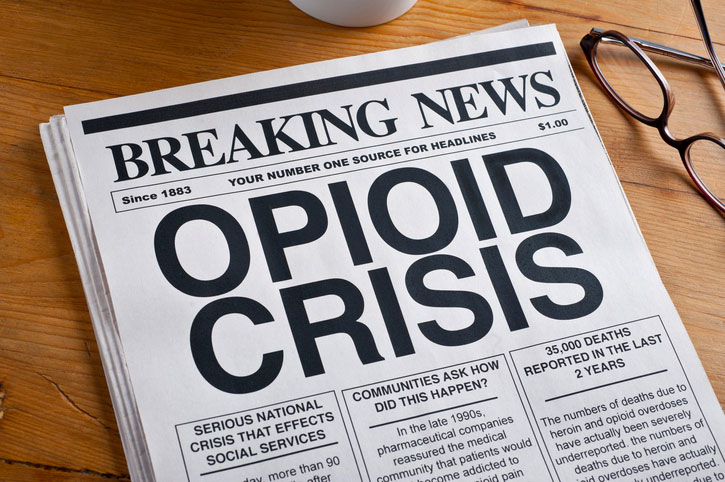
The opioid crisis hasn’t gone away. Despite years of public health campaigns, policy shifts, and treatment expansions, overdose deaths remain at devastating levels across the United States. What’s changed is our understanding of what actually works, and ABA therapy for opioid addiction is increasingly part of that conversation.
Behavior analysts have been working in addiction treatment longer than most people realize. They’ve spent decades advocating for approaches grounded in behavioral science, often against a system that defaulted to criminal punishment over evidence-based therapy. Here’s what that work looks like, and why it matters.
Why ABA Applies to Addiction Treatment
Drug addiction can be understood through a behavioral lens. The patterns of use, the triggers, the reinforcement cycles: these are operant behaviors. And operant behaviors can be modified.
That’s a well-established premise in behavioral science, and it’s the foundation of how ABA approaches addiction: identify the reinforcers maintaining the behavior, then systematically shift the contingencies. The challenge has often been implementation and broader system adoption rather than the underlying science.
Tens of thousands of people die from drug overdoses in the United States each year, according to CDC data.
For much of the opioid crisis, the dominant response was criminal rather than clinical. Many public health experts argue that criminalization alone has not reduced addiction rates, and that behavioral treatment approaches, backed by a growing body of experimental evidence, offer a more effective path. Behavior analysts have been making that case for years, and it’s slowly shifting how policymakers and treatment providers think about the issue.
ABA Techniques With Strong Evidence in Addiction Treatment
Two behavioral approaches in particular have accumulated substantial research support for treating opioid and substance use disorders. Both fall under the broader umbrella of Contingency Management (CM), a behavioral strategy that uses structured reinforcement to promote abstinence and treatment retention.
Voucher-Based Reinforcement (VBR)
VBR provides tangible rewards (typically vouchers exchangeable for retail goods or services) when patients test negative for drug use. The principle is straightforward: make abstinence more reinforcing than use. A substantial body of research, including studies published in the Journal of Applied Behavior Analysis and supported by NIDA, suggests that VBR increases treatment retention and reduces drug use during the program.
The question of what happens after the vouchers stop is an active area of research. Maintaining behavior change outside a structured reinforcement program remains one of the field’s ongoing challenges, and it’s an area where behavior analysts continue to refine their approaches.
Prize Incentive Contingency Management (PICM)
PICM operates on a similar principle, using the chance to win prizes as the reinforcer for negative drug tests. Research suggests it’s particularly effective in outpatient settings, and its evidence base spans multiple substance use disorders, including opioids. SAMHSA has recognized Contingency Management broadly as an evidence-based practice in substance use treatment.
It’s worth noting that both VBR and PICM work best as part of a comprehensive treatment plan. They’re typically used alongside medication-assisted treatment (MAT), including medications like buprenorphine, methadone, and naltrexone, not as standalone replacements for medical care. The behavioral and medical components complement each other in ways that neither achieves alone.
The Case for Treating Addiction as a Behavioral Health Issue
One of the most important contributions behavior analysts make isn’t clinical: it’s conceptual. Helping policymakers, funders, and the public understand addiction as a behavioral health issue rather than a moral failing or a criminal matter opens the door to treatment approaches that are both more humane and more effective.
When addiction is framed primarily as a crime, punishment becomes the dominant tool. When it’s treated as a behavior, modification becomes possible. That shift in framing has real consequences for what kinds of programs get funded and what kinds of interventions actually reach people who need them.
The Association for Behavior Analysis International (ABAI) has devoted significant attention to this area, including dedicated conference tracks and publications focused on the behavioral science of addiction. That ongoing investment reflects where the field sees genuine opportunity to make a difference in one of the most pressing public health challenges of our time.
ABA’s Role in Prevention
Applied behavior analysis also has a role to play before addiction develops. The National Institute on Drug Abuse estimates that nearly 30 percent of people who receive prescription pain medications misuse them. That’s a population where early behavioral intervention can matter.
Operant-based behavioral medicine approaches have a documented history in chronic pain management. These techniques can reinforce healthy behaviors and help patients, along with their families, recognize and reduce pain-linked behaviors that might otherwise lead toward escalating medication use. By addressing the behavioral components of chronic pain early, behavior analysts can help reduce one of the most common pathways into opioid dependence.
This isn’t a replacement for medical care. It’s a complement to it, and one that’s not yet widely used in primary care settings where behavioral referrals could make a meaningful difference. ABA-based approaches are most effective when integrated with comprehensive medical and behavioral treatment plans.
If you’re interested in how applied behavior analysis intersects with substance abuse treatment more broadly, that’s a growing area of both research and practice, extending well beyond opioids into behavioral addictions like gambling and internet use as well.
Frequently Asked Questions
How does ABA therapy for opioid addiction work?
ABA therapy for opioid addiction applies behavioral principles to change the patterns of behavior that maintain drug use. Contingency Management techniques like Voucher-Based Reinforcement use structured rewards to make abstinence more reinforcing than use. These approaches are most effective when used alongside medication-assisted treatment and other components of a comprehensive care plan.
Is Contingency Management the same as bribery?
It’s a common question. Contingency Management uses tangible rewards to reinforce behavior change, which can sound like paying people to stop using drugs. The mechanism is more precise than that: it’s the same reinforcement-based approach ABA applies across all populations and settings. SAMHSA recognizes it as an evidence-based practice precisely because the research supports its effectiveness.
Can ABA help prevent opioid addiction, not just treat it?
Yes. Operant-based behavioral medicine approaches have a documented role in chronic pain management that can reduce reliance on opioid medications before dependence develops. By reinforcing healthy behaviors and helping patients and families reduce pain-reinforcing patterns, behavior analysts can address one of the most common pathways into opioid misuse.
Do behavior analysts work in addiction treatment settings?
Some do, though it’s not yet a common placement for BCBAs. The application of ABA principles to substance use disorders is a growing area of research and practice. Behavior analysts interested in this area should look for practicum and supervision opportunities in substance abuse counseling settings and explore ABAI’s published work on addiction treatment. Roles like alcohol and drug peer support specialists are one entry point for those building experience in this space.
Does Contingency Management replace medication-assisted treatment?
No. CM approaches like VBR and PICM are typically used alongside medications like buprenorphine, methadone, or naltrexone, not as replacements for them. The behavioral and medical components of addiction treatment work best together, and behavior analysts operating in this space generally coordinate closely with medical providers as part of a comprehensive treatment team.
Key Takeaways
- ABA approaches addiction behaviorally. Drug use follows operant principles, which means it can be modified through the same behavioral techniques ABA uses across other populations and settings.
- Contingency Management has strong research support. Voucher-Based Reinforcement and Prize Incentive Contingency Management both have substantial evidence bases for increasing abstinence and treatment retention in opioid and substance use disorders.
- CM works best alongside medical treatment. Behavioral approaches are most effective when integrated with medication-assisted treatment (buprenorphine, methadone, naltrexone) and comprehensive care planning — not used as standalone interventions.
- Framing matters for policy. One of ABA’s most important contributions is advocating for addiction to be treated as a behavioral health issue, which shapes what treatment approaches get funded and implemented at scale.
- Prevention is part of the picture, too. Operant-based behavioral medicine approaches in chronic pain management can reduce one of the most common pathways into opioid dependence before it develops.
Interested in a career that puts behavioral science to work on real public health challenges? An ABA degree opens doors across a wider range of settings than most people expect, including addiction treatment, chronic pain management, and behavioral health policy.