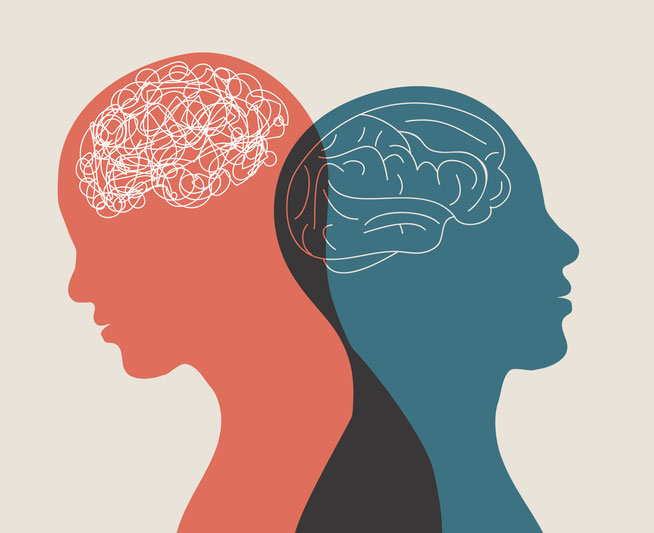

Cognitive behavioral therapy techniques are the structured methods therapists use to help clients identify and change unhelpful thought patterns. Five widely used CBT techniques give ABA professionals a research-backed toolkit for treating anxiety, trauma, addiction, phobias, and more: cognitive journaling, guided discovery, cognitive restructuring, mindfulness and relaxation, and exposure therapy.


The human brain is remarkably adaptable. It can learn new skills, form new habits, and rewire itself in response to experience. That same flexibility, though, means negative thought patterns can take root just as quickly as positive ones. When trauma, mental illness, addiction, or difficult life circumstances reshape how someone sees the world, every new experience can feel like a threat waiting to happen.
That’s where cognitive behavioral therapy comes in. CBT is a solution-focused approach to talk therapy that helps clients recognize the connection between their thoughts, feelings, and behaviors, then work systematically to change what’s not serving them. It’s not about telling people what to think. It’s about helping them develop their own tools for thinking differently.
For applied behavior analysis professionals, CBT techniques aren’t just theoretical knowledge. They’re practical methods that show up across counseling, addiction treatment, school settings, and clinical practice. Here’s a close look at five of the most commonly used CBT techniques and what they actually look like in session.
Technique 1: Cognitive Journaling
Before a therapist can help a client challenge unhelpful thoughts, those thoughts need to be visible. That’s the core purpose of cognitive journaling, a structured writing practice that helps clients track when triggering situations occur, how they automatically respond, and what thought patterns are driving those responses.
Early in treatment, a client might record the situation and their immediate emotional reaction. Later, as therapy progresses, the journal evolves into a progress tracker: what coping strategies did they try, and what actually helped? Over time, the journal becomes a tool the client can return to independently, long after formal therapy ends.
Cognitive journaling is accessible enough to be useful across a wide range of diagnoses and experiences. A 2018 study published in the Journal of Medical Internet Research found that emotionally focused journaling was associated with reduced depressive symptoms and anxiety after one month compared to usual care alone.
Consider someone living with a severe panic disorder. Their attacks feel random and unpredictable. Journaling changes that. By tracking when and where attacks occur, they can start to identify patterns: a specific setting, a particular type of social situation, a recurring trigger they hadn’t consciously noticed. That information becomes the foundation for everything else in treatment.
Technique 2: Guided Discovery
Guided discovery is what makes CBT feel different from other forms of therapy. Rather than telling clients what’s wrong with their thinking or handing them a set of solutions, a therapist using guided discovery asks open-ended questions that help clients examine their own thought processes.
The goal is self-awareness that leads to self-directed change. When clients understand how their brain actually responds to certain situations (not just what the response is, but why), they’re in a position to make real changes rather than manage symptoms.
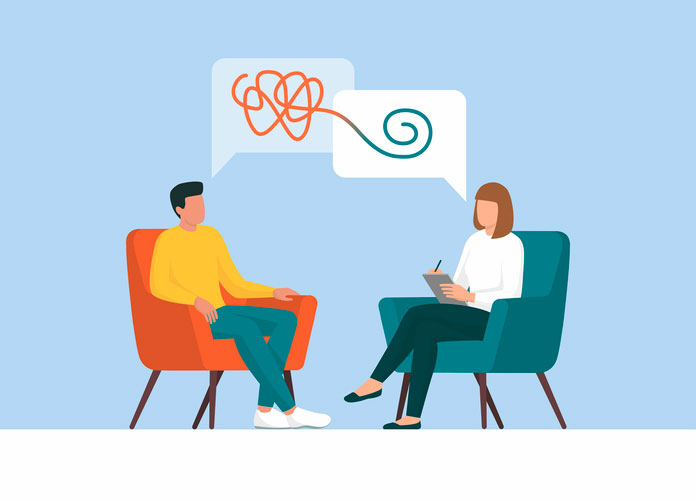
This approach is especially valuable in CBT for trauma and PTSD, where clients often hold distorted beliefs about the likelihood of harm recurring. A paper published in Cambridge University Press describes how guided discovery, combined with accurate medical information, helped patients critically evaluate their beliefs about getting severely ill again, recognizing that their fears were driven by anxiety rather than realistic probability. That shift reduced compulsive symptom-checking and helped patients stop taking precautions that were disrupting their daily lives.
The technique isn’t limited to trauma work. It’s effective for anxiety disorders, phobias, depression, and any condition where distorted thinking is playing a central role in keeping someone stuck.
Technique 3: Cognitive Restructuring Explained
Some negative thought patterns don’t just appear occasionally. They become habits, knee-jerk reactions so deeply ingrained that they feel like facts. Cognitive restructuring, sometimes called reframing, is the systematic process of identifying those patterns and deliberately replacing them with more accurate, balanced ones.
The American Psychological Association outlines a five-step framework for cognitive restructuring:
- Identify the upsetting situation.
- Name the strongest feelings it brings up (fear, sadness, anger, shame).
- Examine the thoughts underneath those feelings. If the feeling is anxiety, what danger is the brain predicting?
- Evaluate those thoughts critically. Is there real evidence for them? Is there another way to read the situation?
- Make an objective call. If the thought is inaccurate, what’s a more realistic replacement? If it is accurate, what’s the most constructive response?
The long-term goal is for clients to run this process on their own, in the moment, without a therapist present. But like physical training, cognitive restructuring takes repetition and guidance before it becomes second nature. That’s especially true when negative thought patterns have become part of someone’s identity.
Take someone managing an eating disorder. Their relationship with food is filtered through feelings of shame and self-loathing. Restructuring asks them to separate physical hunger cues from emotional ones, a process that can mean fundamentally rewiring how they understand themselves. It’s difficult work, and it’s also among the most impactful a trained therapist can do.
Technique 4: Mindfulness and Physical Relaxation
Anxiety and stress aren’t just psychological experiences. They’re physical ones too. During a panic attack or a trauma response, the body enters fight-or-flight mode: digestion slows, the heart races, breathing becomes shallow, and extremities go numb. Addressing only the cognitive side of the experience leaves much of the suffering on the table.

Mindfulness and physical relaxation techniques give clients a toolkit for interrupting that cycle. Some of the most commonly used approaches in CBT include:
- Breathing exercises. Focused, controlled breathing directly calms the nervous system and gives the mind something concrete to anchor to during distress.
- Counting and pausing. In CBT for anger management, deliberately counting before responding gives the emotional response time to de-escalate before it drives behavior.
- Progressive muscle relaxation (PMR). Clients systematically tense and release specific muscle groups (arms, legs, face, and shoulders) over 5 to 10 seconds each. The process builds awareness of where the body is holding tension and provides a physical release.
- Autogenic relaxation. A self-directed form of relaxation where clients visualize calming imagery or repeat affirming phrases, often combined with breathing exercises or PMR for greater effect.
- Hobby-based relaxation. Proactive stress management through activities like yoga, painting, music, or walking. Regular use of these outlets can build a buffer against acute stress responses.
These strategies are useful across a wide range of presenting concerns, not just anxiety. A review of multiple addiction treatment studies published in Karger found that clients who received mindfulness-based addiction treatment reported fewer cravings compared to those in other program types. For ABA professionals working across behavioral and substance use settings, that’s a meaningful finding.
Technique 5: Exposure Therapy in Practice
Exposure therapy has a reputation problem. The popular version (drop someone into their worst fear and let them figure it out) couldn’t be further from how it’s actually practiced in a clinical setting.
When handled by a trained professional, exposure therapy is a measured, collaborative, consent-based process. The goal isn’t to overwhelm a client. It’s to help them build a realistic relationship with whatever they fear, one carefully calibrated step at a time.
Here’s what that typically looks like in practice. If someone has a fear of heights or another phobia, a therapist wouldn’t start by putting them in a high-stakes real-world situation. They’d begin by exploring the thought patterns and beliefs connected to that fear. Then they might move to imaginal exposure: asking the client to vividly picture the feared scenario while using coping strategies in real time. Modern therapists sometimes incorporate virtual reality at this stage, which allows clients to gain exposure without the risks of an uncontrolled real-world environment.
Physical exposure, known as in vivo exposure, comes later and only with the client’s full understanding and consent.
The core goals of exposure therapy are consistent across applications: help clients unlearn the fear response, reduce the physical stress reaction, and build genuine confidence in their own coping skills. That makes it effective well beyond phobias and PTSD. For clients with obsessive-compulsive disorder (OCD), exposure and response prevention (ERP) helps them confront feared situations without performing compulsive rituals, gradually building tolerance for the discomfort and breaking the cycle.
How These CBT Techniques Connect to Your ABA Career
If you’re exploring a career in applied behavior analysis, understanding CBT isn’t a detour from your path. It’s directly relevant to the work. ABA professionals encounter clients across a wide range of settings: schools, clinical practices, addiction treatment programs, and community mental health organizations. In many of those settings, CBT techniques are part of the standard clinical toolkit.
Many ABA and mental health counseling graduate programs include CBT methods in their coursework, though coverage varies by program and specialization. You can explore top ABA master’s programs to compare options and see which programs include clinical training in evidence-based methods like CBT. Understanding how cognitive restructuring, guided discovery, and exposure therapy work, not just their names, gives you a real advantage when you begin fieldwork and start working directly with clients.
The techniques covered in this article show up across most of the populations ABA professionals serve: children with anxiety or OCD, adults managing trauma or addiction, and individuals with behavioral disorders who’ve developed deeply ingrained negative responses to their environment. Knowing how to apply CBT methods and when to refer to a specialist is part of what it means to practice well in this field.
Dissolving fear and guilt with compassion and understanding is at the heart of cognitive behavioral therapy. A person’s pain doesn’t fade overnight, but with the right techniques and a skilled professional guiding the process, real change is possible. That’s what makes this work worth doing.
Frequently Asked Questions
What is cognitive behavioral therapy?
Cognitive behavioral therapy (CBT) is a structured, evidence-based form of talk therapy that helps people identify and change negative or distorted thought patterns. Unlike some other therapeutic approaches, CBT is goal-oriented and typically shorter in duration, focusing on practical tools clients can use on their own over time.
What are the most commonly used CBT techniques?
Widely used CBT techniques include cognitive journaling, guided discovery, cognitive restructuring (reframing), mindfulness and physical relaxation strategies, and exposure therapy. Most therapists use a combination of these approaches depending on the client’s diagnosis and treatment goals.
How is guided discovery different from other CBT techniques?
Guided discovery is the conversational approach that underlies much of CBT: it’s how a therapist helps a client examine their own thinking rather than simply telling them what to change. Other techniques like cognitive restructuring or exposure therapy are more structured interventions, while guided discovery is the ongoing dialogue that makes them work.
Is exposure therapy safe?
Yes. When conducted by a trained professional in a clinical setting, exposure therapy is safe and well-researched. It’s done gradually, with the client’s full understanding and consent at each stage. Starting with imaginal exposure or virtual reality before progressing to real-world situations is standard practice.
Are CBT techniques relevant to ABA professionals?
Absolutely. ABA professionals work across counseling, school, clinical, and behavioral health settings where CBT methods are regularly applied. Understanding these techniques is valuable for working with clients who have anxiety, trauma, OCD, phobias, and behavioral disorders, populations ABA professionals encounter across nearly every practice setting.
Key Takeaways
- Cognitive journaling builds self-awareness by helping clients track triggers, automatic responses, and the effectiveness of coping strategies over time.
- Guided discovery is the conversational backbone of CBT — open-ended questions help clients examine their own thinking rather than being handed conclusions by a therapist.
- Cognitive restructuring gives clients a five-step framework for replacing inaccurate or damaging thought patterns with more balanced, realistic ones.
- Mindfulness and physical relaxation techniques address the body’s stress response directly, and research supports their effectiveness in addiction treatment as well as anxiety.
- Exposure therapy is a gradual, consent-based process — nothing like its popular depiction — and is highly effective for phobias, PTSD, and OCD.
- For ABA professionals, these techniques are practical career knowledge, not just theoretical background.
Ready to put these techniques into practice? Explore ABA and counseling graduate programs that blend behavioral science with evidence-based clinical training, and find the right fit for where you want to take your career.