Quick Answer
This series features candid Q&A interviews with 71 ABA professors and faculty from 61 universities across the country. You’ll hear directly from program leaders about what makes their programs unique, what kinds of students they see, and how they’re preparing the next generation of behavior analysts. Click any university name to expand its full interview.
This series started in 2018 with a simple idea: let the people who run these programs speak for themselves instead of paraphrasing their websites. Since then, more than 70 professors have contributed their thoughts, adding something valuable to the community that has come together around AppliedBehaviorAnalysisEDU.org. Students bookmark this page while narrowing down programs. Professors reference their own interviews when they talk to prospective applicants. We keep it updated because the field keeps changing, and the people teaching it deserve a record that keeps up with them.
One ABA pioneer we worked with actually helped shape the very licensing laws that professional practice is structured around today. The impact of that go beyond just professional credentialing. With that legal structure in place, it became possible for people to access treatment for ASD that insurance companies would help pay for.

Michael F. Dorsey, Ph.D., BCBA-D, LABA
VP of Psychological Services, Amego Inc. · Lecturer, Applied Behavior Analysis Programs, Northeastern University
Dr. Dorsey earned his Ph.D. from Western Michigan University in 1979 and has spent decades shaping the field from the inside: he authored the first behavior analyst state licensing bill filed in the United States, chaired ABAI’s Verified Course Sequences Board, and co-founded the Institute for Behavioral Studies at Endicott College.
Choosing the right ABA program is one of the biggest decisions you’ll make on the path to becoming a Board Certified Behavior Analyst. You can read program descriptions and compare course lists all day, but there’s something different about hearing directly from the people who run these programs.
That’s exactly why we created this series. We reached out to professors and department heads at some of the country’s top ABA programs and asked them to share their perspectives. What you’ll find below are honest, unscripted conversations about everything from student demographics and career outcomes to the challenges facing the field today.
Every School Here Earned Its Spot on Our Rankings
Each of the schools featured in this series was recognized for offering exceptional value and quality when we put together our most highly recommended program lists for prospective students.
- 20 Best Schools Offering ABA Master’s Programs
- 23 Best Master’s in Psychology Programs with an Emphasis in ABA
- 32 Best Master’s in Education Programs with an Emphasis in ABA
- 35 Best ABA Graduate Programs (including doctorates)
- Top 57 Schools Offering Bachelor’s in ABA for BCaBAs
- 62 Best Schools Offering Online ABA Master’s and Certificate Programs


Whether you’re a career changer exploring ABA for the first time or you’re narrowing down your shortlist of graduate programs, these interviews give you the kind of insider perspective that program brochures don’t. Click any university name below to read the full Q&A.
We did not just publish these interviews individually. We also pulled the patterns across all of them into four focused guides:
University Interview Directory
We interviewed 71 faculty from 61 ABA programs nationwide. Find a school below and click through to jump straight to its interview.
ABA Professor Interviews A-Z
Each interview features candid responses from professors and faculty leaders about their programs, their students, and where they see the field of applied behavior analysis heading. Click a university name to expand the full Q&A.
Arcadia University
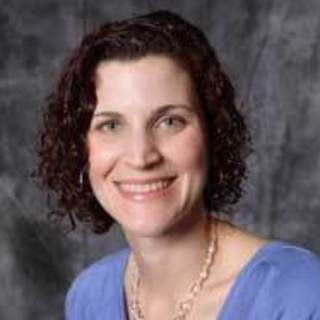
We recognized Arcadia University among the 62 Best Schools with Online ABA Master’s and Certificate Programs, adding them to our list of top recommendations for ABA grad students. We were excited to hear from Sarah Woldoff, Ph.D/BCBA, a faculty member at Arcadia University who took the time to answer a few questions about how the school works to create a great student experience that helps prepare graduates for a career in applied behavior analysis.
Arcadia University Programs:
- M.Ed. with a concentration in Applied Behavior Analysis
- Graduate Certificate in Applied Behavior Analysis
Professor/Faculty Name: Sarah Woldoff, Ph.D/BCBA
Tell us about the types of students you see come through your program. Are you seeing more non-traditional students and career changers coming from other fields?
We are definitely seeing a growing trend in “non-traditional” graduate students in our program. Many people start off in the workforce in one field and then over time decide to change careers. These students enter our program with great knowledge and expertise that really is a positive attribute and is beneficial to other students in the cohort. We have seen students with backgrounds in various industries such as Education, Pharmacy Sciences, Business, and Anthropology who have decided to pursue the field of ABA and utilize their unique backgrounds. Sometimes this change is driven by having a family member diagnosed with an Autism Spectrum Disorder or learning more about the needs in this field due to a fundraising activity at their place of employment or through social media.
What areas of practice are you seeing graduates going into? Do they tend to find jobs in the local school districts or more often join private practices?
Demand is growing for behavior analysts locally, nationally, and internationally. Many of our graduates are working in local school districts but many are also joining center-based and in-home ABA Agencies While the majority of our graduates pursue careers working with children and adults with cognitive, developmental disorders, and ASD, other students have carved out their own path in corporate consultation, counseling, and health coaching.
What are some of the things you love most about the ABA program at your university, the kind of things you’d like future students to know about as they consider their options?
I love the small community and the history of Arcadia University. Teaching others about ABA and best practices in the field has become my passion. I love that we are able to reach students from all over the country and internationally to create a unique cohort of students with amazing backgrounds and experiences. Currently we utilize an online model but also offer hybrid opportunities for students who want to further connect with their cohort and professors. This is achieved through live virtual classroom opportunities, live virtual office hours where students can “drop in” to touch base with a professor, and related meetings. We frequently update our materials and course content to ensure we provide up to date information based on changes in the field and student feedback collected through evaluations and advising appointments. Finally, the core faculty in our program provide mentorship and share their diverse backgrounds with students to further refine skills and carve out career pathways. We strive to support our students from the day they enroll and maintain relationships with many of them far beyond the graduation date.
What do you feel are the most pressing issues in ABA today, and how does the program at your school prepare graduates to address these issues?
As the prevalence of Autism grows across the country, so does the demand for qualified Behavior Analysts. This coupled with the growth of insurance and government initiatives is placing a lot of pressure on agencies to provide services efficiently and quickly to meet this ever growing demand. This can lead to ethical concerns regarding adequate training as well as lead to large caseloads for many BCBAs. Our program attempts to address these needs by ensuring our students understand ethical codes within the field of ABA, best practices within the field, and how to address the potential hiccups experienced by early career practitioners. We also provide a comprehensive program that includes an understanding concepts and principles of behavior, clinical applications of ABA, reading and understanding research in the field, and data driven decision making. Recently, we created a 1 credit course to better prepare students for the field including an understanding of the certification process by state, the available employment options in the field, the need for supervised clinical experiences, and a focus on personal growth including work/life balance.
Which local agencies in the Tri-State area offer students enrolled in your program opportunities to receive practicum experience?
We have established several paid practicum opportunities for students enrolled in our program who live in the Tri State area including center-based, school based, and in-home therapy providers. Agencies such as Behavior Interventions Inc. and Easter Seals have amazing opportunities available for students where they can gain experience working with students diagnosed with Autism, exposure to verbal behavior classroom settings, direct experience with children across settings, while receiving direct supervision hours needed to meet criteria to sit for the BCBA examination.
What inspired your university to create the uniquely designed Modular Master’s program?
The Modular Masters Program was developed with the convenience and current trends in education, work, and community contexts in mind. This program allows students the flexibility to join areas of interest that students will not find in other programs to create a personalized and unique educational experience. For example, if you are interested in Applied Behavior Analysis and educational leadership, you can choose to combine certificate modules in these areas to create a specialized masters degree to meet your needs. These options were important when designing the ABA Program to address student interests as some students may be interested in Autism and ABA while other students may wish to address ABA in Inner City Educational Settings. This program allows us to meet the ever changing landscape of Applied Behavior Analysis and expand the scope of the field to provide a greater variety of job paths for future behavior analysts. What kind of feedback have you gotten from students as a result of this individualized style of design? Students have really enjoyed the opportunity to design a program that meets their interests and career goals. Students have also responded well to the online program which allows them the flexibility to maintain employment while advancing their education. Course material is always accessible online and students can establish a sense of work/life balance without added expenses.
Please feel free to add anything else you would like potential students to know about your program; things that would be good for them to consider before choosing a program.
We have an amazing group of professors teaching the courses at Arcadia University. While the program may be challenging, you can be sure you will graduate with the tools needed to become a Board Certified Behavior Analyst. It is also an exciting time at Arcadia, as we are continuing to foster several partnerships with agencies to continue to provide opportunities for our students to gain needed supervised hours and possible research experience. We are in the process of starting a new program that will allow students to earn a Bachelor’s degree (BA) and a Master’s degree (MA) in just five years of study. This combined BA/MA program will provide another route for obtaining the research and clinical experience needed to pursue board certification with a blend of on-campus and on-line educational experiences. Lastly, our graduate program is cost effective and can be completed according to your pace to meet your needs.
Berry College
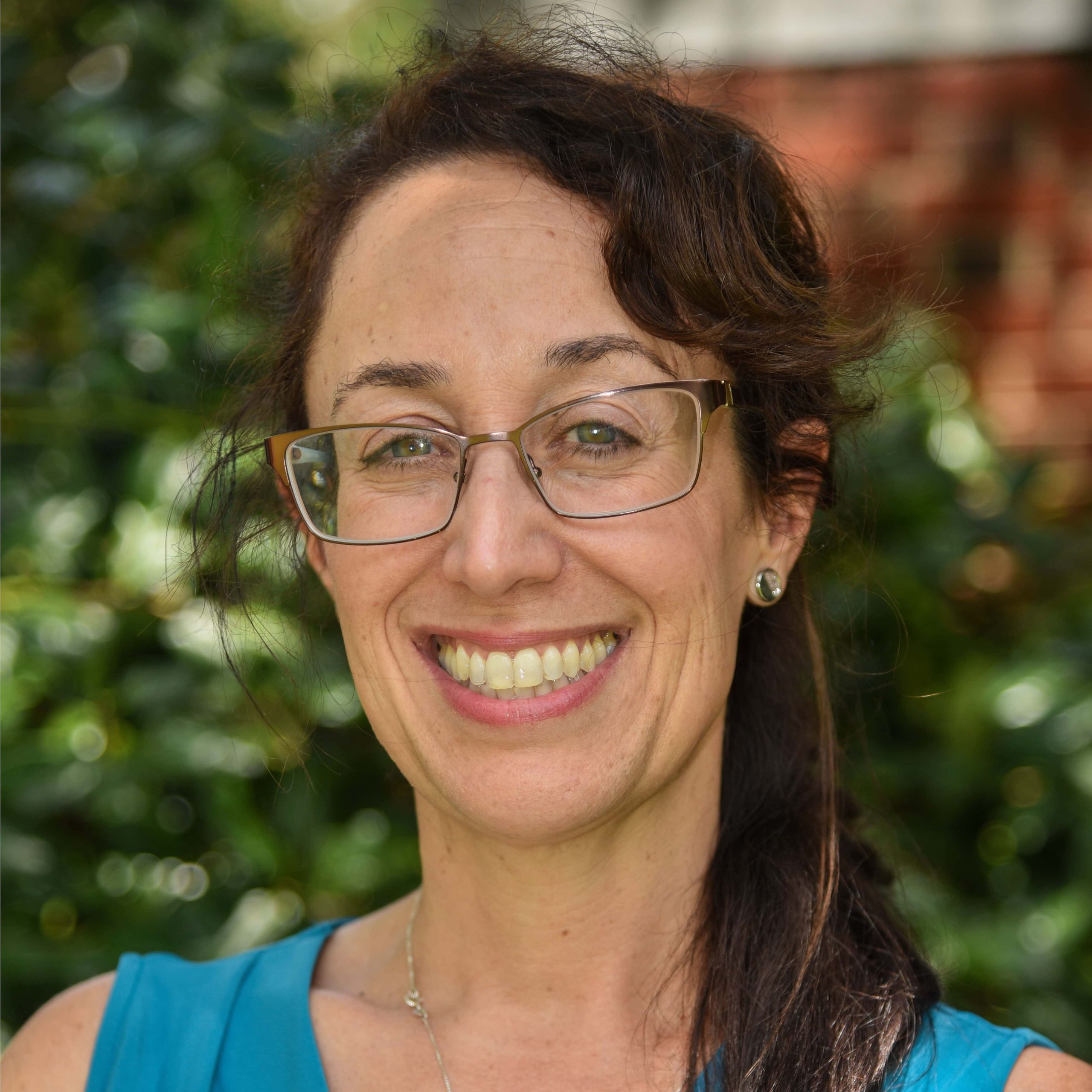
We recognized Berry College as one of the Top 57 Best Schools Offering ABA Bachelor’s and BCaBA Courses, adding them to our list of top recommendations for ABA undergrads. We were excited to hear from Michelle Haney, Ph.D, a faculty member at Berry College who took the time to answer a few questions about how the school works to create a great student experience that helps prepare graduates for a career in applied behavior analysis.
Berry College Programs:
- BCaBA Verified Course Sequence / ABA Minor
Professor/Faculty Name: Michelle Haney, Ph.D
Tell us about the types of students you see come through your program. Are you seeing more non-traditional students and career changers coming from other fields?
Berry College attracts mostly traditional age college students who attend classes on our beautiful campus. In addition to our verified course sequence fulfilling course requirements for the BCaBA, we also offer an Autism Endorsement at the undergraduate and graduate level for current and future teachers. Our autism endorsement (approved by the Professional Standards Commission) has a strong emphasis of ABA into the coursework both at the graduate and undergraduate levels.
What areas of practice are you seeing graduates going into? Do they tend to find jobs in the local school districts or more often join private practices?
The majority of our students who complete the ABA course sequence enter graduate school to become a BCBA. However, each year a few take positions in a private organization as an RBT to gain clinical supervision hours towards their BCaBA. Interestingly, many of those students also go on to become BCBA as well.
What are some of the things you love most about the ABA program at your university, the kind of things you’d like future students to know about as they consider their options?
Berry students in the ABA/Autism program are doing really interesting research! They are earning competitive research grants internally at the college to work with faculty mentors, they are presenting their research at state (GABA) and national (ABAI) conferences; and using their research based on ABA to complete interesting Honor’s theses that are personally meaningful. We have also created a special topics course, where students in the ABA program and those new to ABA learned to use DISTAR to teach reading to kindergarten students in a Title I local public school. I believe these experiences make our students very competitive for Graduate Programs. I think what I love most about our program is that while there is a big emphasis on application of ABA to the field of autism and education in general, our students are working with faculty on projects that explore and apply behavior analysis in a wide variety of areas. Students in our ABA program start to see the world differently with a feeling of optimism that things can change for the better!
What do you feel are the most pressing issues in ABA today, and how does the program at your school prepare graduates to address these issues?
We are in a somewhat rural area, that is just starting to see an influx of private ABA clinics as the insurance laws change. We want our students to have high quality clinical experiences, and have to be careful about which organizations are able to provide the type of clinical experience and supervision our students need. We have also created a stand-alone-3 credit hour ethics class to make sure our students are prepared to apply and understand the underlying standards, the Professional and Ethical Compliance Code for Behavior Analysts, as well as other relevant codes of ethics.
Do you find that some students that complete the BCaBA VCS go on to pursue master’s degrees and BCBA certification later?
Yes, virtually all of our students who have completed the course sequence have either gone on to finish their clinical supervision to become a BCaBA, or entered graduate school to become a BCBA! Other students take 1-2 of the ABA classes and integrate ABA into their framework for related professions.
The college offers ABA students internship options to satisfy supervised hours for certification. Can these internships lead to future job opportunities?
Yes, several of our students have been hired at the Marcus Autism Center after completing summer internships. Other internships have led to positions as RBTs with clinical supervision, there are no shortage of those!
Please feel free to add anything else you would like potential students to know about your program.
Berry College is nationally recognized for academic excellence and extraordinary value, Berry is an independent, coeducational college of approximately 2,100 students. For more than a century the College has offered a comprehensive liberal arts education that balances intellectual exploration, practical learning and character development. The Berry education is built on an exchange. The College offers a purposeful, four-year plan that integrates mentorship, reflection and hands-on learning. In turn, students contribute their ideas and hard work to make Berry and the larger world better. Our ABA program integrates well with our overall college mission!
Caldwell University
We recognized Caldwell University as one of the Top 20 Best Schools Offering Applied Behavior Analyst Master’s Programs, and separately for offering one of the 35 Best ABA Graduate Programs (Master’s and Doctorate). We were excited to hear from Sharon A. Reeve, Ph.D., BCBA-D, LBA-NY, a faculty member at Caldwell University who took the time to answer a few questions about how the school works to create a great student experience that helps prepare graduates for a career in applied behavior analysis.
Caldwell University Programs:
- Ph.D. in Applied Behavior Analysis• M.A. in Applied Behavior Analysis• Combined B.A. in Psychology/M.A. in Applied Behavior Analysis• Post-Master in Applied Behavior Analysis
Professor/Faculty Name: Sharon A. Reeve, Ph.D., BCBA-D, LBA-NY
Tell us about the types of students you see come through your program. Are you seeing more non-traditional students and career changers coming from other fields?
At Caldwell University, we usually have a handful of students each semester that are changing careers. Interestingly, we see the most change from business to applied behavior analysis. Business is actually a good background for behavior analysts to have because they will be navigating funding sources and managing budgets in any future behavior analytic position. The majority of our students, however, come directly out of undergraduate programs, typically in psychology or education.
What areas of practice are you seeing graduates going into? Do they tend to find jobs in the local school districts or more often join private practices?
We see a mixture of both. There is a high demand for behavior analysts in school districts and they tend to pay rather well. The same is true for private schools dedicated to serving individlas with autism. Working in private practices and consulting groups, however, give our students flexible hours, which is attractive to many of them. In Caldwell’s MA in ABA, students are well prepared for all of these types of positions.
What are some of the things you love most about the ABA program at your university, the kind of things you’d like future students to know about as they consider their options?
We built our program to provide students with rigorous and comprehensive academic and clinical training. The part of the program I love the most is our on-campus autism center. This provides the opportunity to clinically train our graduate students prior to graduation. This also allows us to teach a host of professional skills, such as promoting a positive learning environment for our students with autism, effectively working closely with others, and providing parent training, which is a crucial component of any autism program. We are also proud that we can provide scholarships to a number of students to train them in supervisory skills. This is crucial because the majority of our graduates will be in supervisory positions.
What do you feel are the most pressing issues in ABA today, and how does the program at your school prepare graduates to address these issues?
Professional interaction and communication with colleagues and parents is one of the most important skills that our students can learn. Regardless of the position for which they are hired, our graduates will need to effectively interact with others. Most graduate students care tremendously about the learners with autism and effectively learn the clinical skills and the science behind behavior analysis. What requires substantial training, however, is teaching graduate students to not only be compassionate and kind but to work effectively with parents and other colleagues. Consistency across every member of an intervention team is critical for the success of all learners with autism. Another pressing issue is communicating with the greater community about how effective ABA can be for a multitude of societal problems beyond helping people on the autism spectrum. In our program, we conduct research with our graduate students on issues such as gun safety, abduction prevention, traffic safety, food portion control, and others. We really want to save the world with ABA!
Your university features a Combined BA in Psychology/MA in Applied Behavior Analysis program. What factors contributed to the development of this accelerated program?
When we developed our on-campus autism center, it was the perfect opportunity for us to provide internships for our undergraduate psychology students. This gave us the idea to develop the combined program to allow our undergraduates to concurrently learn clinical and academic skills in ABA.
Approximately how semesters do students save by completing this accelerated program as opposed to a more traditional educational pathway?
Students can count 12 credits to both their undergraduate major in psychology and graduate degree in ABA in the combined program. This saves them about a semester in their Master’s program.
What percentage of the students graduating from the MA in ABA program go on to pursue a PhD? Does housing both degrees make this transition easier?
Up to five MA students per year apply to our PhD program. What is nice about having them as MA students first is that we can predict how successful they would be in pursuing a Ph.D. We typically invite students that demonstrate outstanding skills during the MA thesis to apply to the PhD program.
Please feel free to add anything else you would like potential students to know about your program; things that would be good for them to consider before choosing a program.
I think it is important for students to know that Caldwell University’s MA in ABA program is one of only 21 Master’s programs worldwide that are accredited by the Association for Behavior Analysis International’s Accreditation Board. This accreditation indicates that our program is among the best at preparing behavior analysts as professional scientist/practitioners. We also actively contribute to the future development of the field of behavior analysis. In the last 5 years alone, our MA students and faculty co-authors have published 50 research papers in peer-reviewed behavior analysis journals and have given over 100 presentations at local, national, and international conferences in behavior analysis.
California State University Fresno
We recognized California State University: Fresno for offering one of the Top 23 Best Master’s in Psychology Degrees with an ABA Track, adding them to our list of top recommendations for students in the area. We were excited to hear from Marianne L. Jackson, Ph.D, BCBA-D, a faculty member at California State University: Fresno who took the time to answer a few questions about how the school works to create a great student experience that helps prepare graduates for a career in applied behavior analysis.
California State University Fresno Programs:
- Master’s Degree in Applied Behavior Analysis at Fresno State
Professor/Faculty Name: Name: Marianne L. Jackson, Ph.D, BCBA-D
Tell us about the types of students you see come through your program. Are you seeing more non-traditional students and career changers coming from other fields?
We see a variety of students coming through our program, with usually 1-3 who are bilingual. We have a returning student on average about every 2 years, and all of our students work during the program (in a practicum placement). Many have heavy family responsibilities (often with parents and siblings but sometimes with own children) and receive financial aid.
What areas of practice are you seeing graduates going into? Do they tend to find jobs in the local school districts or more often join private practices?
About 1/3 of our students have gone on to PhD programs. 1-2 each year work for school districts and the others all join private practices.
What are some of the things you love most about the ABA program at your university, the kind of things you’d like future students to know about as they consider their options?
We have a diverse student population and accommodate a student’s life circumstances as much as possible. Our students follow a cohort model so we encourage tight social support and have a supportive and involved faculty.
What do you feel are the most pressing issues in ABA today, and how does the program at your school prepare graduates to address these issues?
I think one of the most pressing issues is maintaining the quality of our field. As the demand for qualified BCBA increases, and various ABA companies are at least partially owned by larger companies, there is a real threat of drift from the science. We require all students to complete a Master’s Thesis and to participate in other research projects throughout their time. We also encourage frequent contact with the research literature in their practicum setting to instill an appreciation for research at all levels. We continue to have an in-house practicum that is overseen by faculty and provides high-quality supervision and training.
Students and faculty from your MA in Psychology—ABA Option program routinely present at state/national conventions. At which conventions would we likely see presentations from CSU students?
To begin with, we are now a Master’s degree in ABA and no longer an option (this has been approved starting Fall 2019). We present regularly at ABAI, CalABA, and sometimes NABA
The university’s ABA program instructs students to excel professionally in several related fields. What fields are the most popular among your students?
The vast majority of our students go on to work with individuals with ASD or ID. Their practicum has a heavy focus on ages 6 through adulthood, so our students have a wide range of experience. They work within a social skills program, a problem behavior reduction program, and teaching a variety of skills to enhance independence and quality of life.
Do all of the ABA practicum hours take place at your Focused Behavioral Services site?
Marianne: Yes, all practicum is in-house at our campus-based Focused Behavioral Services, with supervision from in house BCBAs and oversight from three different faculty.
California State University Sacramento
We recognized California State University: Sacramento as one of the Top 57 Best Schools Offering ABA Bachelor’s and BCaBA Courses, and for offering one of the Top 23 Best Master’s in Psychology Degrees with an ABA Track. We were excited to hear from Caio Miguel, Ph.D., BCBA-D, a faculty member at California State University: Sacramento who took the time to answer a few questions about how the school works to create a great student experience in preparing graduates for a career in applied behavior analysis.
California State University Sacramento Programs:
- M.A. in Psychology – Applied Behavior Analysis
- Undergraduate Certificate in ABA (taken concurrent with a bachelor’s in psychology or related field)
Professor/Faculty Name: Caio Miguel, Ph.D., BCBA-D
Tell us about the types of students you see come through your program. Are you seeing more non-traditional students and career changers coming from other fields?
Our program offers a traditional brick-and-mortar academically-oriented degree. The majority of our students have been trained in behavior analysis as undergraduates at either our institution (we offer an ABA undergraduate concentration) or elsewhere. Some applicants have contacted the field through clinical work, but they do not apply to our program unless they want to be trained as scientist-practitioners. Students know that our program is very rigorous, so typical applicants are those who excelled in their undergraduate education. We have seen an increased number of applicants who obtained degrees in Child Development and Speech-Language pathology. We are always excited about the possibility of working with them.
What areas of practice are you seeing graduates going into? Do they tend to find jobs in the local school districts or more often join private practices?
The majority or our graduates stay in CA, mostly because jobs are abundant here. We offer clinical experiences in early intensive behavior intervention, feeding disorders, traumatic brain injury, and organization behavior management. Our students tend to obtain jobs in the private sector (usually early intervention programs), and many of our graduates are working in school districts around northern CA. Local employers tell us that they prioritize our students over those who obtained degrees online, mostly because of their problem-solving and conceptual skills, which are mostly acquired during their last year, when they conduct an experimental thesis. As part of the California State University system, we aim to prepare educated and responsible behavior analysts to contribute to California’s schools, economy, and future.
What are some of the things you love most about the ABA program at your university, the kind of things you’d like future students to know about as they consider their options?
As I mentioned earlier, we are a traditional academic brick-and-mortar program, which is rare these days, especially with the proliferation of online education (which can be a great way to respond to current demand). Also, we are one of the few programs who still operate an animal laboratory for operant conditioning. Thus, we are an ideal alternative for those students who excel working in small groups, while also receiving individualized attention from their advisor. Our program is modeled after long-standing behavioral programs where our faculty received their training. Dr. James Carr, CEO of the BACB calls us as a “boutique program,” referring to our small size, and intensive research productivity. We have four tenured or tenure-track behavior analysis’ faculty, all of whom have been trained in behavior analytic doctoral programs doing either experimental or applied research. Each of us admits two students per year (8 students admitted each fall). Students are assigned to research projects in their first year and conduct their (required) experimental thesis in their second and third years. If you look at traditional measures of academic success, we excel at all of them. Our students graduate on time, we have extremely high retention rates, all of our students obtain jobs in the field, get accepted into Ph.D. programs, and our passing rates on the BACB exam are really high. It is quite common for our students to graduate with a couple of peer-reviewed publications in the top academic journals in our field, such as the Journal of Applied Behavior Analysis, the Journal of the Experimental Analysis of Behavior, Behavioral Interventions, andThe Analysis of Verbal Behavior. My students alone have received over 30 awards for their research. I am biased, but I think this is impressive. I have no doubt that we are one of the top 5
ABA programs
in the country if you use the data I described above. I welcome any of your readers to visit our campus or stop by our graduate poster at the ABAI convention to gather more information.
What do you feel are the most pressing issues in ABA today, and how does the program at your school prepare graduates to address these issues?
First, it is the shortage of professionals. But most importantly, a shortage of qualified professionals. I have been recently contacted by the program director of a reputable ABA agency in Northern CA who wanted to recruit our students, mostly because she has been disappointed at some of the candidates (with BCBAs) she has been interviewing. When interviewees are asked about the distinction between functional assessment and experimental functional analysis and when to use these procedures, most can’t answer accurately. Some have a hard time defining MOs, or even the concept of reinforcement without solely appealing to examples. I have heard this from many employers. Although anecdotal, this worries me. The problem may be a function of folks learning to apply ABA techniques, while memorizing the academic content necessary to pass the BACB exam. If we don’t develop critical skills, and a conceptual understanding of the science, ABA techniques that are so powerful may never evolve, because no one will know how to improve them or to critically and experimentally evaluate their effectiveness. Clinicians need to understand experimental designs, for instance, if they want to show that their intervention, and nothing else, is responsible for the clients’ performance. The lack of conceptual understanding may also lead to naïve consumers – I am talking about professionals consuming the science and not clients. These professionals may find any new technique, assessment, or procedure attractive, just because it is new, or because it is being heavily marketed. Moreover, the shortage of professionals leads to the creation of many training programs, mostly by private institutions. The current demand for behavior analysts encourages the proliferation of for-profit training programs, trying to graduate as many students they can over a short period of time, while employing minimally qualified part-time instructors as to maximize their profits. Even though not all private programs do this, students need to select their graduate program wisely if they want to receive a top-notch education.
The university offers students enrolled in your MS in ABA program specialized study options. Do many students earn academic credit through individualized study or fieldwork designations?
Yes, students register for research units and, as part of the program, attend a weekly 2-hour laboratory research meeting with their lab mates and advisor. Students are involved in research since day one, so when it is time to propose their thesis research, they usually already have a question and are prepared to successfully conduct the study. They also work between 15-20hrs per week providing ABA services so they can learn critical clinical skills (see my answer below).
Which regional schools and agencies have you established research partnerships with?
We have partnerships we some amazing ABA service providers in the region who offer paid internships to our students. Extremely qualified BCBAs vetted by us (some of whom were our graduate students) offer supervision to our students who work between 15-20 hours per week to obtain their experience requirements. We have also sent students to intern at The New England Center for Children where I used to work. Additionally, we collaborate with two institutions in Brazil where I consult. Our research is either conducted on campus or at one of the internship sites. I also have established research partnerships with academic institutions abroad (South America and Europe), so there are many opportunities for our students to travel and/or collaborate with faculty at these institutions.
This school also offers an undergraduate Behavior Analysis Certificate program. Are credits earned in this program applicable toward a degree?
Yes, towards a bachelor’s in Psychology. The coursework meets the requirements for students to take the BCaBA exam, as long as they meet the experience/supervision requirements. This is a rigorous program that prepares students to become BCaBAs and for graduate work in some top institutions. Many of our undergraduates apply to our graduate program, while others have been admitted straight into Ph.D. programs or master’s programs at the University of North Texas, Western Michigan University, West Virgina University, Utah State University, University of the Pacific, among others.
Please feel free to add anything else you would like potential students to know about your program and that you feel would be good for them to consider before choosing a program.
We are a small rigorous program aimed at training applied behavior analysts who are scientist practitioners. Students come out of our program prepared to enter the job market and/or succeed in Ph.D. programs. We specialize in behavior analysis as applied to the following areas: Autism and language development (me), feeding disorders (Dr. Penrod), traumatic brain injury (Dr. Heinicke), and performance management (Dr. Brand). We have a very active student association (Student Association for Applied Behavior Analysis) who hosts many invited speakers who come to our campus from all over the U.S. and abroad. Our students get to know and interact with leaders in the field while attending or program. In summary, candidates should choose a program based on the quality of its faculty, and the success of its graduates. These are measurable outcomes. Candidates can look at each faculty’s research interests, recently published articles, conference presentations, as well as talk to current and former graduate students to find out more about our M.S. program and how prepared they were to enter the job market or a Ph.D. program. As researchers, our mission is to advance the field of behavior analysis, and our select group of students are helping us on this journey while obtaining their degree. They are all very proud to be part of this program and would stay with us if we also offered a Ph.D. option. Maybe, that is what we should do next. For more information on each ABA faculty and their respective research laboratory visit the following sites: Dr. Caio Miguel
http://www.verbalbehaviorlab.com
<https://www.facebook.com/verbalbehaviorlab/> Dr. Denys Brand
https://www.performanceimprovementlab.com
<https://www.facebook.com/performanceimprovementlaboratory/> Dr. Megan Heinicke
https://www.heinickeresearchlab.com
Dr. Becky Penrod
https://www.pbrlab.com
<https://www.facebook.com/PBRLab> Student Association for Applied Behavior Analysis <https://saabacsus.wixsite.com/saaba> <https://www.facebook.com/SAABACSUS/> Admissions’ information <https://www.csus.edu/college/social-sciences-interdisciplinary-studies/psychology/>
California University of Pennsylvania
We recognized California University of Pennsylvania for offering one of the 32 Best Master’s in Education Programs with an ABA Emphasis, adding them to our list of top recommendations for special education teachers. We were excited to hear from Dr. Peter Heh, a faculty member at California University of Pennsylvania who took the time to answer a few questions about how the school works to create a great student experience that helps prepare graduates for a career in applied behavior analysis.
California University of Pennsylvania Programs:
- M.Ed. in Special Education, Applied Behavior Analysis (General or Autism Track)
Professor/Faculty Name: Dr. Peter Heh
Tell us about the types of students you see come through your program. Are you seeing more non-traditional students and career changers coming from other fields?
We seem to have two different groups of students enrolling in the program. It appears that the majority of the students are teachers (special education and regular education) who are seeking their master’s degree in education to obtain their level 2 certification. Since we have the courses set up that they can earn the master’s degree in special education while taking all the required courses for the BCBA-prep, they choose this path. The other group of students who we seem to get are undergraduate students from the communication disorders program who did not get accepted into that graduate program. Many of the students want to work with students who have been diagnosed with autism, so they can go through our program to take the BCBA-prep courses, take our autism track courses, and then apply for the Pennsylvania Behavioral License and work with students on the spectrum. A smaller number of students who are in the program have completed their master’s degree in one of the approved fields (education, psychology, or applied behavior analysis) and are looking for an opportunity to advance to a more supervisor role through taking the BCBA-prep courses.
What areas of practice are you seeing graduates going into? Do they tend to find jobs in the local school districts or more often join private practices?
Many of our students are already teaching in the classrooms so they are staying with their current employers. Many seem to be hoping that that have the chance to do some more consulting in their schools after successfully completing their degree and passing the exam. Students who are doing more direct care work, like BTs or TSS, have moved into BSC roles with the companies they have been working in. We have a few students who leave their current position and take a new job as a supervisor or BSC of programming for behavioral students through wrap around services in Pennsylvania.
What are some of the things you love most about the ABA program at your university, the kind of things you’d like future students to know about as they consider their options?
Although I believe that every program is proud of the work they are doing, I believe that we are giving the students the opportunity to earn their master’s degree while also helping them develop a better understanding of the applied behavior analysis. I have had many students make comments such as, “I have been doing these things for years, but I never had the vocabulary to really explain what I am doing.” Through our coursework we are giving the students to explore what it mean to be a behavioral consultant and get them to start thinking like a consultant. For example, we use a combination of case studies, and actual clients our students identify, to practice data collection, assessment, and the creation of programming. During many of these assignments, we are asking our students to not only complete the work, but to also provide the rationale for why they chose what they did. I believe this is the part that is going to help them develop into better consultants because they are being asked to think like a consultant while still in a structured environment.
What do you feel are the most pressing issues in ABA today, and how does the program at your school prepare graduates to address these issues?
I am not too sure about the field overall, but I think that I can speak to some of the issues that I have seen during my time in this program. Since many of the students are current teachers, I see the need to help bring the use of ABA into the mainstream and getting teachers to think about the work that they are doing. For example, when asking our students to describe the interventions they are using and how they are evaluating the success of the intervention, they have difficulty describing the work they are doing. Many of the teacher do not see their teaching as the intervention and are not collecting sufficient data to properly evaluate performance. This problem is more evident when the teacher is not in a highly structured program such as a verbal behavior classroom. While working with these teachers, I try to get them to think more analytically about the work that they are doing to recognize that the teaching is the intervention and we should be monitoring if the programming needs to be changed or continue based on student performance.
The school offers an Online Masters of Education in Applied Behavior Analysis that boasts two tracks: general and autism. Are you noticing more students interested in the autism track as this field continues to grow?
I think the interest really depends on the type of employment the student currently has or is looking to secure. For the regular education teachers in the program, they seem to go with the more general track because they are not interacting as much with the students diagnosed with autism. For the special education teachers in the program, they are interested in the autism track because they are looking to get the autism endorsement offered through the Pennsylvania Department of Education. I believe that many of these individuals are looking to make themselves more marketable when applying for positions within the public schools. Finally, there seems to be a mix of non-teachers who are looking to work in wraparound services or adult services. If the student is working mainly with the younger population of clients, they are looking at the autism track because they are more likely to have clients diagnosed with autism. For other students, like those working with the adult population, they seem to take the general track courses so they get a little more information about several different populations.
Does offering the M.Ed. as an online program help move students through the coursework at a quicker pace? How many semesters does it take the average full-time student to complete?
I don’t know if it helps students move through the coursework at a quicker pace because we have students that may only take one or two courses per semester because of their current employment. Many of those students are worried that the course load may be too much as a full-time student so they make the choice to take two classes at the most per semester. For the most part though, I believe that being able to complete all of the coursework within one rotation of semester is a huge draw to the program. Since it is online, we have seen a growth in our enrollment and the students are finishing the coursework on time. On average the students take four semesters to complete the program if they are taking a full-time course load.
The ABA Online Post-Master’s Certificate program boasts an intensive practicum component. What are the practicum requirements for this program?
Right now we expect our students to complete some type of field component as part of their degree requirements. We use this field component to observe the student doing work within the field and then help them prepare for being a consultant on their own. Many of the supervise work with the student to address specific needs within their programs by supporting the development of programs or providing feedback on the work they are currently doing. I believe the goal of the practicum is to get the student to take a step back from the day to day interactions with the clients and start to think more globally about the work he/she is doing and how the programming is impacting all of the clients and not just one client. Most students can’t enroll in the field placement during their first semester at the university. We like to make sure they have a solid foundation with the vocabulary and a general understanding of applied behavior analysis before starting any type of field placement. In addition to the semester requirement, we require our students to demonstrate they are working within a program that is utilizing the principles of applied behavior analysis. Typically, if there is any question about the use of applied behavior analysis in their program, I have them identify the skills they are working on through the BACB task list. With the changes coming with the 5th edition of the task list, we are looking to remove the requirement to take a field component for graduation requirements. Students will still be able to take the field component, but it will be arranged through individualized instruction and not a required course. The new foundational course will be replacing the field component so we don’t add additional courses to the program and students can still meet the requirements for the general or autism track courses and the BCBA-prep courses with that four semester rotation.
Central Michigan University
We recognized Central Michigan University as one of the Top 57 Best Schools Offering ABA Bachelor’s and BCaBA Courses, adding them to our list of top recommendations for ABA undergrads. We were excited to hear from Dr. Seth Whiting, a faculty member at Central Michigan University who took the time to answer a few questions about how the school works to create a great student experience that helps prepare graduates for a career in applied behavior analysis.
Central Michigan University Programs:
- BCBA and BCaBA Verified Course Sequences
Professor/Faculty Name: Dr. Seth Whiting

Tell us about the types of students you see come through your program. Are you seeing more non-traditional students and career changers coming from other fields?
I would estimate that most of our students tend to take our first class on behavioral principles as undergrads and decide that this is the career path they want. We also have a sizable proportion of parents looking to learn skills for their own use and individuals in related fields who see a need for more behavior analysts in the area and want to contribute.
What areas of practice are you seeing graduates going into? Do they tend to find jobs in the local school districts or more often join private practices?
Our recent BCBA graduates have found jobs in school, university, laboratory, community, clinic, and consultation settings. Our BCBA course sequence fits nicely within our School Psychology or Experimental Psychology graduate programs, so we can work with a wide variety of student interests and help them to get where they want to go. For the BCaBA, our graduates primarily find jobs in local treatment clinics or head off to grad school. We have had quite a few students who were already working in the field come back to CMU for the BCaBA and BCBA sequences to expand their opportunities at their sites.
What are some of the things you love most about the ABA program at your university, the kind of things you’d like future students to know about as they consider their options?
I think the best aspects of our course sequences are the breadth and depth of student experiences available. All of the classes remain in face-to-face format which opens a lot of opportunities to be involved. Students engage in an animal lab as part of their training, which sharpens their skills as scientist-practitioners. Many of our students elect to train at our campus autism center which is run by several of our BCBA faculty, so they can use those classroom concepts and build a clinical repertoire. A lot of our students assist faculty with research, attend and present at conferences, and have chances to get involved in the professional behavior analysis community and contribute to the field.
What do you feel are the most pressing issues in ABA today, and how does the program at your school prepare graduates to address these issues?
The ABA field is still relatively young, and there is still a need for a lot of development. By emphasizing the scientist-practitioner model and providing experiential training across basic and applied domains, we hope to train future behavior analysts with the clinical skills to solve socially important problems, and also the scientific skills to extend those solutions and our technologies to new areas.
What inspired the university to offer the BACB Verified Course Sequences? Is the Department of Psychology experiencing a greater demand for ABA specialization opportunities?
In our state, ABA practice opportunities have expanded and thus the need for training has increased to fulfill those opportunities. With both student interest and community demand, the seats in classes started to fill and we continued to build from that foundation.
Approximately how long do these course sequences take to complete?
The BCaBA course sequence integrates well with the requirements of our undergraduate psychology major. Similarly, the BCBA sequence fits with the requirements for School and Experimental Psychology graduate programs. If students are enrolled in any of those, no additional time is required. If the course sequences are taken alone, the time generally is dependent on a lot of individual factors but can generally be completed in 2-4 semesters.
Clemson University
We recognized Clemson University as one of the Top 57 Best Schools Offering ABA Bachelor’s and BCaBA Courses, adding them to our list of top recommendations for ABA undergrads. We were excited to hear from William H. Edwards, a faculty member at Clemson University who took the time to answer a few questions about how the school works to create a great student experience to prepare graduates for a career in applied behavior analysis.
Clemson University Programs:
- Clemson University Center for Behavior Analysis Certificate Program (BCaBA VCS)
Professor/Faculty Name: William H. Edwards

Tell us about the types of students you see come through your program. Are you seeing more non-traditional students and career changers coming from other fields?
It’s absolutely the case in the context of our program that we see mostly non-traditional students, and that our students are attending from almost every continent as the visibility and popularity of Behavior Analysis increases globally. I would not say we are seeing people changing fields so much as they are trying to either advance from a current position or being required to obtain advanced training by an employer.
What areas of practice are you seeing graduates going into? Do they tend to find jobs in the local school districts or more often join private practices?
Although we do not have specific data on this at this time, we are working to establish a stronger data base to analyze such information. I would say, based on anecdotal evidence, more people are working in school districts than in private practices at this time. This however, fluctuates greatly in our case and depends on the cohort at the time.
What are some of the things you love most about the ABA program at your university, the kind of things you’d like future students to know about as they consider their options?
Our program is designed to offer affordable training with a fair amount of flexibility while also maintaining the rigors of a graduate level program. We have attempted to provide the closest approximation to a traditional classroom experience as possible even though our courses are online. Our instructors know their cohorts and understand the strengths and weaknesses of our students.
What do you feel are the most pressing issues in ABA today, and how does the program at your school prepare graduates to address these issues?
I think our discipline is in the greatest position it’s ever been in at this time, and that it is poised to continue growing and gaining recognition. That said, we have challenges of maintaining quality instruction while also meeting demand, but also doing so without sacrificing our core roots in science, our focus on behavior as subject matter, and without emphasizing one application area over another at the expense of the broader conceptual underpinnings of the science. There are certain application areas that are extremely popular now such as Autism intervention, and while it is our goal in helping individuals become exceptional practitioners to serve those diagnosed with Autism, the credential in our field is not specific to any diagnosis. Therefore, we have created a program that ideally affords participants the opportunity to truly learn behavior analysis and be exposed to the many areas of application while also meeting the degree requirements necessary to become credentialed.
The school’s Center for Behavior Analysis offers online course sequences for students interested in becoming a BCBA or BCaBA. Are students from other departments within the university eligible to enroll in these course sequences?
Students are eligible to enroll, absolutely. Our program is a certificate only program at this time, so while students from other departments are eligible, they would not receive degree credit from Clemson for enrollment or completion.
Does the program offer extra guidance to help students prepare for the BCaBA certification exam?
Our program offers limited exam preparation courses and guidance toward taking and passing the exam.
How many courses does each course sequence contain? Can they be retaken?
Our sequence is broken into 6 courses with 9 sections total. We require that the first two courses in the sequence be taken in succession and prefer that all courses be taken in succession (although after the second course is completed students can take more than one course simultaneously if there is space available). If a student fails a course he/she can retake that course but they will 1) not be allowed to take another course in the sequence until passing the failed course and 2) they will be entered into a new cohort as a result.
East Stroudsburg University
We recognized East Stroudsburg University as one of the 62 Best Schools with Online ABA Master’s and Certificate Programs, adding them to our list of top recommendations for students in the area. We were excited to hear from Dr. Caroline DiPipi-Hoy,a faculty member at East Stroudsburg University who took the time to answer a few questions about how the school works to create a great student experience that helps prepare graduates for a career in applied behavior analysis.
East Stroudsburg University Programs:
- M.Ed. with ABA concentration
- ABA certification
Professor/Faculty Name: Dr. Caroline DiPipi-Hoy
Tell us about the types of students you see come through your program. Are you seeing more non-traditional students and career changers coming from other fields?
We see many students come into our program after graduating from our undergraduate Rehabilitative and Human Services program. A majority of these students are traditional students. We have had other students who come to our program from the workforce because they need additional training and education to maintain their current positions or to advance in their career.
What areas of practice are you seeing graduates going into? Do they tend to find jobs in the local school districts or more often join private practices?
A majority of our students tend to find employment in local school districts if they are certified as teachers. Students who are not certified join private practices. Some have even started their own private practices.
What are some of the things you love most about the ABA program at your university, the kind of things you’d like future students to know about as they consider their options?
I love the fact that our program is small enough for students to get to know our faculty very well. We are able to develop great relationships with our students and we get to know them on a personal and professional level. This is particularly helpful as students begin to think through their future career in ABA. Our faculty have all worked in the field and are active in scholarly research and service. This allows them to provide guidance to students who are working to find their niche in a field with many opportunities.
What do you feel are the most pressing issues in ABA today, and how does the program at your school prepare graduates to address these issues?
I feel that a pressing issue today is the way different individuals perceive ABA practices. Not everyone agrees with the effectiveness of ABA and there are many myths and misconceptions about it floating around the professional world. This can be confusing for caregivers and parents. We address this issue right from the beginning of our program when students take their first class and continue to discuss this throughout each course. We encourage students to focus on the empirical research supporting ABA practices.
The university offers an ABA certification program. Does the program function as a stand-alone program or a concentration option for graduate special education students?
Students with a Master’s degree have the option of just taking the ABA course sequence to prepare them for BACB certification. Students who come in without a Master’s degree are able to complete a M.Ed. with ABA concentration.
How does the ABA certification open up more professional opportunities?
The ABA certification provides numerous professional options to work with individuals of different ages, abilities and needs. Employment positions are numerous and allow for flexibility in terms of location and the nature of the position.
Please feel free to add anything else you would like potential students to know about your program and that would be good for them to consider before choosing a program.
Our program is great for students who want to develop strong relationships with faculty. Our faculty are focused on scholarly work and service to the field. Our students definitely benefit from that. We also have a well-established transition program. Our CILLS program (Career Independent Living and Learning Studies) provides our students with the opportunity to work with individuals who are transitioning from high school to a post-secondary environment and are currently attending ESU in order to experience a college environment. Our students are able to mentor the participants in this program through a wide variety of paid and unpaid positions. Students who are interested in working with young children may observe and interact with children at Mekeel Child Care center, a daycare facility on campus that serves ESU faculty, staff and students and the surrounding community.
Eastern Connecticut University
We recognized Eastern Connecticut University as one of the Top 57 Best Schools Offering ABA Bachelor’s and BCaBA Courses, adding them to our list of top recommendations for ABA undergrads. We were excited to hear from James Diller, PhD, BCBA-D, LBA; Professor & Assistant Chair at Eastern Connecticut University who took the time to answer a few questions about how the school works to create a great student experience that helps prepare graduates for a career in applied behavior analysis.
Eastern Connecticut University Programs:
- The Department of Psychological Science offers a Verified Course Sequence for the BCaBA credential. This sequence is embedded into our concentration in Behavior Analysis (one of five concentrations available to students in the Psychology major) and can be taken by students in other majors to complete the Psychology minor, or by non-degree-seeking students.
Professor/Faculty Names: James Diller, PhD, BCBA-D, LBA; Professor & Assistant Chair

Tell us about the types of students you see come through your program. Are you seeing more non-traditional students and career changers coming from other fields?
Most of our students are traditional college students, but we have had some people come back to complete our course sequence to advance their career goals or to transition into the field of Applied Behavior Analysis.
What areas of practice are you seeing graduates going into? Do they tend to find jobs in the local school districts or more often join private practices?
Most of our students work for agencies that provide services in home or in school settings, generally working with individuals on with autism spectrum disorders.
What are some of the things you love most about the ABA program at your university, the kind of things you’d like future students to know about as they consider their options?
I love that our program is within the broader context of psychological science. Students in our program gain experience with an array of topics in psychology and a strong foundation in research methods. I am also very proud of the diversity of our coursework within the area of behavior analysis. We require a class on Radical Behaviorism, to ground the practice in the philosophy that underlies it. We also have a course relating behavior analysis to issues of climate change and environmental sustainability. While most funding streams come from special education fields, I think that it is really important to remember that behavior analysis can be beneficial in a variety of settings. I think I am most proud of where our students have gone after graduating from our program. We have had a few dozen students go on to get their master’s degree in behavior analysis and several go on to doctoral training. For a small program, we have been highly successful in having students continue on in the field—and the alums I keep in touch with have consistently said that they are well prepared in their graduate study.
What do you feel are the most pressing issues in ABA today, and how does the program at your school prepare graduates to address these issues?
One big challenge is to develop competent practitioners who understand basic research and the philosophy that support ABA. We work to achieve this goal by providing our students with broad coursework, including a principles of learning class and a radical behaviorism course. We also emphasize ethics and professionalism throughout our curriculum.
The Department of Psychological Science offers a Behavior Analysis Certification Preparation program. Is the program solely targeted at students interested in taking the BCaBA exam?
Any student who is interested in behavior analysis could declare this concentration or complete these courses. Given the interaction between behavioral techniques and other areas of psychology, some of our courses (e.g., principles of learning) are optional for all of our students within the department.
What is the length of this program? Is it available online?
Generally our students complete our course sequence within the context of their bachelor’s degree, so most folks take four years to complete all of the requirements. Our behavior analysis classes are offered on-campus only. This allows for the development of strong relationships between our students and faculty.
Psychology majors can pursue a concentration in behavior analysis. Are these the same concentration courses found in the certification prep courses?
The courses open to our psychology students are the same as in the Verified Course Sequence.
Please feel free to add anything else you would like potential students to know about your program and that would be good for them to consider before choosing a program.
As I mentioned before, I am extremely proud of our alumni who are working in the field at master’s and doctoral levels. Because we are a small behavior analysis program, with our classes held on campus, it is easy to form relationships and make connections with our faculty and with other students. We have had several students present at professional conferences and even publish in behavior-analytic journals. We do what we can to make opportunities available if students are interested in taking advantage of them.
Eastern Michigan University
We recognized Eastern Michigan University among the 20 Best Schools Offering Applied Behavior Analyst Master’s Programs and for offering one of the 35 Best ABA Graduate Programs (Master’s and Doctorate), adding them to our list of top recommendations for ABA grad students. We were excited to hear from Adam M. Briggs, Ph.D., BCBA-D & Thomas J. Waltz, Ph.D., Ph.D., Licensed Psychologist, faculty members at Eastern Michigan University who took the time to answer a few questions about how the school works to create a great student experience that helps prepare graduates for a career in applied behavior analysis.
Eastern Michigan University Programs:
- Clinical Behavioral MS in Psychology Program
- PhD in Clinical Psychology with an Emphasis in Applied Behavior Analysis
Professor/Faculty Names: Adam M. Briggs, Ph.D., BCBA-D & Thomas J. Waltz, Ph.D., Ph.D., Licensed Psychologist
Tell us about the types of students you see come through your program. Are you seeing more non-traditional students and career changers coming from other fields?
The majority of students are traditional or a small extension from traditional (ages 22-28, some with a masters degree, some with previous clinical or research experience).
What areas of practice are you seeing graduates going into? Do they tend to find jobs in the local school districts or more often join private practices?
Our three most recent behavior-analytic focused doc students are on post doc. One at brain injury rehabilitation at NYU, the other is at Stanford Medicine focusing on kids on the spectrum, and the third at the feeding disorders clinic at University of Michigan. Our students are more likely to be in hospital-based or outpatient care (private practice or part of a larger care network) settings rather than schools even though they may do some school-based consultation.
What are some of the things you love most about the ABA program at your university, the kind of things you’d like future students to know about as they consider their options?
Our students receive broad foundational training in behavior analysis that prepares them to practice (or conduct research) in diverse areas. This freedom also places great responsibility on the student for carrying that training forward and learning to be flexible in applying a functional analytic account to diverse areas of practice. This includes access to faculty with diverse interests in behavior analysis: + Behavioral assessment and interventions at the intersection of chronic medical conditions and psychological problems + Application of behavior analysis to assess cognitive losses and to develop interventions + Prevention and reduction of emotional and behavioral changes commonly associated with neurological conditions + Early Intensive Behavioral Intervention (EIBI) with children diagnosed with autism + Assessment and treatment of severe behavior disorders
What do you feel are the most pressing issues in ABA today, and how does the program at your school prepare graduates to address these issues?
If behavior analysis becomes synonymous with autism treatment and nothing else, then the misperceptions of BA being relevant to very few problems gets reinforced. The BACB and APBA advocacy efforts have pushed the BCBA credential into a corner. Expanding the influence of BA in clinical psychology programs should be a high priority for BA having a large scope of practice. Therefore, we encourage students to study the impact of behavior analysis in areas of practice outside of autism This approach teaches students to consider other behavior-based, functional analytic accounts and perspectives toward assessment and treatment which also prepares students to work within multidisciplinary teams
Students in the PhD in Clinical Psychology—ABA emphasis program undergo practicum training at the university’s in-house Psychology Clinic. What kinds of training exercises do students typically engage in here?
Individual and group therapy. Standardized and functional assessment. The experiences vary based on supervisor availability and client flow.
The PhD program also offers extensive research training using the mentorship model. How exactly does the mentorship model work?
The fellowship mentor provides training and guides the student in developing their own research plans for master’s thesis and dissertation work. Students can expect that their mentor will have weekly contact with them particularly during their first two years in the program. Students assigned to non-clinical faculty seek out additional mentoring from clinical faculty or clinical supervisors related to their clinical training. Students are matched with a faculty mentor based on research interests upon admission and ideally the student will stay with their mentor throughout their academic career. However, students may request a change in mentor as they matriculate through the program. We encourage students to stay with a mentor for a minimum of two years to provide continuity in the training program.
Please feel free to add anything else you would like potential students to know about your program; things that would be good for them to consider before choosing a program.
EMU has a generous predoctoral fellowship that provides motivated students the opportunity to really build a tailored career. The faculty have broad training, are flexible thinkers, and will encourage trainees to follow a similar path.
Endicott College
We recognized Endicott College on no less than four lists featuring top recommended programs for ABA grad students: – 62 Best Schools with Online ABA Master’s and Certificate Programs – Top 20 Schools Offering Applied Behavior Analyst Master’s Programs – 32 Best Master’s in Education Programs with an ABA Emphasis – 35 Best ABA Graduate Programs (Master’s and Doctorate) We were excited to hear from Mary Jane Weiss, a faculty member at Endicott College who took the time to answer a few questions about how the school works to create a great student experience that helps prepare graduates for a career in applied behavior analysis.
Endicott College Programs:
- Certificate in Autism
- Certificate in ABA (post-graduate)
- MEd in Non-Licensure Special Education
- MEd in Special Education and ABA
- MEd in Autism and ABA
- MEd in ABA
- PhD in ABA
Professor/Faculty Name: Mary Jane Weiss
Tell us about the types of students you see come through your program. Are you seeing more non-traditional students and career changers coming from other fields?
We have a wide variety of students come into our master’s degree programs. Many of them are career changers or individuals who are in the field, looking to advance from a direct care role into management roles. The online nature of the classes attracts individuals who would have difficulty with traditional graduate school expectations. They may not be able to go to class several nights a week, for instance. Their work schedules may necessitate evening hours. Many are juggling parenting and working. For these students, being able to decide when they will focus on their school work is immensely important, and empowering. One of the greatest joys we have is seeing someone who previously thought that graduate school was not possible be able to join the program and begin to realize their dreams.
What areas of practice are you seeing graduates going into? Do they tend to find jobs in the local school districts or more often join private practices?
Our graduates work in many settings. For those who focus on providing services to individuals with autism, many work in schools. Ample opportunities exist in both public and private schools. Others work in hospitals, day programs, and residential programs. We also have many graduates who work with children and adults with other challenges, and they may work in a variety of educational, residential, and treatment facilities.
What are some of the things you love most about the ABA program at your university, the kind of things you’d like future students to know about as they consider their options?
I think I am most proud of the personalized touch at Endicott. Our class sizes are small, our faculty have been with us for a long time and are assigned to courses they are truly expert in, and our advisors know their students personally. We value a personalized approach to education, and we take that very seriously.
What do you feel are the most pressing issues in ABA today, and how does the program at your school prepare graduates to address these issues?
I think the hardest issues have to do with understanding the complexity of the skills needed to be a professional behavior analyst. I often tell students that it is more important to know what you do not know, than what you do know well. We need to emphasize when more expertise or training is needed to manage difficult clinical challenges. We help students to develop a sense of their scope of competence, to navigate these professional challenges. We also are in an era of specialization, so it is important to identify the things one wants to be able to do well, and to focus on those in coursework and in supervision. Our multiple degree programs and specialization tracks help us to prepare students well for the clinical challenges they are likely to encounter.
Would you tell us a little bit about the difference between the Certificate in ABA and the Certificate in Autism at Endicott? What kinds of different students would each be geared toward?
The certificate in Autism is best for students who seek in-depth knowledge about autism, and who wish to take entire courses in particular areas of intervention. For example, students can take an entire course in social skills, or an entire course in communication challenges and interventions. Given the diversity of the population of individuals with ASD, it is important to be fully prepared to meet the array of needs they present. This program is great for those who are already BCBAs but who did not get in-depth educational exposure to how ABA can be best used to meet the needs of those with ASD. The Certificate in ABA is best for students who already possess a master’s degree, but who need to take the educational coursework required for certification as a behavior analyst.
There are four different M.Ed. programs in ABA offered at Endicott, what are the major distinctions between them?
M.Ed. in ABA This program is for individuals who wish to become behavior analysts who work with a broad range of individuals, and who do not wish to be autism specialists. Three specialized tracks exist, and allow students to select electives with a specialized focus. Mental Health- with a focus on applying ABA to a variety of mental health challenges Child Clinical- with a focus on applying ABA to a variety of childhood clinical challenges (aside from ASD) in school and other clinical settings Organizational Behavior Management-with a focus on how ABA is used to infuse evidence-based practices into supervision, training, and organizational management It is also possible to earn this degree without a specialization, allowing the student to select electives across these areas. M.Ed. in Autism and ABA This program is best for those students of ABA who know they want to be behavior analysts who are autism specialists. The program prepares students with an in-depth understanding of how ABA is applied to the needs of this population of learners, and includes entire courses in core issues specific to autism, such as social skills and communication challenges. M.Ed. in Special Education and ABA This program is best for those students who wish to be licensed special educators in the state of Massachusetts, and who wish to also become Board Certified in Behavior Analysis.
Many ABA students are also working professionals. Are any of the ABA programs available online?
All of our ABA programs are available entirely online. In fact, students do not need to come to campus to earn a degree. All of the programs require some synchronous learning, but most courses can be taken either synchronously or asynchronously. Hence, students can select the course formats that work best for their learning style and their lifestyle.
Please feel free to add anything else you would like potential students to know about your program; things that make your school stand out in the field that are worth considering before choosing a program.
Our programs include a no-tuition class that is focused on exam prep, to help prepare students for certification. Our programs include a thesis or capstone project, which students are supported in accomplishing, which places them apart from other job applicants. It demonstrates that they are capable of a large project, start to finish, that makes a difference in our understanding of the science or in clinical service provision.
Florida Institute of Technology
We recognized the Florida Institute of Technology as one of the Top 20 Best Schools Offering Applied Behavior Analyst Master’s Programs, adding them to our list of top recommendations for students in the area. We were excited to hear from Dr. Nic Weatherly, Head of School & Associate Professor at the Florida Institute of Technology, who took the time to answer a few questions about how the school works to create a great student experience that helps prepare graduates for a career in applied behavior analysis. Program name: School of Behavior Analysis
Florida Institute of Technology Programs:
Professor/Faculty Names: Dr. Nic Weatherly, Head of School & Associate Professor

Tell us about the types of students you see come through your program. Are you seeing more non-traditional students and career changers coming from other fields?
The School of Behavior Analysis at Fl Tech offers programs for students are all stages of their careers. Our Melbourne-based Master’s and Ph.D. program attract more traditional students; however, we still get a fair number of students who have been working in the field or in other fields for some time. A lot of our students in the Orlando-based M.S. program are working full time, so the program accommodates work schedules by ensuring classes take place on Fridays and Saturdays only. Our M.A. in Professional Behavior Analysis is fully online so most, if not all, of the students in that program work full time in the field.
What areas of practice are you seeing graduates going into? Do they tend to find jobs in the local school districts or more often join private practices?
It varies but a large number of Fl Tech graduates are working in clinical practices like a lot of other new and veteran behavior analysts. However, we have graduates all over the place, in education, business consulting, hospitals, etc.
What are some of the things you love most about the ABA program at your university, the kind of things you’d like future students to know about as they consider their options?
We have a strong culture of collaboration within the School of Behavior Analysis and across the university and are proud to see the high level of work our students and alum engage in. Our students are very active researchers, writers, practitioners, and in their service to the field. I would like students to know that they’ll feel part of a team here at Fl Tech and will be supported in their personal and professional journeys. Florida Tech is comprised of a number of colleges and our college, the College of Psychology and Liberal Arts, contains three separate Schools. One of the things I love the most is that we have our own School of Behavior Analysis, which shows a commitment to behavior analysis from the university and allows are team to work together to provide the best possible experience for our students.
What do you feel are the most pressing issues in ABA today, and how does the program at your school prepare graduates to address these issues?
Students need to be marketable for the current job market, which has a great need for qualified clinicians, primarily in intellectual disabilities. We need to be prepared to continue to meet those demands, while also offering students a path to show their value in other areas of behavior-analytic application so as to find work in other areas that interest them. We have a strong Organizational Behavior Management program at Fl Tech and community partnerships in a number of areas of clinical and non-clinical industries so we’re constantly working to ensure Fl Tech graduates have a wide array of employment options. The other pressing issue is in the regulation of behavior analysts and we ensure that, through our courses and individual labs, students are prepared for board certification by the BACB and everything needed to become and maintain board certified, as well as prepared for licensure requirements.
Are non-degree seeking students interested in taking the Verified Course Sequence required to be enrolled at the university? If not, how can they sign up?
Non-Degree seeking students who are interested in taking the Verified Course Sequence (VCS) can register online or by phone through Continuing Education. The Verified Course Sequence classes are considered Professional Development and are available to anyone, they do not require an application or admission to Florida Tech.
How many courses are in the sequence? Can students take more than one course at a time?
The current VCS, which covers the 4thEdition Task List, consists of 18 credit hours of educational content. Classes BEHP5011-BEHP5018 are offered on a quarter term system. Students beginning the VCS would take one, three credit class for each of the first two terms, after which they can request to take up to six credits per term, with approval from Continuing Education.
Please feel free to add anything else you would like potential students to know about your program and that would be good for them to consider before choosing a program.
We’re very proud of our team of students, staff, faculty and alum so please reach out if you’d like to discuss why Fl Tech might be right for you. [
[email protected] ](/cdn-cgi/l/email-protection#422c352723362a27302e3b02242b366c272637)
www.floridatech.edu/behavioranalysis
George Mason University
We recognized George Mason University among The 62 Best Schools with Online ABA Master’s and Certificate Programs, adding them to our list of top recommendations for ABA graduate students. We were excited to hear from Theodore A. Hoch, Ed.D., B.C.B.A.-D., L.B.A., a faculty member at George Mason University who took the time to answer a few questions about how the school works to create a great student experience that helps prepare graduates for a career in applied behavior analysis.
George Mason University Programs:
- Applied Behavior Analysis Graduate Certificate (BCBA Verified Course Sequence)
- MEd in Special Education with ABA Graduate Certificate
Professor/Faculty Name: Theodore A. Hoch, Ed.D., B.C.B.A.-D., L.B.A.

Tell us about the types of students you see come through your program. Are you seeing more non-traditional students and career changers coming from other fields?
Our students are a pretty diverse group. They range in age from recent college graduates in their early 20s to career-changers or retirees in their 50s and 60s. Many have degrees in education, special education, psychology, or related fields. A number of licensed clinical psychologists, speech and language pathologists, physicians, and even attorneys have completed our program. Many are also teachers and other personnel employed by school districts.
What areas of practice are you seeing graduates going into? Do they tend to find jobs in the local school districts or more often join private practices?
Our graduates have made careers in a variety of places. Many work in behavior analysis practices or start their own practices. Some have gone to work in pediatric groups. Many become or remain employed as teachers, behavior specialists, administrators, or others in school districts. A number work with veterans and active duty military personnel promoting health, well-being, and resilience. Some have secured faculty positions at other universities. Several have started their own schools. Others have gone on to find positions in organizational behavior management firms. Still others are involved in providing education, training, and behavior analysis services in countries in Asia, Africa, the Middle East, Scandinavia, and Central America.
What are some of the things you love most about the ABA program at your university, the kind of things you’d like future students to know about as they consider their options?
The faculty in our program come from a variety of backgrounds, to include education, experimental analysis of behavior, medicine, psychotherapy, pediatrics, speech and language pathology, and other areas. All are practicing behavior analysts, serving clients, teaching, training others to become behavior analysts, and keeping their skills sharp. All are actively involved in professional organizations such as ABAI, VABA, WIBA, APBA, and others. Our faculty have connections to many resources around the DC Metro region, around the US, and even internationally, and are able to connect students with others who can provide additional training and experience to further the students’ careers.
What do you feel are the most pressing issues in ABA today, and how does the program at your school prepare graduates to address these issues?
Applied Behavior Analysis as a service is growing exponentially, and it is essential that this service remain grounded in the philosophic roots of radical behaviorism, true to the basic science o the experimental analysis of behavior, and consistent with all of the facets of the applied science of Applied Behavior Analysis. To this end, our curriculum includes reading and work by seminal authors such as B.F. Skinner, Murray Sidman, Aubrey Daniels, and others; and exposure to behavior analysis applied to all areas of human endeavor, across the lifespan. Our students learn about behavior analysis applied to education, business and industry, management, sport, medicine, crime and corrections, and many other areas. We do not limit our training to any one specific population, and we do not simply prepare students to pass the certification exam. We train our students to competently practice Applied Behavior Analysis with a well articulated grounding in a particular science and philosophy. Undergraduate students can begin their graduate ABA coursework by enrolling in the Accelerated Master’s program. How is the Accelerated Master’s program designed? Students enter the Accelerated Master’s program as undergraduates. As they are nearing completion of their undergraduate coursework, they may begin taking graduate courses in our Applied Behavior Analysis Graduate Certificate program. Once these courses begin, they may also begin accruing their supervised experience. On completion of their master’s degree, these students will have satisfied the coursework and degree requirements to sit for the behavior analyst certification examination, and many will have completed the supervised experience requirements, as well. Others will complete their supervised experience after graduation.
The university offers an ABA graduate certificate program. Can this program be taken in tandem with the M.Ed. program?
Absolutely. Students may complete a Master of Education Degree that is comprised of our six graduate applied behavior analysis courses, plus four of our Special Education courses (three required, one of the student’s choice). This 30 credit hour Master of Education degree meets the degree and coursework requirements to sit for the Behavior Analyst Certification Exam. We anticipate that in Fall of 2020, we will offer our seven course applied behavior analysis certificate, and at that time, the MEd would consist of our seven ABA courses plus three required Special Education courses. This will meet the coursework and degree requirements to sit for the Certification Exam after 1 January 2022.
How do students that take the online version of the graduate certificate program earn practicum hours? If so, have these practicum options been approved by the BACB?
While we do presently offer a practicum option for those seeking to complete their supervised experience hours through this avenue, it is unsure whether we will continue to do this beyond 2021. Current BACB supervised experience policies incentivize completing supervised experience through the Practicum and Intensive Practicum option, with fewer practicum work hours a greater number of hours with a supervisor required. This, however, will change on 1 January 2022, when new BACB requirements will not differentiate between supervision completed through a university and supervision completed independent of a university program – the same number of hours worked will be required, and time with a supervisor will be similar. We are currently thinking this through. At present, though, we have been able to locate supervisors for many of those wishing to participate in our practicum program, whether they are local to the Washington, DC Metro area, or are elsewhere in the United States (or even outside of the United States). Having faculty who are active in the field and active in professional organizations certainly facilitates this process.
Please feel free to add anything else you would like potential students to know about your program and that would be good for them to consider before choosing a program.
Our program was one of the first BACB Verified Course Sequences back in 2002 (when the list comprised one side of one sheet of paper), and was the first in Virginia. We have grown over the years, responding not only to requirements of the BACB and ABAI, but also as the field as continued to develop. We prepare our students to see and hear and think like behavior analysts, but to be able to speak like regular people, so that, along with the exposure to the many areas in which behavior analysis is applied they have from their coursework, and through their supervised experience, they can find or make careers in any area in which human or animal behavior is important. As one of our faculty often says, “when you’re a behavior analyst, you can work anywhere.”
Jacksonville State University
We recognized Jacksonville State University for offering one of the 35 Best ABA Graduate Programs (Master’s and Doctorate), adding them to our list of top recommendations for students in the area. We were excited to hear from Paige McKerchar,a faculty member at Jacksonville State University who took the time to answer a few questions about how the school works to create a great student experience that helps prepare graduates for a career in applied behavior analysis.
Jacksonville State University Programs:
- M.S. in Psychology with an emphasis in Applied Behavior Analysis
Professor/Faculty Name: Paige McKerchar

Tell us about the types of students you see come through your program. Are you seeing more non-traditional students and career changers coming from other fields?
Our students are mostly traditional students, but we just accepted a local teacher who has her master’s degree in education but is looking to learn more about behavior analysis. We do expect to see more and more non-traditional students in the future, and we are taking a close look at our curriculum and scheduling to try to accommodate both traditional and non-traditional students.
What areas of practice are you seeing graduates going into? Do they tend to find jobs in the local school districts or more often join private practices?
Most of our graduates have taken jobs with local agencies providing behavioral services in residential, school, and clinic settings. We have also had a couple graduates eventually complete their master’s degrees in special education so that they could work in early intervention classrooms in school districts.
What are some of the things you love most about the ABA program at your university, the kind of things you’d like future students to know about as they consider their options?
Our faculty set us apart from other similar programs. At JSU, we have 4 BCBA-Ds in the Psychology Department and one basic behavior analyst with over 45 years of experience in the field. Four of these faculty regularly teach at the graduate level, and we all work together very closely to ensure students succeed. This is done by constantly monitoring students’ performances and by connecting them to the resources they need during their time in the program and after graduation. I think our faculty’s connections to local providers; state, regional, and national associations; and the state licensing board provide a unique opportunity and experience for students.
What do you feel are the most pressing issues in ABA today, and how does the program at your school prepare graduates to address these issues?
I think it is essential that graduate training programs ensure students leave with a solid background in and understanding of the foundations on which applied behavior analysis was built. It’s one thing to know howto implement behavioral treatments, but it’s a whole other thing to know why you’re implementing them. Students can only learn so much in two years, which is the average length of ABA training programs. At JSU, we stress the basic and theoretical foundations of ABA as well as experimental methods. If students leave us with these essential components, we are confident that they can build an effective assessment and treatment repertoire as they gain years of experience. I also think it’s essential that students studying applied behavior analysis understand that the laws of behavior are thoroughgoing and that the principles can be applied to all behavior, not just maladaptive behavior exhibited by children with autism. To this end, our faculty have worked with graduate students on research studies in gerontology and our coursework emphasizes the breadth of applications of applied behavior analysis.
How does the MS in Psychology—ABA Emphasis program help students acquire professional credentials?
Our Graduate Program Coordinator guides students through the BACB’s supervision requirements beginning at orientation before they start the program and lasting until they apply for the exam. This guidance includes careful review of BACB-required paperwork received from off-campus supervisors while the student is completing a practicum and informal review of the activities students are completing at off-campus agencies. All students are required to take 2 semesters of practicum where they work at an approved, off-site agency that has a Licensed Behavior Analyst available to provide supervision. We also offer some fellowship positions in which students work for a local agency receiving supervision and funding (i.e., hourly pay and tuition reimbursement) while they are in school, and then they in turn work for the agency at a reduced salary (equal to the regular salary minus the tuition costs) as a Licensed Behavior Analyst for a year or two following graduation. Most of our students graduate with enough supervision hours to sit for the BACB exam in August following graduation in early May.
What are some examples of local businesses that provide supervised practicum hours for ABA students?
We work with The Learning Tree, Inc., an agency that provides residential, school, preschool, and clinic services. We also have a number of students who work for and receive supervision from: Milestones Behavior Group, Inc. in Birmingham and surrounding areas where they provide clinic and school-based services. Smith Behavior Group, an agency out of the Auburn area providing in-home and school-based services in counties near JSU. Coosa Behavioral Services in the Gadsden area offering clinic, school, and in-home services.
Are prospective students required to hold an undergraduate psychology degree to apply for the MS degree?
Prospective students are not required to hold an undergraduate degree to apply for the M.S. degree, but we give priority to applicants with strong academic records AND undergraduate coursework in applied behavior analysis or experience working under a Board Certified Behavior Analyst.
Kent State University
We recognized Kent State University among the 62 Best Schools with Online ABA Master’s and Certificate Programs, adding them to our list of top recommendations for ABA grad students. We were excited to hear from Dr. Christine Balan, a faculty member at Kent State University who took the time to answer a few questions about how the school works to create a great student experience that helps prepare graduates for a career in applied behavior analysis.
Kent State University Programs:
- Behavioral Intervention Specialist Certificate Program (BISCP) (BACB VCS)
Professor/Faculty Name: Dr. Christine Balan, Professor NTT of Special Education; Board Certified Behavior Analyst; Certified Ohio Behavior Analyst
Tell us about the types of students you see come through your program. Are you seeing more non-traditional students and career changers coming from other fields?
About half of our students join the Behavioral Intervention Specialist Certificate Program (BISCP) with experience working in the field of Special Education as an Intervention Specialist. The other half of our students join the BISCP after completing their undergraduate degree in Special Education at Kent State University and deciding to pursue the Board Certified Behavior Analyst (BCBA) credential. Because a graduate degree in Special Education and completion of a Behavior Analyst Certification Board Verified Course Sequence are two of the requirements to sit for the BCBA exam, they can get both, while continuing their academic career as a Golden Flash!
What areas of practice are you seeing graduates going into? Do they tend to find jobs in the local school districts or more often join private practices?
The vast majority of our graduates are taking the behavior analytic skills they learn in the Behavioral Intervention Specialist Certificate Program back to classrooms in local schools or in special educational centers. However, we do have some graduates who have chosen to use their skills to benefit clients and families in home-based programs.
What are some of the things you love most about the ABA program at your university, the kind of things you’d like future students to know about as they consider their options?
The Behavioral Intervention Specialist Certificate Program blends scholarly excellence in the field of Special Education and the translation of scholarship into service delivery by having faculty in the Special Education program, as well as practicing Board Certified Behavior Analysts (BCBAs) teach our courses. The Special Education faculty focus on providing the theoretical and research base of the field, while the BCBAs are able to teach students about how this information is translated into the ethical and theoretically sound delivery of behavior analytic services that create socially significant change for their clients. This blend of experts sets the Behavioral Intervention Specialist Certificate Program apart. We also have many great community programs near Kent State University that provide internship hours for our students, so they are able to get real-life experiences while in their program. I think having such a well-rounded program contributes greatly to our very high first-time pass rate on the Board Certified Behavior Analyst Examination.
What do you feel are the most pressing issues in ABA today, and how does the program at your school prepare graduates to address these issues?
The most pressing issues in the delivery of Applied Behavior Analytic services today include ethics, individualization of services, and systematic adherence to applied behavior analytic principles. The Behavioral Intervention Specialist Certificate Program prepares graduates to address these issues by ensuring that they are included in all seven courses in the sequence, rather than only in courses that bear their namesake. In addition, instructors use current case law, issues in the media, and case studies allow students to engage with the issues and learn to problem solve while providing concrete feedback for improving decision-making, rather than just reading about the issues.
The university offers a Behavioral Intervention Specialist Certificate Program (BISCP). Why should this certificate appeal to students interested in becoming a BCBA?
The Behavioral Intervention Specialist Certificate Program should appeal to students who are interested in becoming a Board Certified Behavior Analyst because, for the past ten years, it has been designated as a Verified Course Sequence by the Behavior Analyst Certification Board. Therefore, it meets the course work component of the requirements to be eligible to sit for the Board Certified Behavior Analyst (BCBA) Examination. In addition, Kent State University awards the Behavioral Intervention Specialist Certificate to students who complete program.
What are the benefits of being able to take the BISCP completely online?
Because the Behavioral Intervention Specialist Certificate Program can be completed online, we are able to attract students from outside of our region, state, and country. Currently, the BISCP has students enrolled from 18 different cities in Ohio, six different states, and two countries. The online delivery model creates diversity among the students enrolled. It also permits students to continue working while they complete the course sequence. The vast majority of the content in all of the courses is delivered in an asynchronous format. This benefits students who are working, as well as those from other time zones.
How many hours of study does it take to complete the BISCP? How many courses?
The Behavioral Intervention Specialist Certificate Program is a 21-hour graduate certificate that can be completed in one academic year. The seven courses in the BISCP include: Applied Behavior Analysis I (Fall) Program Development in Applied Behavior Analysis (Fall) Applied Behavior AnalysisII (Spring) Single Subject Research Methods (Spring) Ethical and Professional Conduct in Applied Behavior Analysis (Spring) Advanced Interventions for Addressing Severe Behavior (Summer) Advanced Practicum (Summer)
Please feel free to add anything else you would like potential students to know about your program and that would be good for them to consider before choosing a program.
One of the main factors students consider when choosing where to complete a Verified Course Sequence is the first-time pass rate of the program’s graduates. We are proud to say that over the past seven years, the first-time pass rate for all of our graduates on the Board Certified Behavior Analyst Examination is 89%.
Lehigh University
We recognized Lehigh University as one of the 62 Best Schools with Online ABA Master’s and Certificate Programs, adding them to our list of top recommendations for ABA graduate students. We were excited to hear from Dr. Noor Syed, a faculty member at Lehigh University who took the time to answer a few questions about how the school works to create a great student experience that helps prepare graduates for a career in applied behavior analysis.
Lehigh University Programs:
- Certificate in Behavior Analysis (online & in person)
Professor/Faculty Name: Dr. Noor Syed

Tell us about the types of students you see come through your program. Are you seeing more non-traditional students and career changers coming from other fields?
We have students from all backgrounds in our program! Our online program utilizes a synchronous and asynchronous model, depending on the class. In this program, we have students who already possess a terminal graduate degree and have decided to obtain a specialization in applied behavior analysis, those who are practicing full or part-time educators, practitioners, social workers, and psychologists, as well as students who are parents. Our in-person courses boast students who are interested in obtaining certification as special education teachers, psychologists, or counselors as well those who are seeking post-graduate positions in academia. Students attend our online program are from around the country, as well as abroad.
What areas of practice are you seeing graduates going into? Do they tend to find jobs in the local school districts or more often join private practices?
I find a number of students are interested in or are continuing to serve their local school districts. While many do join private practices full- or part-time, there appears to be a desire to give back to local school communities. Upon completion of their requirements, our graduates have become district behavior analysts, teachers with a specialty in behavior analysis, and practitioners in private practices.
What are some of the things you love most about the ABA program at your university, the kind of things you’d like future students to know about as they consider their options?
Our practicum coursework and site are unique from many sites I have experienced thus far. Students learn the pedagogy in their classes and can apply to become practitioners with Lehigh University Autism Services. Students who are a part of the practicum course practice for varying number of hours per week, dependent upon their availability. The clinic operates year-round and utilizes behavior analytic principles through the seamless integration of verbal behavior development, pivotal response training, milieu teaching, and natural environment teaching. Throughout the progression of their practicum, students take a bigger role within their teams until they are (to name a few activities) leading team meetings, engaging in peer coaching, peer mentoring, engaging in program development and higher order decision analysis, and leading professional development workshops. Students can expect to develop verbal behavior of the science and verbally mediated repertoires, as well as fluency in program implementation, data collection, graphing, etc. Students can also expect to develop an understanding of communicative and social development, utilize soft skills, and begin engaging in supervision of others.
What do you feel are the most pressing issues in ABA today, and how does the program at your school prepare graduates to address these issues?
A currently pressing need in behavior analysis is engaging in and learning to engage in effective supervision, which includes an understanding of evidence based practices as well as soft skills, such as the delivery of feedback with a plan for follow up, an understanding of and ways to assess for basic and advanced repertoires necessary in quality behavior analysts (QBAs), and methodologies to evaluate supervision as related to supervisee progression and client outcomes. While as a field we have acknowledged and are seeking to address the growing need for behavior analysts, we have yet to thoroughly experimentally investigate the supervisory practices that will lead to QBAs. This program is seeking to create and investigate behavior analytic supervision that will lead to the strongest growth and development for our clients, sustainable development, and behavior analysts that possess a strong understanding of professionalism, cultural competency, and the application of behavior analytic principles in all areas but particularly as related to children with autism.
How is the BACB Verified Course Sequence integrated into the other M.Ed. curriculum?
Students can choose to complete the BACB VCS through the following programs: M.Ed in Special Education/ Ph.D. in Special Education, Ed.S. or Ph.D. in School Psychology; M.Ed in Counseling and Human Services, M.Ed in School Counseling, or Ph.D. in Counseling Psychology. This is in addition to the online certification.
Is the course sequence offered in the Online Certificate in Behavioral Analysis exactly the same? If not, how do they differ?
The course sequence can be taken online and utilize a synchronous or asynchronous model, depending on the class. Students can also take the course sequence in person through one of the programs described in the previous section. Course content remains consistent across online and in person classes.
How do students interested in behavioral analysis get involved with the school’s Autism Services Clinic?
Interested students are able to contact the clinic through myself, Dr. Lee Kern, or our Program Coordinator throughout the year or when a call is made for practicum student applications. Students who are interested will meet with me, tour the clinic, and receive a brief introduction to expectations and logistics. We will review scheduling to find times that work best for you and our families.
Please feel free to add anything else you would like potential students to know about your program; anything that would be good for them to consider before choosing a program.
Lehigh University Autism Services, otherwise known as the Autism Clinic, is a non-profit organization that operates through the Center for Promoting Research to Practice within the College of Education. Our mission and values also include conducting original research such we can continue to further an understanding of evidence based practices. Students will receive experience designing, implementing, and/ or evaluating experimental studies for integrity and validity. Students will also be supported in writing these studies for submission to peer-reviewed journals as well as in presenting research in regional, national, and international conferences.
Lipscomb University
We recognized Lipscomb University for offering one of the 35 Best ABA Graduate Programs (Master’s and Doctorate), adding them to our list of top recommendations for ABA grad students. We were excited to hear from M. Annette Little, a faculty member at Lipscomb University who took the time to answer a few questions about how the school works to create a great student experience that helps prepare graduates for a career in applied behavior analysis.
Lipscomb University Programs:
- MS in Applied Behavior Analysis
- Master’s in Psychology (with BCBA VCS)
- M.Ed. in Special Education (with BCBA VCS)
- Stand-alone BCBA VCS Certificate (for those with a qualifying master’s)
Professor/Faculty Name: M. Annette Little
Tell us about the types of students you see come through your program. Are you seeing more non-traditional students and career changers coming from other fields?
When the program started 6 years ago, the majority of students coming into the program were special education teachers looking for a career change. Today, only about 30% of students are SPED career changers. The majority are coming from other fields such as speech/language or behavior therapy (students who are Registered Behavior Technicians). There is a slight increase in students coming directly from an undergraduate program (usually psychology majors).
What areas of practice are you seeing graduates going into? Do they tend to find jobs in the local school districts or more often join private practices?
A few graduates are going into school systems but the majority join private practices.
What are some of the things you love most about the ABA program at your university, the kind of things you’d like future students to know about as they consider their options?
I love the personal connections students have with instructors. Our classes are small enough that students get the one-on-one attention they need.
What do you feel are the most pressing issues in ABA today, and how does the program at your school prepare graduates to address these issues?
The most pressing issue in ABA today is the lack of providers. All business in my area have wait lists. I hate that there are people needing services that cannot receive them. Lipscomb offers a business course as part of the M. S. in ABA so that we can prepare our students to begin making a dent in the tremendous need in our area.
The school prides itself on providing small class sizes. Why is it important for ABA students to learn in a close-knit classroom environment?
ABA is therapy conducted in collaboration with other professionals (e.g. Speech/language pathologists, teachers, parents). Students need practice collaborating with others who may not have the same technical language they possess. The small class environment promotes collaborative learning with peers as well as collaborative opportunities with instructors.
What kind of capstone projects can students expect to find in the MS in Applied Behavioral Analysis program?
Students conduct a single-subject design function-based intervention during their second semester in Lipscomb’s ABA program. They conduct this study in collaboration with their ABA supervisors. Students are also required to pass a comprehensive exam during their last semester in Lipscomb’s Studies in Applied Behavior Analysis.
How does the Applied Behavioral Analysis Professional Certificate go beyond the required coursework needed to qualify for BCBA certification?
The certificate program goes beyond the required coursework in its focus on specific areas. For example, the Program Design class focuses specifically on the school setting and covers Positive Behavior Interventions and Supports as well as the task list specified by the BACB.
Please feel free to add anything else you would like potential students to know about your program; things that would be good for them to consider before choosing a program.
Our M.S. in ABA program is unique in that it offers a class specific to running a business in ABA. In addition, students are required to take a class in speech/language that is taught by a speech/language pathologist. Finally, students take a research seminar class that assists them in finding an outlet (e.g. journal, conference) for the research project they conducted in the second semester of the program.
Mary Baldwin University
We recognized Mary Baldwin University for offering one of the 32 Best Master’s in Education Programs with an ABA Emphasis, adding them to our list of top recommendations for students in the area. We were excited to hear from Dr. Rachel Potter, BCBA-D/LBA, a faculty member at Mary Baldwin University who took the time to answer a few questions about how the school works to create a great student experience that helps prepare graduates for a career in applied behavior analysis.
Mary Baldwin University Programs:
- Master of Science in Applied Behavior Analysis (includes BCBA verified course sequence)2. Bachelor of Arts, major in Autism Studies & Applied Behavior Analysis (includes BCaBA verified course sequence); BA/MS dual degree option (includes BCBA verified course sequence)3. Undergraduate Minor in Applied Behavior Analysis (includes BCaBA verified course sequence); Bachelor’s/MS dual degree option (includes BCBA verified course sequence)4. Coursework toward BCaBA certification (verified course sequence for those that already have an undergraduate degree)5. Coursework toward BCBA certification (verified course sequence for those that already have a master’s degree)
Professor/Faculty Name: Dr. Rachel Potter, BCBA-D/LBA
Tell us about the types of students you see come through your program. Are you seeing more non-traditional students and career changers coming from other fields?
While we have a few students entering our graduate program right out of their undergraduate programs, most of our MS in ABA students are currently working in the field as RBTs or behavior support clinicians. We are also seeing teachers and para-educators who are wanting to increase their skill set in the area of ABA while pursuing a graduate degree. We have also had some practicing social workers who are seeking to shift trajectory while still staying within a similar field of practice. In the last few years, we have also had a handful of collegiate athletic coaches entering the program, working to improve individual and programmatic performance through applying the principles of ABA with their athletes and teams.
What areas of practice are you seeing graduates going into? Do they tend to find jobs in the local school districts or more often join private practices?
Current graduates from our ABA programs are working in school settings, clinical/in-home settings, and for state/local government agencies. Most of the students in our program currently are planning to work for agencies that provide school-based or in-home and/or in-clinic services to clients with developmental disabilities.
What are some of the things you love most about the ABA program at your university, the kind of things you’d like future students to know about as they consider their options?
The ABA programs at MBU prepare students to have skill sets not only in the technical aspects of behavior analysis, but also in leadership and compassion. Our graduates are prepared to work with a diverse array of clients and colleagues across many settings. We take great pride in the fact that our program equips students for educational, clinical, social, and organizational practice. While the BA in Autism Studies & ABA includes an additional twelve specialized credit hours in the study of autism, the ABA coursework itself offers the breadth of application to be truly cross-disciplinary so that our graduates are ready to apply their new skills in their particular area of interest. At MBU we are also very proud that our ABA instructors come from a variety of experiences in terms of applications of their knowledge of learning and behavior. While many have experience with autism and developmental disabilities spanning the ages, we also have instructors with experience in correctional settings, working with sensory impairments, with expertise in sexuality education, in policy and political advocacy, in business and organizational management, and in animal behavior and training.
What do you feel are the most pressing issues in ABA today, and how does the program at your school prepare graduates to address these issues?
The most pressing issue is the lack of qualified service providers; by presenting undergraduate options (a major and a minor, each with the option of an accelerated dual degree), a competitive graduate MS program, and coursework toward certification for those only needing BCaBA or BCBA coursework, Mary Baldwin University is offering multiple pathways. Additionally, all of these options are available 100% online to make them as widely accessible as possible. They are also all available as a hybrid option on our Staunton, Virginia campus. Furthermore, to express gratitude to those who have already committed service to the field by becoming Registered Behavior Technicians, MBU offers a “RBT Advantage” tuition discount (BCaBAs are also eligible for this discount). A second pressing issue is the misconception that ABA is solely a program for “autism treatment.” ABA has a multitude of applications in the realm of behavior change beyond only autism, and the ABA programs at Mary Baldwin will be sure to prepare students to apply their learning of behavior analytic principles and technologies across a breadth of disciplines. Certainly the BA in Autism Studies & ABA does carry additional focus in the study of autism spectrum disorders, but the ABA coursework teaches students to apply their knowledge to diverse settings, experiences, and domains where ABA may be practiced.
The ABA coursework program helps students earn BCaBA or BCBA certification. What are the advantages of offering this program strictly as a course sequence option?
Offering these as ‘course sequence options only’ (in addition to our degree offerings) allows students who already hold the pre-requisite degrees for examination eligibility to take the necessary coursework without having to complete a second degree. The students are fully integrated with those in our degree-seeking programs and are held to the same rigorous standards and expectations.
The school offers a BA in Autism Studies & ABA and an accelerated BA/MS in ABA program. How much time do students save by enrolling in the accelerated pathway?
Students who major in Autism Studies & ABA who select the dual-degree BA/MS option save about one year of graduate school in terms of time and expense. Approximately half of their graduate program is completed while an undergraduate student and counts concurrently toward both undergraduate and graduate degree requirements. Ultimately, this is a cost savings of 17 graduate credit hours. Additionally, it permits promising undergraduate students to begin graduate-level ABA courses so that they are preparing directly for the BCBA examination rather than first for the BCaBA exam. Students who select other undergraduate majors, whether earning a BA, BS, BSN, or BSW, who minor in ABA, are eligible for a parallel Bachelor’s/MS accelerated pathway through which they will also begin graduate-level ABA courses while an undergraduate student, completing 17-credit hours of graduate coursework during the undergraduate program, counting both toward the undergraduate and graduate degree. This leaves one remaining year to complete the MS in ABA with the associated BCBA coursework.
Does the Mary Baldwin MS in ABA program help students find supervised fieldwork so they can meet BACB certification requirements for supervised hours?
Students are responsible for securing their own fieldwork placements for the Supervised Independent Fieldwork requirement for examination eligibility. Faculty in the program are happy to provide advice to students and offer to facilitate introductions between students (particularly those that may be in Virginia) and our network of ABA practitioner partners who may be willing to host fieldwork students. We do not, however, arrange for fieldwork placements or provide the required supervision.
Please feel free to add anything else you would like potential students to know about your program and that would be good for them to consider before choosing a program.
Graduate tuition = $495/credit hour Undergraduate online tuition = $460/credit hour On-campus/residential program tuition = $30,690/year MBU has been offering a BACB-Verified Course Sequence since 2012, but has been teaching coursework in behavior analysis since 1974. The university itself is known for personalized advising, responsiveness of faculty, and has a long standing history of offering courses online, many of which are taught by the same faculty that teach on our historic Staunton campus. Mary Baldwin University was established in 1842, and continues her proud legacy of graduating students who want to change the world through innovation, compassion, and service.
Michigan School of Psychology
We recognized the Michigan School of Psychology for offering one of the 23 Best Master’s in Psychology Programs with ABA Emphasis, adding them to our list of top recommendations for students in the area. We were excited to hear from Ruth Anan, PhD, BCBA-D, a faculty member at the Michigan School of Psychology who took the time to answer a few questions about how the school works to create a great student experience that helps prepare graduates for a career in applied behavior analysis.
Michigan School of Psychology Programs:
- MPS’s Certificate in Applied Behavior Analysis: for students who enter the program with a Master’s Degree and complete our ABAI verified course sequence of ABA classes
- MPS’s Specialization in Applied Behavior Analysis: for students completing MPA’s Master’s Degree in Clinical Psychology who elect to complete our ABAI verified course sequence of ABA classes as part of their master’s coursework
Professor/Faculty Name: Ruth Anan, PhD, BCBA-D
Tell us about the types of students you see come through your program. Are you seeing more non-traditional students and career changers coming from other fields?
Many of the students studying ABA are employed full time. Some are already working in the field of behavior analysis while others are employed in other occupations. To accommodate our students, MSP’s clinical psychology classes are offered both during the daytime and in the evenings and our ABA courses are scheduled one evening a week. Our programs are attractive to students who want a “brick and mortar” learning environment with a small class size rather than on-line classes. MSP is an independent, not-for-profit graduate school that provides an educational climate which inspires students to live up to their potential, professionally and personally.
What areas of practice are you seeing graduates going into? Do they tend to find jobs in the local school districts or more often join private practices?
Students completing MSP’s Master’s Degree in Clinical Psychology with a Specialization in Applied Behavior Analysis are very marketable in Michigan. Upon graduation and completion of practicum requirements, these students are eligible to sit for examination to become both a Board Certified Behavior Analyst (BCBA) and a Michigan Limited Licensed Psychologists (LLP). Many agencies in our state are aggressively recruiting individuals who are both LLPs and BCBAs making our graduates highly marketable. Michigan recently passed an autism insurance mandate and subsequently there has been a large upsurge of ABA clinics in our state, providing our graduates with a plethora of job opportunities to work with children with autism spectrum disorders. In Michigan, there are a gradually growing number of job opportunities for BCBAs to work in school settings, in psychiatric hospitals, and with individuals who have experienced traumatic brain injuries.
What are some of the things you love most about the ABA program at your university, the kind of things you’d like future students to know about as they consider their options?
I love MPA’s three core values! They are as follows: 1. 1. We respect every person. Period. This stems from MPA’s roots in humanistic psychology. Students feel and appreciate this attitude of respect. 2. We value genuine relationships. We foster supportive connections among students and between students and professors. 3. We practice what we teach. Professors teaching ABA and Clinical Psychology coursework are also practicing in clinical settings, as opposed to solely working in academia.
What do you feel are the most pressing issues in ABA today, and how does the program at your school prepare graduates to address these issues?
One current pressing issue in ABA is that it is mistakenly becoming synonymous with intervention for individuals with autism spectrum disorder. ABA is indeed an efficacious treatment for those with this disorder, particularly when it is implemented as early as possible and at an appropriately intensive dosage. The improvements observed in the quality of the lives of individuals with autism has rightfully generated strong public interest in ABA. But ABA is effective in the treatment of a wide range of diagnoses. MSP’s ABA program prepares our graduates to utilize behavior analytic interventions with diverse populations.
One of the graduation requirements for the graduate certificate in ABA program is a Behavior Change Systems Seminar. What exactly does this seminar entail?
Our ABAI verified course sequence includes six courses totaling 21 credit hours. Our ABA classes were designed to meet the more stringent 5thedition task list of the Behavior Analysis Certification Board required for candidates sitting for the BCBA exam beginning 1/1/2020. Prior to that date, candidates’ exam is based on the 4thedition of the task list, one section of which includes behavior change systems. Our Behavior Change System Seminar is a one-day class covering that content area for students who plan to take the BCBA exam prior to 1/1/2020.
How do small class sizes promote student participation within the program?
MSP’s small class size allows students to actively participate in engaging class discussions each week. Rather than passively absorbing information while a professor delivers a lecture, students are dynamically involved in their learning. This facilitates their acquisition and retention of behavior analytic concepts.
Please feel free to add anything else you would like potential students to know about your program that separates you from the field or that would be good for them to consider before choosing a program.
MSP’s ABA faculty provide students with more than just conceptual knowledge. We view our students as aspiring behavior analysts and our job is to help them reach their goals. In that pursuit, we provide them with support in obtaining their clinical training experience hours, guidance in the process of securing employment, and mentoring in their professional development.
Midland University
We recognized Midland University as one of the Top 57 Best Schools Offering ABA Bachelor’s and BCaBA Courses, adding them to our list of top recommendations for students in the area. We were excited to hear from Connie Taylor, Ph.D., BCBA-D, a faculty member at Midland University who took the time to answer a few questions about how the school works to create a great student experience that helps prepare graduates for a career in applied behavior analysis.
Midland University Programs:
- ABA Minor
Professor/Faculty Name: Connie Taylor, Ph.D., BCBA-D
Tell us about the types of students you see come through your program. Are you seeing more non-traditional students and career changers coming from other fields?
Our program is for undergraduate students. As such, it prepares students for the BCaBA credential. Most students begin taking classes in the ABA minor during their freshman or sophomore year.
What areas of practice are you seeing graduates going into? Do they tend to find jobs in the local school districts or more often join private practices?
Many of our students go on to Master’s programs after graduating with their Bachelor’s degree from Midland. Others join university-based programs or private practices providing ABA services.
What are some of the things you love most about the ABA program at your university, the kind of things you’d like future students to know about as they consider their options?
Our students enjoy small classes and individual attention from highly qualified faculty. They complete a yearlong internship where they have the opportunity to work alongside nationally and internationally recognized behavior analysts. Due to our demanding curriculum and outstanding applied experiences, our students are in high demand and typically receive job offers upon graduation.
What do you feel are the most pressing issues in ABA today, and how does the program at your school prepare graduates to address these issues?
In Nebraska, issues related to insurance, funding, and licensure of behavior analysts are being discussed. Midland University encourages students to participate in ABA organizations and financially supports their attendance at local behavioral conventions.
Why should psychology majors consider getting a minor in ABA?
ABA is a growing field and there are lots of job opportunities for qualified individuals in the area. An ABA background exposes students to a wider array of clients, problems, and experiences, which is helpful no matter what specific area of psychology they want to pursue.
Students working toward the ABA minor can earn practical experience through yearlong internships. Where do students typically find internship placements?
Our students typically complete their internships at the Center for Autism Spectrum Disorders (CASD) or the Autism Care for Toddlers (ACT) clinic through the Munroe-Meyer Institute at the University of Nebraska Medical Center.
Please feel free to add anything else you would like potential students to know about your program and that would be good for them to consider before choosing a program.
Our ABA minor at Midland University is the only program in the area that offers this extensive preparation in behavior analysis at the undergraduate level. Our students are extremely well prepared to enter graduate programs in ABA or begin working in the field.
Montana State University Billings
We recognized Montana State University – Billings as one of the 62 Best Schools with Online ABA Master’s and Certificate Programs, adding them to our list of top recommendations for ABA graduate students. We were excited to hear from Cheryl Young-Pelton, EdD, BCBA-D, LBA, a faculty member at Montana State University – Billings who took the time to answer a few questions about how the school works to create a great student experience that helps prepare graduates for a career in applied behavior analysis.
Montana State University Billings Programs:
- MSSED Advanced Studies ABA
- ABA Verified Course Sequence (post-grad, or for students currently earning a graduate degree)
Professor/Faculty Name: Cheryl Young-Pelton, EdD, BCBA-D, LBA
Tell us about the types of students you see come through your program. Are you seeing more non-traditional students and career changers coming from other fields?
Students in our program might be considered non-traditional in other parts of the U.S. In the Northern Rocky Mountain region however, it seems that students rarely continue into a Master’s program directly from a Bachelor’s degree, but perhaps this is becoming a national trend. Most of our students begin their program 5 or more years past their Bachelor’s degree. Students who begin our Master’s ABA degree program want a career boost, either because they’ve done direct ABA treatment services for a few years (e.g.,, RBT, BCaBA) and they have been encouraged to apply to the program to earn a promotion, or because they are a special educator and they want to earn a Master’s degree. Special education teachers choose this Master’s degree for several reasons: (a) to develop a high level of expertise, (b) earn a pay raise that comes from having an additional degree, and (c) receive an additional certification. Some special education teachers complete the program and do not take the BCBA exam, because it is not recognized by the State of Montana Office of Public Instruction.
What are some of the things you love most about the ABA program at your university, the kind of things you’d like future students to know about as they consider their options?
The ABA Program at MSUB emphasizes the utility of behavior analysis and the importance of improving the human condition – Socially significant behavior change can happen everywhere! We are unique in addressing the needs of distance and remote graduate students, because Montana is the fourth largest state in the U.S. by area, yet has a relatively small population (just 1 million). The large expanse of ranches, wheat fields, mountain ranges, rivers, forested areas, and Indian reservations makes travel challenging, especially during the fall, winter, and spring months. The ABA Program is a pioneer and leader in distance and remote learning, and MSU Billings is listed as the “most affordable” of the 2019 Best Online Colleges in Montana. Our program is offered completely online in an ‘asynchronous’ format (not requiring students to sign in a certain times) and our BACB intensive practicum is offered as a Professional Practice track with remote supervision by university adjunct faculty who are BCBAs. Of course, we also offer on-site, in-situ supervision for local students, and we encourage the formation of groups for studying and critical peer-review. Some of these groups are local but students can also use library and online resources to form distance relationships spanning the globe. The MSSED ABA degree program was developed with ABAI accreditation as a goal since the program started in 2009, and maintaining accreditation will be part of our continuous improvement plan. We plan to hire additional faculty and add an on-campus clinic which will highlight ABA practices for school teams and clinics/agencies who seek professional development opportunities. These opportunities make MSU Billings a great place to consider for Graduate school. MSU Billings is also close to some fantastic day trips: Yellowstone National Park, the Bighorn Canyon National Recreation Area, and the Red Lodge, Bridger Bowl, and Big Sky ski areas.
What do you feel are the most pressing issues in ABA today, and how does the program at your school prepare graduates to address these issues?
I think there are two issues facing graduates today. First, graduates want to earn a living wage so they can pay back their student loans, build a house, buy a car, and so on. The reality is that some companies who hire our graduates just as they are applying for their BCBA exam, put too much emphasis on billing rather than developing a competent behavior analyst in their first professional position. As a result, graduates are assigned heavy caseloads. When the emphasis is on potential fees rather than integrity, an ethical dilemma erupts. Our graduates sometimes get caught in the middle. Our courses on ethics can’t always prevent employer traps like these. The second issue facing graduates is somewhat related to the first, and it involves billing for services not rendered – but also supervision not well-supervised. Case in point: Southeast Florida and Medicaid Fraud. The fifth edition task list has an increased emphasis on supervision and I think that will help our students be more competent in this area.
Do most graduates of the MSU-Billings SPED/ABA program go on to work in the school system? What other career paths are you seeing SPED/ABA graduates take?
I would estimate half of our graduates are school employees and the other half are ABA therapy clinic employees. At this time, schools in Montana do not recognize the BCBA credential as ‘Related Services’ because it is not listed in IDEA. It would take a legislative action to change that rule. So, if a graduate student starts our MSSED Adv. Studies ABA Program is not already licensed/endorsed in special education, our degree will not provide it. The term “Advanced Studies” means the degree goes beyond teacher licensure and endorsement to a specialty, which is the BCBA.
Offering a program that is dual-accredited by ABAI and CAEP is impressive. Relatively few programs out there that offer the BCBA VCS actually go through the additional reviews required to earn ABAI accreditation. Could you tell prospective students what makes ABAI-accredited programs unique and some of the benefits that come with earning a degree through a program that has this accreditation. Cheryl: CAEP is an accreditation program for educator preparation, and as I mentioned in the previous question, we go beyond this level to a specialty, which is the degree in behavior analysis. A Verified Course Sequence is necessary to sit for the exam, and it represents the minimum for that requirement. MSU Billings earned the first course sequence approval in 2009 (3rdedition task list), and updated that course sequence in 2012 (4thedition), and once again in 2018 (5thedition). Each task list and new course sequence requirement has meant that our syllabi and course content are updated to the latest information and materials. Degree-seeking and non-degree-seeking students all take the same VCS. Accreditation for the Master of Science in Special Education Advanced Studies ABA Emphasis degree program was important for several reasons. Mainly, it reinforced our university’s commitment to continuous improvement of our program, innovation in online and onsite training, and scholarly endeavors for our students and faculty as well as a greater commitment to the community. Accreditation allows the VCS, practicum, and capstone experiences to fall under one cohesive plan focused on the science and practice of behavior analysis. MSUB’s accredited status also requires ongoing efforts to provide updated technology, additional faculty, and resources for students, including an operational on-campus clinic.
Do all the faculty teaching courses in the SPED/ABA Program hold certification from the BACB?
Absolutely. All faculty who are full-time tenure-track in the core program have terminal degrees (Ph.D. or Ed.D.) and are a BCBA or BCBA-D as well as Montana Licensed Behavior Analyst. All adjunct faculty who are instructors or supervisors are BCBAs who are qualified to supervise.
Please feel free to add anything else you would like potential students to know about your program that separates you from the field or that would be good for them consider before choosing a program.
Cheryl: Our ABAI State Chapter, Montana Association for Behavior Analysis (MT ABA), was founded by Dr. Young-Pelton in 2013, and our graduates and faculty have played key roles in the organization since its inception. Another core ABA faculty member, Dr. Young is President Elect of MT ABA, and she is developing student participation in the chapter. We are small enough to know students by name yet big enough to be deeply involved in both the science and practice of behavior analysis. We follow graduates for many years beyond graduation. We recognize that students are people first and everyone has a story to tell; we encourage each student to use their capstone project to highlight their career interests so their research can launch them in a direction they wish to pursue. The MSSED Advanced Studies ABA Degree is WICHE eligiblebecause of its uniqueness, which means students who live in 14 western states and territories can qualify for resident tuition rates (a savings of approximately 50% per graduate credit).
National University
We recognized National University among the 62 Best Schools with Online ABA Master’s and Certificate Programs, adding them to our list of top recommendations for ABA grad students. We were excited to hear from Dr. Sharlyn Crump, BCBA (Co-Academic Program Director) and Dr. Dina Pacis (Department Chair) who both took the time to answer a few questions about how National University works to create a great student experience that helps prepare graduates for a career in applied behavior analysis.
National University Programs:
- MS Applied Behavior Analysis
Professor/Faculty Names: Dr. Sharlyn Crump, BCBA (Co-Academic Program Director), and Dr. Dina Pacis, Department Chair

Tell us about the types of students you see come through your program. Are you seeing more non-traditional students and career changers coming from other fields?
National University provides accelerated coursework for the non-traditional learner. Non-traditional students come to NU with different needs, skill sets and a variety of life situations. NU opens the door of opportunity to ensure that adult learners receive a quality education that is innovative and on the cutting-edge of industries to create quality leaders. The MS Applied Behavior Analysis is offered as one of these dynamic degrees. There are a variety of students that are in the MSABA Program. We have a continuum of students ranging from professionals, such as educators, healthcare practitioners, administrators, behavior change agents, and parents. The majority of our students are currently working in the fields of education and/or ABA to some compacity. Students come to the MSABA program in the pursuit of the highly desirable Board-Certified Behavior Analyst (BCBA) credential.
What areas of practice are you seeing graduates going into? Do they tend to find jobs in the local school districts or more often join private practices?
The ABA field is seeking qualified practitioners to meet the needs of an on-going demand of behavior change systems. Graduates are working in private practice, mental health field, school districts, business/industrial organizations, own their own behavior agency, behavior consultant for health insurance companies, directors of large organizations, professors at universities, sports athletic trainers/coaches, special education, school psychology and even weight loss clinics. As the world learns about the science of behavior change, the demand increases for certified practitioners to assist in all areas of life where behavior change is needed.
What are some of the things you love most about the ABA program at your university, the kind of things you’d like future students to know about as they consider their options?
Some of the most wonderful aspects of the ABA program at National University is the culture of self-determination and support that our students provide to their colleagues, families, faculty, and the system. Our students have passion, strive to be the best they can be, and love to make changes in the lives of their students/clients. This is not an easy field. At times it can be it can be emotionally challenging yet amazing. This isn’t just an academic program. Our students come to this program to learn the content and have the determination of self-improvement and improving the lives of others.
What do you feel are the most pressing issues in ABA today, and how does the program at your school prepare graduates to address these issues?
Right now, the most pressing issue in the field is the lack of qualified practitioners. This ABA program is very large, and we are growing monthly. NU is working with our ABA Program to assist with meeting the demand of hiring Adjunct Instructors and opening enough course sections to keep up with the growing demand in the field and listening to our new students and partnerships.
What kind of flexibility can prospective students expect from the MS in Applied Behavioral Analysis program?
National University’s course traditionally run one course per month. For the ABA program, the Verified Course Sequence (VCS) courses, they run one course every 2 months. The average student gets through the MSABA Program in 16 months. This is very fast and requires lots of effort, studying and dedication. The program moves quickly. The ABA program is intense, time consuming, and challenges our students. This is to be expected to prepare students to pass the BCBA Exam. Students have the flexibility of attending class Onsite or Online. Either option will provide the same courses as learners advance through the program.
Does the MS program promote collaborative efforts between students and faculty? If so, in what ways?
Whether the students decide to attend class onsite or online, each student must engage and interact with their colleagues and the Instructor. The platform’s system is organized, planned, and are consistent across all courses in the program. Collaboration is embedded within the structure of each course.
Please feel free to add anything else you would like potential students to know about your program; things that would be good for them to consider before choosing a program.
We are focused on maintaining high academic rigor, ethical and practical decision making and research in the field of ABA. We are quickly growing. We continually update and structure our courses to ensure that we are aligned and are in compliance with the BACB and ABAI current Tasklist/Standards.
Nicholls State University
We recognized Nicholls State University among the 62 Best Schools with Online ABA Master’s and Certificate Programs, and for offering one of the 32 Best Master’s in Education Programs with an ABA Emphasis. We were excited to hear from Dr. Laura Darcy, a faculty member at Nicholls State University who took the time to answer a few questions about how the school works to create a great student experience that helps prepare graduates for a career in applied behavior analysis.
Nicholls State University Programs:
- M.Ed. in Curriculum and Instruction-High Incidence Disabilities with ABA option
Professor/Faculty Name: Dr. Laura Darcy
Tell us about the types of students you see come through your program. Are you seeing more non-traditional students and career changers coming from other fields?
We have students who are pursuing a full master’s degree with the ABA option, as well as students who already have their master’s and are just seeking the ABA add on. Our students come from a variety of backgrounds, but most of our students are already working in the field—as teachers in public schools, line technicians providing direct clinical services, or other educational professionals. We have students who are local to the Southeast Louisiana region, as well as many distance learners enrolled in our program from the United Kingdom, Richmond VA, San Diego, CA; Jacksonville, FL; Charlotte, NC, Seattle WA and others.
What areas of practice are you seeing graduates going into? Do they tend to find jobs in the local school districts or more often join private practices?
This really depends on the student and their interests. We do have many graduates who are passionate about teaching and look to stay in the classroom or in the public school setting; however, there is an ever-growing demand for qualified practitioners to provide clinical services and we see many of our graduates take that route as well.
What are some of the things you love most about the ABA program at your university, the kind of things you’d like future students to know about as they consider their options?
One of the things I love the most about our ABA program is that it focuses on training candidates as teachers AND behavior analysts. We believe that effective teachers function as strategic scientists within the classroom. We are one of only two programs in the world (the other is housed at Columbia University) to offer our candidates the opportunity to pursue certification through both the Behavior Analyst Certification Board (BACB) and Comprehensive Application of Behavior Analysis to Schooling (CABAS®) board.
What do you feel are the most pressing issues in ABA today, and how does the program at your school prepare graduates to address these issues?
In my personal opinion, one of the most pressing issues in ABA today is how we can provide quality services to individuals who need them in school settings. In order to do this, there must be effective communication and collaboration between behavior analysts, families and school professionals. Our program is uniquely designed to prepare graduates to use their knowledge of behavior analysis and teaching as a strategic science to effectively serve a wide variety of individuals, especially in school settings.
Why is it important for students enrolled in the M.Ed. in Curriculum and Instruction program to have the High Incidence Disabilities with ABA concentration option available to them?
The High Incidence Disabilities concentration with an ABA option is an important one for candidates enrolled in the M.Ed. program because it not only prepares them to become highly qualified special educators, but allows them to pursue both BACB and CABAS certifications which will ultimately open up a multitude of career opportunities for them.
How much of the ABA concentration centers around practicum hours? Where do students do their fieldwork during the program?
Students in our program complete their coursework while also completing fieldwork. Our program offers a verified course sequence under ABAI standards, and we support our students in completing their supervised fieldwork per BACB requirements. Many of our students come into the program already working in an educational or clinical setting, and our courses are designed to compliment these practicum experiences. We are in the process of establishing a clinic on campus, in order to be able to offer an on campus practicum site as an option for our students as well.
Do all students choose the ABA concentration en route to earning BCBA certification? How does the program help students become certified?
In order to be eligible for BCBA certification, students must meet several requirements including: obtaining a master’s degree, completing a verified course sequence that meets ABAI standards, and completing supervised fieldwork hours. Our program supports students in meeting all of these requirements, and additionally provides students with the opportunity to pursue CABAS teaching ranks.
Please feel free to add anything else you would like potential students to know about your program; things that would be good for them to consider before choosing a program.
Students should know that our program at Nicholls is continuing to expand and flourish, and we are hoping to open an on campus clinic to provide additional practicum opportunities. Additionally, we as a faculty are dedicated to cultivating our students’ individual interests and passions, and we aim to provide each student with the individual attention they need to succeed in whatever career path they decide to follow.
Northern Arizona University
We recognized Northern Arizona University among the 62 Best Schools with Online ABA Master’s and Certificate Programs, adding them to our list of top recommendations for ABA grad students. We were excited to hear from L. Juane Heflin, PhD, BCBA-D, a faculty member at Northern Arizona University who took the time to answer a few questions about how the school works to create a great student experience that helps prepare graduates for a career in applied behavior analysis.
Northern Arizona University Programs:
- MEd in Special Education (without teaching certification) – PBS Emphasis
- Graduate Certificate in Positive Behavior Support
Professor/Faculty Name: L. Juane Heflin, PhD, BCBA-D
Tell us about the types of students you see come through your program. Are you seeing more non-traditional students and career changers coming from other fields?
A range of students apply for one or the other (or both) programs, from students just completing their Bachelor’s degrees in a variety of programs (e.g., Special Education, Psychology, Criminal Justice, English) to individuals who have been working for more than 20 years. Some are career changers, but about one-third have spent their careers in related fields (e.g., teachers, SLPs, School Psychologists), and have been inspired to become BCBAs because they have worked with BCBAs.
What areas of practice are you seeing graduates going into? Do they tend to find jobs in the local school districts or more often join private practices?
There’s a fairly even mix of graduates who join (or open) private practices, and those who advance their careers within school systems, both public and private.
What are some of the things you love most about the ABA program at your university, the kind of things you’d like future students to know about as they consider their options?
The program at NAU is extremely student-centric. We have fantastic support personnel in Financial Aid, Registrar’s, Graduate College, and Instructional Technology Support. Student matriculation and graduation are truly group efforts. I have been amazed by staff willingness to go above and beyond to support students, and many graduates have mentioned this as well.
What do you feel are the most pressing issues in ABA today, and how does the program at your school prepare graduates to address these issues?
Clearly, the international need for more BCBAs is a pressing issue, and the NAU program enables individuals to earn a degree (if needed) and complete the courses required by the BACB in a convenient online format with rolling admissions. Students may begin the program at five times throughout the year. Another pressing issue is to expand to benefits of ABA beyond individuals with ASD. At NAU, we use case studies and readings to illustrate how ABA can improve the quality of life for all individuals across the lifespan, including those with dementia or gambling additions, as well as those across the continuum of disabilities and those without disabling conditions.
How does the Positive Behavior Support Graduate Certificate program partially fulfill the requirements to become a BCBA?
Completing the PBS Graduate Certificate at NAU is one of three steps that needs to be completed to be eligible to sit for the exam to become a BCBA. Another of the steps is to have a Master’s degree, and NAU also provides that opportunity with just 3-4 additional courses. The third step is for the candidate to accrue the required number of hours of supervised practice. NAU students complete this step via independent field work typically where they are employed.
Does the PBS Certificate program also help students to become Licensed Behavior Analysts in Arizona?
Very few of our students actually reside in AZ so there is no need to help them become LBAs in AZ.
What is the relationship between Positive Behavior Support and ABA?
Some argue that PBS presumes a comprehensive lifespan perspective and ensuring contextual fit to real-life settings, while others have argued that there is no difference between ABA and PBS. The NAU PBS Grad Cert program is designed to prepare professionals who will conduct individual assessments and develop unique behavior plans to help people improve their problem (or challenging) behaviors. Students in the PBS Grad Cert are taught how to understand and use the principles and tactics of ABA to promote quality of life. The courses are structured in a way that students will learn to use the science not simply to reduce problem behavior, but to do so with the clear goal of making problem behavior irrelevant, ineffective, and inefficient. This is one of the lessons from the field of PBS.
Northern Illinois University
We recognized Northern Illinois University for offering one of the 32 Best Master’s in Education Programs with an ABA Emphasis, adding them to our list of top recommendations for special education teachers. We were excited to hear from Jesse W. Johnson, Ed.D., BCBA-D, a faculty member at Northern Illinois University who took the time to answer a few questions about how the school works to create a great student experience that helps prepare graduates for a career in applied behavior analysis.
Northern Illinois University Programs:
- BCBA Verified Course Sequence; Certificate of Graduate Study
- MSEd in Special Education, Specialization in Advanced Special Education Practices
Professor/Faculty Name: Jesse W. Johnson, Ed.D., BCBA-D

Tell us about the types of students you see come through your program. Are you seeing more non-traditional students and career changers coming from other fields?
Our program was designed to accommodate school-based professionals. Most of our students are special education teachers, social workers, school psychologists, or other education professionals. We also have individuals who are working for private agencies as
registered behavioral technician’s
and seek to continue as behavior analyst.
What areas of practice are you seeing graduates going into? Do they tend to find jobs in the local school districts or more often join private practices?
The teachers, social workers, and school psychologist who complete our program usually continue in their current positions. Many of them are already involved in developing behavior support plans for students with challenging behavior and they come to us for training. Individuals who wish to work for private agencies typically have many opportunities for employment. The BCBA credential gives an individual many options.
What are some of the things you love most about the ABA program at your university, the kind of things you’d like future students to know about as they consider their options?
Our hybrid program works well for individuals who are working full-time. It offers the convenience of online meetings combined with the connection and sense of community provided by face-to-face meetings. Since students go through the sequence of courses with the same group of peers, they develop a sense of community and establish relationships and professional connections. Our alumni and current students often help each other by assisting with BCBA exam preparation, supervised experience opportunities, and employment opportunities.
What do you feel are the most pressing issues in ABA today, and how does the program at your school prepare graduates to address these issues?
More and more school districts are recognizing the need to hire well-trained BCBAs. Our program offers students a strong background in providing effective behavioral services in school-based settings.
Is it possible for students to take the BACB-verified course sequence without enrolling in the Certificate of Graduate Study in Behavior Analyst program?
At NIU, the Certificate of Graduate Study in Behavior Analysis only requires individuals to complete the BCBA course sequence. Since the CGS requires no additional coursework, everyone who completes our VCS also completes the CGS.
Can credits earned in either the course sequence or graduate certificate be applied toward earning the M.Ed. in Special Education degree later?
Yes, as long as the coursework is current (within 5 years).
What’s the easiest way for non-degree seeking students to apply for the certificate program?
We have an application form on our department website. People can also email me for an application.
Please feel free to add anything else you would like potential students to know about your program; things that would be good for them to consider before choosing a program.
The
BCBA program
at NIU has developed a very positive reputation in the region. We have a dedicated group of faculty and we have designed a program to accommodate the needs of working professionals. I would encourage anyone interested in the program to set up a time to talk with us.
Oakland University
We recognized Oakland University among the Top 57 Best Schools Offering ABA Bachelor’s and BCaBA Courses, and for offering one of the 32 Best Master’s in Education Programs with an ABA Emphasis. We were excited to hear from : Jessica Korneder, PhD, BCBA-D, a faculty member at Oakland University who took the time to answer a few questions about how the school works to create a great student experience that helps prepare graduates for a career in applied behavior analysis.
Oakland University Programs:
- MEd in Special Education, ABA Concentration
- BACB VCS for BCBA Certification
- BACB VCS for BCaBA Certification
Professor/Faculty Name: Jessica Korneder, PhD, BCBA-D
Tell us about the types of students you see come through your program. Are you seeing more non-traditional students and career changers coming from other fields?
In our program we generally have two types of students. One group of students are behavior technicians that are working in the field of ABA at private clinics or providing in-home services. These students are typically just starting their professional careers and are interested in becoming a Board Certified Behavior Analyst (BCBA)/ Board Certified Assistant Behavior Analyst (BCaBA). The second group of students are school administrators, teachers, or paraprofessionals who are interested in growing professionally. These individuals are looking to further their career, interested in applying ABA principles and methodologies to help support their classroom, or to gain higher education in the field of ABA.
What areas of practice are you seeing graduates going into? Do they tend to find jobs in the local school districts or more often join private practices?
Our students generally work in private practice such as clinics or provide in-home therapy when they graduate. Previous students have become entrepreneurs and opened their own ABA clinics and consulting companies. Additionally, Oakland University graduates looking to further the field of research in ABA may have the opportunity to be a staff member or instructor in one of our programs. Some of our teachers from local school districts remain in the schools as teachers while some may move into more of an administrative role such as a behavior specialists or behavior support coordinator for a school district.
What are some of the things you love most about the ABA program at your university, the kind of things you’d like future students to know about as they consider their options?
Our program is great for working adults. The classes are in the evening or online so obtaining a Master’s Degree is very accessible for students that need to work fulltime. We also have committed faculty and staff that guide students through the process of completing their coursework, fieldwork, and applying for their board certification exam. Additionally, there are many options for students. We have BCaBA coursework for students working on their Bachelor degree or continuing education for students that have completed their Bachelors but aren’t quite ready to go into a Master’s program. For the graduate students, we have certificate programs for individuals that have already obtained a Master’s degree. The graduate certificate in ABA (21-31 credits) offers specific courses in behavioral principles and techniques that fulfill course requirements for the Board Certified Behavior Analyst (BCBA) certification. We also offer a full Master’s degree in Special Education with option to complete fieldwork through OU or independently through private agencies. The M.Ed. in Special Education (45 credits) fulfills the BACB degree requirements and the ABA concentration courses are embedded within the degree.
What do you feel are the most pressing issues in ABA today, and how does the program at your school prepare graduates to address these issues?
As the field grows, collaboration across disciplines is very necessary. The program at Oakland University is housed in the Special Education department which helps the students learn about the interdisciplinary aspects of ABA, Special Education, and other related fields. Through the various fieldwork sites, students have the opportunity to work with children, adolescents, and adults on various ends of the spectrum and at different developmental levels. As the need for BCBAs grows across age groups and severity of challenging behaviors, having well trained and versatile BCBAs is an advantageous quality that our graduates possess.
Both the graduate certificate in ABA and the M.Ed. in Special Education—ABA Concentration program include the BACB VCS. What kinds of career paths would the certificate be best suited for?
When students graduate they are well-suited to provide ABA services to children, adolescents, and adults diagnosed with ASD and other related disabilities. Many students provide services in private practice settings, home and community settings, or within local school districts. We have had previous students who have returned to academia and teach in verified course sequences at local universities as well. There is an abundance of career paths for students post-graduation and we are proud to provide an education experience that prepares our students to embark on a variety of opportunities.
What kind of board-approved practicum and fieldwork options are available to ABA students at Oakland University?
At Oakland University we have the unique opportunity for practicum students to gain experience hours at our on-campus ABA Autism Clinic. Additionally, we have the opportunity to collaborate within local school districts, at summer camps specifically designed for individuals with ASD, and at adult employment programs. Students have the opportunity to gain experience with children, adolescents, and adults with varying skill sets and behavioral challenges which truly sets our students apart from other universities.
Can any of the ABA coursework be completed online to cater to students with active careers?
Our program is great for working adults. All classes are in the evening or online so obtaining a Master’s Degree, Bachelor’s Degree, completing a certificate program, or gaining continuing education experience is very obtainable for students that also work fulltime.
Ohio State University
We recognized Ohio State University on three different lists featuring top recommended programs for ABA grad students:
- 35 Best ABA Graduate Programs (Master’s and Doctorate)
- Top 20 Best Schools Offering Applied Behavior Analyst Master’s Programs
- 32 Best Master’s in Education Programs with an ABA Emphasis
We were excited to hear from Sheila Alber-Morgan, Professor, PhD, BCBA-D, a faculty member at Ohio State University who took the time to answer a few questions about how the school works to create a great student experience that helps prepare graduates for a career in applied behavior analysis.
Ohio State University Programs:
- Master of Arts in Special Education
- PhD in Special Education
Professor/Faculty Name: Sheila Alber-Morgan, Professor, PhD, BCBA-D
Tell us about the types of students you see come through your program. Are you seeing more non-traditional students and career changers coming from other fields?
MA program: We have both part time and full time students in our MA program. Most of our part time students are either special education teachers in our local public schools or interventionists working for ABA service providers or hospitals. In order to be admitted into our MA ABA program, applicants must have background education and experience working with individuals with disabilities. Some enter the program after gaining a few years of applied experience and some have entered the program much later in their teaching careers. Most students entering the MA ABA program are able to expand their career options after they graduate.
PhD program: The PhD students in our program represent a wide range of cultures from around the United States and around the world. We currently have international students from China, Taiwan, Nigeria, India, and Saudi Arabia. Our PhD students have a range of educational backgrounds and applied experiences as intervention specialists, behavioral therapists, and school psychologists.
What areas of practice are you seeing graduates going into? Do they tend to find jobs in the local school districts or more often join private practices?
MA program: Most of the part time students in the MA program have jobs in local school districts, hospitals, or in private practices. Many stay in their current jobs and expand their opportunities for leadership and promotion after earning the MA degree and the BCBA credential. After they graduate, most of the full time students have been getting jobs in local private schools (serving children with autism), private practices, or ABA companies. Additionally, several of our program graduates pursue PhD programs.
PhD program: Most of our PhD program graduates get jobs in higher education as university faculty in special education or psychology programs. Additionally, many of our program graduates have started their own schools or businesses that provide in-home or center-based services for children with disabilities.
What are some of the things you love most about the ABA program at your university, the kind of things you’d like future students to know about as they consider their options?
Both MA and PhD programs. Our program faculty work closely with our students and mentor them as they develop, implement, and disseminate their applied research projects. Most advisors have weekly meetings with their graduate students to identify and work toward individual goals related to their program of study and their research.
Teleconference seminar. During autumn semester since 1988, the work of prominent researchers in special education and applied behavior analysis has been featured in a weekly teleconference seminar called Contemporary Issues in Special Education. Researchers at other universities serve as distinguished guest faculty and provide the seminar’s content and interact with our students through videoconferencing, and many distinguished guest faculty visit OSU in person.
Thesis co-advisement. Thesis co-advisement is beneficial for both the MA and PhD students. PhD students receive valuable practice with mentoring and providing advice and feedback to MA students as they work on their thesis research. MA students receive extra support as they design, implement, and write their thesis.
Strong cohort model. Both our MA and PhD programs foster a strong cohort which has proven to be a major source of support for our students. Each student’s program of study and research becomes increasingly individualized as they progress through their programs, reflecting the particular areas of application in which the student wishes to develop special expertise. Students also participate in a variety of social activities such as the I-Survived-My-First-Semester party hosted by the first year doctoral students, sporting events, and the OSU reunion each year at ABAI.
Integrated Special Education and ABA backgrounds. The graduate students who attend our program tend to come from either a special education background or an ABA therapy background or both. The graduate students from each of these backgrounds have opportunities to work together and learn from each other. All of our students have opportunities to gain school-based experiences, and most of our PhD students’ primary focus is on training teachers. Additionally, general education teachers who are admitted to our program have an opportunity to get both a special education interventionist license and the BCBA credential.
What do you feel are the most pressing issues in ABA today, and how does the program at your school prepare graduates to address these issues?
MA program. The need for certified behavior analysts who are well-trained continues to grow exponentially locally, nationally, and internationally. We address this pressing issue by providing a quality program with close supervision and frequent applied opportunities to learn about and implement evidence-based practices.
PhD program. There is a pressing need for qualified leaders in the field of ABA who are contributing to the science of ABA by researching and disseminating evidence-based practices designed to improve the quality of life for individuals with disabilities. The Ph.D. program places major emphasis on training future leaders and helping them learn to conceptualize, plan, conduct, and disseminate applied research in special education under the close guidance and assistance of a faculty mentor.
The MA in Special Education, Applied Behavioral Analysis Specialization program is designed for educators. What kind of teaching experiences do prospective students need to apply to this program?
MA program. Some of our MA students graduate and apply to our PhD program. The MA program prepares students to be successful in the PhD program primarily by requiring a master’s thesis. The MA thesis requires students to experimentally address research questions and methods based on a behavior analytic approach to changing behavior to ultimately improve the quality of life for individuals with disabilities. The MA thesis can focus on academic, social, functional, or daily living skills. A PhD student serves as co-advisor for the master’s student. This relationship provides opportunities for the MA student to learn about the PhD program from a mentor currently in the program. Additionally, this relationship provides opportunities for both the MA and PhD student to disseminate research through presentations at professional conferences and publications in peer reviewed journals.
Please feel free to add anything else you would like potential students to know about your program, things that make your school stand out in the field that are worth considering before choosing a program.
Both MA and PhD programs. The Ohio State University’s graduate programs in special education have been advancing the study of ABA for more than four decades. Emeritus Professors John O. Cooper, Timothy Heron, and William Heward founded our special education program in the 1970s. In 1995, OSU’s Ph.D. program in special education was the first doctoral program to receive ABAI accreditation. This program prepares leadership personnel for special education whose research, teaching, and professional practice are grounded in the philosophy of behaviorism and the methodological and technological principles of applied behavior analysis. The MA program, also first accredited in 1995, emphasizes the design, implementation, and evaluation of curricular and instructional interventions to improve academic, social, self-care, and vocational skills for individuals with disabilities. In 2011, our special education graduate programs were the recipients of the SABA Award for Enduring Programmatic Contributions in Behavior Analysis. The contributions we continue to make include hundreds of published peer-reviewed journal articles co-authored with students and dozens of books, including Applied Behavior Analysis by Cooper, Heron, and Heward. The greatest contributions of OSU’s special education program are the program graduates whose work has brought evidence-based practices to practitioners and students around the world.
Oslo Metropolitan University
We recognized OsloMet – Oslo Metropolitan University as one of the Top 20 Best Schools Offering Applied Behavior Analyst Master’s Programs, adding them to our list of top recommendations for students in the area. We were excited to hear from Gunnar Ree, associate professor, Department of Behavioral Science, a faculty member at OsloMet – Oslo Metropolitan University who took the time to answer a few questions about how the school works to create a great student experience that helps prepare graduates for a career in applied behavior analysis.
Oslo Metropolitan University Programs:
- Master’s program in Behavior Science (formerly Master’s in Learning in Complex Systems)
Professor/Faculty Name: Gunnar Ree, associate professor, Department of Behavioral Science
OsloMet offers a Bachelor’s in Psychology with an Emphasis in Behavior Analysis that includes the courses required for the BCaBA certification. Are you seeing most graduates of this program entering the field to make a career out of being assistant ABAs, or do most eventually go on to pursue advanced studies to become BCBAs and psychologists?
The Bachelor’s program in ABA is an important source of students for our Master’s program, as is the Social Educator program, which also has a strong ABA component. In Norway, the BACB certification is not required for professionals working with people with autism. We have rather strict licensing requirement for health personnel (social educators who are trained to work with persons with developmental disabilities; psychologists) and teachers. So, the BACB certification has not yet caught on, but there is increasing interest. Most agencies providing the services that require BCBA skills are government funded. The bachelor’s program is not a basis for becoming a licensed psychologist; that requires admission to a special program sequence which takes 6 years.
Tell us about the types of students you see come through your Master’s in Learning in Complex Systems program. Are you seeing more non-traditional students and career changers coming from other fields, or mostly graduates from the psychology bachelor’s program you offer with an emphasis in behavior analysis?
The master’s program admits students from all educational backgrounds. The admission requirement is a bachelor’s degree with a C average or better, and we have seen students from very diverse educational fields – teachers, nurses, social educators, psychology bachelors, social workers, economists, engineers, police, military, lawyers and HR professionals. In our view, knowledge of behavior analysis adds value to any professional repertoire. When combined with network theory and complexity, this knowledge is applicable across most professional settings. The Master in Behavior Science (renamed as of last fall semester) is the program of choice for our psychology bachelors and in social education, but they meet a wide variety of students who can contribute knowledge and experience from other fields. We are determined to spread knowledge of behavior analysis to as many working environments as possible. We know Oslo and Akershus is happy to host international students. I’m sure our readers here in the U.S. would be interested in knowing if you’ve had many students from the U.S. enroll in the
ABA program
and how they have been able to manage the program without speaking Norwegian. We have not seen international students in the bachelor’s program yet (students from Sweden don’t count here, they suffer no language barriers). We have had students from Iceland, Sweden, Ghana and Denmark in the master’s program, but so far no students from the US. US students would have to take a Norwegian language proficiency test to be admitted to the complete master’s program. For taking the separate courses, we will find ways to accommodate them through tutoring and lab work (lab groups are usually run in English, and most instructors use slides in English for lectures). About half our Ph. D. candidates come from outside of Norway, so the Ph. D. program is completely international.
What areas of practice are you seeing graduates going into professionally? Do they tend to find jobs in schools or more often join private practices?
As the graduates usually come to us with an education for a certain profession, and frequently with work experience (especially the part-time students), we find that they tend to go back to what they were doing originally. Some use the degree to secure promotions, and a few take the opportunity to enter new fields. Schools and care facilities are common choices, but we have had graduates going into performance management and business consultancies, and into HR and management.
What are some of the things you love most about the ABA program at your university, the kind of things you’d like future students to know about as they consider their options?
We have integrated systems thinking, complexity, and network theory into the program, in order to expand the scope of problems that can be solved with behavior analytic knowledge. We know of no other program that takes this approach. We are also very proud of our courses in OBM, risk management, and behavioral economics, which combine field-specific knowledge with behavior analysis in a way that is appreciated by both students and employers.
What do you feel are the most pressing issues in ABA today, and how does the program at your school prepare graduates to address these issues?
We would like to bring behavior analysis to the people, in the sense of disseminating new-found and robust old knowledge in all relevant fields. This would be everywhere, of course. Behavioral solutions and behavioral science now have a unique momentum, and we would very much like to keep that going. One way of doing that will be collaboration with other disciplines and integrating their science with ours. This applies to genetics and neuroscience as well as to political science and sociology.
Queens College and Graduate Center of CUNY
We recognized Queens College of CUNY for offering one of the 35 Best ABA Graduate Programs (Master’s and Doctorate), adding them to our list of top recommendations for ABA grad students. We were excited to hear from Dr. Joshua Jessel, a faculty member at Queens College of CUNY who took the time to answer a few questions about how the school works to create a great student experience that helps prepare graduates for a career in applied behavior analysis.
Queens College and Graduate Center of CUNY Programs:
- Master of Arts in Applied Behavior Analysis
- Advanced Certificate Program in ABA (for those who already have a master’s)
Professor/Faculty Name: Dr. Joshua Jessel

Tell us about the types of students you see come through your program. Are you seeing more non-traditional students and career changers coming from other fields?
We have a diverse population of students. In fact the ethnic and racial diversity of the Queens College student body is almost double the national average! In addition, the students in our master’s and certificate program in ABA come from a range of those just entering the field to more experienced individuals looking to advance their careers. Most students who come to us will likely be motivated to work with individuals with autism because of the scope of restriction in our state. We are very proud of the students we graduate who go on to provide services for children with autism by consulting in schools, supervising therapists, or starting their own clinics; however, the scope of restriction in New York tends to quash diverse applications of behavior analysis by requiring licensed behavior analysts to only work with one population. This does not limit the educational and research experiences the students receive at Queens College because we are an exempt setting and we make sure students understand that the operant principles apply to everyone. In fact, Dr. Emily Jones leads research in applied behavior analytic treatment for children diagnosed with Down syndrome and I have a pigeon laboratory. Therefore, the restrictions in New York may limit the types of students looking to earn a master’s degree in behavior analysis but many of our students will leave the program with the understanding that they can do so much more if given the opportunity.
What areas of practice are you seeing graduates going into? Do they tend to find jobs in the local school districts or more often join private practices?
The area of practice tends to depend on if the students are graduating from the master’s program or the certificate program. Students graduating from the master’s program will often be looking and finding jobs in private practices that provide services at a clinic, in the home, or as school consultants. Those graduating from the certificate program are likely to have a career that will be enhanced with behavior analytic teaching and the BCBA. Therefore, prospective students come to us as speech therapists/pathologists, general education teachers, special education teachers, and school psychologists. The students then continue their career now synthesizing their previous training with the newfound knowledge of behavior analytic principles.
What are some of the things you love most about the ABA program at your university, the kind of things you’d like future students to know about as they consider their options?
What I like most about the ABA program at Queens College is how well the faculty work together to provide the best opportunities for students to experience the true generality of behavior analytic procedures. We have established a university based clinic called QC ACES. QC ACES is an amalgamation of all of the faculty members’ expertise and gives students the opportunity to see multifaceted applications of behavior analytic principles. For example, Dr. Emily Jones runs SIBS Club, a program for children with autism and their families. Children receive behavior analytic instruction while typically developing siblings receive interventions to meet their needs, all the while teaching students in best practices. I am in charge of the Child Behavioral Health Clinic where we provide intensive services for children who exhibit problem behavior such as aggression, property destruction, or tantrums. Dr. Peter Sturmey also uses his extensive knowledge in parent and therapist training to maintain the quality of treatment implementation. Lastly, Dr. Patricia D’Ateno provides her expertise in fieldwork, ensuring students receive the necessary training to hit the ground running when they graduate. In other words, all the faculty members have diverse training that brings something different to the table and they work together in a way that is mutually beneficial to all involved.
What do you feel are the most pressing issues in ABA today, and how does the program at your school prepare graduates to address these issues?
I feel as though the spread of misinformation is having a lasting impact. Behavior analysis is growing. Those in other disciplines may see our growth as a concern based on a false narrative of who we are and what we do. We are seeing that in New York at the state legislature level as we fight to remove the scope of restriction and educate others on multiple applications of the principles of behavior analysis that can be used to help individuals with and without autism. At any rate, we teach our students to embrace growth and diversity and how to critically evaluate new research using the practitioner-scientist model to ensure our behavioral technology remains cutting edge. In addition, our students are taught that this isn’t just a job. The children and families we serve deserve applied behavior analytic services as a right and we need to actively participate in the dissemination of information on best practice while collaborating with other professionals outside of our field to ensure what they understand about behavior analysis is grounded in facts.
Beyond including the VCS required for state licensure and national certification, how does the CUNY MA in ABA program help students prepare for real world practice?
Students are encouraged the moment they are accepted into our program to apply for one of the dozens of fellowship sites we are associated with. So from day one, students should be working as therapists in schools, clinics, and in client homes. They even have scholarship opportunities at QC ACES, our on campus center. We have built strong relationships with some of the best service providers in New York City, which allows the students to have multiple opportunities to participate in practicums, internships, and fieldwork projects. Many of our students jump on these opportunities and I believe leave feeling well prepared for the real world.
Where could ABA students find on-campus clinical placement opportunities? What about off-campus locations?
Opportunities on campus can be found at our QC ACES and a list of the off-campus fellowship sites can be found on our website: http://aba.qc.cuny.edu/masters-program-in-aba/
How many credits are included in the Advanced Certificate in ABA program? How quickly can this program be completed?
There are 27 credits included in the Advanced Certificate program. This program can be completed in 1.5 years. The Advanced Certificate program is designed for those who have received a master’s degree in a related field and have found a calling in applied behavior analysis, it is never too late to join the team. We provide the necessary coursework requirements in classes with master’s students so that they are ready to sit for the BCBA or state licensure exam.
Please feel free to add anything else you would like potential students to know about your program and that would be good for them to consider before choosing a program.
With a population over 8 million, the excitement never ends in New York City. There is an endless need for good behavior analysts in New York and the Queens College Applied Behavior Analysis master’s program is here to help provide exemplary training in research and practice.
Rider University
We recognized Rider University for offering one of the 23 Best Master’s in Psychology Degrees with an ABA Track, adding them to our list of top recommendations for psychology graduate students. We were excited to hear from Frances A. Perrin, Ph.D., BCBA-D, a faculty member at Rider University who took the time to answer a few questions about how the school works to create a great student experience that helps prepare graduates for a career in applied behavior analysis.
Rider University Programs:
- M.A. in Applied Psychology: Applied Behavior Analysis
Professor/Faculty Name: Frances A. Perrin, Ph.D., BCBA-D
Tell us about the types of students you see come through your program. Are you seeing more non-traditional students and career changers coming from other fields?
Rider’s ABA program has a diverse student population. We get many students who are coming directly from undergraduate programs, including our own, where they have been exposed to behavior analysis in their coursework. We also have students who have been working in the field for a number of years. Additionally, we get quite a few students who are non-traditional or career changers.
What areas of practice are you seeing graduates going into? Do they tend to find jobs in the local school districts or more often join private practices?
Again, there is diversity in where students are working. If they are already teaching, they tend to stay in the public school system. Otherwise we see many at private schools, clinics, and consulting agencies.
What are some of the things you love most about the ABA program at your university, the kind of things you’d like future students to know about as they consider their options?
Rider’s program offers some distinct differences from the other local programs with BACB verified course sequences. Being a degree in applied psychology is different than the above programs which offer degrees in ABA or education. Most of these programs have a heavy focus on autism spectrum disorder (ASD) with few elective options outside of this. While most of the students applying to behavior analytic programs are interested in working with individuals with autism spectrum disorders and other developmental disabilities, Rider has seen a growing number of applicants expressing interest in other areas of behavior analysis including addictions, organizational behavior management, and sports and fitness. We are attempting to meet these needs by increasing the breadth of elective options and prepare our students to practice ABA in other areas.
What do you feel are the most pressing issues in ABA today, and how does the program at your school prepare graduates to address these issues?
There are many more board certified behavior analysts today than there were even 10 years ago, yet there is still a need for many more. It is imperative that we are providing quality education and training to ensure that the behavior analysts of the future are qualified to address the needs of the individuals that we provide services for. Rider is committed to teaching using best practices in higher education and partnering with local organizations to ensure that students can receive competency-based training.
How will completing the MA in Applied Psychology—ABA program help to increase a prospective student’s marketability as a practitioner?
Rider’s program in ABA provides depth of study in the content requirements from the BACB’s® 5th Edition Task list as well as breadth of study in different areas of behavior analysis. Our academic standing requirements ensure that students have a thorough understanding of the material taught.
The university is conveniently located between Philadelphia and New York City. How does this location promote ABA student access to internships and future job opportunities?
New Jersey is one of the top states in terms of numbers of individuals diagnosed with ASD. Across the region there are many private schools and centers serving this population, public school districts with strong ABA components, and a large number of behavior analytic consulting agencies providing services. Students have choices in terms of both field experience and employment once they have graduated.
New Jersey is leading the nation in diagnosed cases of autism spectrum disorder. How is the ABA program helping to assist individuals, families and communities affected by autism?
Over the past 20 years, the number of children identified with autism spectrum disorder has grown steadily, with New Jersey leading the nation in diagnosed cases. In recent years, applied behavior analysis (ABA) has shown remarkable success in helping students learn, particularly children with autism spectrum disorders, as well as individuals with other developmental disabilities, intellectual disabilities, and brain injuries. With the growing number of children and adults presenting with unique behavioral challenges and requiring additional supports, mental health providers, agencies and school districts are increasingly seeking the services of professionals with highly specialized training in ABA. As a result, board certification as an applied behavior analyst is becoming increasingly important, providing professionals with enhanced training and credentials to work with children and adults with autism and other developmental disabilities. Rider University’s
ABA program
is designed to respond to this demand regionally and nationally. Students can gain real-world experience through field experience, networking, and mentoring as a result of our longstanding, successful relationships with nationally recognized schools and organizations providing services for individuals with disabilities. The Applied Psychology program has increased its visibility external to the University through our offering of the lecture series and training for both professionals and families of individuals with ASD.
Rowan University
We recognized Rowan University as one of the Top 57 Best Schools Offering ABA Bachelor’s and BCaBA Courses, adding them to our list of top recommendations for ABA undergrads. We were excited to hear from Bethany Raiff, a faculty member at Rowan University who took the time to answer a few questions about how the school works to create a great student experience in preparing graduates for a career in applied behavior analysis.
Rowan University Programs:
- Post-Baccalaureate Certificate in ABA
Professor/Faculty Name: Bethany Raiff
Tell us about the types of students you see come through your program. Are you seeing more non-traditional students and career changers coming from other fields?
We get a bit of both coming through the program. The most common students applying to our program are people working in the field already, or have experience working with BCBAs, and would like to advance in their careers. We do get the occasional career change or non-traditional student, but they are not the majority. Right now we have a student who is very unusual – he is a a detective and in the military, but just really loves behavior analysis and sees how it could have value in other disciplines. This is rare but we love when we get students like this who want to expand the field beyond the traditional applications.
What areas of practice are you seeing graduates going into? Do they tend to find jobs in the local school districts or more often join private practices?
It is a mix there as well. We get students who end up working in the schools, but more of them probably work in private practices when they graduate.
What are some of the things you love most about the ABA program at your university, the kind of things you’d like future students to know about as they consider their options?
Our program is really unique because we teach the science and the philosophy first and foremost. Our faculty have a variety of experiences, including the experimental analysis of behavior working with rats and pigeons, behavioral pharmacology and behavioral health, school psychology, as well as more traditional applications such as early intervention, feeding disorders, and parent training. I don’t think there are a lot of programs that have that kind of breadth of experience that we offer the students. Most students come in to the field thinking it is a treatment for autism, but when they leave they realize this is much bigger than that and the applications are numerous.
What do you feel are the most pressing issues in ABA today, and how does the program at your school prepare graduates to address these issues?
To me the most pressing issues in ABA today are finding ways to extend our science to other important areas and have it be respected and valued in those disciplines. We’ve done a pretty good job of getting ABA valued in the area of autism and developmental disabilities. I think our growth has led to some quality control issues in that regard so we still have work to do there, but I would love to see ABA respected in areas such as health and wellness, substance abuse, geriatrics, and even politics.
How is the MA in Applied Behavior Analysis program designed to accommodate working students?
Our program assumes that students are working so we start all classes at 3:30pm or later to accommodate the school day. We also offer a part-time track so students. It takes twice as long if going part time, but this has worked for some of our working students.
What are the required credit hours needed to complete the Post-Baccalaureate Certificate in ABA program? How many semesters does it take to complete the certificate program?
The post-baccalaureate certificate program is currently comprised of 15 credits, although that may be changing soon because of changes to the verified course sequence. The program can currently be completed in 3 semester and even when we add the additional course it should be possible to complete it in 3 semesters.
How is the Certificate of Advanced Graduate Study (CAGS) in ABA program different from the Post-Baccalaureate Certificate in ABA program?
The CAGs program is all graduate level coursework and prepares students to become BCBAs, whereas the post-baccalaureate program is for undergraduate students and only prepares students for the BCaBA exam.
Please feel free to add anything else you would like potential students to know about your program and that you feel would be good for them to consider before making the decision about which program is right for them.
We have a very hard-working group of faculty at Rowan University. If you come to our program you will most certainly be challenged, but you will get an excellent education and an excellent experience. Additionally, because we accept students in cohorts, you will likely make life-long friendships and professional connections. We are dedicated to providing our students with the best preparation possible to become Board Certified Behavior Analysts.
Russell Sage College
Known as The Sage Colleges at the time of this interview. The Sage Colleges consolidated into a single institution, Russell Sage College, in 2020.
We recognized The Sage Colleges among the 62 Best Schools with Online ABA Master’s and Certificate Programs, adding them to our list of top recommendations for ABA grad students. We were excited to hear from Cheryl Ostryn, Ph.D., LBA, BCBA-D · Sarah Russell, M.S., LBA, BCBA · Cheryl Davis, Ph.D., LABA, BCBA-D · Lori L. Finn, Ph.D., LBA, BCBA-D · Sam Blanco, Ph.D., LBA, BCBA-D, faculty members at The Sage Colleges who took the time to answer a few questions about how the school works to create a great student experience that helps prepare graduates for a career in applied behavior analysis.
The Sage Colleges Programs:
- M.S. in ABA and Autism
Professor/Faculty Names: Cheryl Ostryn, Ph.D., LBA, BCBA-D · Sarah Russell, M.S., LBA, BCBA · Cheryl Davis, Ph.D., LABA, BCBA-D · Lori L. Finn, Ph.D., LBA, BCBA-D · Sam Blanco, Ph.D., LBA, BCBA-D


Tell us about the types of students you see come through your program. Are you seeing more non-traditional students and career changers coming from other fields?
Cheryl Ostryn, Ph.D., LBA, BCBA-D: We see both traditional and non-traditional students graduating from our program. The majority of our students are already working in the field in some capacity, such as therapists or teachers. Our students range in ages and abilities from new undergrads to those with many years of field experience. This program has been well designed to accommodate all types of students, such as those with families and full-time jobs.
What areas of practice are you seeing graduates going into? Do they tend to find jobs in the local school districts or more often join private practices?
Cheryl Ostryn, Ph.D., LBA, BCBA-D: Graduates from the program have the ability to choose where they would like to pursue their careers. Some will work for private agencies, including day schools and residential schools, while others may work for school districts, or decide to open their own companies. Their education opens many interesting avenues for them in the field of ABA.
What are some of the things you love most about the ABA program at your university, the kind of things you’d like future students to know about as they consider their options?
Sarah Russell, M.S., LBA, BCBA: The program is small, which allows for students to get to know their professors, and vice versa. While often online programs have large cohorts and students may question the extent to which their professors know who they are, Sage cohorts are small enough to allow that professional relationship to develop. This is important when considering an online program; while convenience is important, it is important for students to feel like their professors are invested in their success. Sage students are advised by the faculty chair during their first semester, which allows the opportunity for students to “get acquainted” with the program, expectations, and procedures with direct contact and interaction from the faculty chair. After that, they are assigned a faculty member who will typically advise them the remainder of their time in the program. Professors are always a simple email or phone call away and are happy to take the time to ensure student success.
Within our program, we work together to ensure that students are learning and accessing all of the necessary content. Our program meets standards for both the BACB and NYSED; upon graduating, students have the educational requirements in order to sit and become a Board Certified Behavior Analyst or Licensed Behavior Analyst in New York. Our program integrates all standards from both, and the professors work together to ensure that the content exceeds those requirements. Student learning and success is also of importance to faculty, so students can be sure that faculty are frequently reaching out to ensure that each student is meeting their personal educational goals.
What do you feel are the most pressing issues in ABA today, and how does the program at your school prepare graduates to address these issues?
Cheryl Davis, Ph.D., LABA, BCBA-D: The most pressing issues in ABA today are to meet the needs of diverse clients, maintain caseloads that allow for effective oversight and supervision, along with being prepared to utilize a variety of applied behavior analysis interventions with clients. The Sage Colleges addresses these issues in multiple courses to signify the significance of each of these. First, students are taught how to manage caseloads, advocate for the appropriate number of clients and the importance of timely data-based decisions. This is initially taught conceptually and then students are provided a variety of scenarios to work through how to provide effective case oversight. The Sage Colleges places a strong emphasis on utilizing evidence-based practices (EBPs) and works with students through several courses on how to identify these practices, and then creating applied applications for a variety of client profiles. The reality of BCBAs in the public sector is that they will be working with a diverse population, certainly those with autism spectrum disorder (ASD), but also intellectual impairment, HFA, and there is a recent increase in social emotional learner needs. Our program primarily focuses on ASD, however, we ensure students know how to utilize best practices across a wider profile of clients. The Sage Colleges ABA program emphasizes ethical considerations in many courses, allowing student to learn throughout their courses the importance of timely data-driven changes to programming that utilize EBPs.
How does M.S in ABA and Autism program strive to create small, interactive environments within its online format?
Lori L. Finn, Ph.D., LBA, BCBA-D: We limit class size to 15 students. All courses include discussion forums where students interact with one another regarding course material. Most courses also have assignments where students interact with one another in smaller groups. Students may collaborate on a project together or provide feedback to one another on clinical cases or work submitted. Student-student interaction may occur through written asynchronous discussion groups, student-created video/audio content, and video conferencing. Students are encouraged to interact with one another both formally and informally, via internet as well as in person in some cases. In their first semester, students are grouped according to physical location, whenever possible, so they have the opportunity to get to know other students in the program that live near them. This provides students with additional peer support and interaction throughout the program.
What kind of optional practicum experiences are offered through the M.S. in ABA & Autism program?
Cheryl Davis, Ph.D., LABA, BCBA-D: We offer an optional 4-course practicum sequence where students can accrue experience hours that count towards both the BCBA certification and NYS licensure. Most students that opt to take this sequence take one 2-credit practicum course in each of their 3rd, 4th, 5th, and 6th semesters. Students accrue experience hours in a worksite that is approved by the college, often their current place of employment. Most placements have onsite BCBA supervisors providing individual supervision. Some practicum students are supervised by Sage-appointed supervisors as long as the licensing regulations are followed. Students completing the entire sequence will accrue all hours needed to be eligible to sit for the BCBA exam. Students may also accrue the additional hours needed for NYS licensure.
The school’s ABA programs follow a scientist-practitioner model of training. Could you tell us a bit about how this unique teaching model benefits students?
Sam Blanco, Ph.D., LBA, BCBA-D: The faculty in the ABA department at Sage College are devoted to the use of the scientist-practitioner model in training students. In this model, students gain the ability to understand and evaluate research in order to apply critical thinking skills the problems they will face as practitioners. The scientist-practitioner model is supported in several ways within our students’ coursework.
The first way this is addressed is through providing a general knowledge about the research in our field. Students are required to read both foundational research articles as well as recent research. In several assignments, such as through forums and written assignments, students must clearly summarize, evaluate, and explain the application of this research.
The second way the scientist-practitioner model is utilized is through application of research to given case studies, current cases, and ethical scenarios. Here, students must not only demonstrate knowledge of the research in our field, but also the ability to find research that directly relates to content provided by professors in order to identify evidence-based practices.
Finally, our faculty supports the scientist-practitioner model through the option to participate in faculty research or complete a thesis. In this way, students are able to contribute to the body of scientific research in ABA and develop skills to continue research in the future.
Please feel free to add anything else you would like potential students to know about your program; things that would be good for them to consider before choosing a program.
Lori L. Finn, Ph.D., LBA, BCBA-D: Sage’s MS in ABA and Autism program is delivered entirely online. Courses are delivered asynchronously. Asynchronous learning is a student-centered method of learning that allows students to access course materials and complete coursework at different times and locations. Courses include a schedule of required activities and due dates, and students meet these requirements according to their own schedules. This flexibility allows courses to be accessible to all students, regardless of their location, time zone, and schedule.
Sage runs three full semesters a year, and the program is typically completed in 6 semesters (2 years). It can be completed in as few as five semesters. There is no time limit on course completion, so students can also opt to go as slowly as they need.
[Restored 2026-08-14 from the legacy standalone page /the-sage-colleges-interview/. This section previously held a byte-for-byte duplicate of the University of Arizona interview.]
Saint Louis University
We recognized Saint Louis University for offering one of the 35 Best ABA Graduate Programs (Master’s and Doctorate), adding them to our list of top recommendations for ABA grad students. We were excited to hear from Alyssa N. Wilson, a faculty member at Saint Louis University who took the time to answer a few questions about how the school works to create a great student experience that helps prepare graduates for a career in applied behavior analysis.
Saint Louis University Programs:
- Master of Science in Applied Behavior Analysis
- Master of Social Work with concentration in Applied Behavior Analysis
- Post-Master’s Certificate in ABA (BCBA Verified Course Sequence)
Professor/Faculty Name: Alyssa N. Wilson
Tell us about the types of students you see come through your program. Are you seeing more non-traditional students and career changers coming from other fields?
• We typically see students in their 20s, most come to us after 1-2 years serving in the field in some capacity (as line therapists, paraprofessionals in schools, etc.) and decide to return to school. It’s a mix of students 1-2 years out of undergrad and those that are coming directly from undergraduate. • We occasionally have a person come through as a later generation, non-traditional student (usually one or two per cohort)
What areas of practice are you seeing graduates going into? Do they tend to find jobs in the local school districts or more often join private practices?
Most of our students are offered positions in some behavior analytic capacity in their place of employment or practicum site. Several choose to leave the state with each cohort. Placement is based on need—so at this time, more agencies are hiring than school districts, so the number is likely leaning more towards clinic practice, but many students also gain employment with school districts. We do have some alumni who go on to work at state level positions, either through state departments of education or mental health.
What are some of the things you love most about the ABA program at your university, the kind of things you’d like future students to know about as they consider their options?
Students genuinely learn the science of human behavior here at SLU, but with greater depth than any other program in our region. We repeatedly get this feedback from students post-graduation who go out of their way to reach out and express how much more prepared they are to be leaders in the field. Further, students past and present articulate they notice a clear differentiation between their skill set and knowledge base than anyone graduating from a competitor program in town (and even many out of town). Our students often are developed to be leaders locally and nationally and if interested, can readily publish in journals and present at national conferences and do so regularly. Finally, I love that the ABA program is housed in the school of social work that allows us to support persons interested in the science of behavior analysis and not just with a single population (e.g. the discipline is often focused on those serving persons with autism and related intellectual/developmental disabilities). Through our program we develop student understanding of ABA through experiences, reading, and classroom instruction regarding many issues that impact the range of human behavior. As a result, students are exposed to matters related to mental and public health issues related to addiction, poverty, homelessness, etc., in addition to more traditional topics such as education and treatment approaches for Autism. We believe this approach helps students foster more thoroughgoing conceptualization of the science behind ABA, as well as opens the door for our students to advance the field in directions that can help impact and improve the human experience.
What do you feel are the most pressing issues in ABA today, and how does the program at your school prepare graduates to address these issues?
At SLU’s ABA program, we believe that the most pressing issues in our society today include social determinates of health and mental health, experiences of trauma and exposure to extreme stress (e.g., adject poverty, systems of oppression, etc.), as well as social justice initiatives focused on climate change, equity and inclusion. Students get exposure to how these issues in classes, as well as opportunities to participate in research and or unique clinical practice initiatives to using ABA to address these issues.
Do the SLU master’s programs in applied behavior analysis offer any areas of specialized study? If so, which specializations?
While no formal programmatic designation of specializations are offered, the ABA program tailors all practicum experiences to fit the individual preferences and career goals of our students. Further, students can take additional classes to emphasize in gerontology, mental health (as related to social work practice), and education.
What kind of fieldwork and research opportunities are typically encountered in the MS program?
We provide a range of research and clinical opportunities for students. Our program requires students complete research practicum hours, to enhance their appreciation and application of research-based practice. Further, faculty work collaboratively with students across a range of research agendas such as gambling and other forms of substance/process addiction, clinical behavior analysis, and school-based consultation. Our program also has an ABA clinic, where students can specialize their skill sets for specific target behaviors (e.g., challenging behaviors, skill acquisition/discreate trial training, etc.) or processes in treatment (e.g., assessment, diagnosis, treatment).
Please feel free to add anything else you would like potential students to know about your program and that would be good for them to consider before choosing a program.
SLU’s ABA program offers two degrees: Master of Science in Applied Behavior Analysis, and Master of Social Work with concentration in Applied Behavior Analysis. We also offer a post-master certificate to students who already have a master’s degree. We are the only program to offer ABA within the MSW degree, wherein graduates are eligible to sit for both the BCBA as well as the LMSW examination after graduation. SLU’s ABA program prides itself on being a research-focused program, where students are taught how to become scientist practitioners. In this way, students are taught to conduct research-informed clinical practice, to disseminate their work to the field and beyond, as well as to continue to consume and stay up to date on research findings to adjust their clinical practice as needed.
St. Cloud State University
We recognized St. Cloud State University as one of the Top 20 Best Schools Offering Applied Behavior Analyst Master’s Programs, adding them to our list of top recommendations for students in the area. We were excited to hear from Benjamin N. Witts, Michele R. Traub, and Kimberly A. Schulze, faculty members at St. Cloud State University who took the time to answer a few questions about how the school works to create a great student experience that helps prepare graduates for a career in applied behavior analysis.
St. Cloud State University Programs:
- Master of Science in Applied Behavior Analysis
Professor/Faculty Names: Benjamin N. Witts, Ph.D. · Michele R. Traub, Ph.D., BCBA-D · Kimberly A. Schulze, Ph.D., BCBA-D
Tell us about the types of students you see come through your program. Are you seeing more non-traditional students and career changers coming from other fields?
BNW: Our campus program sees a lot of students coming from all over the country, typically straight out of an undergraduate program. Often these students have some experience with behavior analysis, either as a research assistant or through working at an autism treatment agency.
MRT: In our distance program we see quite a few special education teachers who are seeing the benefit in having a background in behavior analysis. We’re also seeing many students who studied general psychology or speech and language as undergraduates look to ABA in graduate school, as the career opportunities are so vast.
KAS: Many nontraditional students from around the world complete our distance program. They have typically been working for several years in agencies that serve individuals with autism and other developmental disabilities and wish to pursue a graduate degree in order to advance in their company and become a BCBA. The online format provides the flexibility they need to continue working full-time while working toward their degree in ABA.
What areas of practice are you seeing graduates going into? Do they tend to find jobs in the local school districts or more often join private practices?
BNW: Our campus students are probably split between autism centers and school jobs. Most graduates stay local to Minnesota, but some return to their home state or use the opportunity to move across the country.
MRT: Most of our distance students are already employed at autism agencies or school districts, and they are able to advance up the ladder with their MS degree. Other graduates have gone into policy and advocacy work, using their knowledge of the science to make positive changes at a governmental level.
KAS: Some of the campus and distance students work with adults in supported employment or community support services. I see a tremendous need for behavior analysts to provide programming and leadership in these settings.
What are some of the things you love most about the ABA program at your university, the kind of things you’d like future students to know about as they consider their options?
BNW: Our program is completely student-focused. We work hard to support practical and research opportunities that help our students explore what they are passionate about. Some really neat opportunities have come from that. A distance student had an idea to approach voter turnout through a single-case experimental design lens, and that work led us to present our findings to the Canadian parliament. We’ve also done some work with physicians and dentists, and those students started a program to provide supports to area physicians and dentists who were working with special needs patients.
MRT: We work hard to push our students beyond simply learning procedures or the “how-to,” we train them to be analysts, not just technicians. That means we challenge them to think critically and write a lot, they don’t always love it in the moment, but graduates always tell us how well prepared they were once they moved into their current positions. We also encourage them to apply what they are learning to what they are most interested in, even if it isn’t our main interest as researchers, because the students can develop their skills in an area they are passionate about.
KAS: Campus and distance students go through the program as a cohort. This is easy for campus students who see each other often. But even online students get to know each other well during class discussion and projects, and will meet each other face-to-face at ABAI. We encourage several staff from an agency to go through our program as a group so that they can support each other. Often, there are former graduates of our program at an agency who mentor current staff enrolled in our program.
What do you feel are the most pressing issues in ABA today, and how does the program at your school prepare graduates to address these issues?
BNW: Diversity in focus is one thing you read a lot about today in the journals, the need to expand to new areas of practice. We emphasize this quite a bit in our classes and when students select practical experiences and research topics. We also spend time in our classes studying other treatments outside of behavior analysis to better prepare students for interdisciplinary work, which is becoming more and more prevalent these days.
MRT: The field is growing very quickly, but we still can’t meet the need that is out there. The high demand has challenged our field to churn out practitioners quickly while maintaining high standards for training and experience. If any group of people can find a way to manage these “growing pains” it should be behavior analysts, so it’s an exciting time to be teaching students to not only be practitioners but also supervisors, mentors, and leaders.
KAS: We encourage participation in state, regional, and international behavioral organizations so that our graduates become aware of policy, certification and licensure issues that impact our field. Our students may participate in and take leadership positions in a local student-led organization (SOBA), as well as their state and local organizations, perhaps beginning in a student liaison role. Some have gone on to take leadership roles in their local and regional organizations and in advocating for licensure of behavior analysts in their states.
What kind of graduate assistantships are available through the MS in Applied Behavior Analysis program?
BNW: Campus students can apply for teaching, research, and advising assistantships through our program. In the near future, we anticipate funding through clinical opportunities on campus. These funds help pay for tuition and provide a stipend.
MRT: St. Cloud State is very supportive of its students, which means that there are a lot of research grants, awards, and travel stipends available for driven students who are looking to disseminate their work or gain new experiences.
KAS: Another source of scholarships is through the Autism Recovery Foundation. ARF is a nonprofit dedicated to providing scholarships for students working toward becoming Board Certified Behavior Analysts who plan to deliver ABA services to individuals with autism in Minnesota. Each year we award about 15 scholarships to ABA graduate students, many from our ABA program, for the amount of $1,000.
Beyond the coursework that centers around BACB curriculum recommendations (the VCS), how does the program at St. Cloud prepare students to become effective practitioners?
BNW: One thing we do that stands out is we emphasize a systems approach to practical work. I think the research upon which our interventions lean tends to omit an analysis of all the variables that come into play with a client. We look at culture, community, family, personal goals, and so on in helping students to recognize that each treatment must truly be individualized, and that often the “client” goes far beyond the individual you are working with.
MRT: We balance teaching the fundamentals of the science and how it is typically presented in the research, which is conducted under ideal conditions, with the real world they will encounter as practitioners. Things are not black-and-white in practice, and our students get to see that through practicum and internship experiences. They also conduct projects and research programs in those courses, meaning that they have to practice finding creative solutions to real-world problems.
KAS: Some students go on for doctoral work in behavior analysis after graduating from our program. Students report that they are well-prepared for doctoral work after our program. We have had the pleasure over the years to see these students start their own agencies, lead agencies, or have successful careers in academia.
At which regional, state, and national conferences have past ABA students presented research projects?
BNW: We’ve included a partial list of student presentations over the last few years to give readers a sense of what kinds of contribution our students are making to research. MRT: The Minnesota Northland chapter of the Association of Behavior Analysis International puts on a conference each September, our students regularly present posters, and many of our graduates sit on panels and present invited talks. Last year, 3 of the 5 members of the MNABA executive board were alumni of our program. We typically have a handful of posters and/or symposium presentations by current students at the annual ABAI conference in May. Distance students have also presented their thesis or internship work at their local conferences (recent examples are British Columbia ABA, Ontario ABA, and Manitoba ABA).
Please feel free to add anything else you would like potential students to know about your program and that would be good for them to consider before choosing a program.
BNW: We’ve just added a new option for campus students: do your first year on campus and your second year at a distance. The first year is all on-campus intensive coursework, and the second year is dedicated to practical experiences, which can be done anywhere in the world. This adds flexibility for those students who want the campus experience but can’t afford to take two years away from family, work, etc.
MRT: It’s a really exciting time to be at SCSU. We are in the process of starting a campus autism clinic that will serve clients in the community and provide training, research, and employment opportunities for our students. We are also fostering several international partnerships, which we hope will give US students the opportunity to travel and apply ABA in other communities and countries, and bring international students to our campus to study here.
KAS: SCSU has a long history in behavior analysis. The campus ABA program began in 1980 with expansion to the online program in 2001. We have had students enroll from all states, all Canadian provinces and at least 18 countries. We have been an ABAI accredited program since 1999 and a VCS provider since 2002. Our passing rate on the BACB exam was 100% in 2018 and has been over 95% for the last three years. We are very proud of our program and the success of our students. Anyone interested in the MS in ABA program at SCSU can visit the university’s website or contact the program coordinator, Dr. Benjamin Witts.
Teachers College, Columbia University
We recognized Teachers College, Columbia University as one of the Top 20 Best Schools Offering Applied Behavior Analyst Master’s Programs, and on our list of 35 Best ABA Graduate Programs. We were excited to hear from Jessica Singer-Dudek, PhD, LBA, BCBA-D, SBA, AssocRS, CABAS®, a faculty member at Teachers College, Columbia University who took the time to answer a few questions about how the school works to create a great student experience that helps prepare graduates for a career in applied behavior analysis.
Teachers College, Columbia University Programs:
- Master of Arts: Teaching as Applied Behavior Analysis
Professor/Faculty Name: Jessica Singer-Dudek, PhD, LBA, BCBA-D, SBA, AssocRS, CABAS®

Tell us about the types of students you see come through your program. Are you seeing more non-traditional students and career changers coming from other fields?
Our program is quite rigorous; the mean undergraduate GPA of students who are accepted is above 3.5. We also weigh heavily academic letters of reference, many of which come from well-known researchers in the field. Typically, our students come to us with some background in behavior analysis. Almost all have had at least one course in their undergraduate studies; many majored in psychology or education. Some even have Master’s degrees and come do our MA program anyway (hoping it will lead to acceptance into our PhD program). Further, almost all of our students have worked in labs or schools that implement behavioral programs. They seek us out because they know of our program and the quality training we provide. We rarely get applicants who don’t already know about us and our model.
What areas of practice are you seeing graduates going into? Do they tend to find jobs in the local school districts or more often join private practices?
Our graduates usually have a range of options available to them upon graduation. Their CABAS® experience and training (see below), as well as the prestigious TC degree, is highly sought after. Most continue working in school settings, either as teachers or as behavior analyst consultants, but some do pursue agency or independent work. A large proportion of our graduates (about 25%) are admitted to our PhD program. Also, a good number of our students are international. They return to their home countries upon graduation, helping to spread the science of ABA and the CABAS® model throughout the world.
What are some of the things you love most about the ABA program at your university, the kind of things you’d like future students to know about as they consider their options?
The most important thing about our program is our connection to the CABAS® model schools (
www.cabahttps://fassteaching.org/sschools.org
). Our MA students complete two years of full-time work in our Research and Demonstration schools in conjunction with their coursework. The course readings, assignments, and class discussions are inextricably linked to the experiences gained within the schools. The graduate training and experience taken together result in a much more intensive, integrated kind of training. The Comprehensive Application of Behavior Analysis to Schooling (CABAS®) model of education is a systems approach to teaching, teacher training, and supervision that places the students at the center of an analytic matrix, emphasizing ongoing rule-governed communication among all component members of the system. CABAS®is a data-driven, research-driven system whereby the performance of all individuals involved in the educational process—from students to teachers to supervisors, and sometimes parents—is measured, monitored, and analyzed in an effort to produce the best outcomes for the students, who are the core of the system. Training of teachers and teaching assistants (including our MA students) is the primary focus of our program. Students will learn as fast as their teachers can teach them. Efforts to remedy instructional difficulties and accelerate students’ program result the in the cutting-edge research emerging from our schools. The second most important thing is our focus on verbal behavior development. Stemming from Skinner’s groundbreaking theory, Doug Greer and colleagues developed the Verbal Behavior Development Theory, as a result of attempts to put Skinner’s theory of Verbal Behavior into practice while remedying the idiosyncratic difficulties in language development experienced by our students with autism and related disorders. VBDT drives all curriculum and pedagogy in our CABAS® schools and is the basis for most of the research conducted by our MA and PhD students.
What do you feel are the most pressing issues in ABA today, and how does the program at your school prepare graduates to address these issues?
I think the biggest issue for the field of ABA today is that too often, the science is divorced from practice. For decades, the science of applied behavior analysis was seen as an obscure branch of psychology, usually given very little attention in undergraduate psychology courses. Over the years, ABA has become more widely known, but mostly only for dealing with problem behaviors, like those most commonly associated with autism spectrum disorders. Although the research base of the science extends to a wide range of individuals and problems, the practice of ABA remains largely relegated to those with autism. Behavior analysts have the potential to contribute greatly to such areas as addiction (smoking, drugs, alcohol, gambling, etc.), nutrition (e.g., weight loss, healthy eating), exercise, and numerous other behavioral issues. Further, the operant principles of verbal behavior outlined by Skinner (1957) have led to verbal behavior analysis becoming a leading method of improving the speech and communication skills, yet these practices are rarely incorporated into speech/language services. Finally, advances in the education of children with and without developmental disabilities can be attained using behavior analytic instructional procedures. The CABAS®/Advanced Independent Learner model has been used in schools for almost 40 years. Students in CABAS®/AIL classes have demonstrated advancements from 1-4 grade levels in a 6-month period. Accelerating ALL students’ learning should be the goal of all educators.
Graduates from the MA in Teaching as ABA program are eligible for four distinct certifications. This isn’t something we see in many other programs. Could you tell prospective students a bit about this and what it means for a teaching career in New York?
Behavior analytic training is increasingly becoming preferred, if not required, in many educational settings. In addition to providing the coursework and supervised experience, qualifying to sit for exams leading to certification as a Board-Certified Behavior Analyst (BCBA) and Licensure in ABA in New York State (LBA), our students also qualify for NYS Teaching certification in four areas—dual certification (General and Special Education) in Birth through 2ndgrade (Early Childhood Education) and 1stgrade through 6thgrade (Childhood Education). Throughout their 2 years in the MA program, our students rotate through several schools and classrooms, working with children in each of the areas and grade levels specified. In addition, our MA students may qualify for CABAS® Teacher ranks (Teacher I and Teacher II). These ranks incorporate three-tiered modules consisting of competencies associated with a) Verbal Behavior about the Science, b) Contingency-Shaped Teaching Repertoires, and c) Verbally Mediated Data Decision Analysis Repertoires. These competencies are gained through either coursework associated with degree programs in Teaching as Applied Behavior Analysis, non-degree Teacher Training programs, or on-site individualized training. The three-tiered modules are completed through a Personalized System of Instruction (PSI) format (Keller, 1968). Modules are based on increasing levels of verbal complexity, and in-situtraining in model school and classroom environments. Mastery of training module components lead to CABAS®ranks, which are conferred by the CABAS®Professional Advisory Board as acknowledgement of the competencies gained. Two separate doctoral dissertations have demonstrated that the CABAS®ranks are the only variable that can predict student achievement, when compared to commonly used variables such as teacher level of education, certification, years of experience, and demographic variables such as teacher ethnicity, age, and native language (Scherzo, 2010; Silsillah, 2019). Teaching as Applied Behavior Analysis is paramount to our program—principles of ABA are applied to all elements of instruction, from ensuring delivery of discreet, unambiguous instructional antecedents to appropriate, non-punitive consequences, and instructional design aligned with students’ verbal development. Our students are trained to define, measure, identify, implement, analyze, and correct instruction so that their students perform optimally and achieve the highest educational outcomes possible. It makes them highly qualified for a wide variety of jobs in the education field.
The MA program provides preparation for working in classrooms using the CABAS Accelerated Independent Learner Model. How does this model operate?
The CABAS® AIL classroom is based entirely on scientific procedures and emphasizes individualized or differentiated instruction using one of the most thorough, if not the most thorough, curriculum-based measurement currently available. In this program, students are instructed on objectives derived from the school district’s curriculum (and additional AIL curricula consistent with the national CORE) to mastery. An essential component of the AIL classroom is that each student moves at his or her own pace. That is, the students’ progress drives their instruction and instruction is accelerated. For students who progress quickly through objectives, they move at an advanced pace and for children who have difficulty achieving an objective, scientific research-based tactics are applied until mastery is achieved. In some cases, teachers may induce a verbal behavior developmental capability or cusp so that students can learn in ways they could not prior to these interventions. All students are taught skills and the relevant developmental cusps are established to allow them to become independent learners. They learn to monitor their own progress, set realistic and appropriate goals, evaluate their progress and determine the ratio of accomplishment to self-reinforcement. All students are taught to learn from observation as well as direct instruction to prepare them to be independent learners. Classrooms are designed to be positive environments wherein coercive procedures are avoided and a major goal is the expansion of the children’s community of interests. Learning to enjoy and prefer engaging in learning activities is a systematic goal. It is not enough to learn to read and do math fluently, it is equally as important for the student to learn to love to read and do math. The model is based on research that has reported 4 to 7-times more learning than control or baseline educational procedures (See the relevant research cited in this website, www.cabasschools.org). An initial evaluation conducted after the first two years of the AIL program showed that all of the children were performing on a standardized test from two to six grade levels above their grade level in mathematics, reading and language arts, with the exception of one child who was performing at grade level.
How do PhD students help mentor MA students during the ABA teaching placement part of the program?
All of our PhD students have successfully completed our MA core and spent two years working full-time in classrooms under the mentorship of those with more expertise. We only accept PhD applications from students in our MA program, so all mentors have acquired the expertise they seek to impart to their mentees. The teaching placement is a critical part of the program, because it provides opportunities to learn the science and its application to teaching children. In that role, PhD students are critical instructors for the first- and second-year MA students, an experience that prepares the candidate to teach and mentor graduate-level students. In keeping with the CABAS® model, our PhD candidate teachers are mentored by behavior analyst supervisors who themselves have completed the PhD program. PhD students, aided by their MA students, conduct cutting-edge research in efforts to advance their children’s verbal development and they play a significant role in our record of providing measurably superior instruction and bridging the educational gap.
Please feel free to add anything else you would like potential students to know about your program.
We look for candidates who demonstrate a strong interest in a science of teaching. In our MA program, we do not seek to simply train BCBAs or LBAs (although for some that is the ultimate goal). Our program is devoted to a system that prioritizes student success—whether or not students are neurotypically developing, English Language learners, or academically advanced. We seek applicants who share our passion for making a difference at the individual student level, as well as improving entire educational systems. Our 2-year MA program is extremely rigorous and intense, leaving little time for anything else, but our graduates will say it was worth it! However, for those who are seeking to augment their existing MA degrees with relevant ABA credentials, we have recently begun offering an Advanced Certificate program in ABA. Students who enroll in this program have or are pursuing master’s degrees in areas such as education (general and special), school psychology, and clinical psychology, among others. The 24-credit program satisfies the coursework requirements for licensure in New York State as a Behavior Analyst (LBA) as well as the requirements for certification as a Board-Certified Behavior Analyst (BCBA). We offer the practicum experience in CABAS®schools or affiliates, in conjunction with the coursework, for a more comprehensive, integrated program.
Temple University
We recognized Temple University for offering one of the 32 Best Master’s in Education Programs with an ABA Emphasis, adding them to our list of top recommendations for teachers. We were excited to hear from Amanda Fisher, Ph.D., BCBA-D, a faculty member at Temple University who took the time to answer a few questions about how the school works to create a great student experience that helps prepare graduates for a career in applied behavior analysis.
Temple University Programs:
- MSED in ABA and Graduate Certificate in ABA
Professor/Faculty Name: Amanda Fisher, Ph.D., BCBA-D
Tell us about the types of students you see come through your program. Are you seeing more non-traditional students and career changers coming from other fields?
Some students are entering graduate school directly from their undergraduate work and some are professionals coming back to obtain their BCBA credential after working in the field. We also see professionals from other fields join our Graduate Certificate Program to obtain the coursework for the BCBA credential. We have students from the Philadelphia area, across the country, and international students. This diverse student mix has been a longstanding feature of our program.
What areas of practice are you seeing graduates going into? Do they tend to find jobs in the local school districts or more often join private practices?
We consistently see students from our program continue on to Ph.D. programs. Many students are already working in the field and earn promotions upon graduation. We have alumni working in local and surrounding school districts, but many work in local agencies and health care centers as well. We also have alumni who are faculty in universities across the country, running private schools and agencies, working in research positions, and consulting across the nation.
What are some of the things you love most about the ABA program at your university, the kind of things you’d like future students to know about as they consider their options?
This past spring (2019) we celebrated 50 years of behavior analysis at Temple University. Our program has a long reputation in behavior analysis, and with that comes unparalleled opportunities for students around the world.. We have talented faculty conducting impactful research, publishing books and articles, consulting in the community and holding leadership roles in organizations like ABAI. Our faculty are committed to our students and our program is designed to teach students about the science, not just a set of interventions, and expose students to the wide array of applications of behavior analysis. I especially love the wide variety of practicum sites where students get exposure to a variety of populations and target behaviors and our thesis where students get experience with research and empirically evaluating interventions.
What do you feel are the most pressing issues in ABA today, and how does the program at your school prepare graduates to address these issues?
I think one pressing issue right now is ensuring the quality of services provided in the name of ABA. With current trends and issues such as insurance and licensure acts, changes to certification requirements, increasing demand for ABA practitioners, rising awareness of our field, we provide the high quality training necessary to meet these challenges. A second pressing issue is ensuring accurate and positive dissemination of our science. Our research-focused interdisciplinary program allows students to experience and learn the field’s breadth and depth.
Can students apply any credits earned in the Graduate Certificate in ABA program toward the MSEd in Applied Behavior Analysis degree?
Should a student complete our graduate certificate in ABA with acceptable grades and performance, and apply and be accepted into our MSED in ABA program, all the certificate courses can be transferred (assuming the courses required are the same at the time of completion and application).
Can you offer a description of the interdisciplinary nature of the MSEd. in ABA program?
Our program has faculty from a variety of programs and expertise (e.g., special education, applied behavior analysis, developmental disabilities, experimental analysis of behavior, organizational behavior management). We advise masters theses in a wider variety of topic areas (e.g., decreasing aggression in seals, increasing pedestrian safety at crosswalks, assessment and treatment of challenging behavior associated with autism, turnover of direct care staff). Also, students experience the application of our science in at least two different settings outside of work in a variety of approved practicum sites with a variety of populations (e.g., autism, traumatic brain injury, employees) and target behaviors (e.g., problem behavior, staff performance, feeding issues).
Please feel free to add anything else you would like potential students to know about your program; things that make your school stand out in the field that are worth considering before choosing a program.
Our ABA programs are designed to give students a strong foundation in the science of behavior analysis and its wide array of applications. Our small faculty to student ratio enhance our evidence-based instructional strategies and our reputation is internationally recognized. Our practical experience and masters thesis are unique and prepare the students for effective practice as well as future graduate school endeavors.
Texas State University
We recognized Texas State University for offering one of the 32 Best Master’s in Education Programs with an ABA Emphasis, adding them to our list of top recommendations for special education teachers. We were excited to hear from Russell Lang BCBA-D, a faculty member at Texas State University who took the time to answer a few questions about how the school works to create a great student experience that helps prepare graduates for a career in applied behavior analysis.
Texas State University Programs:
- MEd in Special Education with a concentration in Autism and ABA
Professor/Faculty Name: Russell Lang BCBA-D

Tell us about the types of students you see come through your program. Are you seeing more non-traditional students and career changers coming from other fields?
The majority of our students are public school teachers and
Registered Behavior Technicians
.
What areas of practice are you seeing graduates going into? Do they tend to find jobs in the local school districts or more often join private practices?
Approximately 50% of our graduates go on to work for private ABA clinics serving individuals with autism and other developmental disabilities; 30% work in special education school settings; 15% continue their education in PhD programs and the remainder work for government agencies, nonprofits, and other related careers.
What are some of the things you love most about the ABA program at your university, the kind of things you’d like future students to know about as they consider their options?
Our program has a university-based clinic (Clinic for Autism Research Evaluation and Support, CARES) that offers behavioral assessment, intervention, consulting, diagnostic assessment, and professional development. Graduate students complete at least one practicum course in CARES where they learn to connect coursework to actual practice under the close supervision of BCBA clinic staff. In addition to earning supervision toward certification, they acquire a range of experiences and have the opportunity to contribute to a robust research agenda. Students may repeat practicum for course credit and additional supervision hours.
What do you feel are the most pressing issues in ABA today, and how does the program at your school prepare graduates to address these issues?
I believe the most important issue in the education and treatment of people with intellectual and developmental disabilities involves the prevalence of pseudoscientific and fad interventions that displace evidence-based practice. Behavior analysts in our program are taught to be scientist-practitioners. Specifically, our students acquire a strong foundation in the basic research findings that have informed the practice of behavior analysis while also learning to “think and act like a scientist” (i.e., collect accurate meaningful data, make data-based decisions, and approach problems with both compassion and logic).
Beyond the fact that it includes the VCS required for national BCBA certification, how does the M.Ed. in Special Education—Autism and ABA Concentration program help students prepare to become effective in the classroom?
Students complete projects in applied settings. We directly discuss common obstacles and challenges to providing ABA services in school settings across the majority of our courses.
ABA students can earn BCBA supervision hours at the CARES clinic. Is the clinic on-campus? What type of activities and services will students be involved in providing during their practicum here?
Our program has a university-based clinic (Clinic for Autism Research Evaluation and Support, CARES) that offers behavioral assessment, intervention, consulting, diagnostic assessment, and professional development. Graduate students complete at least one practicum course in CARES where they learn to connect coursework to actual practice under the close supervision of BCBA clinic staff. In addition to earning supervision toward certification, they acquire a range of experiences and have the opportunity to contribute to a robust research agenda. Students may repeat practicum for course credit and additional supervision hours.
Are night classes available for ABA students at Texas State?
Yes, all of our classes are from 5:00 to 6:20 PM or from 6:30 to 9:20 PM.
Please feel free to add anything else you would like potential students to know about your program; things that would be good for them to consider before choosing a program.
Russell: Texas State University is a large research university with over 40,000 students and we pride ourselves on enrolling a diverse and highly capable student body. The large majority of the courses in the VCS are taught by tenured or tenure-track faculty with active and successful research agendas. We strongly encourage students to participate in research. Our students have published numerous peer-reviewed articles and regularly present at major conferences. Our graduates have been accepted to some of the most prestigious PhD programs in the world. We are not the place to come if you’re looking for an easy ride. We accept only those with a genuine emotional and intellectual investment in the field.
University of Arizona
We recognized The University of Arizona among the 62 Best Schools with Online ABA Master’s and Certificate Programs, adding them to our list of top recommendations for ABA grad students. We were excited to hear from Rebecca Hartzell, PhD, BCBA-D, a faculty member at University of Arizona who took the time to answer a few questions about how the school works to create a great student experience that helps prepare graduates for a career in applied behavior analysis.
University of Arizona Programs:
- Master’s in Special Education – Applied Behavior Support
- BCBA Verified Course Sequence
Professor/Faculty Name: Rebecca Hartzell, PhD, BCBA-D
Tell us about the types of students you see come through your program. Are you seeing more non-traditional students and career changers coming from other fields?
We have many students that have started in the field as RBTs that decide they want to pursue their BCBA certification. The last couple of years, we have seen an increase in teachers deciding to pursue their certification in behavior analysis to more effectively qualify themselves for the challenges of the school setting.
What areas of practice are you seeing graduates going into? Do they tend to find jobs in the local school districts or more often join private practices?
Our students typically find employment in private practice; but as school districts recognize the need for behavior support, more students are finding employment in the schools. We expect to see the trend to increase as students find more employment in the school setting. Our program provides the necessary education in applied behavior analysis and special education in the schools.
What are some of the things you love most about the ABA program at your university, the kind of things you’d like future students to know about as they consider their options?
University of Arizona has a rich history in Applied Behavior Analysis. Many researchers from the University of Arizona have advanced the field in Applied Behavior Analysis, Positive Behavior Support, and single subject research. Our classes are taught by extraordinary faculty and we have created a fully online program that is rigorous and effective. Our program gives
What do you feel are the most pressing issues in ABA today, and how does the program at your school prepare graduates to address these issues?
The field of Applied Behavior Analysis has been shown to be effective with many individuals, not just individuals with autism. In the future, Applied Behavior Analysis can be utilized more with the elderly, individuals experiencing addiction, and students in the school setting. Our program combines special education with applied behavior analysis to help our students to understand the positive behavior support framework in the schools with applied behavior analysis.
We love the fact that you’re offering both the stand-alone BCBA VCS and your MA in Applied Behavior Analysis entirely online, and with no residency requirement – this is exactly what today’s busy grad students need… Rebecca: Our tuition is discounted for the Arizona Online program: <https://online.arizona.edu/programs/graduate-certificate/online-graduate-certificate-applied-behavior-analysis-cert> It is the same tuition for student in Arizona and outside of Arizona. Students can graduate in less than 18 months if they include summer semesters. The program meets the requirements of the 5th task list outlined by the BACB.
Are you getting students from other states? And are you finding that they are easily able to prove their qualifications for licensing in those states?
More than half of our students come from other states. Thus far, they have not had difficulty getting licensure in other states, because they receive their supervision hours in the state in which they live.
How do University of Arizona online ABA students make arrangements to get the supervised experience they need to qualify for BCBA certification?
The students that live outside of the state work with a BCBA in their area to acquire the supervision hours they need to take the BCBA exam. Typically, students that enroll in our program have worked in the field and have a specific BCBA with whom they plan to work.
University of Central Missouri
We recognized University of Central Missouri as one of the Top 57 Schools Offering Programs that Include the BACB VCS for BCaBA Certification, adding them to our list of top recommendations for students in the area. UCM also offers an ABAI-accredited MS in Behavior Analysis and Therapy that comes highly recommended for graduate students looking for a program that includes the BACB VCS required for BCBA certification. We were excited to hear from Dr. Duane A. Lundervold, BCBA-D, LPC, coordinator of the University of Central Missouri ABA program, who took the time to answer a few questions about how the school works to create a great student experience that helps prepare graduates for a career in applied behavior analysis.
University of Central Missouri Programs:
- UCM Certificate in ABA (BACB VCS for BCaBA Certification)
- MS in Behavior Analysis and Therapy
Professor/Faculty Name: Dr. Duane A. Lundervold, BCBA-D, LPC

Tell us about the types of students you see come through your program. Are you seeing more non-traditional students and career changers coming from other fields?
We have a mixture of traditional and non-traditional students being accepted to the program. At this point it is an equal distribution. We are also accepting more professional educators as well as students who want a solid foundation in behavior analysis and whose goal is to be accepted in a clinical psychology program. My sense is that the professional educators want to be more effective in the classroom and school environment.
What areas of practice are you seeing graduates going into? Do they tend to find jobs in the local school districts or more often join private practices?
Because we have not had as many professional educators in the program, students completing the MS-BAT program accept positions in private practice settings. Since public primary and secondary educational settings typically require a teaching certificate to be employed in that setting, I am hopeful that the professional educators completing the MS-BAT program return to those public education settings and work as licensed and board certified behavior analysts. It would be great for all parties concerned.
What are some of the things you love most about the ABA program at your university, the kind of things you’d like future students to know about as they consider their options?
I am proud to be a part of a diverse, highly skilled and dedicated PhD-level behavior analyst faculty. Each faculty member has a wealth of experience and is both a practitioner and scientist and provides behavior analytic services in different areas of application. Besides offering traditional behavior analytic courses, we also provide students with coursework in behavior therapy and behavioral medicine, which is quite unique. These courses broaden students’ view and skills. While we are an online program, our mission and goal is to provide high quality, affordable education. To this end, we employ a synchronous online distance learning model. We have instructors in our distance education classroom with whom the students can see and interact in real time.
What do you feel are the most pressing issues in ABA today, and how does the program at your school prepare graduates to address these issues?
From my view, there are three areas that need to continue to be addressed: broadening the scope of behavior analysis, ensuring that students are trained and committed to the philosophy of a science of behavior, and the interaction between quality education, ethical behavior and quality services. Behavior analysis must continue to strive to define itself as a culture of caring. The current contingencies of reimbursement are driving the training of applied behavior analysts to work in the area of autism spectrum disorders. While this is a wonderful thing for all parties concerned, to some extent ABA has been defined as or gained stimulus equivalence with autism. Behavior analysis has much broader application. For example, I have students with criminal justice education whose goal is to bring ABA to criminal justice settings. This is great. With respect to the philosophy of science of behavior, ABAI/BACB has taken steps to address this challenge through the revision of its current Task and Knowledge list, though those content changes won’t be in place until 2022. However, programs like ours immerse students in the philosophy of science of behavior throughout the curriculum, it is not just one course. The relationship between quality training, ethical behavior, and the delivery of high quality behavior analytic services is complex. Well trained behavior analysts acquire skills in the classroom and hone them in practice settings. But once graduating and becoming independent behavioral healthcare providers, the contingencies change. We know a lot about verbal behavior, especially rule-governed behavior. Much, if not all of ethical behavior is rule-governed. When professional service delivery action comes in contact with powerful financial contingencies, the quality and purpose of behavior analytic services is in peril. Continuing education in ethical and professional behavior is useful, but higher order more complex issues need to be addressed. But it boils down to values, how you as a behavior analyst want to be in the world.
Are instructors for the online MS in Psychology-Behavior Analysis and Therapy (BAT) program BCBAs? What other ABA experience backgrounds do they have?
We have licensed and board certified (BCBA-D and BCBA) instructors in the MS-BAT program who are also licensed psychologists, school psychologists, neuropsychologists, and professional counselors. Each has experience working with individuals with developmental disabilities, in addition to expertise in other areas such as child abuse and neglect, older adults, clinical behavior analysis (e.g., major depression), and behavioral medicine.
Could you tell us a little about the thesis and/or research project MS-BAT students are required to complete, how are these different options well suited for different career paths?
We prepare practitioner-scholars who are well versed in the scientific literature and its application. Students are required to develop a research proposal and a self-management project as part of their coursework. They must also prepare and present a controlled case study using an evaluation design or a research design that demonstrates functional relation as part of the practicum requirement. While a thesis or research project is not required, some students who wish to pursue a PhD develop a formal research project including a prospectus. They then go on to conduct the independent research.
What are the basic admission requirements for the Master of Science in Behavior Analysis and Therapy program? Is there a coursework-only option?
We accept students who have a minimum cumulative GPA of 3.00 or better and have had a minimum of one undergraduate course in learning, behavior analysis or applied behavior analysis with a grade of B or better. Applicants with a master’s degree in education, psychology, or education and have a GPA of 3.00 or greater can enroll in MS-BAT graduate courses. At this time, approximately 18 credit hours of coursework is needed to meet the ABAI/BACB education requirements to become a licensed and board certified behavior analyst.
University of Central Oklahoma
We recognized University of Central Oklahoma for offering one of the 23 Best Master’s in Psychology Degrees with an ABA Track, adding them to our list of top recommendations for psychology grad students. We were excited to hear from Scott Singleton, BCBA-D, PsyD, a faculty member at University of Central Oklahoma who took the time to answer a few questions about how the school works to create a great student experience that helps prepare graduates for a career in applied behavior analysis.
University of Central Oklahoma Programs:
- BCBA Verified Course Sequence
- MA in Psychology – Applied Behavior Analysis emphasis
Professor/Faculty Name: Scott Singleton, BCBA-D, PsyD

Tell us about the types of students you see come through your program. Are you seeing more non-traditional students and career changers coming from other fields?
Many of our students come through our undergraduate psychology program, and find that they are looking for something more career oriented.
What areas of practice are you seeing graduates going into? Do they tend to find jobs in the local school districts or more often join private practices?
We see students joining clinical practice and working in schools. Some students come to us working in a clinical setting and continue on that route once they complete the program and obtain certification. Other students may be working in schools and have used the program to change positions. We have alumni who are currently working in working in schools as behavioral specialists and special education administration.
What are some of the things you love most about the ABA program at your university, the kind of things you’d like future students to know about as they consider their options?
We have a wide variety of internal and external opportunities for students in our program. In any given course we have students who are working for various private agencies often under the supervision of alumni, and we will also have students in the same course working on grant projects housed within the program.
What do you feel are the most pressing issues in ABA today, and how does the program at your school prepare graduates to address these issues?
Although ABA wouldn’t be where it is today without the emphasis on autism and developmental disabilities, the field has so much to offer outside those areas. At UCO we try hard to teach ABA as the science of all human behavior. We try to prepare students to work with a wide variety of populations and behaviors.
Would you name the different U of Central Oklahoma master’s degree programs that offer the BCBA course sequence embedded in its curriculum?
For those seeking the BCBA, we have the General Psychology MA which is a 36 hour graduate program. The course sequence is also embedded in our NASP approved School Psychology program. The School Psychology program is 62 semester hours and graduates are eligible for both the BCBA and national certification as a school psychologist (NCSP).
Is the course sequence available to students not enrolled in a master’s program?
Yes. We have a good mix of students who complete the sequence. Some are in other master’s programs such as counseling or special education. We also have students who have already completed a master’s, but are returning to school to complete the BCBA course sequence. Please feel free to add anything else you would like potential students to know about your program that separates you from the field or that would be good for them to consider before choosing a program. Students in our program have had very good success in consulting with public schools on severe behavior problems. These successes have allowed us to partner with our state department of education on two large programs to support schools. One program focuses on teacher training in behavior reduction methods and utilizes our students as coaches in public school classrooms. A second program, funded by the state department of education, allows our students to provide behavioral consultation to teachers around the state. Our students gain invaluable consultation experience with these programs.
University of Colorado Denver
We recognized University of Colorado – Denver as one of the Top 57 Best Schools Offering ABA Bachelor’s and BCaBA Courses, adding them to our list of top recommendations for students in the area. We were excited to hear from Patrick Romani, Ph.D., BCBA-D, a faculty member at University of Colorado – Denver who took the time to answer a few questions about how the school works to create a great student experience that helps prepare graduates for a career in applied behavior analysis.
University of Colorado Denver Programs:
- Applied Behavior Analysis Certificate Program
Professor/Faculty Name: Patrick Romani, Ph.D., BCBA-D

Tell us about the types of students you see come through your program. Are you seeing more non-traditional students and career changers coming from other fields?
Most of our students are either functioning as
registered behavior technicians
in private agencies delivering applied behavior analytic services or come from special education or general education backgrounds. Prospective students are looking to further their education in applied behavior analysis and receive their BCaBA or BCBA certifications.
What areas of practice are you seeing graduates going into? Do they tend to find jobs in the local school districts or more often join private practices?
Most of our graduates take jobs in private therapy clinics and agencies. A sizeable group also work in local school districts.
What are some of the things you love most about the ABA program at your university, the kind of things you’d like future students to know about as they consider their options?
The faculty teaching in our certificate program come from diverse backgrounds. We have faculty with expertise in the assessment/treatment of severe problem behavior, trauma-informed care, brain injury, and early intervention. We offer educational experiences that provide comprehensive training for future behavior analysts.
What do you feel are the most pressing issues in ABA today, and how does the program at your school prepare graduates to address these issues?
I feel that many certificants entering the field have limited experiences with the broad applications of ABA. I am proud of the University of Colorado’s ABA program because we have faculty members with diverse backgrounds that arrange for relevant and engaging course content and assignments.
How does University of Colorado’s ABA instructors develop individualized communication methods with students in the online format?
The faculty at the University of Colorado’s ABA Certificate program use a combination of synchronous and asynchronous online class formats. This permits students to interact live with their professors and fellow classmates. As a faculty, we emphasize transparency and quick communication to enhance student’s online learning experience.
Can credits earned in the Applied Behavior Analysis Certificate program be applied toward the MS in Special Education degree?
Currently, credits earned in the ABA Certificate program cannot be applied towards master’s degrees in other degree programs at the University of Colorado.
Please feel free to add anything else you would like potential students to know about your program and that would be good for them to consider before choosing a program.
At the University of Colorado, we believe in providing exposure to broad applications of the science of behavior analysis. As a faculty, we strive to educate students in a broad range of evidence-based practices within the field of ABA. Students will leave our program with a solid understanding of how to function as highly competent behavior analysts.
University of Florida
We recognized University of Florida as one of the Top 57 Best Schools Offering ABA Bachelor’s and BCaBA Courses, adding them to our list of top recommendations for ABA undergrads. We were excited to hear from Jesse Dallery, PhD, a faculty member at University of Florida who took the time to answer a few questions about how the school works to create a great student experience that helps prepare graduates for a career in applied behavior analysis.
University of Florida Programs:
- Undergraduate and Doctoral Program In Behavior Analysis
Professor/Faculty Name: Jesse Dallery, PhD.

Tell us about the types of students you see come through your program. Are you seeing more non-traditional students and career changers coming from other fields?
Our program is highly selective in that virtually every applicant we admit has: (a) several courses in behavior analysis at the undergraduate or graduate level, (b) laboratory experience in either basic or applied research, and (c) letters of reference describing exemplary performance in both of the above areas. Students who have had little or no exposure to behavior analysis in their undergraduate careers are highly encouraged to seek additional experience following graduation (we often send our own undergraduate students to one of several leading research programs around the country before considering them as graduate students), or to complete a Masters degree in behavior analysis having a strong research emphasis before applying to our program.
What areas of practice are you seeing graduates going into? Do they tend to find jobs in the local school districts or more often join private practices?
Since its beginning in 1970, the Behavior Analysis program has graduated more than 100 Ph.D.’s, with initial placements at Harvard Medical School, Johns Hopkins University School of Medicine, Louisiana State University, Stanford Medical School, University of North Carolina, Walter Reed Medical Center, University of Kansas, among others. Most graduates find positions in traditional academic departments or in academic medicine. Some also find positions in clinical practice in a variety of agencies. Many graduates of the program now hold senior positions at their respective institutions, are Fellows in APA, serve on editorial boards of major journals, and have achieved national and international distinction. The Behavior Analysis Program has achieved international recognition by receiving the Award for Enduring Programmatic Contributions in Behavior Analysis from the Association for Behavior Analysis in 2002.
What are some of the things you love most about the ABA program at your university, the kind of things you’d like future students to know about as they consider their options?
The behavior analysis program at UF is unique in that it combines all aspects of behavior analysis—basic, applied, and theoretical. As such, our program is not an “ABA” program. All students take seminars in each of these areas and individualize their programs primarily on the basis of their research. The faculty view research competence as the primary emphasis of training, although students acquire related skills during the course of their training through practica, research apprenticeships, and liaison work with off-campus research sites.
What do you feel are the most pressing issues in ABA today, and how does the program at your school prepare graduates to address these issues?
Marr (2017) recently discussed some of the challenges facing behavior analysis, and I’ll draw from his article. Some of these relate to ABA per se, but the perspective is more general. I’ll note how the UF program addresses each issue. Basic versus applied behavior analysis. Marr notes that the “relative roles and positions of these two wings of the edifice of behavior analysis have been continuing sources of controversy for at least the last third of a century or so.” As noted above, our program combines all aspects of behavior analysis, and views all aspects as mutually informative and vital. Training in behavior analysis, natural science, and quantitative analysis. Marr notes that, “quality Ph.D. programs to train academicians—basic or applied—have dwindled to a precious few—at least in the States.” We are one of the few. He also notes that many student lack quantitative skills, which are essential in any natural science (i.e., behavior analysis). The UF program was perhaps the first to offer a formal class in Quantitative Analysis to address this issue. Students in our program have also taken coursework in a variety of other disciplines here at UF, including Health Education and Behavior, Journalism, Public Health, Business, Computer Science, Aging, to name a few. Indeed, a strength of the program is the fact that it is housed at UF, which is ranked as the 8thtop public college or university in the nation. Isolation. Marr and other have noted behavior analysis’s “self-imposed isolation from others whose interests and concerns we might better have diplomatically and collaboratively cultivated.” Within the Department of Psychology, which houses five specialty areas, behavior analysis faculty have collaborated with faculty from Behavioral and Cognitive Neuroscience, Developmental Psychology, Counseling Psychology, and Social Psychology (i.e., all areas). Outside of Psychology, faculty have collaborated with scientists from Education, Medicine, Nursing, Aging, Computer Science, Health Education and Behavior, and others. We also collaborate with scientists at a large number of academic and clinical institutions across the nation and world, which are too numerous to list here. In addition, faculty work with a variety of local clinical agencies, schools, zoos, and animal shelters. Support. Marr notes that “The core concept of behavior analysis is contingency, and contingencies affecting our survival are embodied in such elements as job demands and opportunities, proper training, criteria for academic success, productive collaboration, and research support, among others.” We have been successful over the years in placing our students in academic posts, and in clinical agencies. The demand is present and even increasing for such positions. Although securing grant funding is challenging, as Principal Investigators Behavior Analysis Faculty have garnered over $23 million in extramural support from multiple sources (federal, state, contracts, etc) over the past 15 years. Funding opportunities exist in many areas including behavioral gerontology, substance abuse, developmental disabilities, autism, language development, behavioral safety, performance management, behavioral economics, and animal learning, husbandry, and conservation.
Can you tell us the difference between the specialization track available to UF psychology majors and the BACB VCS open to all UF students?
The specialization track is open to full-time UF Psychology majors. The curriculum includes coursework in behavior analysis, psychology, statistics, mathematics, and biology. The specialization also allows the option to conduct a senior honors thesis. The behavior analysis coursework includes a Behavior Analysis Certification Board (BACB)-verified course sequence (VCS) that prepares students to sit for the BCaBA exam after graduation. Students who successfully complete this sequence will automatically meet the coursework requirement to qualify for the exam. In addition to this coursework, the student will have to complete a minimum of 1000 hours of supervised practical experience in behavior analysis to fully qualify for the exam. The course sequence is open to students in any major, and just consists of the course sequence.
What kind of research opportunities are offered to students enrolled in the behavior analysis graduate program?
Research activities span a diverse range of settings, from laboratory to applied and business settings. Human laboratory research involves choice and decision making, behavioral economics, substance abuse, cigarette smoking, and other topics. Applied research includes behavioral processes (preference, response acquisition, stimulus control) in disorders of learning and behavior, contingency management to promote health behavior, functional analysis and treatment of problem behavior, performance management, behavioral safety, and school-based interventions. Students work closely with one or more of the faculty in developing a continuing research apprenticeship and routinely publish their thesis and dissertation research in major behavioral journals including the Journal of Experimental Analysis of Behavior and the Journal of Applied Behavior Analysis. The consistent productivity of our students and faculty has earned our program the #1 ranking among universities and research institutions in publication frequency in behavioral journals (Shabani et al., 2004).
University of Houston, Clear Lake
We recognized University of Houston Clear Lake as one of the Top 20 Best Schools Offering Applied Behavior Analyst Master’s Programs, adding them to our list of top recommendations for students in the area. We were excited to hear from Dorothea C. Lerman, Ph.D, BCBA-D, a faculty member at University of Houston Clear Lake who took the time to answer a few questions about how the school works to create a great student experience that helps prepare graduates for a career in applied behavior analysis.
University of Houston, Clear Lake Programs:
- M.A. in Behavior Analysis
Professor/Faculty Name: Dorothea C. Lerman, Ph.D, BCBA-D
Tell us about the types of students you see come through your program. Are you seeing more non-traditional students and career changers coming from other fields?
The majority of our students come from undergraduate programs where they completed coursework and practicum experiences in applied behavior analysis. However, we have been seeing more teachers interested in returning to graduate school to become BCBAs.
What areas of practice are you seeing graduates going into? Do they tend to find jobs in the local school districts or more often join private practices?
The majority of our graduates are taking jobs at private therapy clinics and agencies. Some of our graduates seek employment in local school districts. With 54 school districts in Houston, we are seeing more demand for school-based BCBAs.
What are some of the things you love most about the ABA program at your university, the kind of things you’d like future students to know about as they consider their options?
We are so fortunate to have a lot of funded practica experiences for students, enabling them to get a wide variety of supervised experiences prior to graduation. Students have the opportunity to work with individuals across the life span and with a variety of targets (e.g., severe behavior, verbal behavior, life skills, vocational skills) and in a variety of settings (clinic, home, hospital). They have opportunities to gain extensive experience training caregivers, staff, parents, and teachers. The three faculty also are passionate about teaching and are active researchers in the field.
What do you feel are the most pressing issues in ABA today, and how does the program at your school prepare graduates to address these issues?
I feel that many BCBAs are entering the field without an adequate diversity of training and experiences. For example, some BCBAs have never conducted a functional analysis, developed behavior intervention plans, or received training or experience in how to supervise or manage staff. Our three-year program is specifically designed to give students a well-rounded experience.
What kind of integrated coursework can students expect during the MA in Behavior Analysis program?
Our students begin with ethics and basic concepts courses. Next, they take research methods and assessment courses to correspond with the development of their required research project and practicum activities. In their second and third years, they take more advanced courses in the principles (e.g., conceptualizations, verbal behavior) and procedures (e.g., behavioral interventions, staff training and management) of ABA.
How does the Behavior Analysis Certificate program help elevate students professionally?
The ABA Certificate program is designed for applicants who already have a master’s degree in a related area and some experience in the field. It enables them to obtain the coursework and supervised experience needed to sit for the BCBA exam without having to obtain another master’s degree.
Could you tell us about the role the school’s Center for Autism and Developmental Disabilities plays in the behavior analysis programs?
The Center provides a large number of paid practicum experiences for students. Nearly all of the program’s research and clinical work are conducted through the Center. The Center currently has 10 programs.
Please feel free to add anything else you would like potential students to know about your program that separates you from the field or that would be good for them to consider before choosing a program.
UHCL’s rigorous program is nationally recognized as one of the top programs in the field. We believe that the requirements to sit for the BCBA exam represent minimum standards. We strive to ensure that our students graduate with the competencies needed to perform effectively for their clients, not just meet the minimum standards. We encourage students to pursue their own clinical and research interests in a supportive environment.
University of Massachusetts Lowell
We recognized University of Massachusetts Lowell among the 57 Best Schools Offering ABA Bachelor’s and BCaBA Courses and as one of the 62 Best Schools with Online ABA Master’s and Certificate Programs, adding them to our list of top recommendations for both undergraduate and graduate students. We were excited to hear from Rocio Rosales, PhD, BCBA-D, LABA, a faculty member at University of Massachusetts Lowell who took the time to answer a few questions about how the school works to create a great student experience that helps prepare graduates for a career in applied behavior analysis.
University of Massachusetts Lowell Programs:
- Bachelor’s in Psychology with a Concentration in Behavior Analysis
- Bachelor’s to MS in Autism Studies five-year option – For juniors with a minimum 3.0 GPA
- Graduate Certificate in ABA: Behavioral Intervention in Autism Certificate Program (BCBA Verified Course Sequence)
- Master of Science in Applied Behavior Analysis and Autism Studies
- Ph.d. in Applied Psychology and Prevention Science
- UMASS Lowell also offers an M.Ed. in Curriculum and Instruction: Autism Studies Option through the University’s College of Education (This program does not include the VCS for BCBA or BCaBA certification.)
Professor/Faculty Name: Rocio Rosales, PhD, BCBA-D, LABA
Tell us about the types of students you see come through your program. Are you seeing more non-traditional students and career changers coming from other fields?
The graduate program in Applied Behavior Analysis and Autism Studies at UMass Lowell caters to a diverse group of students. The majority of students in our program apply immediately after completing their bachelor’s degree, but some complete our online graduate certificate in ABA before applying to the degree program. Students who complete the ABA certificate first are more typically non-traditional students returning to school after working in the field as teachers, paraprofessionals, and/or behavior technicians. We admit international students on a regular basis, and have been seeing more and more parents of children with autism apply to our program in recent years too. Finally, we can admit UMass Lowell students as early as their junior year to take advantage of our bachelor’s-master’s option. This option gives students the opportunity to apply coursework towards both their undergraduate and graduate degree. Students who are admitted to this option have a very high GPA and typically have some prior applied and/or research experience.
What areas of practice are you seeing graduates going into? Do they tend to find jobs in the local school districts or more often join private practices?
We are fortunate in Massachusetts to have some of the leading ABA agencies hiring graduates of our program. Some of our alumni have gone on to start their own companies, and some work in public schools or choose to remain at smaller agencies that provide services to underrepresented groups. Although the majority of our alumni are practicing BCBAs, we also have alumni working at some of the leading autism research centers in the U.S. and we are starting to see more students apply to PhD programs, including the UMass Lowell doctoral program in Applied Prevention Science.
What are some of the things you love most about the ABA program at your university, the kind of things you’d like future students to know about as they consider their options?
Students in our program benefit from small class-sizes and individualized attention from faculty. We have relationships with many local agencies that provide behavior analytic services to children and adults with ASD in Massachusetts and New Hampshire. Students may also gain experience working directly with children and adults with other developmental disabilities and with children who present with emotional behavioral disorders. These sites are always eager to hire our students in order to provide them with the required experience and supervision hours they need to qualify for the Behavior Analyst Certification Board exam. The agencies provide high-quality experiences and supervision to our students. We are in regular communication with the supervising BCBAs at each agency and pride ourselves on promoting a sense of community between the university and the affiliated sites. One unique feature of our graduate program is that students take required coursework from faculty who are not behavior analysts. Students also have the opportunity to conduct research with these faculty members, and many take advantage of this unique opportunity even if their end goal is to practice as a BCBA. We feel strongly that gaining a first-hand perspective from professionals outside the field of behavior analysis is crucial in training behavior analysts to work collaboratively with all professionals. We also instill the importance of academic and professional humility, something we think is incredibly important for the continued success of our field.
What do you feel are the most pressing issues in ABA today, and how does the program at your school prepare graduates to address these issues?
One of the most pressing issues in the profession of behavior analysis is the need for high-quality programs that will help meet the growing demand for BCBAs. A feature of our program that helps us meet this demand is the practicum course sequence that is incorporated into the degree program. Students are required to complete three semesters of a practicum course taught by a full-time faculty member who is also a BCBA-D. One of the major requirements for the practicum course sequence is successful completion of a capstone project that culminates with a poster presentation at UMass Lowell’s annual research and community engagement symposium. The capstone project gives students real-world practice implementing single-subject designs into their ongoing clinical work. This helps them fully embrace the scientist-practitioner model during their tenure as a graduate student. Another pressing issue in the field is a lack of or narrow focus on issues related to culture and diversity. We aim to integrate issues related to culture (e.g., continued professional development in this area) into every course in the degree program. We feel strongly that issues related to culture can’t be taught in a single course and must be presented regularly to avoid giving the impression that this is a topic that can be “checked off”. Through this repeated exposure to cultural issues, we also help students to become more sensitive to their own biases while preparing them to understand the diverse needs of families, professionals, paraprofessionals, and colleagues they will interact with on a daily basis. Finally, we aim to recruit and welcome students from diverse backgrounds into the program. A third and related pressing issue in the field is the lack of diversity in the application of behavior analysis. Although the majority of students who come to UMass Lowell are interested in and end up pursuing careers working with individuals with autism spectrum disorder; every student leaves the program with a solid understanding of the philosophical underpinnings of behavior analysis and the many and varied applications of our science. This is also something we incorporate into our undergraduate concentration in Behavior Analysis, where students can get experience and first-hand knowledge of applications in applied animal behavior, organizational behavior management, traditional school settings for children with emotional and behavioral disturbances, among others.
How many required courses are in the program? How many semesters do these courses typically take to complete?
Our master’s degree is 42 credit hours (14 classes) and students typically complete the program in 2 – 2.5 years. We require summer enrollment and although this is a hybrid program, the majority of the coursework requires an on-campus presence. The ABA certificate program is 18 credit hours (6 classes) and students typically complete the certificate in 1.5 years by taking two courses per semester. We offer multiple sections of all courses in the certificate program every semester. This allows greater flexibility for students who are working full-time (the majority of our students).
Please feel free to add anything else you would like potential students to know about your program; things that would be good for them to consider before choosing a program.
We have a vested interest in the success of all our students. Once you matriculate into the graduate program at UMass Lowell you will be surrounded by supportive faculty and classmates. The program is rigorous, but once you graduate you will not only be prepared to pass the BCBA exam, but you will also be well-prepared to work as a professional in diverse settings and with professionals from varied disciplines.
University of Nebraska
We recognized the University of Nebraska for offering one of the 35 Best ABA Graduate Programs (Master’s and Doctorate), adding them to our list of top recommendations for students in the area. We were excited to hear from Nicole M. Rodriguez, Ph.D., BCBA-D, a faculty member at University of Nebraska who took the time to answer a few questions about how the school works to create a great student experience that helps prepare graduates for a career in applied behavior analysis.
University of Nebraska Programs:
- ABA Ph.D. Program
- For a number of these questions Dr. Rodriquez tapped her colleague Dr. Retzlaff to expand on some points. As a former student of the UNMC
- ABA doctorate program,
- Dr. Retzlaff was in a unique position to offer some additional insights.
Professor/Faculty Name: Nicole M. Rodriguez, Ph.D., BCBA-D
Tell us about the types of students you see come through your program. Are you seeing more non-traditional students and career changers coming from other fields?
Applicants tend to be students that have just completed their master’s degree and are looking to get further education. Most students who enter our program plan to go into academia or obtain a position as a clinical director. We occasionally get students who have been practicing ABA for a while and are now returning to school, or students with experience in a related field, such as speech or school psychology. However, because the Ph.D. program requires that students are BCBA eligible, their most recent experience tends to be behavior analytic.
What areas of practice are you seeing graduates going into? Do they tend to find jobs in the local school districts or more often join private practices?
We have a good record of our graduates obtaining the types of jobs that they were looking for post-graduation, whether that be as an assistant professor at a research or teaching university or a director of a clinic. We have a breadth of practicum experiences at MMI, including but not limited to our early intervention, severe behavior, virtual care, and pediatric feeding programs. We tend to see graduates practice and continue to do research in the areas that they specialized in during their time in the Ph.D. program. Here’s a list of some of the places folks have ended up after graduating and the kind of positions they hold: The Behavior Center – Program Director The May Institute – Postdoctoral Fellow and Lead Behavior Analyst Utah State University – Assistant Professor University of Saint Joseph – Assistant Professor Oregon Health and Science University – Pediatric Resident Drake University – Assistant Professor University of Iowa – Postdoctoral Fellow University of Nebraska Medical Center – Assistant Professor, Postdoctoral Fellow, Assistant Professor Director University of North Carolina, Wilmington – Postdoctoral Fellow STE Consultants – Director of Telehealth University of Florida, Gainesville – Postdoctoral Fellow University of Houston, Clearlake – Autism Program Manager, Adjunct Professor Glenwood-APEX Regional Program – Program and Research Coordinator University of Missouri – Assistant Teaching Professor Association Agir Et Vivre L’Autisme – Behavior Consultant Brock University – Assistant Professor Upstate Medical University – Postdoctoral Research Fellow Florida Autism Center – Chief Clinical Officer Southeast Missouri State Medical Center – Director Kennedy Krieger Institute – Senior Behavior Analyst, Postdoctoral Fellow California State University-Northridge – Assistant Professor Briar Cliff University – Assistant Professor University of Alaska, Anchorage – Assistant Professor EQHealth Solutions – Second Level Utilization Reviewer Saint Louis University – Assistant Professor Fyzical Therapy and Balance Centers of Iowa – Owner Pier Center for Autism – Clinical Director Global Behavior Solutions – Owner Centre for Autism Services – Clinical Supervisor Elijah School – Associate Executive Director Ball State University, Hong Kong – Instructor Private Practice, International Organization (Hong Kong, Kuwait and Vietnam) – Private Behavioral Consultant and Supervisor Learning Strategies – Director of Clinical Assessments West Virginia University – Assistant Professor
What are some of the things you love most about the ABA program at your university, the kind of things you’d like future students to know about as they consider their options?
Students get tons of experience integrating research and their clinical work, lots of ongoing contact and mentorship from their advisors, and the coursework is rigorous (and tends to be highly rated by students). It is clear that our faculty really care about the success of our students and are passionate about the work that they do. Here’s some highlights from the ABAI reaccreditation material we put together recently that sums it up nicely: The department’s philosophy of education is that students learn best by doing, combined with appropriate preparation and ongoing mentoring, supervision, and feedback. The training program follows the scientist-practitioner model in that we provide students with intensive didactic instruction in combination with hands-on experience in clinical research and the delivery of empirically supported clinical services. We encourage students to discuss their clinical and research experiences in their didactic courses to facilitate cross pollination. In addition, students participate in peer-review meetings multiple times per week in which students and staff present data from clinical and research cases, and students, staff members, and faculty discuss these data. Few, if any, other programs integrate academic training, research, and clinical service in such an integrated and cohesive manner. A primary goal of the program is to train students to integrate scientific knowledge with clinical research and practice as an interconnected and organized entity rather than multiple distinct activities. As such, we emphasize empirical, data-based approaches to the study of behavior and the practice of applied behavior analysis. We expect students not only to follow current standards of practice based on the extant research literature, but also to strive to continually refine clinical procedures and generate new knowledge through integrated clinical research. Effective clinical services should be informed by prior research and should also kindle future socially relevant research. Thus, the goal of the training program is to produce scientist practitioners who skillfully provide the most advanced, empirically supported behavior-analysis services currently available and who engender the continual refinement of behavioral assessments and interventions for a variety of human problems through systematic clinical research.
Former student and current faculty member Dr. Retzlaff responded with this statement: Nicole: I love how integrated research, coursework, and clinical work are in our program. Students have so many opportunities to get involved in different research projects or clinical experiences and these all tie back nicely to the courses they are taking. I also really appreciate the wide range of opportunities for our students. For example, students can attend group supervisions for other departments, participate in reading groups/journal clubs, or participate in mock grant reviews.
What do you feel are the most pressing issues in ABA today, and how does the program at your school prepare graduates to address these issues?
Dr. Retzlaff responded to this question by identifying the following as the most pressing issues: Dissemination of ABA services, increasing public awareness and understanding of evidence-based practice, producing socially meaningful outcomes, and issues surrounding coverage/access to services. These themes are integrated into all areas of our programs (research, clinical experiences, courses). Students are encouraged to collaborate with other ABA-based programs but also non-ABA providers, including SLPs, OTs and PTs. Telehealth programs and school-based services are also increasing within our programs. Students are encouraged to attend conferences, and even get the funding they need to cover travel expenses. Students are also given opportunities to provide various forms of community trainings and outreach, including general ASD training for direct service staff in group homes, and challenging behavior trainings for local schools and ABA providers.
Can students begin the PhD in ABA program without their BCBA? If so, what is the grace period for getting it?
Students are often wrapping up their master’s degree when they apply for our program. They do not need to start the program with their BCBA, but it is expected that they sit for the exam as soon as possible. Doing so allows them to quickly grow into a supervisory role during their time in the Ph.D. program, which allows them to hone their case management and supervisory skills. Students are expected to take the BCBA exam as soon as they meet the requirements, but would typically have about 6 months to obtain the BCBA certification after the beginning the program.
The UNMC has close ties with the Munroe-Meyer Institute (MMI). Do ABA students get access to the MMI Center for Autism Spectrum Disorders for practicum purposes?
The ABA Ph.D. program is formally listed under The UNMC Medical Sciences Interdepartmental Area (MSIA] Graduate Program. However, all coursework is taught by faculty at MMI and students complete their practicum at MMI or affiliated sites. I would say the core practicum sites are Early Intervention (including Autism Care for Toddlers [ACT] Clinic), Severe Behavior, Pediatric Feeding, and Virtual Care. However, there are also other options if the faculty overseeing those programs are interested in taking a student.
Please feel free to add anything else you would like potential students to know about your program and that would be good for them to consider before choosing a program.
When it comes to covering the cost of tuition, we only accept students into the Ph.D. program who we can support fully. This means: An NIH-level stipend (currently $24,500 annually during Years 1 and 2 and $28,500 during internship year) A full tuition waiver for up to 31 semester hours per year Coverage of all student fees (e.g., the institute pays each student’s health insurance fee, which is approximately $3,000) For an out –of-state student, this represents about a $50,000 a year financial-support package. In addition, we provide financial support to attend at least one national conference per year, including the cost of conference registration, flights, ground transportation, a meal per diem, and accommodations. Also, it’s worth mentioning that to better meet the demands of the Omaha autism community, we will be moving into a new building in 2020/2021. This will open up at least a handful of new faculty positions.
In response to this opportunity to share something else that prospective students should know, Dr. Retzlaff wrote: I think students should know that one of the best things about UNMC’s program is that, although you will have one chair/assigned mentor, at UNMC you have the opportunity to work with and learn from a wide range of behavior analysts with various specialties and backgrounds. All the faculty are open to meeting with students to discuss interests, career options, research projects, or clinical cases. Developing a mentorship network is incredibly valuable to students as they move forward in their careers and UNMC is a great place to do this. I also really like that our program requires that your dissertation be submitted to a peer-reviewed journal for consideration of publication prior to graduation. I believe this sets a valuable contingency for both the student and mentor and encourages productivity and follow-through on one of the hardest aspects of conducting and disseminating research.
University of Nevada, Reno
We recognized University of Nevada—Reno among the best schools for ABA undergrads and graduate students, giving them a spot on several lists of our most highly recommended programs: – 20 Best Schools Offering ABA Master’s Programs – Top 23 Best Master’s in Psychology Degrees with an ABA Track – 35 Best ABA Graduate Programs (Master’s and Doctorate) – Top 57 Best Schools Offering ABA Bachelor’s and BCaBA Courses – 62 Best Schools with Online ABA Master’s and Certificate Programs We were excited to hear from W. Larry Williams Ph.D., BCBA-D, LBA(NV), a faculty member at University of Nevada—Reno who took the time to answer a few questions about how the school works to create a great student experience that helps prepare graduates for a career in applied behavior analysis.
University of Nevada, Reno Programs:
- BA in Psychology – Behavior Analysis
- MA in Psychology, Behavior Analysis Specialization
- Ph.D. in Psychology, Behavior Analysis
Professor/Faculty Name: W. Larry Williams Ph.D., BCBA-D, LBA(NV)

Tell us about the types of students you see come through your program. Are you seeing more non-traditional students and career changers coming from other fields?
We have a large spectrum of students. Masters Clinical ABA types seeking the BCBA, Doctoral level Clinical students seeking BCBA\_D status, to start or join service type organizations and perhaps an equal or larger number of students seeking the PhD for academic and research jobs at both the theoretical and basic research levels. Our satellite programs also train all of these types of interest at the masters level world wide. We have seen clinically interested MA students switch to Ph.D. theoretical interests, and many more basically and theoretically trained students working in applied settings after graduation. Faculty’s expertise in the areas cultural behavior analysis and organizational leadership have attracted an increasing number of (national and international) doctoral students. Some students with very little undergraduate training in BA have become educational and clinical service leaders.
What areas of practice are you seeing graduates going into? Do they tend to find jobs in the local school districts or more often join private practices?
Both but more in private practice (at least locally) who also often work in the school system. Several are seeking Gerontology or Acquired Brain Injury services but these are MIA in our state. Some have started significant educational services for regular school kids. A significant number of our students with interests in behavioral systems analysis, basic and theoretical areas of behavior analysis are working in medical settings, global energy companies, and academia.
What are some of the things you love most about the ABA program at your university, the kind of things you’d like future students to know about as they consider their options?
Significant training in Theoretical, Basic and Applied Behavior Analysis. Our graduates all have experience in how to run a behavioral service business( be it clinical, educational, or business OBM). Our Masters graduates are all working successfully or are applying to Ph.D. programs including ours and our Ph.D. graduates are ready for anything, and currently are found in many National leadership positions in the field.
What do you feel are the most pressing issues in ABA today, and how does the program at your school prepare graduates to address these issues?
The pros and cons of the rise in the Autism App, and the threat of a possible decline in basic and theoretical academic interests. The need for more Ph.D. programs and systemic funding for behavioral research. The growing “legalization” of ABA (largely related to autism) and the very real challenges of legislative/ business vs educational/clinical influences on decision-making. The lack of a tangible/politically significant Behavior Analysis of the performances and outcomes that will be necessary to address “Green” behavior before its too late or at least to stop total annihilation of the planet. The need for gerontological training and major Behavioral services for the elderly Now. The need for interdisciplinary collaborations with other scientific groups. Our Lab groups all promote both “Heady” discussion and realistic problem solving.
How do satellite behavior analysis programs deliver educational instruction to locations off-campus?
Most often through in person live instruction and hands on training. This general approach also takes advantage of technology to “teach” different people in different places and at the same time. The programs have also been a rich opportunity for our own students for developing effective materials, procedures, and teaching skills in general.
The behavior analysis program is largely funded through self-capitalization efforts. How does this funding model motivate faculty to advocate for students?
Actually, we are no longer a self-capitalized funded program (All of our Faculty are fully university salaried for over 10 years now). However having entrepreneurial roots has resulted in many creative ways to fund graduate students. Essentially, all of our students have funding opportunities, most of which are ABA related training. There are also ample opportunities for teaching assistantships and scholarships, etc.
Does the school’s Behavioral Education and Consultation Services (BECS) facility play a role in ABA training?
Yes, to date it has been a major applied training resource in clinical ABA as well as health services related OBM training. We have a varied clientele and different general service delivery settings/protocols (e.g., home, school, hospital/clinic) We have also been able to conduct human operant research and clinical work on conditional discrimination issues.
Please feel free to add anything else you would like potential students to know about your program and that would be good for them to consider before choosing a program.
Decide if your interest is in “just helping” the clientele of Behavior Programs, or the effectiveness and efficiency of the programs. Make yourself aware of the recent advances in theory and demonstrations in basic and applied Behavior Analysis, and get interested in fully researching the newer methods, protocols, and explanations as they will define the future scientific basis of our Field. It is important to acquire the skills needed to work with other scientific disciplines. The graduate program at UNR is expanding the applied and basic training to promote dissemination of behavior analysis through interdisciplinary collaborations with biology, medical education, education, and engineering.
University of North Alabama
We recognized University of North Alabama as one of the Top 57 Best Schools Offering ABA Bachelor’s and BCaBA Courses, adding them to our list of top recommendations for students in the area. We were excited to hear from Dr. Ryan Zayac, BCBA-D, LBA, a faculty member at University of North Alabama who took the time to answer a few questions about how the school works to create a great student experience that helps prepare graduates for a career in applied behavior analysis.
University of North Alabama Programs:
- BS in Psychology with Certificate in ABA
- BSE in Elementary Education with Certificate in ABA
- BSE in Secondary Education with Certificate in ABA
Professor/Faculty Name: Dr. Ryan Zayac, BCBA-D, LBA
Tell us about the types of students you see come through your program. Are you seeing more non-traditional students and career changers coming from other fields?
Many of the students interested in our ABA certificate are traditional students pursuing a bachelor’s degree in psychology. However, we have had an increasing number of non-traditional students who are employed by various local/regional behavior-analytic service providers or school districts begin taking coursework as non-degree seeking students.
What areas of practice are you seeing graduates going into? Do they tend to find jobs in the local school districts or more often join private practices?
Current graduates from our ABA programs are working in school settings, clinical/in-home settings, and for state/local government agencies. Most of the students in our program currently are planning to work for agencies that provide school-based or in-home and/or in-clinic services to clients with developmental disabilities.
What are some of the things you love most about the ABA program at your university, the kind of things you’d like future students to know about as they consider their options?
One of the areas that sets our program apart from others is our department’s dedication to incorporating undergraduates in our research. We have a tremendous success rate of alumni being accepted into high-quality ABA graduate programs (masters and doctoral-level) in part due to their experience conducting behavior-analytic research and contributing new knowledge to the field.
How many credits are required to complete the Certificate in ABA program? What is the typical length of the program?
Currently, we offer a 12-credit ABA certificate that may be completed by students either as part of a degree-seeking program or by non-degree seeking individuals who are interested in completing the coursework in order to meet eligibility requirements to sit for the BCaBA Examination ®. Most students complete the 12 credit certificate in two years. Of note, as we transition to the 5thedition task list, our department is examining the possibility of changing the ABA certificate into a minor in Applied Behavior Analysis.
Does this program help students earn professional credentials?
The goal of the Applied Behavior Analysis certificate program is to introduce students to the field of behavior analysis, and to provide training to individuals interested in designing, delivering, and evaluating behavioral interventions. The 12-credit certificate program provides high-quality training in the field of ABA. The coursework, along with appropriate practicum experience, will prepare individuals to sit for the BCaBA Examination. In turn, the BCaBA credential will provide individuals the opportunity to become licensed in the state.
Even though the certificate program does not include practicum, is the faculty willing to assist students in finding potential sites for supervised fieldwork?
Although our program does not include a practicum, we have worked with a number of students to identify supervised fieldwork opportunities in the region. We are also in the process of identifying behavior-analytic service providers who are interested in providing academic scholarships to students pursuing the ABA certificate if they agree to work for the company for a minimum amount of time (e.g., two years) following graduation.
University of North Dakota
We recognized University of North Dakota as one of the 62 Best Schools with Online ABA Master’s and Certificate Programs, adding them to our list of top recommendations for students in the area. We were excited to hear from Cristine Deaver, a faculty member at University of North Dakota who took the time to answer a few questions about how the school works to create a great student experience that helps prepare graduates for a career in applied behavior analysis.
University of North Dakota Programs:
- Special Education
Professor/Faculty Name: Cristine Deaver
Tell us about the types of students you see come through your program. Are you seeing more non-traditional students and career changers coming from other fields?
Most of our students have experience working in the field of either special education or human services agencies providing services to individuals with disabilities. They tend to have families and full time jobs and want to continue their education. Although, most students are seeking national certification as a Board Certified Behavior Analyst (BCBA).
What areas of practice are you seeing graduates going into? Do they tend to find jobs in the local school districts or more often join private practices?
Most of our students plan to sit for the national exam and continue to work with people with autism and other developmental disabilities. Most continue to work in their current jobs while others seek out employment in private agencies or in school districts.
What are some of the things you love most about the ABA program at your university, the kind of things you’d like future students to know about as they consider their options?
I enjoy that our program focuses on applying the principles of behavior analysis to many populations and settings. Students complete authentic, competency-based assignments that make them career ready.
What do you feel are the most pressing issues in ABA today, and how does the program at your school prepare graduates to address these issues?
There are two issues that I think are important to address. The first is that the principles of behavior analysis apply to all people and settings. The second is that our field is a field of science and therefore we should understand the principles behind what we do and that we are not practicing from a tool kit or bag of tricks. Courses within our program require assignments that students apply to various behaviors, settings, and populations. We also weave in many research articles and stress the importance of reviewing the research to support our interventions.
The school describes the online MS in Special Education—ABA Specialization program as “barrier-free.” Could you tell us a little about that?
The program at the University of North Dakota is full service. Student can attend UND and meet BACB’s degree, course sequence, and experience requirements. All of our courses are offered on-line and asynchronous. Students can complete their assignments at times that are convenient for them during the week. Our intensive practicum allows students to identify and set up a practicum site wherever they may live. The intensive practicum does require group supervision which is conducted via synchronous web based meetings. This allows us to accommodate students with busy schedules such as working full time and raising a family.
One of the unique features of the MS—ABA degree is its Special Education Resident Teacher Program. Would you share some details about this program?
The Resident Teacher Program is associated with those specializations in Special Education that lead to classroom teaching. Currently, the ABA program meets the experiential training requirements through our intensive practicum.
Does the online format affect the students’ tuition rates? If so, in what ways?
At this time, online students pay the same tuition rate as in state students.
Please feel free to add anything else you would like potential students to know about your program and that would be good for them to consider before choosing a program.
We strive to get to know our students through academic advising as well as smaller student to faculty ratios. Beginning Fall 2019, we will also be offering a Graduate Certificate in Applied Behavior Analysis. Beyond this, UND is currently exploring a PhD program in ABA.
University of North Florida
We recognized University of North Florida for offering one of the 32 Best Master’s in Education Programs with an ABA Emphasis, adding them to our list of top recommendations for students in the area. We were excited to hear from Cynthia Livingston, Ph.D., BCBA, Lead Professor in the Applied Behavior Analysis programs and Gerry Giordano, Ph.D., Program Director, Exceptional Student Education, faculty members at University of North Florida who took the time to answer a few questions about how the school works to create a great student experience that helps prepare graduates for a career in applied behavior analysis.
University of North Florida Programs:
- The University offers two programs:
- Graduate Certificate in Applied Behavior Analysis
- Master of Education in Disability Services, specialization: Applied Behavior Analysis
Professor/Faculty Name: Cynthia Livingston, Ph.D., BCBA, Lead Professor in the Applied Behavior Analysis programs
Tell us about the types of students you see come through your program. Are you seeing more non-traditional students and career changers coming from other fields?
The programs currently had 20+ students in past fall. Several of the students had completed undergraduate degrees in psychology and then immediately commenced their ABA program. One student had completed her undergraduate degree in special education and immediate commenced the program. Ten of the students had completed their undergraduate degrees in psychology, worked as Registered Behavior Technicians at private clinics, and then decided to become BCBAs. The remainder of the student are mid-career persons. Some of these are nontraditional students who have worked in business; the rest have worked in education as teachers. They had learned about ABA from personally interacting with a BCBA or from a colleague who had interacted with one.
What areas of practice are you seeing graduates going into? Do they tend to find jobs in the local school districts or more often join private practices?
Over the past several years, more than 90 percent of our students have taken jobs at private clinics. Most of the others are working in the public schools. One of our graduates is working in a hospital/rehabilitation center. None are employed in industry.
What are some of the things you love most about the ABA program at your university, the kind of things you’d like future students to know about as they consider their options?
The program is taught by highly qualified residential faculty and adjuncts. The adjuncts are all wording as fulltime BCBAs in private clinics. They bring a practical focus to the courses that they teach and complement the instruction by our resident faculty. Over the past five years, we have had a 100 percent placement rate for our graduates. The majority of them have multiple employment options after earning board cortication.
What do you feel are the most pressing issues in ABA today, and how does the program at your school prepare graduates to address these issues?
The program has five emphases, each of which corresponds to a pressing issue in the field. Graduate are placed at practicum sites in which they have to interact with a broad range of persons: family members, teachers, professionals from other disciplines. They develop the skills to make highly specialized techniques accessible to all of these team members. Ethical conduct is a foundation for the program. Although ethical conduct is the focal point of a dedicated course on that topic, it permeates every course in the program, especially the practicum courses. Jacksonville is a highly diverse community. Graduates are continually challenged to adapt strategies so that they will be highly effective with the minority groups they will encounter in schools, clinics, hospitals, and industry. Most of the graduates of the program take jobs at private clinics. However, over their careers, they will have opportunities to work in other settings. Our program ensures that they are informed about and prepared for career options in education, health, and industry/business. The courses equip students with interventions that are research-verified and that have been used with success by clinicians. However, they continually underscore the theoretical basis for these interventions as well.
The MEd in Special Education—ABA Concentration contains the BACB Verified Course Sequence needed to become a BCBA. Is there a way for non-degree seeking students to take only the course sequence so as to become eligible for certification?
Yes…The University offers two programs, one leading to a degree and the other to certification: Graduate Certificate in Applied Behavior Analysis Master of Education in Disability Services, specialization: Applied Behavior Analysis
How many supervised experience hours can ABA students earn through the Intensive Practicum course?
The Intensive Practicum course, which currently is being revised, will not be offered during the fall semester. During that semester, Dr. Livingston will meet with community partners at currently approved practicum sites as well as prospective sites. She and the community partners will collaborate to designate the number of hours that the ABA students can earn.
What kind of course delivery format options are available with the Graduate Certificate in ABA program?
Some of the courses are face-to-face, some are online, and some are a hybrid of these two formats.
Please feel free to add anything else you would like potential students to know about your program and that would be good for them to consider before choosing a program.
The goal of the program is to prepare individuals who are not only well-informed, ethical, and skilled, but who will pass the exam required for board certification. The instructors continually monitor whether candidates will be prepared for that exam. They then take steps to ensure that they meet that professional goal.
University of Northern Colorado
We recognized University of Northern Colorado among the 62 Best Schools with Online ABA Master’s and Certificate Programs, and for offering one of the 32 Best Master’s in Education Programs with an ABA Emphasis. We were excited to hear from Michelle Athanasiou & Tracy Mueller, faculty members at University of Northern Colorado who took the time to answer a few questions about how the school works to create a great student experience that helps prepare graduates for a career in applied behavior analysis.
University of Northern Colorado Programs:
- Applied Behavior Analysis Graduate Certificate
- MA Intervention Specialist (Behavior Emphasis)
- Ed.S. School Psychology (ABA Emphasis)
- ABA coursework can also be completed as elective courses in the Ph.D. programs in school psychology and special education
Professor/Faculty Names: Michelle Athanasiou & Tracy Mueller
Tell us about the types of students you see come through your program. Are you seeing more non-traditional students and career changers coming from other fields?
We designed our program as a collaborative effort between the Department of School Psychology and the School of Special Education. The majority of our students, therefore, are currently studying school psychology and special education (e.g., MA Intervention Specialist). In addition, we offer an Applied Behavior Analysis graduate certificate. Students pursuing the certificate tend to be non-traditional students who are adding an ABA credential to their current licenses/certifications.
What areas of practice are you seeing graduates going into? Do they tend to find jobs in the local school districts or more often join private practices?
I would say there is a relatively equal number of program graduates who work in local school districts and agencies that provide behavior analytic services.
What are some of the things you love most about the ABA program at your university, the kind of things you’d like future students to know about as they consider their options?
We have a series of very well-done online classes that include a large amount of instructor contact with students, a variety of learning activities, and appropriate rigor. We have recently received a 5-year Federal grant that allows us to infuse cultural/linguistic diversity content into our course sequence.
What do you feel are the most pressing issues in ABA today, and how does the program at your school prepare graduates to address these issues?
Pressing issues include providing ABA services in a culturally responsive manner, applications of ABA in inclusive settings and services with autism (medical coverage). Our grant allows us to train students in cultural issues as they apply to ABA services, and we are including related content in our coursework. We also currently cover inclusion and autism services in our applications course.
The Special Education MA—Intervention Specialist: ABA Emphasis program is an online program. How does this format facilitate accelerated coursework delivery?
Our program consists of a series of 8-week online courses, which allows ABA graduate certificate students who begin the course sequence in a fall semester to complete the coursework in 4 semesters (fall, spring, summer, fall). Our goal is not to offer the program that can be completed quickly as much as it is to ensure quality education that results in students feeling prepared for and passing the BCBA exam.
Does the MA—ABA program offer students any preparation tools for the BCBA examination?
Yes, our program requires use of the Behavior Development Solutions CBA Learning Module Series, which students later use to study for the exam. Our pass rate for the BCBA exam is currently 100%.
Can the ABA Graduate Certificate be combined with degree programs offered at UNC? If so, which ones?
Yes, as stated, this program can be added to both the Ph.D. and Ed.S. programs in school psychology, as well as the Ph.D. program in special education. The Master’s Intervention Specialist program has the ABA coursework built in to the program.
Please feel free to add anything else you would like potential students to know about your program; things that would be good for them consider before choosing a program.
The program is taught by highly qualified and experienced instructors, most of whom are tenured or tenure-track faculty. Students and instructors have a great deal of contact during coursework, even though it is online. Our emphasis on cultural/linguistic diversity sets us apart from other programs. Finally, although we do cover ABA applications to students with autism, we take a broad view of ABA, including its uses in fields such as mental health, geriatrics, and industry.
University of Oklahoma
We recognized University of Oklahoma for offering one of the 62 Best Schools with Online ABA Master’s and Certificate Programs, adding them to our list of top recommendations for students in the area. We were excited to hear from Dr. R. Nicolle Carr, BCBA-D, LBA-OK, a faculty member at University of Oklahoma who took the time to answer a few questions about how the school works to create a great student experience that helps prepare graduates for a career in applied behavior analysis.
University of Oklahoma Programs:
- Certification program in Applied Behavior Analysis at the University of Oklahoma
Professor/Faculty Name: Dr. R. Nicolle Carr, BCBA-D, LBA-OK
Tell us about the types of students you see come through your program. Are you seeing more non-traditional students and career changers coming from other fields?
Yes – we have many students come through the program who have been teaching in SPED classrooms for 5 – 20 years who want to learn a more effective way to teach their students. We have an online synchronous program bc we are one of three programs in the whole state and need to reach many students who are not centrally located. This allows more diversity in students. Most of our students are female.
What areas of practice are you seeing graduates going into? Do they tend to find jobs in the local school districts or more often join private practices?
Most of our students are currently part of a school district and plan to stay within a school district. As more and more autism clinics pop up in the state, this m ay change but right now most are SPED teachers who want to be their district ‘behavior person’ or rise up through the administrative ranks at their current school.
What are some of the things you love most about the ABA program at your university, the kind of things you’d like future students to know about as they consider their options?
Our program is one of three in the state. We work with students who are use to being in rural areas with few resources (staff, money, other trained board certified behavior analysts, etc) and want to make a difference in those areas. Our program is currently using Zoom to hold SYNCHRONOUS online courses so students log in on a certain day of the week at a specific time and get a live lecture from a faculty member on campus. This allows for real interaction, partner work and everything you would get from being in an actual classroom outside of driving to campus.
What do you feel are the most pressing issues in ABA today, and how does the program at your school prepare graduates to address these issues?
With the inundation of all the cures / therapies out there vying for time and money from our clients and those who need our help, it is important that our students know how to search out evidence based intervention, write effective behavior plans, train staff to implement those plans and defend our field. It is also important that our students know how to implement our principles with more than the autism population as there is great need for those with mental health / behavior problems in the school systems who do not have a diagnosis of autism. My main background is with kids with mental health diagnosis (rather than autism) and it brings a unique perspective to our faculty / program.
Based on what you’ve seen with past graduates, are you finding that the Master’s in Special Education—ABA Concentration program creates opportunities for professional advancement?
It depends. It depends on what the students want to do with it and what they have when they walk in the door. If they already have a MA, then adding the certification doesn’t always add money or allow for advancement within the school as a whole though it may help them to move into administration within a SPED realm (Director of SPED). However, if they come to us with a BA and work toward their MA in SPED + certification, yes – more doors are opened both there at the school as well as within clinics, etc. More doors / options for future employment are opened.
Does University of Oklahoma offer any other master-level degree options in ABA?
We are hoping to start that process in the Fall.
The ABA Certificate program is available in a blended format. What kind of hybrid methods are used to present curriculum, and what components take place in person on campus?
Currently, we have moved our classes to Zoom in a synchronous online format through Canvas. Professors lecture at a given time / day and all students log in from their computer at that time. Group / partner work, calling on students, answering live questions is all able to occur through this format. Students
Please feel free to add anything else you would like potential students to know about your program and that would be good for them to consider before choosing a program.
Currently, we have 4 full time faculty that teach courses within the ABA program. Two currently are BCBAs and two others are working hard to obtain their certification.
University of South Florida
We recognized University of South Florida among the 57 Best Schools with ABA Bachelor’s and BCaBA Courses and for offering one of the 35 Best ABA Graduate Programs, adding them to our list of top recommendations for ABA undergrads and graduate students. We were excited to hear from Raymond G. Miltenberger, PhD, BCBA-D, a faculty member at University of South Florida who took the time to answer a few questions about how the school works to create a great student experience that helps prepare graduates for a career in applied behavior analysis.
University of South Florida Programs:
- Undergraduate Minor in ABA (BCaBA Verified Course Sequence)
- Master of Science in ABA
- Online MA in ABA
- PhD in ABA
Professor/Faculty Name: Raymond G. Miltenberger, PhD, BCBA-D

Tell us about the types of students you see come through your program. Are you seeing more non-traditional students and career changers coming from other fields?
Most students in our master’s program are traditional students that enter the MS program right after getting their undergraduate degree. All students have some ABA background through coursework and or work experience. Some work for a while in the field as an RBT or BCaBA before entering our program. All students, traditional or nontraditional, will be considered for admission to our program if they have a background in ABA.
What areas of practice are you seeing graduates going into? Do they tend to find jobs in the local school districts or more often join private practices?
Most graduates find jobs in agencies that serve children and adults with autism and developmental disabilities and children with behavioral difficulties. These are often private agencies, but also consist of public and private schools. Our MS graduates are employed immediately upon graduation because they are ready to sit for the certification exam and because of the high demand for BCBAs locally, across the state, and nationally.
What are some of the things you love most about the ABA program at your university, the kind of things you’d like future students to know about as they consider their options?
The ABA MS program at USF has great faculty members. All are excellent teachers and researchers who work closely with the students in their classes and in their research. Our program integrate coursework, research, and practice so that all students are trained as practitioners and researchers who can choose to work with their master’s degree or apply to a doctoral program. We have a full time practicum coordinator, Dr. Cividini-Motta, who helps students find placements in community agencies and schools for their supervised hours and guides them through the process of gaining great clinical experiences. We have a cohort model so all students who enter in the fall take all classes together while in the program. This model helps create closeness among our students. We have a great culture in our program that supports student growth and accomplishment.
What do you feel are the most pressing issues in ABA today, and how does the program at your school prepare graduates to address these issues?
I think one of the most important issues facing the field of ABA today is assuring competent and ethical practice of graduates of ABA programs. Competence comes from providing a solid foundation in basic principles, training to conceptualize problems and solutions from a behavioral perspective, and guiding students through a rigorous process of approaching every clinical case or every research project from this perspective. The USF program values the importance of a strong behavioral foundation and strives to connect practice to basic principles so all students operate from this perspective. Ethical practice comes from the expectations set forth by the faculty members in the program. The USF program emphasizes ethical practice throughout the two-year program in coursework, in the five semesters of practicum seminar, and in weekly research meetings so students learn to incorporate solid ethical decision-makings in everything they do.
How does the PhD in ABA program foster research opportunities within the curriculum?
The presence of doctoral students in the ABA program at USF provides enhanced opportunities for MS students to get mentoring in their research. The doctoral students assist the faculty members in working with MS students on their research and provide additional feedback to MS students in and out of research meetings as they are conceptualizing their research and working on data collection or writing. USF doctoral students are as passionate as the faculty members are about ABA in their teaching and research and serve as great models for the MS students.
What are some examples of current ABA practicum sites for MA and MS students?
We have BCBAs providing supervision in private agencies that serve children with autism in home, in clinic, and in school. We have BCBAs providing supervision in private agencies that serve individuals with intellectual disabilities in school and home settings. We have BCBA supervisors in public schools in three counties to provide a wide variety of experiences for practicum students in diverse school settings. We also have BCBA supervisors in private schools. All supervisors across all settings are reviewed and approved by the USF ABA program to supervise our MS students
The school offers an ABA minor that helps students to become BCaBAs. How important is it for students to earn professional credentials prior to entering into Tampa Bay’s competitive job market?
It is imperative that students get the RBT credential at a minimum to enter the job market in the Tampa Bay area. There are numerous jobs for RBTs and students in these entry-level positions often find out how much they love ABA and then decide to enroll in our ABA minor or master’s program. The USF ABA program has an online RBT course that many of our students take to get the credential. The ABA Minor at USF is growing each year as students learn about it and about the opportunities that come with having the minor. Some who take the minor decide to become BCaBAs and some decide to apply to a master’s program in ABA.
Please feel free to add anything else you would like potential students to know about your program and that would be good for them to consider before choosing a program.
I have only described the on-campus MS program at USF, which is just one of four ABA programs available at USF. We also have a doctoral program, an online MA program, and the ABA minor. The online MA program in ABA is ideal for students who cannot attend classes on campus at USF or who prefer the online approach. The MA program, coordinated by Dr. Scalzo, has a Verified Course Sequence just like the MS program so students are ready to sit for the certification exam upon graduation. The MA program also approves all supervisors who provide supervision to the online students. Across the MA and MS programs, the USF pass rate for the BCBA exam was 92% in 2018,
University of Southern Maine (USM)
We recognized University of Southern Maine (USM) among the 62 Best Schools with Online ABA Master’s and Certificate Programs, adding them to our list of top recommendations for ABA grad students. We were excited to hear from Jamie L. Pratt, a faculty member at University of Southern Maine (USM) who took the time to answer a few questions about how the school works to create a great student experience that helps prepare graduates for a career in applied behavior analysis.
University of Southern Maine (USM) Programs:
- Certificate in Applied Behavior Analysis
- Master of Science in Educational Psychology with a Concentration in Applied Behavior Analysis
Professor/Faculty Names: Jamie L. Pratt, PsyD, BCBA, Assistant Professor and Chair of the Department of Educational and School Psychology
Tell us about the types of students you see come through your program. Are you seeing more non-traditional students and career changers coming from other fields?
Given our focus on applied behavior analysis to support academic, social, emotional, and behavioral success for school-aged children, many of our students have professional backgrounds providing behavioral health or educational services to children from birth to 20 years of age. The majority of our students are employed as behavior therapists, paraprofessional educators, teachers, educational specialists, or educational administrators, and they are seeking opportunities to expand their skills or advance their careers. All courses are scheduled on weekday evenings, so students typically maintain full-time employment and obtain supervised field experience while completing their coursework. The online program option also enables students to participate in the program from anywhere in the world. Our current population of students includes representation from all regions of the country and military posts overseas. Our students’ diverse professional backgrounds and shared interest in supporting school-aged children contribute to a genuinely rich classroom experience.
What areas of practice are you seeing graduates going into? Do they tend to find jobs in the local school districts or more often join private practices?
Our graduates often secure initial employment in preschool programs and K-12 schools or with behavioral health agencies that provide clinic or home-based ABA services. After gaining experience in these environments, some pursue private practice. Behavior analytic consultation and supervision services are in high demand, and these opportunities often appeal to more experienced behavior analysts.
What are some of the things you love most about the ABA program at your university, the kind of things you’d like future students to know about as they consider their options?
The students and faculty are the greatest assets of our program! Our students are exceptionally committed to promoting positive outcomes for school-aged children and therefore engage actively in collaborative learning. Our faculty are unique because they are dually credentialed as behavior analysts and school psychologists. All faculty have extensive experience providing behavior analytic services to school-aged children with developmental and emotional-behavioral disorders and embrace a collaborative, problem-solving approach to assessment, intervention, and consultation. Faculty draw from their clinical experience to support students in developing awareness of implementation considerations in schools and related settings and thus prepare students to bridge the gap between research and practice. The structure of our program also is unique. Students may participate in ABA courses on campus or via videoconferencing. This approach to delivering an online program allows students to engage with program faculty regularly, in real time, and enables faculty to supplement didactic instruction with ample opportunities for students to engage in small group discussion and guided learning activities during class sessions.
What do you feel are the most pressing issues in ABA today, and how does the program at your school prepare graduates to address these issues?
Translating research into practice is complex! It requires a deep understanding of behavior analytic principles and procedures and skillful application of a collaborative, data-based problem-solving model. Faculty therefore strive to impart students with knowledge of evidence-based practices, an understanding of the individual and contextual factors that must be considered for effective implementation of behavior analytic services, and the skills needed for collaboration with diverse multidisciplinary teams. They accomplish this by blending didactic instruction with frequent opportunities for collaborative, in-class application using case examples. Additionally, the curriculum supplements coursework on topics such as behavioral principles, ethics, single-case research design, functional behavior assessment, skill acquisition procedures, behavior reduction strategies, and supervision with a course on behavior analytic consultation and collaborative problem-solving. Students in the master’s degree program also complete supplemental courses to facilitate their understanding of special education procedures and the IEP team process.
How many credits are required for the MS in Educational Psychology—ABA Concentration program? Of these, how many are part of the BACB Verified Course Sequence?
The MS in Educational Psychology (ABA Concentration) program of study includes twelve courses (36 graduate credits). Eight of these courses comprise our Behavior Analyst Certification Board (BACB®) Verified Course Sequence. Four additional courses provide students with background knowledge about educational research, special education procedures, and the needs of school-aged children with exceptionalities. Is the MS—ABA program available in on-campus, online or hybrid format? The MS in Educational Psychology (ABA Concentration) program is offered in a fully online (blend of synchronous and asynchronous courses) or hybrid (blend of on-campus and online courses) format. Students in both online and on-campus programs benefit from regular opportunities to interact directly with program faculty and participate in real-time learning activities with their peers.
What kind of professionals and students would benefit most from the Certificate in ABA program?
The post-master’s Certificate in ABA program requires completion of eight courses (24 graduate credits). This option is designed for students with an earned graduate degree in education, psychology, or behavior analysis who wish to complete a Behavior Analyst Certification Board (BACB®) Verified Course Sequence in order to meet the coursework requirements for credentialing in behavior analysis. Master’s-level educators seeking professional development in behavioral assessment and intervention often pursue this pathway. To accommodate these working professionals, all certificate courses are offered on weekday evenings, and students may participate in class meetings on campus or via videoconferencing.
University of Texas San Antonio
We recognized University of Texas—San Antonio among the 57 Best Schools Offering ABA Bachelor’s and BCaBA Courses, and for offering one of the 32 Best Master’s in Education Programs with an ABA Emphasis. We were excited to hear from Dr. Leslie Neely & Dr. Amarie Carnett, faculty members at University of Texas—San Antonio. They took the time to answer a few questions about how the school works to create a great student experience that helps prepare graduates for a career in applied behavior analysis.
University of Texas San Antonio Programs:
- Bachelor of Arts in Interdisciplinary Studies – EC-12 Special Education – Course Sequence in Applied Behavior Analysis (BCaBA VCS)
- Master’s in Educational Psychology, Behavior Analysis concentration
- MA in Special Education – ABA Concentration
- MA in School Psychology – ABA Concentration
Professor/Faculty Names: Dr. Leslie Neely & Dr. Amarie Carnett

Tell us about the types of students you see come through your program. Are you seeing more non-traditional students and career changers coming from other fields?
Our institution is located in south Texas and we are proud of our student diversity. We serve undergraduate students and graduate students and both traditional and non-traditional students. For example, we often work with students of diverse ethnicities, first generation college students, military vets, and student who are changing careers. Our program is specifically set up to meet students where they are and support them as they transition to independent practice.
What areas of practice are you seeing graduates going into? Do they tend to find jobs in the local school districts or more often join private practices?
Our program is set up similar to the medical model. Students spend two years with us engaged in coursework and experiential internship experiences. We encourage our students to experience a variety of settings and students will work in the home, hospital, clinic, and school settings during our program. We encourage this multiple exemplar training to finesse student skills and facilitate the application of behavior analysis in different contexts. We aim for students to achieve behavioral artistry that is so essential in human health services. Since our program is clinically focused, most of our students take positions in the applied sector. Our recent graduates primarily landed at outpatient clinics and home health. Most also work in private practice or at non-profits.
What are some of the things you love most about the ABA program at your university, the kind of things you’d like future students to know about as they consider their options?
Our program is a complete package. We offer the coursework, degree work, and supervision experiences. We are particularly proud of the diversity of experiences we provide for field work within the community. Each of our student’s complete field experiences in hospital, clinic, schools, adult services, in-home, and supervision training. These experiences help students develop a comprehensive skill set and vast range of understanding of the applied sector. We are lucky to have a very engaged community that supports our students in achieving their personal goals.
What do you feel are the most pressing issues in ABA today, and how does the program at your school prepare graduates to address these issues?
We have developed our program to prepare empathetic, well rounded practioners who are not only technically solid but have the professional skills to address real life issues. One of the most important issues without our field is failure to program for generalization of skills. We are trying to alleviate this issue by ensure our students complete a variety of competencies that address the dimensions of generalization.
What type of student or professional is the Graduate Certificate in ABA program designed for? ?
Our program actually boasts multiple options for students seeking a behavior analysis program. We have a master’s program in Educational Psychology – concentration in Behavior Analysis, a master’s program in School Psychology where students can add the ABA experience, and we have a stand along Graduate Certificate program. The master’s programs are full-time comprehensive programs that embed the coursework and internship experience. Our Graduate Certificate students complete all of the required coursework but they typically have already completed a master’s degree or bachelor’s degree. These students may be part-time students and are typically just looking to complete the ABA specific coursework. Graduate certificate students may also add internship experiences to complete their required experience hours.
Other than the fact that the program includes the BACB VCS, does the ABA faculty offer additional support for students preparing for the BCBA exam?
Yes, in addition to the varied course sequence, our master’s student take a capstone class in their last semester. The class is not only designed for our students to prepare for the BCBA exam but to prepare for interviews and work life beyond their master’s program. We provide course prep and mock exams. One hundred percent of our program graduates have passed the BCBA exam on their first try!
How do ABA students interact with the school’s San Antonio Applied Behavior Analysis Project and Research Consortium?
The San Antonio Applied Behavior Analysis Project and Research Consortium (“SAABA”) is a collaborative effort between the Autism Treatment Center, The Children’s Hospital of San Antonio, and the University of Texas at San Antonio – Department of Educational Psychology. Our mission is to improve outcomes from individuals with autism, intellectual, and developmental disabilities in hospital, home, school, and community settings and to train UTSA graduate students to use behavior analytic methods with this population via research, teaching, and service. UTSA students interested in gaining experience hours towards becoming a Board Certified Behavior Analyst and Licensed Behavior Analyst can earn hours at the SAABA. The SAABA Project offers a number of paid and volunteer experience opportunities for UTSA students. Our SAABA website is: <https://sites.google.com/view/saaba/home>
University of the Pacific
We recognized University of the Pacific for offering one of the 23 Best Master’s in Psychology Degrees with an ABA Track, adding them to our list of top recommendations for psychology grad students. We were excited to hear from Carolynn Kohn, PhD, BCBA-D, a faculty member at University of the Pacific who took the time to answer a few questions about how the school works to create a great student experience that helps prepare graduates for a career in applied behavior analysis.
University of the Pacific Programs:
- Master’s in Behavioral Psychology – with specialization in Behavior Analysis
Professor/Faculty Name: Carolynn Kohn, PhD, BCBA-D
Tell us about the types of students you see come through your program. Are you seeing more non-traditional students and career changers coming from other fields?
The structure of our program tends to draw applications from traditional students from all across the country. Our program is a brick-and-mortar, full-time 2 to 2.5 year program with a required empirical thesis. In addition to coursework and thesis research, we also provide paid supervised clinical experience which meets the current requirements for the BACB’s intensive practicum and will meet the requirements for Concentrated Fieldwork under the new supervision standards required beginning in Jan 2020. Occasionally we have nontraditional students who are changing careers apply to our program and if our program is a good fit we absolutely consider their applications.
What areas of practice are you seeing graduates going into? Do they tend to find jobs in the local school districts or more often join private practices?
We see graduates from our program going into a number of different areas. Many have joined private practices and agencies, some have started their own practices and agencies, others have gone on to work in public and private school districts, and others have gone on to somewhat unique positions, such as working as research associates at prominent research universities and head of operations at tech start-up companies. Our program also has a doctoral preparation focus, and several of our graduates have been accepted into doctoral programs in behavior analysis, school psychology, or clinical psychology.
What are some of the things you love most about the ABA program at your university, the kind of things you’d like future students to know about as they consider their options?
An especially unique aspect of our program is the financial package we are able to offer. Over the past 15 years we have been able to provide all of our students with 75-100% tuition coverage in addition to the salaried stipend they receive for their supervised clinical work. We also are quite excited that in our program we have the freedom to focus on the science of behavior analysis and the application of behavioral principles to a wide range of human behaviors. Our academic coursework and research experience give students the opportunity to learn about the philosophical underpinnings of our science, and the application of our science to a wide range of world problems and populations. Several of our students have had their thesis research presented at regional and national conferences and published in peer-reviewed journals such as Journal of Applied Behavior Analysis, Behavioral Interventions, Behavior Analysis: Research and Practice, PLOS ONE, and Frontiers in Psychology. Our supervised clinical work gives students the opportunity to apply behavioral principles to many different types of behaviors in a wide variety of populations, including typically developing children, children diagnosed with autism spectrum disorders and/or developmental delays, and adults diagnosed with chronic mental illness. Our program is somewhat unique among Master’s programs because of its small size and mentorship model. Each faculty member accepts one or two students each year and in total, we accept five to eight students per year. Most classes are small, typically ranging in size from five to fifteen students. Faculty work closely with their students throughout their time in our program providing advising, mentorship, and thesis research supervision. As mentioned earlier, all students in clinical placements are supervised in-house and all faculty are directly involved with the supervision of clinical work. Perhaps because of this model, we have a very high pass rate on the BACB exam and to date, all students who have applied to doctoral programs have been accepted.
What do you feel are the most pressing issues in ABA today, and how does the program at your school prepare graduates to address these issues?
There are several pressing issues in ABA today. First, as licensure continues to expand in the U.S., BCBAs will be able to broaden the scope of their practice to include working with typically developing children and adults and broaden the settings in which they practice (e.g., primary care, behavioral health). Our program’s broad focus on the theoretical underpinnings of behavior analysis and application of behavioral principles to a wide range of populations and problems helps address this issue. Second, as behavior analysis expands, BCBAs are being asked to work more closely with a broad spectrum of other professionals, paraprofessionals, and laypeople, all of whom are working with the same individual. Our academic and clinical training focuses on helping students become consummate professionals, able to effectively communicate and collaborate with a wide audience (e.g., teachers, case managers, physicians, parents) with regard to treating their clients.
How many credits comprise the BACB® Verified Course Sequence featured in the MA in Psychology—ABA Specialization track?
All students are required to complete 30 semester units in our program comprised of six 4-unit courses (24 units), 4 units of thesis (2 units per semester), and two supervision/supervisory skills courses (1 unit each).
Does the MA—ABA program offer clinical experiences that will help students qualify for BCAB certification? If so, what are some examples of locations and types of experiences past students have had?
Yes, we offer clinical experiences that will help students qualify for BACB® certification. One of the aspects of our program of which we are most proud is that all of our clinical experiences are supervised in-house. We have a group of Master’s level BCBAs, a Master’s level BCBA clinical director, and three faculty with BCBA-Ds, all of whom are involved in the supervision of our graduate students who work our contracted settings. Our current contracted sites include public schools, non-public education agencies, group homes for children with severe problem behavior, outpatient treatment for adults diagnosed with chronic mental illness, and regional center funded cases where the clients’ problem behaviors are interfering with the on-going treatment.
Which regional and national conferences have past ABA students had opportunities to present research at?
ABAI, CalABA, BABAT, CNC (CSU Sacramento)
Please feel free to add anything else you would like potential students to know about your program; things that would be good for them to consider before choosing a program.
The Psychology department offers a program of graduate study leading to the M.A. degree in Psychology with a specialization in Behavior Analysis. The program has two primary goals:
(1) Applied Behavior Analysis (BACB® Verified course sequence and practica): Students interested in sitting for the BACB® certification exam and practicing as a Board Certified Behavior Analyst at the master’s level or applying to a doctoral program in Behavior Analysis.
(2) Doctoral Preparation: Students interested in significantly improving their chances of being accepted into a doctoral program at other institutions in behavior analysis or behavioral clinical/counseling psychology. Pacific’s Psychology program provides graduate students with extensive experience in: Behavioral assessment Behavioral interventions Research design and evaluation Theoretical and applied coursework All students complete an empirical thesis and at least a one-year research apprenticeship. Faculty. Graduate students in the Psychology program benefit from close relationships with passionate professors dedicated to students’ professional development. Our faculty members have been recognized for their teaching and research excellence and expertise in behavior analysis and behavioral psychology. Faculty research in behavior analysis currently includes: physical activity and health coaching (Dr. Matthew Normand), honesty and problematic speech (Dr. Corey Stocco), and college student drinking and methodological replications (Dr. Carolynn Kohn).
Tuition and Stipend Assistantships In a typical year,
all Psychology graduate students receive a substantial amount of financial aid that includes 75-100% of tuition costs and supervised hourly clinical work. Students take 7-8 units per semester of coursework. Salaried clinical work pays approximately $13,000 per year. In the past 15 years, 100% of our graduate students received tuition coverage and a stipend. To learn more about our program, please follow the links below: <https://www.pacific.edu/academics/schools-and-colleges/college-of-the-pacific/academics/departments-and-programs/psychology/academics/graduate-program/about.html> <https://www.pacific.edu/academics/schools-and-colleges/college-of-the-pacific/academics/departments-and-programs/psychology/academics/graduate-program/financial-assistance.html> To learn more about individual faculty members, follow the links below: Matthew Normand: <https://www.pacific.edu/academics/schools-and-colleges/college-of-the-pacific/academics/departments-and-programs/psychology/faculty-directory/matthew-normand.html> Corey Stocco: <https://www.pacific.edu/academics/schools-and-colleges/college-of-the-pacific/academics/departments-and-programs/psychology/faculty-directory/corey-stocco.html> Carolynn Kohn: <https://www.pacific.edu/academics/schools-and-colleges/college-of-the-pacific/academics/departments-and-programs/psychology/faculty-directory/carolynn-kohn.html>
University of Washington
We recognized University of Washington among the 62 Best Schools with Online ABA Master’s and Certificate Programs, adding them to our list of top recommendations for ABA grad students. We were excited to hear from Nancy Rosenberg, a faculty member at University of Washington who took the time to answer a few questions about how the school works to create a great student experience that helps prepare graduates for a career in applied behavior analysis.
University of Washington Programs:
- University of Washington Applied Behavior Analysis Program (BCBA VCS and optional Master’s in Special Education)
- MEd in Applied Behavior Analysis
- Doctoral Program in Special Education: Applied Behavior Analysis Option
Professor/Faculty Name: Nancy Rosenberg
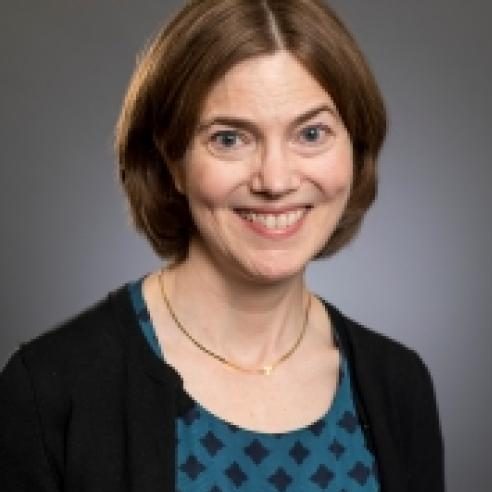
Tell us about the types of students you see come through your program. Are you seeing more non-traditional students and career changers coming from other fields?
We see both traditional and non-traditional students in our program. In our on campus program, we tend to see more traditional students: students who are able to take two years out of their life to attend graduate school full time. Most of these students have worked in clinics as behavior technicians before coming to our program. In our online program, we see students in all stages of life. We have had many teachers in our online program, taking the program while also continuing to teach full time. Many of the teachers want to become BCBAs; others just want to become better teachers. Other students in our online program are more traditional, coming to our program straight from an undergraduate program, having worked as a behavior technician in an ABA clinic. The mix of students with varied experiences makes for particularly rich discussions in class.
What areas of practice are you seeing graduates going into? Do they tend to find jobs in the local school districts or more often join private practices?
Both. We have many students who go to work for private ABA agencies or clinics. Some of our students who take the program as teachers move to a behavior analyst or behavior specialist role within their school district. We also have students that cross over – students who previously worked in agencies that decide to work in schools and teachers or other school-based educators who decide to move to agencies after graduation.
What are some of the things you love most about the ABA program at your university, the kind of things you’d like future students to know about as they consider their options?
There are so many things I love! The focus in our program is preparing students to work with individuals with developmental disabilities and we have a strong, continual emphasis on ensuring that quality of life for these clients is always foremost in our students’ minds as they utilize ABA to improve lives. We also want students to understand that ABA services can be helpful for people across the lifespan, not just for preschoolers with autism, and we are always working to provide more practicum opportunities and course content about working with adults with disabilities. I always really love our focus on collaboration. We want to make sure that our graduates are ready to work openly and collaboratively with families, schools, and other community stakeholders. Thinking about our online program, I love it that our program is synchronous, meaning that the professor and the students all meeting together online each week for class, just as they would in an on campus program. We try to have as much participation and interaction as possible; we believe this is the way students learn best. I love it that the students and I can have in-depth conversations about the topics and that I can see where they are struggling or are confused about a topic and can immediately address it. We also have a focus on building community in our online program. We have seen how close the students in our on campus program get, going through all of their classes together, and we are constantly trying new ways to build that same sense of community in our online program.
What do you feel are the most pressing issues in ABA today, and how does the program at your school prepare graduates to address these issues?
I think the issue of collaboration is one of the most pressing issues. Historically in my experience, behavior analysts have not been perceived as particularly collaborative. I think that has hindered the acceptance of a behavior analytic approach, particularly in schools. Helping individuals with developmental disabilities is a complex endeavor, involving many types of expertise, and to be truly valuable, behavior analysts need to learn to work collaboratively on a team with people who may think differently than themselves. So training in collaboration is a focus of our program. Another really pressing issue right in ABA right now is cultural responsiveness. ABA services are now available much more broadly in our country, and that is a very good thing, but it means that each of us needs to be prepared to work with families and clients who may come from cultures very different from our own. This is not an area where ABA has been particularly strong in the past and I think understanding what it means to deliver ABA services in a culturally responsive manner is a critical issue for our field. We have tried to embed a focus and discussion of these issues throughout our ABA coursework.
What kind of course load and class schedule can students applying for the On Campus Master’s in Special Education—ABA program anticipate?
In 2020, our on campus program is becoming a two year program. Students will take three classes a quarter during those two years. Classes meet once a week in the late afternoon, so students can expect to be on campus three afternoons a week.
Can students that participate in the online version of the Master’s in Special Education—ABA program still participate in practicum activities? If so, how does this work?
Yes – for students who do not have other options for obtaining their supervised experience, we offer a limited number of spots for students to obtain their supervised experience through us. For students who are not local, supervision is done through online technologies, both online meetings and observations, supervision, and coaching through video technologies. Local online student will receive both video and live observations.
How does the MEd—ABA degree help facilitate a smooth transition for students interested in the UW ABA doctoral program?
We have had a number of students from our MEd program enter our doctoral program. We ask students interested in our ABA doctoral program to practice as a BCBA for two years before applying. Many students in our doctoral program receive funding through supervising the practicum experience of our master’s students and thus, we want doctoral students who have sufficient experience as a BCBA before entering.
Please feel free to add anything else you would like potential students to know about your program; things that would be good for them to consider before choosing a program.
Our mission statement is a good statement of what the priorities of our program are: <https://education.uw.edu/programs/graduate/special-education/aba/mission-statement>. We want to train technically competent BCBAs, but we also want to train BCBAs who are collaborative, culturally competent, and who will always use quality of life for individuals with disabilities and their families as their guiding principle. We also have a strong stance of inclusion for individuals with disabilities in our program, and work to train our BCBAs in how to promote inclusion for their clients and students.
University of West Florida
We recognized University of West Florida as one of the Top 57 Best Schools Offering ABA Bachelor’s and BCaBA Courses, adding them to our list of top recommendations for students in the area. We were excited to hear from Sal Ruiz PhD., BCBA, a faculty member at University of West Florida who took the time to answer a few questions about how the school works to create a great student experience that helps prepare graduates for a career in applied behavior analysis.
University of West Florida Programs:
Professor/Faculty Name: Sal Ruiz PhD., BCBA
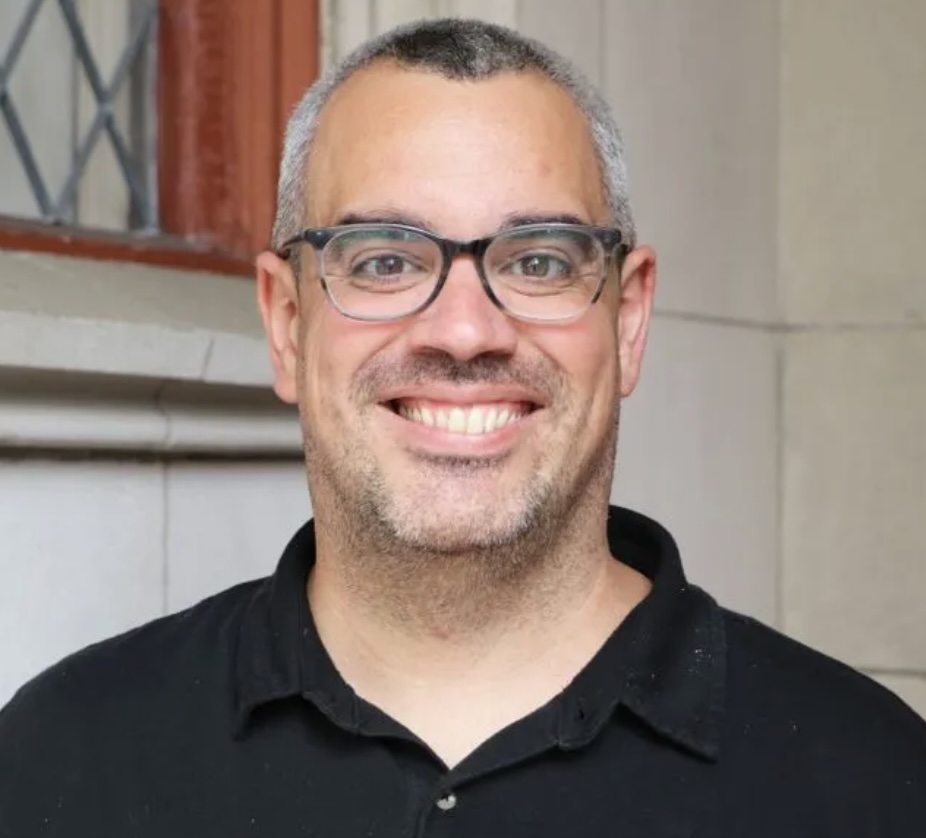
Tell us about the types of students you see come through your program. Are you seeing more non-traditional students and career changers coming from other fields?
We have more non-traditional students in both our undergraduate and graduate degree programs. Many of our students have decided to pursue a career change, so they have obtained one degree in another field, delayed college to work first, and/or have pursued behavior analysis because they have a loved one who was diagnosed with ASD. Generally, our students are not the traditional 18-22 year old straight from high school.
What areas of practice are you seeing graduates going into? Do they tend to find jobs in the local school districts or more often join private practices?
Our students mainly enter education, ASD treatment. We have had a few students that want to apply the principles of behavior in other fields, but that is not as common as education. Many of our students have the RBT credential and look to receive promotion with their current employer. It is a good mix of local schools and private practice. Student jobs largely depend on where the students are in their lives and where they live. For example, in more rural areas it is likely that the student will seek to establish a practice verses a place like NJ where behavior analysts have options regarding school district or current existing company.
What are some of the things you love most about the ABA program at your university, the kind of things you’d like future students to know about as they consider their options?
I love several things at UWF. First, I truly enjoy and love that we implement behavior analytic principles in our training program. Currently we utilize elements from direct instruction and precision teaching to ensure our students are acquiring skills. Second, I like that our team reviews teaching and course content frequently and attempt to make improvements based on data. Third, the team at UWF is always available for students. For example, I can recall multiple times where staff member meets with students to discuss career options, degree plans, and career advice. Fourth, I love that our staff have frequent and open communication. It creates an ease in transitioning from course to course and consistency for students across the program.
What do you feel are the most pressing issues in ABA today, and how does the program at your school prepare graduates to address these issues?
As Behavior Analysts we are fortunate to be experiencing a time of massive growth. However, with that we have issues of private equity, job opportunities, and new sectors previously limited. When a student enters any of our programs we ensure that they receive a well-rounded education. They have a thorough understanding of the principles of behavior, data collection, and visual displays of data. These three critical tools provide our graduates the ability to be successful in any behavior analytic job. As our field grows a strong emphasis in core concepts will provide the foundation for personal career growth.
University of West Florida offers several programs that ensure students meet the eligibility requirements for BACB certifications. What are the major differences between them?
We currently offer two degree programs and two verified course sequences. The degree programs are a Bachelor of Science in Health Science or a Master of Arts in Exceptional Student Education. The verified course sequences are for the course component of BCBA and BCaBA certification. The Center for Behavior Analysis is committed to providing training for students and meet them where they are in their education. For example, if a student has a graduate degree and does not wish to pursue a second graduate degree they may choose to enroll in a course sequence. The content in the course sequences and degree courses is the same, but a student will NOT earn a degree if they take the course sequence options. That saves money and time for our students.
Are these BACB-approved programs offered online, on-campus or both?
Our program is 100% online. We do NOT do on-campus classes. We do offer courses with live lecture that are done via Zoom or similar software and create interactive environments that are similar to face-to-face learning.
Do any of the programs offer opportunities to accumulate supervised hours?
We currently do NOT offer supervision hours; however, the Office of ABA has done a wonderful job of providing resources for students seeking to accumulate hours.
Please feel free to add anything else you would like potential students to know about your program and that would be good for them to consider before choosing a program.
For those seeking to enter the field of Behavior Analysis, students have many options to fit their needs. Whatever program and supervision options one selects attempt to ensure that it is a good fit for you. Don’t be afraid to reach out and ask questions. University programs that offer verified courses all have to teach the same topics. The differences lay in the options. All students have different needs and there is a program that is appropriate for them.
Wayne State University
We recognized Wayne State University as one of the Top 57 Best Schools Offering ABA Bachelor’s and BCaBA Courses, adding them to our list of top recommendations for ABA undergraduates. We were excited to hear from Krista Clancy, a faculty member at Wayne State University who took the time to answer a few questions about how the school works to create a great student experience that helps prepare graduates for a career in applied behavior analysis.
Wayne State University Programs:
- Undergraduate Certificate in Applied Behavior Analysis
Professor/Faculty Name: Krista Clancy
Tell us about the types of students you see come through your program. Are you seeing more non-traditional students and career changers coming from other fields?
Most of our students are working through school. Many of our students have a position in the field of ABA as a behavior technician. They often come from psychology or pre-med, but also come from a variety of other fields such as speech and language, anthropology, social work, etc.
What areas of practice are you seeing graduates going into? Do they tend to find jobs in the local school districts or more often join private practices?
Most of our students leave the program and enter a job in the private sector or work for companies that provide Community Mental Health services. We are seeing a greater number of students begin to find field experience in the school setting and stay in the education sector following graduation, but it is still a small percentage of the cohort each year.
What are some of the things you love most about the ABA program at your university, the kind of things you’d like future students to know about as they consider their options?
What I love most about our program is students in our program are required to complete their field experience at a local agency of their choice while they are completing their coursework. We work very hard to help students find a community placement or work with them to find supervision at the site where they are currently working when they enter our program. We focus on blending the clinical and classroom experiences to make sure students can pass the exam and also perform all the duties of a behavior analyst before leaving our program. We have students complete guided performance tasks at their community field experience setting as part of their graded coursework. This ensures our students are getting a good experience in the field. Students leave our program with all or most of their field experience hours completed and have a richer understanding of what the course content means from a practical stand point. All of our previous students have left our program with a job offer or current job placement following graduation at the place where they have completed their field experience hours because of our community partnership with local service providers. The other thing that I think is a benefit about our program is the cohort model of training that is used. Our students enter our program with a cohort of students who complete all of their classes together in sequence. They learn together and build relationships that will follow them into the community. With our growing field and constantly changing expectations as professionals and treatment providers, it is nice to have a ready-made group who you can contact for support and bounce ideas off of. Our students create study groups, discuss difficult situations they run into at their different placements and help each other problem solve a variety of conflicts as part of their work in class and outside of class. Students have reported in their exit interviews that this is one of the most valuable parts of the program at WSU and they really appreciate the learning experience that comes with a cohort model of training.
What do you feel are the most pressing issues in ABA today, and how does the program at your school prepare graduates to address these issues?
One of the most important issues students and professionals in the field encounter have to do with engaging professionally with the larger treatment community. The WSU master’s program has recently been approved for a MS in ABA and we have expanded our curriculum to focus more on these issues. We have field experience courses where students must interact with the other students in class discussions focusing on some of the professional issues that they will encounter when they enter a practice environment. These classes have historically focused on common issues and issues related to working with families and other professionals in the area of early intensive behavior intervention, improving communication and organization to improve therapeutic relationships with families and other members of the treatment team, and training and supervision of others in the field. We have expanded these courses to focus on additional areas including more work on treatment planning and working with populations with a variety of mental health issues. Another issue of importance in the field right now is dealing with challenging client behavior more effectively. Students need to have exposure to clients, assessment, and treatment focused on improving services related to severe and challenging behaviors so that they are prepared for this population of clientele when they enter the workforce. We have improved our curriculum by adding an additional treatment planning course focused on treatment of challenging behavior and treatment of clients that have more significant impairment so that students can provide treatment with more effective outcomes for this population and feel comfortable accepting clients with more challenging problems on their caseload.
The school intentionally designed the ABA graduate certificate and MEd ABA degree as on-campus only programs. What are the advantages of the traditional classroom-based learning model for ABA students?
The advantage to having students in class and face to face for each lecture is that it allows for the instructor to add activities that increase participation with the course content, monitor professional behavior with the students during classroom activities and interactions with other students, and shape effective communication styles for our future professionals that will represent our field when they exit our program. Instructors teaching in our programs focus on a behavior skills training model of instruction for all performance tasks that come up in the curriculum. Students experience many hands-on activities that they have to work in groups to practice class content using the lecture and reading material studied for that week. This allows for a greater understanding of how and why the material it is taught, as well as, better preparing students to actively engage in these activities in their field experience with less support.
Which of the two ABA programs offer the BACB VCS needed to qualify for certification?
Both our undergraduate and graduate programs in Applied Behavior Analysis are Verified Course Sequences under task list 4. We are in the process of updating our curriculum and gaining approval from ABAI for our programs to also meet criteria for task list 5. We plan to have students in the next two cohorts in both our BCBA and BCaBA preparation programs have the option of taking the exam before or after 2022, so we are working to maintain approval for both task lists for this transition period.
What kind of applied practical training is offered in the MEd—ABA program?
As mentioned above there is a large focus on coordinating learning between the practical and classroom settings. We offer students many options for training. They are often interested in staying at the agency that they currently work, as many of our students who enter our program are already working as a behavior technician in a field setting. However, for those students who are not currently working in the field or are looking to move to another site for their field work we offer placement opportunities at our affiliated agencies and work with students to obtain placement before or during the first semester of the program. Students also have graded performance activities that they complete during their field experience hours with their site supervisor that we use to ensure that students get a basic exposure to tasks that are important for them to learn before they enter the workforce. Students at their exit interviews have expressed appreciation for the structure and oversight of the field experience that is offered though our program and the performance measures that are in place. It has allowed for them to have more choice and opportunity for job placement following graduation with enough structure and support to ensure that they are getting a valuable learning experience even when they are out in the community working with supervisors at a variety of settings.
West Virginia University
We recognized West Virginia University for offering one of the 35 Best Behavior Analysis Graduate Programs, adding them to our list of top recommendations for students in the area. We were excited to hear from Claire St. Peter, PhD, BCBA-D, a faculty member at West Virginia University who took the time to answer a few questions about how the school works to create a great student experience that helps prepare graduates for a career in applied behavior analysis.
West Virginia University Programs:
- PhD in Psychology with a specialization in Behavior Analysis
- Of particular note is that our program is a Behavior Analysis program, not an Applied Behavior Analysis program. We equally emphasize basic and applied sciences in the program, and focus on research experiences.
Professor/Faculty Name: Claire St. Peter, PhD, BCBA-D
Tell us about the types of students you see come through your program. Are you seeing more non-traditional students and career changers coming from other fields?
Most of our students are coming from other academic institutions, or following a period in which they have worked as a professional (e.g., as a practitioner or lab manager). Competitive applicants generally already have a strong background in behavior analysis specifically or research in natural sciences more generally.
What areas of practice are you seeing graduates going into? Do they tend to find jobs in the local school districts or more often join private practices?
About 2/3 of our graduates are in research-intensive post-doctoral positions or are faculty. Only about 20% of our graduates become practitioners.
What are some of the things you love most about the ABA program at your university, the kind of things you’d like future students to know about as they consider their options?
There are two features of our program that really stand out to me. The first is the collegiality among our faculty and students. We emphasize a non-competitive environment in which allstudents receive a tuition waiver, stipend, and funding for research projects and travel (thus, students don’t have to compete for these resources). Students and faculty work together on mutually interesting research projects (students are not treated as the minions of faculty), and students are encouraged to work closely with multiple professors. The second is the diversity of experiences available in our program. We are proud to have a program that is balanced between basic science (in which principles of behavior are discovered through highly controlled research, often with animals) and applied sciences (in which technologies are developed and tested based on those principles to solve socially significant problems). Although students may choose to emphasize basic or applied work, all students take at least one introductory and one advanced course in each of basic and applied sciences. Many students choose to work in multiple laboratories, which allows them to build a variety of technical skills spanning the continuum from basic to applied.
What do you feel are the most pressing issues in ABA today, and how does the program at your school prepare graduates to address these issues?
We must continue to link science and practice. The mission of the PhD program area in Behavior Analysis at West Virginia University is to produce an individual who can function effectively in various academic or applied settings, advance our understanding of the principles of behavior, and apply those principles to socially significant problems. Thus, we are very focused on building well-rounded behavior analysts who can move seamlessly between basic and applied domains.
The WVU behavior analysis program has a history that goes back over 40 years, before the BACB and ABAI were there to offer curriculum guidance. How do you feel uniform curriculum standards and professional certification has improved things over the years for ABA students, practitioners and their clients?
We are fortunate at WVU to have faculty who have been leaders in the field for decades, including former editors and associate editors of The Journal of the Experimental Analysis of Behavior and The Journal of Applied Behavior Analysis, and former presidents of the Association for Behavior Analysis International. Our faculty have ensured high-quality education since the formation of the program area in 1976, and continues to this day. We were delighted to recently receive re-accreditation of our program by ABAI until 2025, making us one of only 10 doctoral accredited doctoral programs in behavior analysis. Accreditation provides assurance that independent evaluators have determined that our program is of excellent quality.
WVU offers one of the strongest ABA doctorate programs we’ve seen, complete with doctorate-prepared faculty members with impressive backgrounds and great research facilities and labs. I’m really interested in knowing about some of the research WVU PhD graduates have contributed to the field. Claire: Our graduates have gone on to become president of the Association for Behavior Analysis International, editors of major journals (like The Journal of the Experimental Analysis of Behavior), and leaders in fields like the experimental analysis of behavior, behavioral pharmacology, and organizational behavior management. In the last 5 years alone, our current students and recent graduates have co-authored over 50 peer-reviewed publications with our faculty and over 75 professional presentations. Like our faculty, our students go on to be prolific scholars who make important contributions to the field.
Please feel free to add anything else you would like potential students to know about your program and that would be good for them to consider before choosing a program.
Our doctoral program is an on-campus only program housed in the Psychology Department (in the Eberly College of Arts and Sciences). Applicants sometimes get confused because the College of Education at WVU also offers an online Master’s degree in Applied Behavior Analysis. It’s important for students to know that the online Master’s degree and our (on-campus only) doctoral degree are distinct programs, with no overlapping coursework or experience. When evaluating our programs, students should be sure that they are looking at materials relevant to the specific program at WVU that interests them. For example, we don’t have enough students in our doctoral program taking the BACB exam for our pass rates to be published (although, to the best of our knowledge, 100% of students have passed)—the published pass rates for WVU are from the online Master’s program only. As a general bit of advice, applicants should carefully consider the opportunities available in a program, and whether or not those opportunities match the applicant’s long-term goals. Our program is research intensive, so it’s not a good fit for students who want to have an exclusive emphasis on practice. That said, we are an excellent fit for students who want to go on to careers that involve a research focus (like faculty positions), in part because students in our program work closely and intensively with renowned scientists in behavior analysis. As a side note, our actual median time to graduation (from Bachelor’s to PhD) is about 5 years.
Western Michigan University
We recognized Western Michigan University among the 57 Best Schools Offering ABA Bachelor’s and BCaBA Courses, and for offering one of the 35 Best ABA Graduate Programs (Master’s and Doctorate), adding them to our list of top recommendations for ABA undergraduates and grad students. We were excited to hear from Stephanie Peterson, Ph.D., BCBA-D; Professor and Chair of the Department of Psychology at Western Michigan University. Dr. Peterson took the time to answer a few questions about how Western Michigan works to create a great student experience that helps prepare graduates for a career in applied behavior analysis.
Western Michigan University Programs:
- B.S. in Psychology – Behavioral Science Major
- M.A. in Behavior Analysis
- Ph.D. in Behavior Analysis
- Interdisciplinary Preparation in Autism (IPA) (available to Master’s level Psychology and Special Education majors)
Professor/Faculty Names: Stephanie Peterson, Ph.D., BCBA-D; Professor and Chair, Department of Psychology
Tell us about the types of students you see come through your program. Are you seeing more non-traditional students and career changers coming from other fields?
We have a behavioral science undergraduate major, two master’s programs (one on campus and one in Metro Detroit), and a Ph.D. program. We are seeing more non-traditional students coming through our programs. However, we remain largely a traditional program. All of our graduate programs are full-time graduate programs, meaning they require the students to be enrolled full-time as students. Our Metro Detroit program is designed, however, for individuals already employed and working in a setting that serves children with disabilities. These individuals typically work half time and attend our classes online, with required once-a-month, face-to-face meetings with faculty.
What areas of practice are you seeing graduates going into? Do they tend to find jobs in the local school districts or more often join private practices?
Our ABA master’s students typically find jobs in autism centers all over the country. They find jobs quickly, and most of them are hired before they even graduate. Having said that, we also train folks who are not entering ABA fields, but other fields within behavior analysis as well. Many of those, along with several ABA folks, go on to further studies and earn Ph.D.s. Our graduates who earn Ph.D.s in behavior analysis work in a variety of areas. Some are leaders in clinics and companies that serve individuals with developmental disabilities, individuals who have brain injuries, and more recently, companies that serve the elderly. Many of our students also go on to faculty positions at other universities, and some become researchers at universities.
What are some of the things you love most about the ABA program at your university, the kind of things you’d like future students to know about as they consider their options?
One of the things I love most about our program is the strength of our faculty. We have many world renowned and esteemed faculty, who are doing incredible and interesting research. It is a wonderful opportunity for students to explore a variety of areas within behavior analysis. I also love that our faculty care deeply about our students and the development of their skills. We require students to engage in applied practicum to get their supervised experience hours as part of our program. I believe that adds strength to our program, because there is a strong connection between practicum and our curriculum. We also use a mentorship model of advising here, so students closely interact with faculty throughout their training. As a result, our students exit our program with both strong behavior analytic knowledge as well as excellent clinical skills.
What do you feel are the most pressing issues in ABA today, and how does the program at your school prepare graduates to address these issues?
I believe one of the most pressing issues in ABA today is the rapid growth of the field. The number of ABA practitioners out there is growing exponentially. This creates challenges in the field. For example, the there is such a density of newly-minted Board Certified Behavior Analysts that practitioners are often relatively inexperienced. This places challenges on those who supervise these individuals. There is a need for folks in the field with very strong supervision and organizational systems skills to manage this rapidly-growing workforce. Because we also have a very strong Industrial Organizational Behavior Management program in our department, our students are able to take courses in systems development, instructional design, and supervision. We also have a strong Clinical Psychology program, from which students can take courses in motivational interviewing, cognitive processes, etc. We also have faculty with expertise in behavioral gerontology, from whom students can take courses and conduct research. This prepares students to work with populations other than children with autism. I believe this makes our graduates uniquely qualified assets to the field.
What kind of research facilities are open to students enrolled in behavior analysis programs at Western Michigan?
First, we have rat lab courses and active nonhuman animal research that goes on here at WMU. Students all have the opportunity to take a rat lab course and to conduct nonhuman animal research, if they choose. Beyond that, our laboratory is really our surrounding community. We have several generous and supportive community partners, such as Kalamazoo Community Mental Health, Van Buren Intermediate School District, Summit Pointe, Kalamazoo Regional Education Service Area (KRESA), and Residential Opportunities, Incorporated, just to name a few. These partners allow our students to gain applied experience and conduct research in their settings. This allows our students to have opportunities to engage in research with our faculty and also results in the betterment of our local community—by providing opportunities to implement evidence-based practices as part of ongoing community practice.
How much past ABA work experience is required to apply for the MA in Behavior Analysis program?
Past ABA work experience is beneficial for applicants, but it is not always required. Some of our students come from our own undergraduate program, where they have had several opportunities to participate in applied practice. Most of our students have at least a little applied practice with individuals who would benefit from applications of behavioral principles (e.g., children with disabilities, typically-developing children, working in a group home, working as a behavior tech, working as a child-care provider, having a sibling with autism).
Please feel free to add anything else you would like potential students to know about your program and that would be good for them to consider before choosing a program.
Western Michigan University’s Department of Psychology has one of the most enduring programs in behavior analysis anywhere in the world. The department has had a behavioral orientation for well over 50 years now. Many of our faculty are considered “founding members” of the field. Graduates from Western Michigan University have become incredible leaders in the field, helping continue to shape behavior analysis as it currently looks today. We are incredibly proud of our history, our graduates, and our faculty.
Frequently Asked Questions
How were these universities selected for the interview series?
Every school in this series was already recognized on one of our program rankings before we reached out, things like the 20 Best Schools Offering ABA Master’s Programs or the 62 Best Schools Offering Online ABA Master’s and Certificate Programs listed above. We asked a professor or department head at each one to speak candidly about their own program. This isn’t a ranked or exhaustive list of every ABA program in the country, it’s a growing collection of conversations with faculty from programs that already met our bar for quality and value.
Are these interviews updated regularly?
The interviews themselves stay as the professor originally answered them, we don’t rewrite someone’s quoted words after the fact. What we do keep current is the surrounding information: professor titles, current employers, and program details get checked and corrected as things change. If a professor has since moved to a new institution, you’ll typically see a note reflecting that alongside their original answers.
Can I use these interviews to compare ABA programs?
Yes, that’s exactly what they’re here for. Reading how different professors describe their own students, career outcomes, and program philosophy is a good way to get a feel for fit that a course catalog won’t give you. That said, treat these as a starting point, not a substitute for checking current tuition, curriculum, and accreditation status directly with each school before you apply.
What if my university isn’t listed here?
This series covers 61 programs so far, and we’re adding more over time. If your school isn’t included yet, that doesn’t say anything about its quality, it just means we haven’t interviewed someone there. Our program rankings cover a wider set of schools than this interview series does, so that’s a good next place to check.
Do I need a specific degree to become a BCBA?
Yes. BCBA certification requires a master’s or doctoral degree in behavior analysis, education, psychology, or a closely related field, along with coursework that meets the BACB’s current content requirements and supervised fieldwork hours. Several professors in this series touch on how their own programs structure that coursework, which is worth reading if you’re still comparing options.
Key Takeaways
- Hear it from the source. These 71 professor interviews from 61 unique ABA programs give you direct insight into ABA programs that you won’t find in brochures or course catalogs.
- Career paths are expanding. Across interviews, professors consistently note that ABA graduates are finding opportunities well beyond traditional autism services, including healthcare, education, organizational management, and more.
- Program fit matters. The right program depends on your goals, your schedule, and how you learn best. These interviews can help you identify which programs align with your situation.
- Demand for BCBAs keeps growing. Multiple faculty members across these interviews point to a growing need for qualified behavior analysts nationwide.
Ready to find your program?Browse accredited ABA programs and connect with schools that fit your goals, your schedule, and your budget.