
What Degree Do You Need to Work with Autistic Children?
What degree do you need to work with autistic children? Entry-level roles like Registered Behavior Technician require no degree. Just a 40-hour training and competency assessment. To design treatment plans and supervise others, you’ll need a bachelor’s degree at minimum. BCBA certification, the clinical standard for independent ABA practice, requires a master’s degree with BACB-approved coursework and 1,500 to 2,000 supervised fieldwork hours.


If you’re drawn to working with autistic children and want to make a real, measurable difference in their lives, you’ve probably started asking the practical questions. What degree do you actually need? How long will it take? What will the job look like?
Those are exactly the right questions. And the answers depend on how far you want to go in the field.
Applied Behavior Analysis (ABA) is the most research-supported approach for improving communication, social skills, and adaptive behaviors in individuals with autism. The degree path you choose shapes which roles you’re qualified for, how much clinical independence you’ll have, and what your long-term career looks like. Here’s a clear breakdown of what each credential level gets you.
What Degree Do You Need to Work with Autistic Children?
The short answer: it depends on your role. ABA has multiple credential levels, and each one opens different doors.
If you want to work directly with autistic children as a front-line therapist under supervision, you can get started with an RBT certification. No degree required. If you want to assess clients, design treatment plans, and supervise others, you’ll need a bachelor’s degree at minimum and a master’s degree to earn BCBA certification, which is the standard most employers require for independent clinical practice.
Here’s how the credential levels break down:
Registered Behavior Technician (RBT): No degree required. Complete a 40-hour training, pass the BACB competency assessment, and you’re qualified to work directly with autistic children under a BCBA’s supervision. It’s a great entry point while you pursue a degree.
Board Certified Assistant Behavior Analyst (BCaBA): Requires a bachelor’s degree with BACB-approved coursework and supervised experience hours. At this level, you can design and implement behavior plans under BCBA supervision.
Board Certified Behavior Analyst (BCBA): Requires a master’s degree with BACB-approved coursework and 1,500 to 2,000 hours of supervised fieldwork. This is the credential most clinical roles require for independent practice and supervision of others.
Board Certified Behavior Analyst – Doctoral (BCBA-D): For professionals who’ve completed a doctorate in behavior analysis or a related field. Opens doors in research, academia, and advanced clinical leadership.
ABA Degree Programs: What Each Level Teaches You
Regardless of where you start, ABA degree programs are built around core skills: behavioral assessment, intervention design, data analysis, and evidence-based practice. The depth of that training expands significantly at each level.
Associate’s Degree in ABA
An associate’s degree gives you a foundation in behavioral principles and prepares you for technician-level roles. You’ll learn how behavior is shaped by the environment, how to collect and track session data, and how to implement structured therapy under supervision. It’s a solid entry point if you want to get into the field quickly while continuing your education.
Bachelor’s Degree in ABA or Psychology
A bachelor’s degree builds that foundation with more advanced coursework in assessment, intervention design, and professional ethics. You’re learning not just how to run sessions, but how to think analytically about behavior. Most bachelor’s programs in ABA or psychology include coursework that counts toward BCaBA eligibility.
One important note: if you know you want BCBA certification eventually, plan your bachelor’s program carefully. Look for programs that include BACB-approved coursework or clear pathways into verified master’s programs. Our guide to top schools offering bachelor’s in ABA and BCaBA course sequences is a good place to start comparing options.
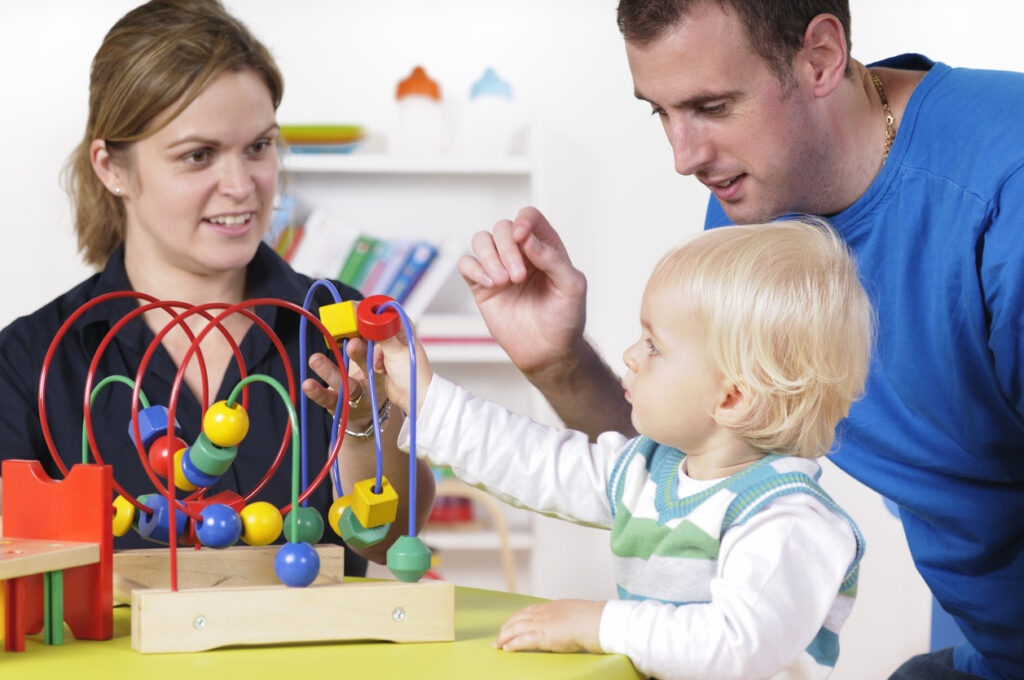
Collaboration between ABA professionals, families, and other support systems is crucial for success
Master’s Degree in ABA
This is where most clinical careers take shape. A master’s degree in ABA prepares you to assess clients independently, design individualized behavior intervention plans, supervise RBTs and BCaBAs, and lead treatment teams. Programs typically combine intensive coursework with supervised fieldwork placements.
Completing a BACB-verified master’s program is the most direct path to BCBA certification. When comparing programs, look for ABAI accreditation or confirmation that the coursework sequence is BACB-approved, and ask specifically about fieldwork placement support. An ABAI-accredited master’s program puts you on the most streamlined path to the BCBA credential.
Doctoral Degree in ABA
Doctoral programs prepare graduates for research positions, university faculty roles, and advanced clinical leadership. A doctorate isn’t required for clinical practice, but it opens doors in academia, policy, and specialized research on autism interventions.
How ABA-Trained Professionals Help Autistic Children
ABA isn’t one-size-fits-all. Your degree training introduces you to a range of evidence-based approaches, each suited to different goals and settings.

ABA-trained professionals use evidence-based techniques to support autistic children across a range of developmental goals.
Discrete Trial Training helps break complex skills into smaller, structured steps. It’s especially useful for teaching foundational communication and academic skills in one-on-one settings.
Naturalistic Teaching builds skills in a child’s natural environment using their own interests as motivation. This approach tends to produce better generalization, meaning skills transfer more readily to real-life situations outside the therapy setting.
Pivotal Response Training targets pivotal developmental areas, such as motivation and social initiation. Improving these pivotal skills tends to create positive ripple effects across other areas of development.
Verbal Behavior Therapy applies behavioral principles specifically to language development, helping children learn to communicate their needs and engage with others more effectively.
The common thread across all of these approaches is that ABA is data-driven. You’re not guessing at whether a child is making progress. You’re measuring it, adjusting your approach based on the data, and documenting outcomes. That’s a skill set your degree program will develop systematically through both coursework and supervised fieldwork.
Families often notice meaningful changes from well-implemented ABA therapy. Improved communication skills, reduced challenging behaviors, enhanced daily living skills, and greater engagement with peers are documented outcomes. Learning what careers working with autistic children actually look like day to day can help you figure out which credential level fits your goals.
Career Outlook for ABA Professionals Working with Autistic Children
The demand for qualified ABA professionals is strong and growing. Nationally, employment for substance abuse, behavioral disorder, and mental health counselors is projected to grow 17% from 2024 to 2034, adding roughly 81,000 new positions. That translates to approximately 48,300 average annual job openings nationwide.
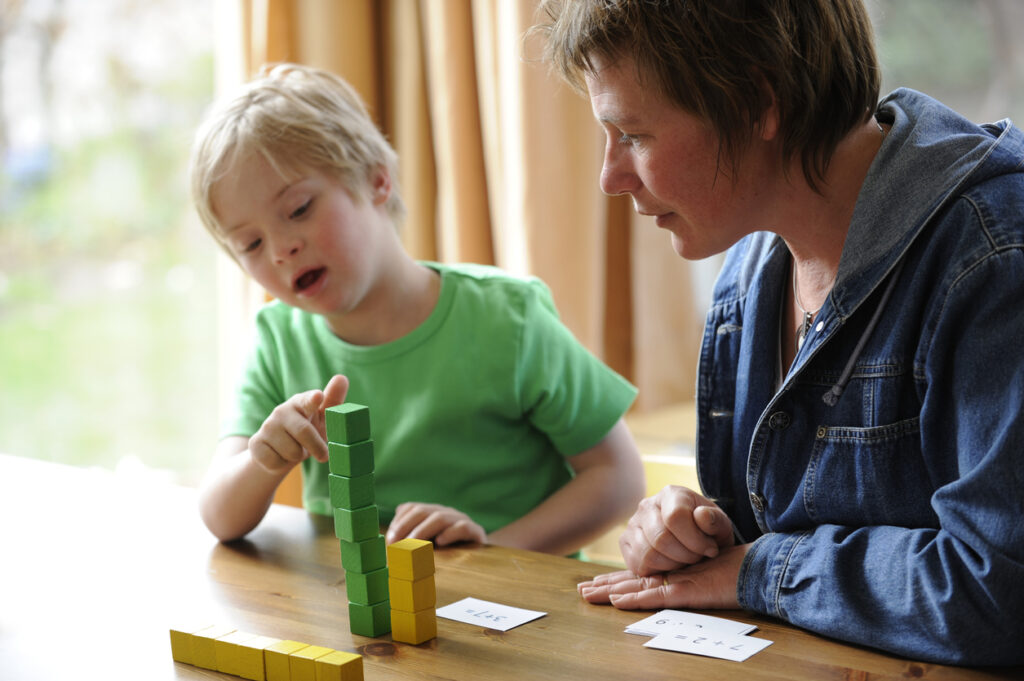
ABA professionals use structured, data-driven techniques to build skills across developmental domains.
The national median salary for this occupation is $59,190 as of May 2024. The top 25% earn $76,230 or more, and the top 10% earn over $98,210. BCBA-certified professionals typically earn on the higher end of this range, and salaries vary significantly by state, setting, and experience level.
The ABA workforce is also expanding beyond traditional clinic and school settings. Telehealth delivery of ABA services has opened new opportunities, and the field increasingly serves adults with autism and other developmental disabilities alongside children. A degree in ABA gives you real flexibility as the field continues to evolve. To learn more about the full path into clinical practice, see our guide on how to become an ABA therapist.
Frequently Asked Questions
Can I work with autistic children without a degree?
Yes, at the entry level. Registered Behavior Technician (RBT) certification requires only a high school diploma, 40 hours of training, and passing a BACB competency assessment. RBTs work directly with autistic children under the supervision of a BCBA. It’s a great way to enter the field and gain hands-on experience while pursuing a degree.
Is a master’s degree required to become a BCBA?
Yes. BCBA certification from the Behavior Analyst Certification Board requires a master’s degree from a BACB-approved program, completion of required coursework, and 1,500 to 2,000 supervised fieldwork hours. The master’s degree is the minimum educational requirement for this credential.
How long does it take to complete an ABA degree?
An associate’s degree typically takes two years. A bachelor’s degree takes four years, though some professionals finish faster with transfer credits. A master’s degree generally adds 2 to 3 years beyond the bachelor’s degree. The total time from start to BCBA certification is typically 6 to 8 years, including fieldwork.
What’s the difference between a BCBA and an RBT?
An RBT (Registered Behavior Technician) implements behavior plans designed by a BCBA under direct supervision. A BCBA (Board Certified Behavior Analyst) assesses clients, designs and oversees treatment plans, and supervises RBTs. The BCBA credential requires a master’s degree. The RBT certification does not. You can learn more on our certified autism specialist page for a related credential comparison.
Do online ABA degree programs qualify for BCBA certification?
Yes, if the program is BACB-approved or ABAI-accredited. Many fully online programs meet these requirements. When evaluating programs, confirm the coursework sequence is BACB-verified and ask about their support for arranging supervised fieldwork placements, which you’ll need to complete in person regardless of how the coursework is delivered.
Key Takeaways
- Entry-level roles don’t require a degree. RBT certification opens the door to working directly with autistic children with just a high school diploma and 40-hour training.
- BCBA certification is the clinical standard. It requires a master’s degree, BACB-approved coursework, and 1,500 to 2,000 supervised fieldwork hours — the credential most independent clinical roles expect.
- ABA degree programs build core clinical skills. Assessment, intervention design, data collection, and evidence-based practice across multiple therapy approaches are all part of the curriculum.
- The field is growing fast. 17% projected job growth nationally through 2034, with roughly 48,300 average annual job openings.
- Program selection matters. Look for BACB approval or ABAI accreditation, and confirm support for fieldwork placement before committing to a program.
Ready to find a program that fits your goals? Whether you’re starting with a bachelor’s or looking for a BACB-verified master’s program, comparing your options is the right first step.
2024 US Bureau of Labor Statistics salary and employment figures for Substance Abuse, Behavioral Disorder, and Mental Health Counselors reflect state and national data, not school-specific information. Note: ABA/BCBA roles are included in this broader BLS category, and actual salaries for these professionals are frequently higher. ABA salaries can vary based on experience, location, and setting. Data accessed February 2026.