Quick Answer
If you already have a master’s in social work and you’re wondering whether you can become a BCBA, the answer is yes. MSW holders can qualify for the BCBA exam through a post-graduate ABA certificate program with coursework that meets BACB standards. You don’t need to earn a second full master’s degree.


If you’re a social worker thinking about adding the BCBA credential, you’ve picked a good moment to look into it. The field of applied behavior analysis has expanded well beyond its roots in autism treatment, and social workers are increasingly finding that ABA techniques translate directly into the work they’re already doing: working with families, addiction recovery clients, trauma survivors, and more.
This guide covers everything you need to know: what social work actually looks like day-to-day, how the two fields intersect, and specifically how to pursue the BCBA credential if you’ve already got an MSW under your belt. Still finishing your bachelor’s? There’s a faster path for you too, and we’ll get to it.
To ground this in more than just the BACB’s own handbook, we pulled from our ongoing interview series with ABA faculty. Connecting with more than 70 professors from 61 ABA programs across the country, wherever they had something specific to say about students coming from social work or human-services backgrounds, we incorporate those statements.
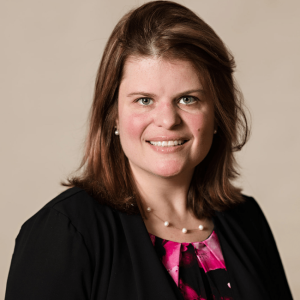
ABA Faculty, Mary Baldwin University
Dr. Potter is a Board Certified Behavior Analyst-Doctoral and Licensed Behavior Analyst on the ABA faculty at Mary Baldwin University, where she’s helped build one of the field’s more flexible entry points for non-traditional students: a parallel accelerated pathway that lets undergraduates majoring in fields like social work, nursing, or psychology begin graduate-level ABA coursework before they’ve even finished their bachelor’s degree.
What Social Workers Actually Do
Social workers show up wherever people are struggling. That might mean checking in on at-risk kids and elderly clients, connecting homeless families to housing assistance, counseling domestic violence survivors, or helping someone navigate a frightening medical diagnosis. The thread running through it all is advocacy on behalf of individuals, families, and entire communities.
The day-to-day work varies a lot depending on your specialization. Clinical social workers provide direct counseling and therapeutic services, often in hospitals, mental health clinics, or private practice. Community social workers focus more on outreach, case management, and connecting people to resources. School social workers work with students and families navigating educational and mental health challenges.
What most people outside the field don’t realize: a significant chunk of the job is documentation. Social assistance programs have strict record-keeping requirements, and caseloads at high-needs agencies can run deep. Research and advocacy are also part of the picture. It’s not unusual for social workers to testify before local government committees or coordinate campaigns for policy changes.
And yes, the hours can be unpredictable. Late-night calls from clients in crisis are part of the territory for many social workers.
Education and Licensing Requirements for Social Workers
A bachelor’s in social work (BSW) is the minimum for entry-level positions, though employers sometimes accept degrees in psychology, sociology, or human services. For most advanced or clinical roles, you’ll need a master’s in social work (MSW) from a program accredited by the Council on Social Work Education (CSWE). Graduation from a CSWE-accredited program is required for licensure in most jurisdictions, though specific education and equivalency rules vary by state. Check with your state licensing board before enrolling.
Licensing varies by state. Many jurisdictions use one of the ASWB Social Work Licensing Exams, but the required exam and other rules are set by each state’s board. License categories vary too. Depending on the jurisdiction, licenses may be offered at the bachelor’s, master’s, advanced-generalist, or clinical level, each with its own education, examination, and supervised-experience requirements. You can check the state licensing requirements for behavior analysts in your state if you’re also considering the ABA pathway.
For social workers who want to practice independently in a clinical capacity, you’ll generally need an LCSW (Licensed Clinical Social Worker) or equivalent designation, which requires an MSW plus post-graduate supervised hours.
Voluntary national certification is also available through the National Association of Social Workers (NASW). The ACSW (Academy of Certified Social Workers) credential requires a CSWE-accredited master’s degree, two years of documented supervised employment, 20 hours of continuing education, and current NASW membership. It’s not required for licensure, but it does signal expertise.
Can You Become a BCBA with a Master’s in Social Work?
This is the question we get most often from social workers exploring ABA, and it’s a good one. Here’s what you need to know.
The BACB’s Pathway 2 eligibility requirements welcome candidates from non-traditional backgrounds, including social work. If you hold an MSW, you can typically satisfy the coursework requirement for the BCBA exam without earning a second full master’s degree. What you actually need is behavior-analytic coursework covering the BACB’s required content areas, documented through your university’s coursework-attestation process. A post-graduate certificate in ABA is the most common way MSW holders complete that coursework, though the certificate itself isn’t the BACB’s requirement. The coursework it delivers is.
A handful of programs have gone even further and built the overlap directly into the degree itself. Saint Louis University, for instance, offers a Master of Social Work with a concentration in Applied Behavior Analysis. It’s designed to meet the educational and supervised-fieldwork requirements for BCBA exam eligibility while also preparing graduates for social work licensure, though the applicable license title, exam, and other requirements still vary by state. It’s the only program built this way in our 61-university interview series. That’s the exception, not the rule. Most MSW holders will take the certificate route below, which is faster and doesn’t require restarting a graduate program from scratch.
That’s a meaningful option. Before this pathway was available, many MSW holders assumed they’d need a dual master’s: one CSWE-accredited degree for social work licensure, and a separate ABA master’s for BCBA eligibility. That’s a lot of school. The post-graduate certificate route makes it considerably more accessible.
Certificate programs are built around the same content areas the BACB requires for Pathway 2: Ethics, Concepts and Principles, Measurement and Experimental Design, Behavior Assessment, Behavior-Change Procedures, and Personnel Supervision. You can browse ABA graduate certificate programs to find options that fit your background. Once your university’s designated coursework contact attests that you’ve completed the required coursework and you’ve accumulated the required supervised fieldwork hours, you can sit for the BCBA exam.
So, to be direct: yes, you can typically become a BCBA with an MSW without going back for another full master’s. One more thing worth knowing: BACB requirements are scheduled to change. Revised eligibility rules take effect January 1, 2027, and Pathway 2 itself is set to be discontinued in 2032, after which an accredited-degree pathway becomes the only route. Confirm the rules in effect when you actually apply.
Is There a Faster Path If You’re Still an Undergrad in Social Work?
Everything above assumes you already hold the MSW. If you’re still an undergraduate, some programs let you get a head start. Mary Baldwin University runs a parallel accelerated pathway open to any undergraduate major, including a BSW, who adds a minor in ABA:
Faculty Voice
“Students who select other undergraduate majors, whether earning a BA, BS, BSN, or BSW, who minor in ABA, are eligible for a parallel Bachelor’s/MS accelerated pathway through which they will also begin graduate-level ABA courses while an undergraduate student, completing 17-credit hours of graduate coursework during the undergraduate program, counting both toward the undergraduate and graduate degree.
Translation: instead of waiting until after your BSW to think about ABA, you can knock out a meaningful chunk of graduate coursework while you’re still an undergraduate. At Mary Baldwin specifically, that’s designed to save roughly a year of graduate school, per the program’s own description. Other schools with similar accelerated tracks will have their own specific numbers, so confirm the details directly with any program you’re considering.
Does This Pattern Show Up Outside the US?
It’s not just a US phenomenon. At OsloMet, a university in Oslo, Norway, the master’s program in behavior science pulls from an unusually wide professional mix, and social work is part of it:
Faculty Voice
“The master’s program admits students from all educational backgrounds… we have seen students from very diverse educational fields – teachers, nurses, social educators, psychology bachelors, social workers, economists, engineers, police, military, lawyers and HR professionals.
Worth noting: credentialing and regulation differ internationally. In the US, BCBA is a national certification, and many states separately regulate or license behavior-analyst practice on top of it. Norway’s system works differently. But the underlying pattern, social workers finding their way into ABA graduate study because the skills transfer, holds regardless of which country’s rules you’re dealing with.
What About Social Workers Coming from Case Management or Human Services Roles?
Not every social worker in this pipeline holds a clinical MSW. Plenty come from human services specialist roles, case management, or special education, roles that overlap heavily with direct social work practice without always carrying the MSW label. Programs see this constantly:
Faculty Voice
“Most of our students have experience working in the field of either special education or human services agencies providing services to individuals with disabilities.
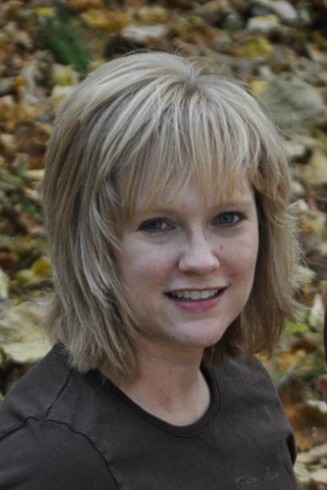
A faculty member at a different program, this one built around an undergraduate Rehabilitative and Human Services pipeline, described the same pattern from the other side:
Faculty Voice
“We see many students come into our program after graduating from our undergraduate Rehabilitative and Human Services program.
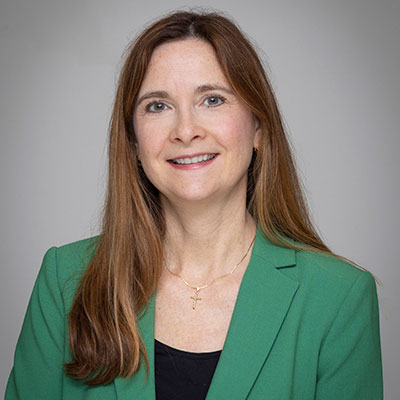
Different states, different program structures, same underlying story: human services experience is common preparation for ABA graduate study, whether or not it comes with a formal MSW attached.
What the Rest of Our Interview Series Shows
Professors from 10 of the 61 ABA programs in our interview series specifically named social work, human services, or case management backgrounds when describing their students, not just the four programs quoted above. Wayne State, Lehigh, and Northern Illinois all count social workers among the career changers filling their ABA classrooms. And Saint Louis University’s Master of Social Work with a concentration in Applied Behavior Analysis remains the clearest example of the overlap built directly into a single degree.
BCBA vs. Social Worker: What’s the Difference?
A common question for people standing at this crossroads is what’s actually different about these two roles. At the highest level, it comes down to lens: social workers zoom out to the whole system around a client, while BCBAs zoom in on specific, measurable behaviors.
Systems-Level Lens
Social Worker
Broad, environment-focused practice
- Focus:Family, housing, employment, community factors
- Method:Advocacy, resource coordination, counseling theory
- Licensing authority:State board, exam varies by state
Behavioral Science Lens
BCBA
Narrow, data-driven practice
- Focus:Specific, measurable behaviors
- Method:Evidence-based behavior-change procedures
- Certification body:BACB exam, state license may also apply
Do BCBAs and Social Workers Actually Work Together in Practice?
Different lens doesn’t mean separate lanes. A BCBA working with clients who have addiction histories, trauma, or developmental disabilities may address many of the same challenges a social worker would, just with different tools. Increasingly, that means working the same case together, not past each other. One professor described why that collaboration skill gets built directly into ABA graduate training:
Faculty Voice
“Our academic and clinical training focuses on helping students become consummate professionals, able to effectively communicate and collaborate with a wide audience (e.g., teachers, case managers, physicians, parents) with regard to treating their clients.
Having both an LCSW and a BCBA gives you a rare combination: the systems perspective and relational skills of a social worker, plus the behavioral science toolkit of a certified behavior analyst.
Salary and Career Outlook
Salary in this field depends heavily on setting, specialization, and the credentials you hold. Since you’re likely weighing this against your current path, here’s how the two occupations compare.
For this comparison we’re using substance abuse, behavioral disorder, and mental health counselors (SOC 21-1018) as the closest published BLS category to the counselor-adjacent roles many social workers in ABA-adjacent settings transition into. That’s our editorial judgment for this comparison, not an official BLS classification of ABA or BCBA roles.
| Metric | Social Workers | Counselors (Closest BCBA-Adjacent Category) |
|---|---|---|
| Median Annual Wage | $61,330 | $59,350 |
| 10th Percentile | $41,580 | $38,940 |
| 90th Percentile | $99,500+ | $97,590 |
| National Employment | 810,900 | 491,930 |
| Projected Growth, 2024 to 2034 | 6% | 16.8% |
Sources: US Bureau of Labor Statistics, Social Workers (SOC 21-1020), National, May 2024. Substance Abuse, Behavioral Disorder, and Mental Health Counselors (SOC 21-1018), National, May 2025. The two datasets are a year apart because BLS hadn’t yet published May 2025 figures for the Social Workers category as of this writing.
Median pay is close between the two. What stands out more is the growth gap: the counselor category is projected to grow more than twice as fast as social work overall between 2024 and 2034, adding roughly 81,100 positions against social work’s 44,700.
Within social work itself, pay varies a lot by specialty. Social workers classified as “all other” earned a median of $69,480 in May 2024, healthcare social workers earned $68,090, mental health and substance abuse social workers earned $60,060, and child, family, and school social workers, the largest group by headcount at nearly 400,000 nationally, earned $58,570. These are national figures, and both occupations vary a lot by geography. If you want to see ABA salaries in your state, we break that down separately.
It’s worth noting that BCBAs don’t map neatly to a single BLS occupational category. Depending on the setting and role, they may be classified under several different codes. BCBA-specific compensation isn’t captured in either figure above. It varies by role, employer, experience, and location, so treat both the counselor and social worker numbers as reference points, not a ceiling or a floor.
What we can say with confidence: demand keeps growing in both fields, though at very different rates depending on the specialty. Professionals who hold both a clinical social work credential and a BCBA can work across settings that might otherwise call for choosing one lane or the other, though we don’t have data measuring demand for that specific combination.
Frequently Asked Questions
Can I become a BCBA with a master’s in social work?
Yes. MSW holders can typically meet the BCBA exam’s coursework requirement without earning a second full master’s degree, usually through a postgraduate ABA certificate program that delivers the BACB’s required coursework content, plus the required supervised fieldwork hours.
Can you become a BCBA with an MSW without another master’s degree?
Yes. Pathway 2 lets candidates with a qualifying master’s degree, including an MSW, satisfy the coursework requirement without a second full master’s degree. A postgraduate ABA certificate program is the most common way to complete that coursework. Once it’s attested and your supervised hours are complete, you can sit for the BCBA exam. Keep in mind Pathway 2 is scheduled to be phased out by 2032.
Can I start toward a BCBA while I’m still an undergrad studying social work?
Some programs allow it. Mary Baldwin University, for example, runs a parallel Bachelor’s/MS accelerated pathway open to any undergraduate major, including a BSW, who adds a minor in ABA. It lets you complete graduate-level coursework while still an undergraduate, and at Mary Baldwin that’s designed to save roughly a year compared to completing each degree separately. Exact savings depend on the program, so ask directly if you’re weighing this route.
What’s the difference between a BCBA and a licensed clinical social worker (LCSW)?
BCBAs are trained in behavioral science and use data-driven, evidence-based behavior change techniques. LCSWs are trained in clinical counseling and take a broader systems-oriented approach to client wellbeing. The credentials can complement each other well, and some professionals hold both.
What is an LCSW to BCBA pathway?
If you hold an LCSW (or are working toward one), you can add the BCBA through a post-graduate ABA certificate program. The BACB recognizes master’s degrees from social work and related fields as qualifying education. You’d complete the required ABA coursework, accumulate supervised fieldwork hours, and pass the BCBA exam.
Does ABA training help social workers?
It can, in several practical ways. ABA techniques have applications in functional behavior assessment, structured approaches to addiction recovery support, and evidence-based strategies for working with children and families. Many social workers find that behavioral science knowledge strengthens their existing clinical toolkit rather than replacing it.
Key Takeaways
- Social work and ABA overlap significantly. Both fields often serve the same populations, making dual credentialing a natural fit for many practitioners.
- MSW holders can pursue the BCBA through a postgraduate ABA certificate program without earning a second full master’s degree.
- Undergrads have a head start option too. Accelerated Bachelor’s/MS pathways at some schools let BSW students begin ABA graduate coursework early.
- A few programs combine both credentials directly, like Saint Louis University’s MSW with an ABA concentration, producing dual BCBA/LMSW eligibility.
- The credentials follow separate regulatory paths. Social work licensure is governed by state boards, with education, exam, and supervised-experience requirements varying by jurisdiction. BCBA certification requires BACB-eligible coursework, supervised fieldwork, and a passing exam score, and some states add their own behavior-analyst licensure on top.
- Salary is close between the two fields. Social workers had a national median of $61,330 in May 2024, and the closest BCBA-adjacent counselor category had a median of $59,350 in May 2025. BCBA-specific compensation isn’t captured by either figure.
Ready to explore your options? If you’re an MSW holder considering adding the BCBA credential, the next step is to find an ABA certificate program that fits your background and schedule.
2025 US Bureau of Labor Statistics salary and employment figures for Substance Abuse, Behavioral Disorder, and Mental Health Counselors, as well as Psychiatric Technicians for RBT-related content, and comparison figures for Social Workers. Note: ABA/BCBA and RBT roles are included in these broader BLS categories, and actual salaries for these professionals are frequently higher. ABA salaries can vary based on experience, location, and setting. Data accessed August 2026.