
Creating a safe home for your child with autism means going beyond standard childproofing. Because autism affects every child differently, the safest environments account for sensory sensitivities, wandering risks, water fixations, and the need for structured routine. These five tips will help you think through the unique safety challenges autism can bring into your home.


For most parents, childproofing is a quick afternoon project. You pick up some cabinet locks, install a baby gate, and call it done. But when your child has autism, that checklist barely scratches the surface.
Autism affects every child differently. The severity of the condition, any cognitive differences or sensory sensitivities, and your child’s specific behaviors all shape what safety looks like in your home. What works for one family may not work for yours.
The good news: you don’t have to figure this out from scratch. Here are five areas to focus on when creating a safer, more supportive environment for your child with autism.
Sophisticated Locks May Be Necessary to Prevent Wandering
Household chemicals are an obvious hazard. So are fertilizers, paints, gasoline, and bug sprays. Any chemical stored in or around your home can become a target for a curious, determined child. It’s worth choosing one secure location, ideally outside your child’s normal daily environment, to lock everything away.
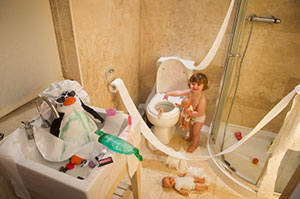
Medicines are another concern. Even with latches on the cabinet, your child may keep trying. If they’re clever enough to work around simpler childproof locks (and many kids with autism are), more sophisticated locking mechanisms are worth the investment.
Wandering is the bigger issue for many families. Known as “elopement,” it’s a serious risk in the autism community. A 2012 study cited by the National Autism Association found that about half of children with autism wander and attempt to leave the safety of their homes at some point. In extreme cases, a double-keyed deadbolt on exterior doors is the only reliable solution.
The stakes are real. Take wandering seriously before it becomes a crisis.
Create a Structured Environment That Works for Everyone
Children with autism thrive on structure. According to the National Institute of Neurological Disorders and Stroke, kids with ASD find genuine comfort in patterns and derive a sense of security from consistent, predictable routines. A regular schedule for meals, play, therapy, and bedtime can make a real difference in how your child copes day to day.
If you have neurotypical children at home too, the balancing act gets more complicated. Meltdowns in children with autism can be more frequent and intense than typical tantrums, and in some cases may involve aggressive behavior toward others. Being aware of your child’s early warning signs and what tends to set them off is one of the most useful things you can do for everyone in the house.
Structure isn’t just good for your child with autism. It creates predictability that benefits the whole family.
Create a Quiet Space Just for Your Child
When children with autism become overstimulated, they need somewhere to decompress. Not as a punishment, but as a tool.
A dedicated quiet space gives your child a place to regroup when things get overwhelming. Low lighting, soft textures, minimal decorations, a few favorite toys, or a weighted blanket. Simple and calm is the goal.
Consistently redirecting a child to a calm, familiar space during stressful moments can help them build self-regulation skills over time. This approach aligns with strategies used across several behavioral and therapeutic frameworks, including techniques common in ABA. Many children eventually learn to seek out that space on their own when they anticipate a meltdown. That’s a skill that will serve them well beyond your home.
Regular Household Hazards Carry Extra Risk for Kids with Autism
Sharp edges on coffee tables and kitchen islands. Tall furniture that could tip. These are the standard childproofing concerns. But for children with autism, there’s often an added dimension: sensory and proprioceptive differences.
Proprioception is the body’s ability to sense where it is in space. Some children with autism have difficulty with this, which can lead to clumsiness and unexpected collisions with furniture, walls, and countertops. Rubber bumpers on sharp corners and wall anchors on tall furniture are inexpensive steps that can prevent serious injuries.
Water is also a significant concern. Children with autism are often deeply drawn to it. It’s soothing, interesting, and sometimes irresistible. According to the National Autism Association, drowning is one of the leading causes of accidental death among people with autism. If you have a pool, a rigid cover, fencing, a gate alarm, and a keyed lock are all worth having. Even without a pool, don’t overlook hot-water faucets, bathtubs, drainage ditches, and any other areas that hold standing water.
The bathroom carries extra risks, too. Electrical appliances like hair dryers and curling irons can be a hazard for a child fixated on the noise or sensation. If that’s a concern, keep them out of reach and consider adding a lock to the bathroom door.
Teach Your Child About Strangers and Trust
As your child gets older, they’ll start responding to the door. For parents of children with autism, that’s worth thinking through carefully.
A 2013 study by Brosnan et al., published through the British Psychological Society, found that children with autism tend to be more trusting of strangers than neurotypical children and less able to evaluate trustworthiness based on facial expressions and other social cues. That natural read on whether someone “seems off” doesn’t develop in the same way for many kids on the spectrum.
Working with your child to understand basic safety around strangers takes time and practice. Teaching them who they can trust, what to do when they’re unsure, and how to identify a safe person are skills that protect them at home now and support their independence as they grow.
Frequently Asked Questions
What is elopement and why is it a concern for children with autism?
Elopement refers to when a child leaves a safe environment without supervision. It’s one of the most serious safety risks for children with autism because many kids don’t fully understand boundaries or the danger of traffic, water, and other hazards. A 2012 study cited by the National Autism Association found that about half of children with autism will elope at some point.
How do I create a sensory-friendly quiet space at home?
Focus on low stimulation. Choose a corner or small room with soft lighting, minimal decorations, and no hard surfaces. Add soft pillows, blankets, and a few of your child’s favorite comfort objects. The goal is a reliable retreat that your child learns to associate with calm, not punishment.
Are children with autism more at risk around water?
Yes. Many children with autism are drawn to water in ways that can become dangerous quickly. According to the National Autism Association, drowning is one of the leading causes of accidental death in the autism community. If you have a pool, secure it with fencing, a rigid cover, a gate alarm, and a keyed lock. Also watch for fixation on bathtubs, fountains, and any standing water.
How do I balance safety with my neurotypical child’s needs?
Structure helps both. A predictable routine benefits children with autism and gives neurotypical siblings a stable framework, too. When meltdowns or incidents occur, ensuring neurotypical siblings feel heard, not overshadowed, is important. Honest, age-appropriate conversations about their siblings’ needs go a long way.
Should I be concerned about my child with autism answering the door?
It’s worth thinking through. Research suggests children with autism tend to be more trusting of strangers and less able to assess risk from social cues. As your child gets older, teaching them basic door and stranger safety is an important skill, one that supports both their safety and their developing independence.
Key Takeaways
- Wandering (elopement) is a serious risk. A 2012 study found that about half of children with autism elope at some point. Sophisticated locks and secured outdoor access may be necessary, not just convenient.
- Structure and predictable routines reduce anxiety and meltdowns for children with autism, and they benefit the whole household.
- A dedicated quiet space gives your child a tool to self-regulate over time, a skill that can eventually transfer beyond the home.
- Sensory and proprioceptive differences can make everyday furniture a hazard. Bumpers, anchors, and secured bathrooms are practical starting points.
- Children with autism may be more trusting of strangers. Teaching safety awareness is a long-term investment in their independence.
Ready to learn more about how ABA therapy supports children with autism at home and beyond? Explore programs from accredited universities and find the path that fits your goals.
This article is intended for general informational purposes only and does not constitute medical, therapeutic, or safety advice. Every child with autism is different. Consult with your child’s healthcare provider, behavior analyst, or a qualified ABA professional before making decisions about safety interventions or behavioral strategies for your child.