Quick Answer
BCBA certification is a graduate-level credential issued by the Behavior Analyst Certification Board (BACB). There are two ways to qualify. Pathway 1 involves earning a degree from an ABAI- or APBA-accredited program, which comes with the assurance that all coursework requirements are covered. Pathway 2 involves earning a qualifying master’s and completing specific required courses, which a designated faculty member at your university then formally attests to on your behalf. Pathway 2 is being phased out and will disappear entirely on January 1, 2032. Either route also requires 1,500 to 2,000 hours of supervised fieldwork and a passing score on the BCBA exam. Most people take six to ten years from the start of undergrad to reach certification.


Most people are aware that changes are coming to the BCBA certification process, but there’s still some uncertainty on exactly what that means for students looking to enroll in qualifying master’s programs today. We asked the professors who run these programs, more than 60 of them across the country, for a clear understanding of the best way to prepare for BCBA certification in 2026, and going forward under the new process.
This guide draws on direct insights from the community of professors who’ve contributed to our ongoing faculty interview series, the people actually teaching the next generation of BCBAs. Wherever questions come up that require some nuance to the answer and a faculty perspective, we lean into what our faculty contributors have to say, not just what’s already printed in the BACB’s certification handbook. One of those voices belongs to someone who’s shaped the field for more than four decades.

Michael F. Dorsey, Ph.D., BCBA-D, LABA
VP of Psychological Services, Amego Inc. · Lecturer, Applied Behavior Analysis Programs, Northeastern University
Dr. Dorsey earned his Ph.D. from Western Michigan University in 1979 and has spent decades shaping the field from the inside: he authored the first behavior analyst state licensing bill filed in the United States, chaired ABAI’s Verified Course Sequences Board, and co-founded the Institute for Behavioral Studies at Endicott College.
In This Guide
What Is BCBA Certification, Exactly?
The Board Certified Behavior Analyst (BCBA) credential is issued by the Behavior Analyst Certification Board, founded in 1998 to establish a consistent standard for the education and training of ABA practitioners. It’s a graduate-level credential that you can’t get without at least a master’s degree, and it’s recognized by the National Commission for Certifying Agencies (NCCA).
Does BCBA Certification Give You the Legal Right to Practice?
Not automatically, no. Holding BCBA certification doesn’t by itself give you the legal right to practice. That authority comes from state law, and every state handles it a little differently, though the landscape has consolidated a lot over the past decade.
Most states, 41 as of 2026, have passed a dedicated behavior analyst licensure or registration law. And that number is climbing every legislative session. In nearly all of them, BCBA certification is the basis for state licensure. That means to apply for the state credential, you need to earn the BCBA first. Some of these laws are “practice acts,” meaning it’s illegal to deliver ABA services in that state without the license, full stop. Others are “title acts,” which only restrict who can call themselves a Licensed Behavior Analyst there, leaving room for someone to practice under a different label without one. Texas is a straightforward example of the first pattern: its LBA credential requires BCBA certification before you can even apply.
In the remaining states, there’s no dedicated behavior analyst license at all, and BCBA certification itself functions as the practical standard. California doesn’t license behavior analysts as a separate profession, but it recognizes BCBA certification for the equivalent professional activities. Florida developed the state certification program that became the foundation for the BACB’s national model, and in 1993 its exam began being administered outside Florida for the first time. Today, Florida exempts people who practice only behavior analysis from its psychology-licensure requirements, as long as they don’t claim a protected license or title, and it separately maintains its own certification provisions for developmental-disability services. In states like these, insurers, Medicaid programs, and employers still check for BCBA certification even though no government agency issues a license for it.
Either way, the national credential comes first, and it travels with you. BCBA certification itself doesn’t reset when you move states. What changes is whether you also need to layer a state license on top of it, and that’s exactly what our state-by-state guide to ABA licensing and the section further down this page cover in detail.
How Does ABAI Accreditation Relate to BCBA Certification?
ABA program accreditation is nothing new. It’s been the mechanism for identifying programs that teach to the highest professional and ethical standards for a very long time. Ohio State’s special education faculty put a number on just how long that’s been true: their Ph.D. program was the first doctoral program to receive ABAI accreditation, back in 1995. And for nearly as long, ABAI has been involved in setting the academic standard for BCBA certification.
ABAI, the Association for Behavior Analysis International, and the BACB are two different organizations doing two different jobs, and it’s worth keeping them straight. The BACB certifies individual practitioners, it’s the body that issues the BCBA credential itself. ABAI accredits graduate programs, reviewing a university’s curriculum, faculty, and training model against a fixed standard. The two intersect at exactly one point: your coursework has to be verified somehow before the BACB will let you sit for the exam, and a degree from an ABAI-accredited program is one of two ways to satisfy that requirement. We’ll walk through both routes, and why one is about to become the only viable path.
We put this question directly to faculty at an ABAI-accredited program: what does that accreditation actually signal to a prospective student?
Faculty Voice
“Caldwell University’s MA in ABA program is one of only 21 master’s programs worldwide that are accredited by the Association for Behavior Analysis International’s Accreditation Board. This accreditation indicates that our program is among the best at preparing behavior analysts as professional scientist/practitioners.
Pathway 1 or Pathway 2: Which One Should You Choose?
Right now, there are two ways to become eligible for the BCBA exam. Most sources treat them as interchangeable. They’re not, and the gap between them is expected to widen every year through 2032.
The future-proof route
Pathway 1: Accredited Degree
Valid now. Valid after 2032.
- Requirement:ABAI-accredited (Tier 1, 2a, 2b) or APBA-accredited master’s program
- Coursework verificationbuilt into accreditation, none needed
- After Jan. 1, 2032:The only route left
The bridge route
Pathway 2: Attested Coursework
Valid now. Gone Jan. 1, 2032.
- Requirement:Qualifying master’s + BACB coursework hours
- Coursework verification:University “Pathway 2 Program Contact” attestation
- After Jan. 1, 2032,Discontinued, no exceptions announced
The mechanics of Pathway 2 changed on January 1, 2026: the ABAI’s old Verified Course Sequence (VCS) system (the thing most programs still market as their credibility signal) was retired, and coursework is now confirmed by a designated BCBA faculty member at your university, called a Pathway 2 Program Contact. This is the person who attests that you’ve completed the required coursework to meet BACB standards for certification. If a VCS Coordinator Coursework Attestation for you was submitted before December 31, 2025, that specific attestation is still usable through December 31, 2026. And if you’re in that situation, you’re already likely scheduled for the exam.
What’s the Full Transition Timeline?
Pathway 2 Coursework Attestation System replaces the VCS
ABAI stopped administering course sequences. A named BCBA faculty contact now attests coursework directly to the BACB.
Fieldwork, supervision, and attestation rules tighten in stages
New fieldwork hour and supervision rules take effect for anyone applying on or after January 2027, Pathway 2 Program Contacts must be affiliated with an institution in a country within BACB jurisdiction starting in 2028, and Pathway 1 adds a US-equivalency requirement for international programs in 2029. See our 2027 BCBA Certification Changes guide for the complete, year-by-year breakdown.
Pathway 2 is discontinued. Pathway 1 becomes the only route.
If your program isn’t ABAI- or APBA-accredited by then, its coursework can no longer lead to BCBA eligibility.
Timeline sourced directly from the BACB’s university training and upcoming changes pages. The BACB updates these regularly, so always confirm current dates before making a decision based on them.
A multi-year phase-out like this isn’t unusual for the BACB, and it won’t be the last one either. What’s consequential this time is that the change (Pathway 1 only, by 2032) has been announced years in advance. If you’re choosing a program today, that fact alone is a reason to weigh accreditation status heavily in the decision. Our guide to the top ABA master’s programs and our best 100% online ABA programs list both flag accreditation status for exactly this reason.
Step 1: What Degree Do You Need for BCBA Certification?
Whichever pathway you pursue, you need at least a master’s degree, and you need a C or better in every graduate course that’s meant to count toward eligibility. For Pathway 1, that means the program itself carries ABAI or APBA accreditation. For Pathway 2, it means the specific courses you take cover the BACB’s required content areas (Ethics, Concepts and Principles, Measurement and Experimental Design, Behavior Assessment, Behavior-Change Procedures, and Personnel Supervision) in the required hours, with your university able to attest to it.
Do You Need a Specific Bachelor’s Degree First?
Usually, no. Almost none of the master’s programs we surveyed require an undergraduate degree in psychology or ABA specifically. What they require is a bachelor’s degree from an accredited institution, sometimes a minimum GPA, and occasionally a prerequisite course or two in statistics or introductory psychology. We put the question to faculty directly, and found that the field pulls from everywhere:
Faculty Voice
“We have seen students with backgrounds in various industries such as Education, Pharmacy Sciences, Business, and Anthropology who have decided to pursue the field of ABA and utilize their unique backgrounds.
Other faculty went further and said an unrelated background isn’t just tolerated, it’s actively useful:
Faculty Voice
“We usually have a handful of students each semester that are changing careers. Interestingly, we see the most change from business to applied behavior analysis. Business is actually a good background for behavior analysts to have because they will be navigating funding sources and managing budgets in any future behavior analytic position.
There’s an exception worth knowing about, mostly at the more research-focused end of the spectrum. A handful of highly selective programs, typically ones with a strong PhD pipeline, do expect some prior exposure to behavior analysis before you apply, and this next answer is a clear example of that stricter standard:
Faculty Voice
“Our program is highly selective in that virtually every applicant we admit has: (a) several courses in behavior analysis at the undergraduate or graduate level, (b) laboratory experience in either basic or applied research, and (c) letters of reference describing exemplary performance in both of the above areas.
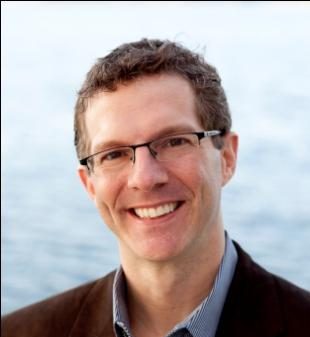
Dr. Dallery’s program is the exception here, not the rule, and this level of selectivity shows up almost exclusively at programs built around research training rather than clinical practice. For the large majority of master’s programs, whatever your bachelor’s degree says, the door is open.
What the Rest of Our Interview Series Shows
Professors from 36 of the 61 ABA programs in our interview series described real, substantial numbers of non-traditional students or career changers, not just an occasional exception. Beyond the business and pharmacy-sciences backgrounds already mentioned above, other programs specifically named licensed clinical psychologists, speech-language pathologists, physicians, and attorneys among their incoming students, and one master’s program overseas counted nurses, economists, engineers, police officers, and HR professionals in a single cohort. Programs built like Dr. Dallery’s, quoted above, are very much the exception and not the rule.
Does It Matter Which Department Grants the Degree?
Here’s what trips up a lot of prospective students: the BACB doesn’t care what your degree is called. It cares whether the program is accredited (Pathway 1) or whether the coursework covers the required content areas (Pathway 2). That opens the door to four different academic homes, and we found real programs from all four in our interview series:
A Dedicated ABA or Behavior Analysis Degree
The most direct route. Coursework is built entirely around behavior-analytic content from day one, often with a required thesis or research practicum. Tends to lead toward clinical practice in autism-focused agencies, research roles, or a PhD.
A Psychology Master’s with an ABA Emphasis
ABA coursework layered onto a psychology degree. Depending on the state, this can position you for dual credentials alongside a psychology license, not just the BCBA.
An Education or Special Education Master’s with ABA
Built for people who are already teaching. The degree renews or advances a teaching credential while the embedded coursework covers BCBA eligibility, often letting you stay in your current job the whole time.
A Social Work Master’s with ABA (Less Common, Real)
Rare, but it exists, and it produces an unusual dual credential: board certification plus a clinical social work license.
Faculty from each of those tracks confirmed the pattern, each from their own vantage point. Here’s how a professor from a dedicated ABA program described what it’s built for, straight to the point about speed and clinical depth:
Faculty Voice
“Being a degree in applied psychology is different than the above programs which offer degrees in ABA or education. Most of these programs have a heavy focus on autism spectrum disorder with few elective options outside of this… Rider has seen a growing number of applicants expressing interest in other areas of behavior analysis including addictions, organizational behavior management, and sports and fitness.

That direct-ABA-route emphasis on speed and depth showed up again and again:
Faculty Voice
“Our ABA master’s students typically find jobs in autism centers all over the country. They find jobs quickly, and most of them are hired before they even graduate… Many go on to further studies and earn Ph.D.s.
On the psychology track, a second credential can sometimes ride alongside the BCBA. Michigan offers a state-specific example: one program described a licensing lane that let graduates pursue both credentials, though BCBA eligibility alone doesn’t create licensure eligibility nationwide, or independently of a state’s other requirements:
Faculty Voice
“Upon graduation and completion of practicum requirements, these students are eligible to sit for examination to become both a Board Certified Behavior Analyst (BCBA) and a Michigan Limited Licensed Psychologist (LLP). Many agencies in our state are aggressively recruiting individuals who are both LLPs and BCBAs, making our graduates highly marketable.
On the education track, the appeal is usually staying employed the whole way through, since the degree does double duty as a teaching credential renewal:
Faculty Voice
“It appears that the majority of the students are teachers (special education and regular education) who are seeking their master’s degree in education to obtain their level 2 certification. Since we have the courses set up that they can earn the master’s degree in special education while taking all the required courses for the BCBA-prep, they choose this path.
And on the rarer social-work track, the payoff is a dual credential you won’t find almost anywhere else:
Faculty Voice
“We are the only program to offer ABA within the MSW degree, wherein graduates are eligible to sit for both the BCBA as well as the LMSW examination after graduation.
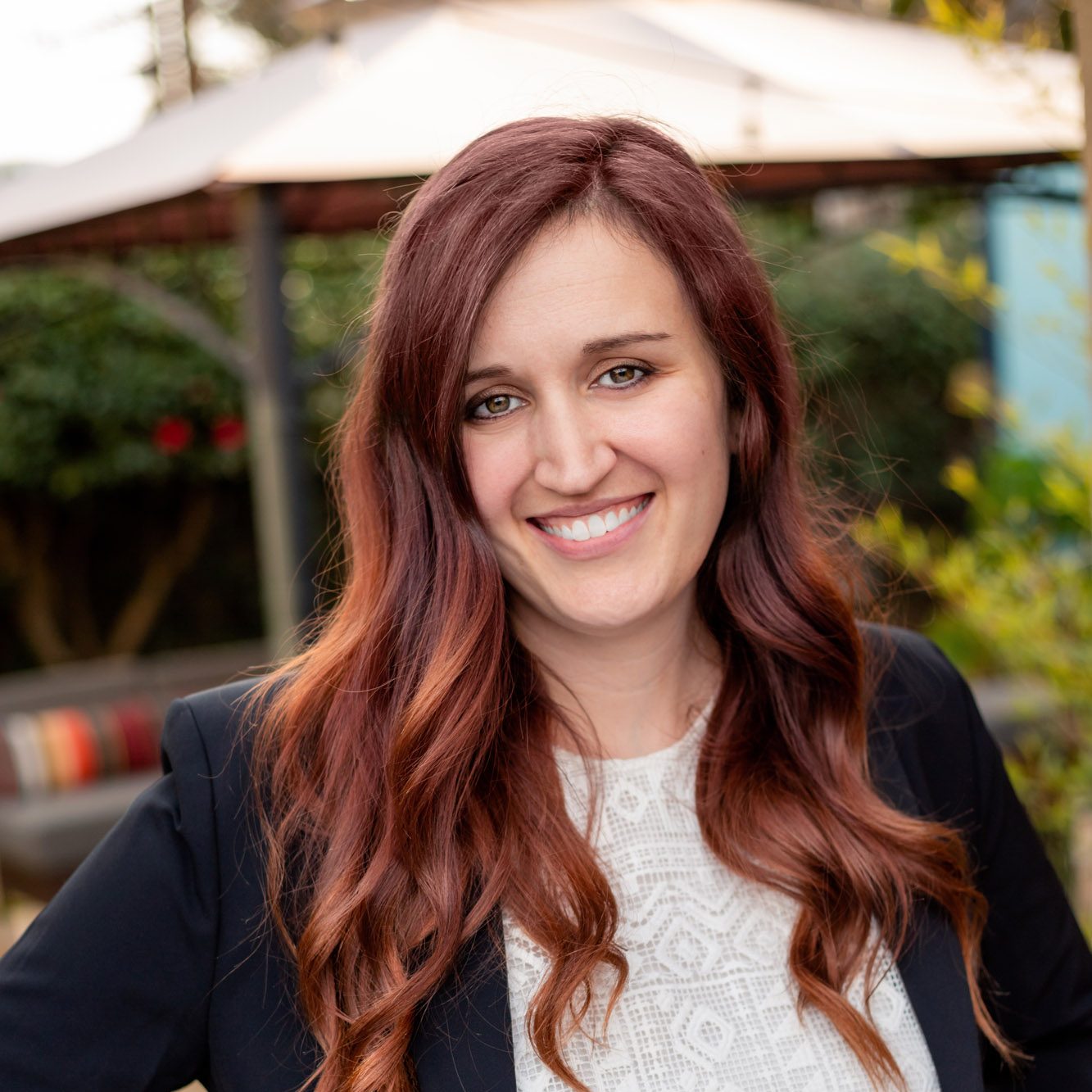
The credential at the end is identical no matter which door you walked through. What changes is the elective menu, the day-to-day flavor of training, and, in at least two of these four cases, a second license waiting alongside the BCBA.
Which Path Tends to Lead Where?
None of these tracks locks you into one outcome, but the patterns professors described were consistent enough to plan around. One of the clearest breakdowns came from a program that blends special education with an autism-and-ABA concentration:
Faculty Voice
“Approximately 50% of our graduates go on to work for private ABA clinics serving individuals with autism and other developmental disabilities; 30% work in special education school settings; 15% continue their education in PhD programs and the remainder work for government agencies, nonprofits, and other related careers.

That split (roughly half toward clinical practice, a third staying in schools, and a meaningful slice heading toward a PhD) tracked closely with what we heard across dozens of other programs, regardless of which department granted the degree. The department mostly determined the electives and the network you graduated into, not whether any of those doors were open to you.
On that PhD slice specifically, it’s worth being clear about what the degree actually trains you to do, since it’s not simply “more of the master’s”:
Faculty Voice
“There are really two things about the Ph.D. One is the Ph.D. is really preparing you for research. So if you’re really interested in furthering the scientific field by researching, fellowshipping, and presenting at conferences, you can do that with a master’s, but that’s what a Ph.D. is really all about. If you want to teach at a college or university, for the most part you need a Ph.D.
What’s Online ABA Instruction Actually Like?
If your hesitation about any of these four tracks is “but I need this to be online,” it’s worth updating that assumption. A large share of the programs in our interview series, across all four degree types, are delivered online, and the professors running them were unusually direct about what that experience is actually like now versus what it looked like a decade ago.
The short version: the old worry (online means isolated, asynchronous, disconnected from faculty) described a real problem in ABA graduate education, once. It’s largely been engineered away. Most current programs run live, synchronous class sessions on a fixed weekly schedule, not a self-paced video library. The modern cohort structure means you go through the entire sequence with the same group of classmates rather than starting cold in every course. We asked faculty to describe what that actually looks like week to week:
Faculty Voice
“Our program is synchronous, meaning that the professor and the students all meet together online each week for class, just as they would in an on-campus program… I love it that the students and I can have in-depth conversations about the topics and that I can see where they are struggling or are confused about a topic and can immediately address it. We also have a focus on building community in our online program.

That live, real-time format is now common enough that it shows up almost word for word across programs with no other connection to each other:
Faculty Voice
“Currently, we have moved our classes to Zoom in a synchronous online format… Professors lecture at a given time/day and all students log in at that time. Group/partner work, calling on students, answering live questions is all able to occur through this format.
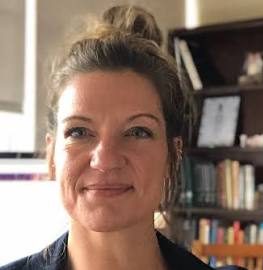
The cohort model is the other piece that tends to get overlooked. Going through every course with the same peers, rather than an ever-changing roster, is what actually builds the sense of community people often assume an online format can’t deliver. In fact, many programs even bring their students together face to face at least once in the course of the program:
Faculty Voice
“Campus and distance students go through the program as a cohort. This is easy for campus students who see each other often. But even online students get to know each other well during class discussion and projects, and will meet each other face-to-face at ABAI.
That same peer network tends to outlast the program itself. It’s common for alums to keep helping current students long after graduation, in ways that reach well beyond the classroom:
Faculty Voice
“Our hybrid program works well for individuals who are working full-time. It offers the convenience of online meetings combined with the connection and sense of community provided by face-to-face meetings. Since students go through the sequence of courses with the same group of peers, they develop a sense of community and establish relationships and professional connections. Our alumni and current students often help each other by assisting with BCBA exam preparation, supervised experience opportunities, and employment opportunities.

None of this means every online program is equally good at it. Some are truly self-paced and asynchronous with minimal live contact, which suits certain schedules but delivers a different experience than the synchronous, cohort-based model these professors described. When you’re comparing programs, ask directly whether class sessions are live (synchronous) or pre-recorded (asynchronous), and whether you’ll move through the sequence with a fixed cohort or enroll into whichever section has room. Both answers are legitimate. They’re just different products, and the marketing rarely spells out which one you’re buying.
Graduate Certificate or Full Master’s? How to Tell Which One You Need
This is the question we saw prospective students get wrong most often. The short version: if you don’t already hold a qualifying graduate degree, you need the full master’s, since it satisfies both the degree requirement and the coursework in one program. If you already have a master’s in psychology, education, social work, counseling, or a related field, a stand-alone graduate certificate can get you just the missing ABA-specific coursework, usually faster and considerably cheaper than starting a second full degree.
You don’t have one yet.
Full Master’s Degree
Satisfies the degree AND the coursework
- Typical length2 to 3 years
- CoversDegree requirement + BACB coursework
- Best forCareer-starters, career-changers with no grad degree
You already have one
Stand-Alone Graduate Certificate
Adds just the missing coursework
- Typical length1 to 1.5 years
- CoversBACB coursework only
- Best forMaster’s-level educators, social workers, counselors, psychologists pivoting in
Who Is the Graduate Certificate Track Actually For?
We asked programs who the certificate track is actually built for. The pattern held across every answer: it’s aimed at people who already have a master’s degree and just need the ABA-specific coursework, whether that’s because they’re pivoting fields entirely or bolting a new credential onto a license they already hold. One of the professors who’s spent decades placing people into exactly this kind of track put it about as plainly as it can be put:
Faculty Voice
“If you have a degree in special ed or any education field, you can take a certificate course and get board certified without a degree in applied behavior analysis. It’s extremely useful for people who are special education licensed teachers, and they’re working in a classroom where some or all of their students are on the autism spectrum.
Faculty at a certificate-specific program described the exact same target student, in almost the same words:
Faculty Voice
“This option is designed for students with an earned graduate degree in education, psychology, or behavior analysis who wish to complete a Verified Course Sequence to meet the coursework requirements for credentialing in behavior analysis. Master’s-level educators seeking professional development in behavioral assessment and intervention often pursue this pathway.
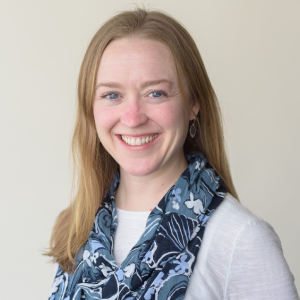
That efficiency argument, coursework only, no second master’s degree required, came up almost every time we asked a program about its certificate track:
Faculty Voice
“The ABA Certificate program is designed for applicants who already have a master’s degree in a related area and some experience in the field. It enables them to obtain the coursework and supervised experience needed to sit for the BCBA exam without having to obtain another master’s degree.

The other pattern showed up just as often, and it’s worth knowing about even if a career change feels far off: certificates aren’t only for people switching fields entirely. Just as commonly, they’re a credential bolted onto a license someone already holds:
Faculty Voice
“In addition, we offer an Applied Behavior Analysis graduate certificate. Students pursuing the certificate tend to be non-traditional students who are adding an ABA credential to their current licenses/certifications.
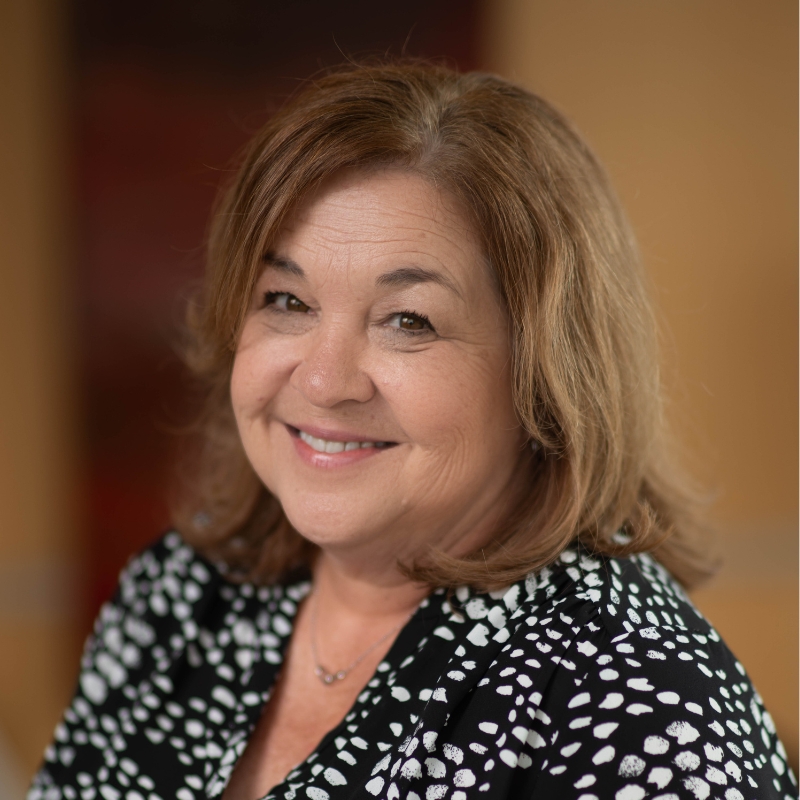
How to Actually Compare Programs
Once you know which of the four tracks fits your background, a handful of concrete questions do more to separate a strong program from an adequate one than any ranking list:
Ask any program you’re seriously considering:
- Is it ABAI- or APBA-accredited (Pathway 1), or does it rely on a Pathway 2 coursework attestation? Given the 2032 sunset covered above, this changes how future-proof your choice is.
- What happens if you fail a course in the sequence? Some programs simply have you retake it. Others reset your entire cohort.
- Does the program help arrange your supervised fieldwork, or is that entirely on you? Most programs we surveyed said the latter (see Step 2 below).
- What’s the program’s first-time BCBA exam pass rate, and how many graduates does that percentage actually represent?
- Is there an on-campus clinic or a required practicum, or do you find and manage every placement independently?
- If a PhD is even a possibility down the road, does this program’s faculty regularly mentor students into doctoral programs?
On that first question about course sequencing, one program was especially direct about what’s actually at stake:
Faculty Voice
“Our sequence is broken into 6 courses with 9 sections total. We require that the first two courses in the sequence be taken in succession… If a student fails a course he/she can retake that course but they will not be allowed to take another course in the sequence until passing the failed course, and they will be entered into a new cohort as a result.

Once you know what to ask, matching your starting point to the right list is straightforward:
Step 2: How Many Fieldwork Hours Do You Need?
Outside of the postdoctoral pathway, you’ll log 1,500 to 2,000 hours of supervised fieldwork before you’re eligible to sit for the exam. The specific supervision rules ease up for anyone applying on or after January 1, 2027: the monthly hour cap rises from 130 to 160, concentrated-fieldwork supervision drops from a 10% to a 7.5% minimum, and client observation shifts from a contact-count model to a duration-based one. Total hours required don’t change. It’s still 2,000 hours for the standard track or 1,500 for the concentrated track, and if you’re on track to finish right around the turn of 2027, ask your supervisor now which ruleset you’re being tracked under, since the two aren’t interchangeable mid-stream. For the complete before-and-after breakdown, see our guide to the 2027 fieldwork changes.
This isn’t the first time supervision requirements have been rewritten, either. The last major shift happened in 2022, when the BACB eliminated an older distinction between university-run and independent supervision tracks. Faculty who lived through that transition described it directly:
Faculty Voice
“Current BACB supervised experience policies incentivize completing supervised experience through the Practicum and Intensive Practicum option… new BACB requirements will not differentiate between supervision completed through a university and supervision completed independent of a university program.

The pattern holds across both changes: expect these specific numbers to keep moving, and build a buffer into your planning rather than treating today’s figures as permanent.
Will My Program Help Me Find a Fieldwork Placement?
We asked programs directly whether they help place students in fieldwork sites. The answer we heard most often, across very different kinds of programs, was some version of the same thing: guidance and introductions, yes, but the placement itself is on the student.
Here’s how one program put it directly:
Faculty Voice
“Students are responsible for securing their own fieldwork placements for the Supervised Independent Fieldwork requirement for examination eligibility. Faculty in the program are happy to provide advice to students… We do not, however, arrange for fieldwork placements or provide the required supervision.
Not every program leaves you entirely on your own, though. Some structure paid, supervised placements directly into the degree, which is worth asking about explicitly, since it can shorten your post-graduation timeline substantially:
Faculty Voice
“We also offer some fellowship positions in which students work for a local agency receiving supervision and funding (hourly pay and tuition reimbursement) while they are in school. Most of our students graduate with enough supervision hours to sit for the BACB exam in August following graduation in early May.

How Do Online Students Complete In-Person Fieldwork?
Fieldwork has to happen somewhere real, with real clients and a supervisor who can meet you in person, even when your coursework is entirely remote. That’s the part prospective students most often assume is a dealbreaker for an online degree. In practice, programs solved it the same way, over and over: you find a qualified BCBA supervisor local to you, often someone you’re already working with or near, and the university’s role shifts from providing that supervisor to helping you connect with one:
Faculty Voice
“The students that live outside of the state work with a BCBA in their area to acquire the supervision hours they need to take the BCBA exam. Typically, students that enroll in our program have worked in the field and have a specific BCBA with whom they plan to work.
Some programs go a step further and build a formal remote-supervision track directly into the degree, layered on top of whatever local supervision you can arrange:
Faculty Voice
“Our BACB intensive practicum is offered as a Professional Practice track with remote supervision by university adjunct faculty who are BCBAs. Of course, we also offer on-site, in-situ supervision for local students, and we encourage the formation of groups for studying and critical peer-review.
How Many of Your Hours Actually Come From the Program Itself?
Here’s the piece that’s easy to assume wrong in either direction. Hours you accrue through a required practicum course count directly toward your BACB total, they aren’t a separate bucket, as long as your supervisor and coursework meet the same contract and timing rules as independent fieldwork. Some programs build enough practicum hours into the degree that graduates finish with most of their total already banked:
Faculty Voice
“Students register for research units and, as part of the program, attend a weekly 2-hour laboratory research meeting with their lab mates and advisor… They also work between 15-20hrs per week providing ABA services so they can learn critical clinical skills.

But don’t assume that’s the norm. Across the programs we reviewed, it was far more common for a practicum sequence to cover a meaningful chunk of the total, not the entirety of it, with graduates finishing the remainder independently after the degree. At roughly 20 to 130 hours a month (rising to 160 after January 2027), even two full years of an intensive practicum can land short of 2,000 hours once you account for semester breaks, course loads, and the 60% floor on unrestricted activities. Ask a program directly what share of its graduates finish fieldwork by graduation versus afterward. If they don’t track that number, that’s worth knowing too.
Does a Fieldwork Placement Turn Into a Job?
Often, yes, and several programs we spoke with described it as close to the default outcome rather than a lucky exception:
Faculty Voice
“All of our previous students have left our program with a job offer or current job placement following graduation at the place where they have completed their field experience hours because of our community partnership with local service providers.
That pattern wasn’t unique to one program or one region:
Faculty Voice
“Several of our students have been hired at the Marcus Autism Center after completing summer internships. Other internships have led to positions as RBTs with clinical supervision, there are no shortage of those!
None of this is guaranteed. It depends on the agency, your performance during fieldwork, and whether the site has an opening when you finish. But it’s common enough that where you complete your fieldwork deserves the same scrutiny as which degree you choose. A placement site with a track record of hiring its own trainees is worth more than its stipend suggests.
Step 3: How Do You Pass the BCBA Exam?
Once your degree and fieldwork requirements are complete, you apply through the BACB’s online Gateway and schedule your exam through Pearson VUE. First-attempt costs: a $245 certification application fee plus a $125 examination appointment fee.
The exam itself is built on the 6th edition BCBA Test Content Outline (in effect since January 2025): 185 total questions (175 scored, 10 unscored), split into a Foundations section (Concepts and Principles, Measurement and Experimental Design, Philosophical Underpinnings, about 40% of your score) and an Applications section (Behavior-Change Procedures, Ethics, Behavior Assessment, Supervision, Selecting Interventions, the remaining 60%). You get four hours. If you don’t pass, the retake application becomes available within 48 hours, but you must wait at least 30 days before you can retake the exam. You get up to eight attempts within a two-year window, at $140 plus $125 per retake.
What’s a Realistic First-Time Pass Rate?
Programs talk about their first-time pass rates because prospective students ask about them constantly, and the self-reported numbers vary more than you’d expect for a standardized national exam:
Faculty Voice
“One of the main factors students consider when choosing where to complete a Verified Course Sequence is the first-time pass rate of the program’s graduates. We are proud to say that over the past seven years, the first-time pass rate for all of our graduates on the Board Certified Behavior Analyst Examination is 89%.
Other programs post numbers that sound almost too good to be true, and for their specific cohort size, they may well be accurate:
Faculty Voice
“One hundred percent of our program graduates have passed the BCBA exam on their first try!


Here’s the number that puts both of those in perspective. The BACB’s own aggregate data, not any single program’s self-report, put the national first-time pass rate at 51% in 2025, down from 66% in 2020. That’s the figure at the top of this guide, and it’s worth sitting with: field-wide, passing on the first attempt is close to a coin flip, even though individual cohorts regularly report 89% or 100%. Self-reported numbers are useful context, but they aren’t independently audited the way the BACB’s aggregate figure is, and a 100% pass rate from a program with six graduates isn’t telling you the same thing as a 92% rate from a program with two hundred. See the full comparison, program by program, in our BCBA exam pass rate by school guide.
What the Rest of Our Interview Series Shows About Pass Rates
6 of the 61 university programs in our interview series volunteered a specific, numeric first-time BCBA pass rate, and none came in below 89%: Kent State University (89%), the University of South Florida (92%), the University of Northern Colorado (100%), St. Cloud State University (100%), UT San Antonio (100%), and West Virginia University (100%). West Virginia’s own faculty added the catch themselves: their doctoral cohort is too small for that number to carry real statistical weight, exactly the caveat worth applying to every self-reported figure on this list.
One more thing worth hearing directly from faculty: passing the exam and being truly ready to practice are not always the same milestone.
Faculty Voice
“When interviewees are asked about the distinction between functional assessment and experimental functional analysis, and when to use these procedures, most can’t answer accurately… If we don’t develop critical skills and a conceptual understanding of the science, ABA techniques that are so powerful may never evolve.
Step 4: How Do You Maintain Your BCBA Certification?
BCBA certification isn’t a one-time achievement. Every two years, you’ll submit a recertification application (a $215 fee) and document 32 continuing education units (CEUs). That total includes at least 4 in ethics, and if you supervise RBTs, BCaBAs, or trainees, 3 of those CEUs need to be in supervision. Under the BACB’s 2027 requirements, that supervision minimum rises to 4 CEUs for affected recertification cycles. CEUs come from teaching, publishing or peer-reviewing in ABA journals, attending BACB-authorized continuing-education events, or completing graduate-level ABA coursework.
Why Does Certification Require Ongoing CEUs?
That ongoing requirement exists for a reason faculty described directly: certification tells you someone met a floor, not that they’ve stopped needing to learn.
Faculty Voice
“It is more important to know what you do not know, than what you do know well. We need to emphasize when more expertise or training is needed to manage difficult clinical challenges.
Does BCBA Certification Come with a State License?
The BACB’s requirements are national. Most states have added a separate licensure requirement on top of it, largely because national certification and local licensure solve different problems. One of the professors in our series didn’t just describe that difference. He wrote the law that created it.
Faculty Voice
“Board certification has been a tremendous asset to the field, it’s done a great service over the last, what, 20 years now? But I really believed that it’s time to sort of “step up” to the next level and create licensure for behavior analysts. It didn’t exist anywhere in the country.
That bill became the model. Dr. Dorsey put the number at roughly 28 states with licensing laws on the books by 2017, and the count has only grown since.
Why Does State Licensure Exist Alongside National Certification?
His explanation of why the two layers exist at all is the clearest we found anywhere:
Faculty Voice
“The difference between the national certification and local licensing is ethical complaints. If a parent has a concern that you’re overbilling, or has a concern that you’re doing something you shouldn’t be doing, they can call the local licensing board rather than have to file with BACB in Denver.
How Does State Licensure Actually Restrict Practice?
Two more examples from the university interview series show how differently that second layer can play out state to state. New York’s was a scope-of-practice restriction written into the license itself, as Dr. Jessel described it at the time of his interview:
Faculty Voice
“The scope of restriction in New York tends to quash diverse applications of behavior analysis by requiring licensed behavior analysts to only work with one population… We are seeing that in New York at the state legislature level as we fight to remove the scope of restriction.

New York’s law has since broadened. Under Education Law §8802, licensed behavior analysts can now treat qualifying behavioral health conditions recognized in the DSM or an equivalent system, not just autism, subject to diagnosis and order requirements.
Montana’s is a different kind of problem: not a restriction, but a recognition gap between two systems, education law and behavior-analytic certification, that were never built to talk to each other:
Faculty Voice
“Schools in Montana do not recognize the BCBA credential as ‘Related Services’ because it is not listed in IDEA. It would take a legislative action to change that rule.
None of that is something the BACB’s national handbook will tell you, and state licensure requirements, including the licensing agency, accepted exam, scope of practice, exemptions, and any added education or experience requirements, vary by jurisdiction and change over time. Before you commit to a state, check our state-by-state guide to ABA licensing, and verify current requirements directly with the licensing authority where you plan to practice.
Frequently Asked Questions
What’s the real difference between Pathway 1 and Pathway 2?
Pathway 1 means your degree itself comes from an ABAI- or APBA-accredited program. Accreditation does the verification work, so no separate attestation is needed. Pathway 2 means your university’s designated Pathway 2 Program Contact (a full-time BCBA faculty member) attests, course by course, that you met BACB content requirements. Pathway 1 is the only route that survives past January 1, 2032.
Is my program’s old VCS status still good?
The ABAI’s Verified Course Sequence system ended December 31, 2025. If your program had a VCS Coordinator Coursework Attestation filed before that date, it remains usable until December 31, 2026. After that, your university needs an active Pathway 2 Program Contact to attest your coursework directly to the BACB.
How long does it take to get BCBA certification?
Most people take six to ten years from the start of undergrad, factoring in a bachelor’s degree, a qualifying master’s program, 1,500 to 2,000 hours of supervised fieldwork, and the exam itself. Starting with an existing qualifying master’s shortens that considerably.
How much does BCBA certification cost?
Direct BACB fees: $245 to apply, $125 to schedule the exam, $215 every two years to recertify. Retakes run $140 plus $125. None of that includes graduate tuition, which is by far the largest cost and varies enormously by program and format.
What’s actually changing in 2027?
Fieldwork supervision rules ease for anyone applying on or after January 1, 2027: the monthly hour cap rises from 130 to 160, and the required minimums for direct supervision drop slightly. Total hour requirements don’t change, it’s still 2,000 hours standard or 1,500 concentrated. Our 2027 BCBA Certification Changes guide covers the complete rule-by-rule breakdown.
Do BCBA certification requirements vary by state?
The BACB’s requirements are the same nationwide. Most states layer their own licensure requirement on top, and some, like New York and Montana, add restrictions or recognition gaps that the national credential doesn’t address at all. Check your specific state before you assume BCBA certification alone is enough to practice.
What can you do with a BCBA certification?
Most BCBAs work directly with individuals with autism spectrum disorder, ADHD, or other behavioral health needs, but the credential also opens doors well beyond autism-focused clinical work. Faculty in our interview series pointed to graduates in private practice, mental health settings, school districts, business and industrial organizations, insurance consulting, university teaching, and even sports performance and wellness settings. If those adjacent paths interest you, our guides to organizational behavior management, sports and athletic training, and behavioral gerontology break down what those careers look like day to day, and our ABA careers hub covers the full picture.
Key Takeaways
- Accreditation status matters more now than it used to. Pathway 2 (coursework attestation) is being phased out entirely by January 1, 2032. Pathway 1 (ABAI/APBA-accredited degree) is the only route that survives.
- Fieldwork rules depend on when you apply, not when you start. The current 130-hour monthly cap and 10% concentrated-supervision minimum rise to 160 hours and drop to 7.5% for anyone applying on or after January 1, 2027.
- Securing your own fieldwork placement is standard, not exceptional. Nearly every program we surveyed said the same thing: they’ll advise you, but you find the placement.
- Self-reported pass rates are a data point, not the whole picture. Compare them against sample size and against the BACB’s own aggregate data before weighting them heavily.
- State licensure is a separate, additional requirement, and in some states, it comes with restrictions the national BCBA credential doesn’t have.
Ready to find a program built for where BCBA certification is headed?
Compare accredited ABA master’s programs and see which pathway fits your timeline.