People on the autism spectrum achieve remarkable things every day — in the arts, athletics, science, and business. This article shares five real stories of individuals with ASD who found their strengths and built meaningful lives. Whether you’re a parent looking for hope or a professional seeking perspective, these stories remind us what’s possible.


If your child was recently diagnosed with autism spectrum disorder, it’s completely normal to feel scared or uncertain about what the future holds. You’re not alone in that. And while no two people with ASD have the same journey, one thing we’ve seen consistently over the years is this: people on the spectrum find their strengths, and those strengths can take them places that surprise everyone — including themselves.
Here are five stories worth knowing.
Stephen Wiltshire — Acclaimed Artist
Stephen Wiltshire was born in London in 1974 and showed many of the classic signs of ASD from an early age. He was nonverbal and appeared to live almost entirely in his own world. He was diagnosed at age three, and didn’t begin to speak until he was eight.
But he could draw. From an early age, Stephen sketched the buildings of London with extraordinary precision — accurate down to the finest architectural detail, even after only a brief glance at a structure. He sold his first drawing at eight. Not long after, the Prime Minister commissioned him to draw Salisbury Cathedral.
By 32, Wiltshire had been appointed a Member of the Order of the British Empire and had been given a permanent gallery at the Royal Opera Arcade in London. What started as a way for a nonverbal child to connect with the world became a celebrated career. Early support and a focus on his strengths made all the difference.
Justin Hansen — Division I Football Player
Justin hated football at first. Hated that his dad made him start playing in grade school. Hated being around the other players. The coaches didn’t want him there either — they saw him as a charity case, a lumbering kid with Asperger’s who didn’t make eye contact and preferred to stay home.
But he was good at it. He had a lot of pent-up emotion from years of being bullied, and the football field gave him somewhere to put it. Size and aggression didn’t require small talk.
By his senior year, Justin wasn’t the odd man out anymore. He was the standout defensive lineman that college programs were recruiting. He landed a Division I scholarship at Colorado State, became part of the team, and slowly learned how to socialize in the locker room in ways that the classroom never taught him. Teammates brought him along. He learned to laugh and make small talk.
Justin’s story is a good reminder that the right environment matters. Finding the place where a person’s traits become strengths — not obstacles — changes everything.
Temple Grandin — Animal Behaviorist and Autism Advocate
Temple Grandin is probably the most recognized name in autism advocacy, and for good reason. She’s contributed groundbreaking research to animal science, published more than sixty papers on livestock handling, and has spent decades speaking openly about her own experience on the spectrum.
What’s remarkable about Grandin’s story is that even with a long and distinguished career, she wasn’t formally diagnosed with ASD until she was 64. She’d shown all the classic signs of high-functioning autism from childhood, but like so many people of her generation, she didn’t have the language or the diagnosis to explain her experience.
In the ABA community, she’s best known for inventing the “hug machine” — a device that applies evenly distributed deep pressure throughout the body. Grandin designed it for herself to manage anxiety and sensory overload, and it became one of the earliest examples of how understanding one person’s sensory needs can lead to tools that help many. Variations of the concept are now widely used in clinical and home settings.
Susan Boyle — Singer
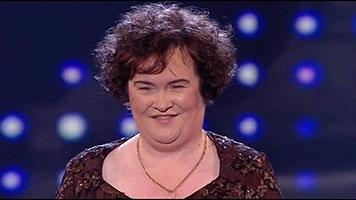
Susan Boyle was 47 years old when her life changed. Her debut on Britain’s Got Talent was jaw-dropping — a quiet, awkward woman from a small Scottish town who walked out and silenced a skeptical audience. Her first album shattered sales records and became the best-selling debut album in UK history. She sang for the Queen’s Diamond Jubilee.
What the cameras didn’t show was how much Boyle had struggled her whole life without knowing why. As a child, she’d been told she had brain damage. She wasn’t offered any real support or explanation. The pressure of sudden fame was a lot for anyone, but especially for someone still unaware that she was living with Asperger’s syndrome.
She was officially diagnosed at 51. Having a name for her experience gave her something she’d never had before — the ability to get the right support, and to understand herself more clearly. Her career continued. The diagnosis wasn’t a limitation. It was an explanation.
Matt Cottle — Baker and Business Owner
When Matt Cottle asked his supervisor at a Scottsdale grocery store if he could move from bagging groceries to working in the bakery, she told him he’d never do more than collect carts in the parking lot.
He’d fallen in love with baking in high school during a culinary demonstration, and with the kind of focused intensity that many people with ASD know well, he thought about it constantly. For six years, he worked at that grocery store, thinking about baking. He applied to culinary school multiple times and was rejected — he and his family believe this was due to challenges related to his autism, though no official reason was given.
So he found his own way in. He tracked down a pastry chef willing to give him one-on-one lessons. He practiced. He refined his craft. And then he made the leap and opened his own bakery.
He named it the Stuttering King Bakery — a nod to both his passion and what he’d had to overcome to pursue it. Together with his mother, he runs a catering business out of their home in the Phoenix metro area.
Not bad for a guy someone said couldn’t do anything more than collect grocery carts.
Frequently Asked Questions
Can people with autism live full, independent lives?
Many people on the autism spectrum do live full and independent lives. Outcomes vary depending on the level of support available, early intervention, and individual strengths. ABA therapy and other evidence-based approaches have been shown to help build skills that support greater independence over time.
What do these success stories have in common?
In each case, the individual found an environment or outlet that matched their strengths rather than forcing them into a mold that didn’t fit. They also had people — parents, coaches, mentors — who stayed in their corner. Early support and the right relationships consistently appear in positive outcomes for people on the spectrum.
How does early intervention affect outcomes for children with autism?
Research consistently shows that early intervention — particularly ABA therapy started during the preschool years — can significantly improve communication, social skills, and adaptive behavior. The earlier a child receives targeted support, the more opportunity there is to build on their existing strengths.
Does autism affect intelligence?
Autism spectrum disorder affects people across the full range of intellectual abilities. Some individuals have intellectual disabilities, while others have average or above-average intelligence. The spectrum is wide, and IQ is just one small piece of a much larger picture.
Key Takeaways
- Success looks different for everyone — people on the autism spectrum achieve meaningful lives across virtually every field, from arts and athletics to science and business.
- Environment matters as much as ability — finding the right setting and building on individual strengths consistently outperforms trying to minimize differences.
- Early support opens more doors — the earlier a child receives targeted intervention, the more opportunities they develop over time.
- A late diagnosis is still a valuable one — for Susan Boyle and Temple Grandin, understanding their diagnosis gave them the language and support to move forward with more clarity.
- These stories aren’t outliers — they’re examples of what becomes possible when people with ASD are given real opportunities and the right support.
Ready to learn more about supporting a child with autism? Explore ABA programs that can help build the skills and confidence your child needs.