
Common off-the-shelf options for deep touch stimulation include weighted blankets, pressure vests, compression clothing, weighted lap pads, and pea pods. Each works differently, so finding the right fit for your child often takes a little trial and error.


 “If he could just sit still for five minutes, maybe we could all relax a bit!” It’s the weary sigh of so many parents of children with autism and sensory processing disorders.
DTS is thought to work by applying gentle, sustained pressure to the body, which may help calm the nervous system and reduce sensory overload. Think of it like a firm hug that doesn’t let go. While there’s no magic solution that works for every child, many families report that DTS products provide helpful moments of calm in an otherwise overwhelming day.
With so many options on the market, it’s hard to know where to start. We’ve pulled together five of the best off-the-shelf deep touch stimulation products to help you sort through the choices.
1. Pressure Vests
Not to be confused with a weighted vest, pressure vests create gentle, even pressure along the torso.
Some vests, like the popular Snug Vest, offer stylish designs that look like they came straight off a retail rack. Your child controls the pressure level with a small hand pump and can adjust it as needed throughout the day. If you want something that fits under clothing, the Squeeze Vest is worth a look.
Other lower-cost options wrap around the torso in a cozy hug and Velcro into place rather than using air. Many of these come with a money-back guarantee, so if it doesn’t work for your child, you can send it back for a refund.
2. Weighted Blankets
Weighted blankets were originally designed for people with sensory processing disorders, but even neurotypical adults are getting on board. There’s something undeniably comforting about the feeling of a heavy blanket on a cool morning.
Some parents report improved sleep when using these blankets, and many find that letting their child curl up with one during a hard moment brings some relief to frazzled senses.
Buying a weighted blanket can feel confusing. Most companies offer multiple weights and filling options. Many manufacturers suggest choosing a blanket around 10% of your child’s body weight, sometimes plus one pound, though recommendations vary. Poly beads are the most commonly used filling and carry the fewest concerns. Blankets stuffed with rice or flaxseed can pose problems when it comes to washing and potential mold.
Some blankets are two-sided: smooth (calming) on one side and textured (stimulating) on the other. Harkla and Creature Comforts both offer this option.
A few important safety notes for weighted blankets:
- Weighted blankets have been associated with infant deaths when used improperly. They should never be used with infants or very young children.
- Blankets should always match the child’s weight to reduce the risk of suffocation.
- Children should never be rolled in a blanket in a way that restricts movement.
- When used appropriately and under supervision, weighted blankets may provide sensory relief, but caregivers should follow manufacturer and professional guidance.
3. Pea Pods
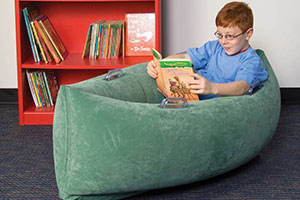
This one takes up a bit of floor space, but if snuggling into one prevents a meltdown or helps a child wind down before sleep, you might find it worth rearranging the furniture.
Pea pods are inflatable sitting devices that look like a cross between a peapod and a canoe. The velvety material presses firmly but gently against your child as they read, watch TV, or just settle in for a few quiet minutes.
Prices vary quite a bit from store to store, with some of the best deals found on Amazon and through specialty autism product retailers. Pay attention to sizing: they come in Junior, Medium, and XL.
4. Weighted Lap Pads
Does your child struggle to sit still in school or during car trips? Many parents find weighted lap pads to be one of the most versatile tools in their calming toolkit.
Essentially a mini weighted blanket, lap pads are easy to tuck into a bag for long car rides, trips away from home, and movie outings. Many adults keep one at their desk as well.
Options range from simple smooth gel pads to those offering varied visual and tactile stimulation. Like weighted blankets, lap pads come in different weights depending on your child’s age and size, so check the manufacturer’s recommendations carefully.
5. Compression Clothing
If you’re looking for something less visible that can be worn throughout the day, compression clothing is worth trying.
Compression garments gently and evenly squeeze the body without pinching or binding. Some children and adults report sensory relief from these garments, and many kids who resist other clothing actually seek out compression outfits. Individual experiences vary, and anecdotal reports should not replace professional guidance.
Options to explore include purpose-built sensory compression wear like Kozie Clothes, athletic-style compression garments available through retailers like Amazon.
It’s worth asking your child’s therapist or other parents if you can borrow one of these products before buying. You might find that a vest another family’s child rejected works perfectly for yours, or that the pea pod your neighbor swears by isn’t the right fit at all.
Frequently Asked Questions
What is deep touch stimulation, and how does it help children with autism?
Deep touch stimulation (DTS) provides proprioceptive input, which may help some individuals feel calmer and more regulated. For children with autism or sensory processing disorders, DTS products like weighted blankets and compression vests are commonly used to support sensory regulation throughout the day. Research findings are mixed, and more high-quality studies are needed to determine effectiveness, but many families find them a useful part of their child’s sensory toolkit.
How do I know which deep touch stimulation product is right for my child?
There’s no one-size-fits-all answer. A child who loves burrowing under blankets might do well with a weighted blanket, while a child who needs to move around during the day might do better with compression clothing or a pressure vest. It’s worth talking to your child’s occupational therapist or ABA provider, who can help match the right type of DTS input to your child’s specific sensory profile.
Are weighted blankets safe for children?
Weighted blankets are generally considered safe for older children when used correctly, but they’re not appropriate for every child. They should never be used with infants or very young children, and weight selection should follow manufacturer and professional guidelines. Children should always be able to move freely. When in doubt, consult your child’s therapist before purchasing.
Can deep touch stimulation products be used at school?
Yes, many of these products are designed with school settings in mind. Weighted lap pads are a popular classroom tool. Compression clothing can be worn all day without drawing attention. Some pressure vests are designed to look like regular outerwear. Check with your child’s school team to make sure any sensory tools are included in your child’s IEP or sensory plan.
Where can I try these products before buying?
Your child’s occupational therapist or ABA clinic may have loaner products available. Parent support groups and autism community organizations sometimes offer product libraries. Many companies also offer trial periods or money-back guarantees, so it’s worth asking before purchasing.
Key Takeaways
- DTS is thought to work by applying firm, sustained pressure that may help calm the nervous system, though research findings are mixed.
- Five main options are pressure vests, weighted blankets, pea pods, weighted lap pads, and compression clothing.
- Weighted blanket safety is critical: never use with infants or very young children, and always follow manufacturer and professional guidance on weight selection.
- No single product works for every child. Trial and error, guided by your child’s therapist, is the most reliable path to finding what helps.
- Try before you buy. Many companies offer money-back guarantees or trial periods, and therapists sometimes have loaners available.
Interested in learning more about ABA therapy and the professionals who support children with autism?