
People with autism often model qualities the rest of us struggle with: radical honesty, comfort with silence, loyalty to routine, and the ability to move through the world without social fear. These aren’t deficits in disguise. They’re traits worth paying attention to, and they can shift how you think about what ABA therapy is really building toward.


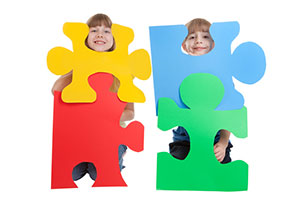
When we talk about autism, we tend to focus on the challenges: what needs to be addressed, fixed, or modified. Rarely do we stop and ask what people with ASD might teach us. Our lives might actually be better if we were willing to embrace some of the characteristics common to autism spectrum disorder. Here are five of them worth thinking about. And if you want to go deeper, there are 10 more things that make autism worth celebrating on the spectrum worth exploring.
Honesty
One woman recalled the moment her neurotypical three-year-old walked up to a woman at church, poked her belly, and asked, with complete innocence, why she was so fat. Mortified, the young mother apologized profusely. The woman took no offense. The question came from a child who didn’t have a social filter yet.
People with autism are often like that three-year-old. They’re direct to a fault. That directness can cause awkward moments, but it also means they haven’t learned to lie, hide their feelings, sweep things under the rug, or manipulate. Imagine going through life with that kind of transparency.
What if more of us operated that way? Wearing your heart on your sleeve, engaging in honest dialogue, and making a point of never letting the important things go unsaid could be the best thing that ever happened to your relationships. Honesty builds trust. Trust opens the door to healthier connections.
Fearlessness
Joey Fatone of ‘NSYNC once appeared on a game show alongside his daughter Kloey, who was diagnosed with high-functioning autism. In interviews, Fatone has noted that his daughter often seems unfazed by situations that might make other kids nervous. She just goes in without hesitation.
No fear. For a parent of a child with ASD, those two words can spark anxiety. Kids who don’t perceive risk need constant protection. But looked at differently, that fearlessness is something most of us have long since lost.
Barry Glassner, author of The Culture of Fear, pointed out the irony of modern anxiety: most Americans live in what is arguably the safest time in human history, yet fear levels keep climbing. We let the constant stream of bad news convince us that danger is everywhere, all the time.
Take a cue from those with ASD. There are always things worth worrying about. But the ability to move through the world without constant dread? That’s worth aspiring to.
Quietude
Many of us live bathed in constant noise. We have a hard time with silence. There are entire books written on the practice of it. In a room full of people, silence feels awkward, something to fill as fast as possible.
Some experts say our fear of silence is a product of culture. We grew up in a world where a TV or radio was always running in the background, even when nobody was watching. We’re surrounded by external noise all day long and barely notice it until the power goes out.
For many people with ASD, silence is medicine. When they’re overstimulated, quiet iswhatt restores them. The constant low-level noise that fills our lives contributes to the stress and anxiety that define modern living. Seeking out silence isn’t weakness. It’s a form of self-care most of us neglect.
Solitude
Silence and solitude tend to go together. You can’t really have one without the other.
A pull toward alone time is a common characteristic of autism. Most neurotypical people are wired for social contact and will turn on the TV just to feel like someone else is in the room. Being alone gets associated with depression or isolation. But it doesn’t have to be.
Author Ester Schaler Buchholz argued in The Call of Solitude that time alone can act as a psychological protector and an important part of healthy development. People with autism tend to understand this instinctively. They’ve found ways to soothe themselves, to be content with their own company, in ways that busy, socially-driven people rarely bother to learn.
Being alone can help us settle our minds and restore our senses. Solitude isn’t something to escape. It’s something to value.
Routine
Ellen liked her bedroom. She liked her bed by the window, her stuffed monkey beside her, and the canopy overhead. One day, she came home from school to find everything had changed. Her mom had moved her in with her little sister. The canopy was gone. Her bed was against the wall. Her monkey was in the closet.
Ellen, who was on the spectrum, had a complete meltdown.
She didn’t like change. She wanted things to stay the same. The predictability of her room gave her peace. If you’ve ever wondered why routine matters so much to people with autism, Ellen’s story is a good place to start.
Most of us have lost our capacity for that kind of loyalty. We throw away a perfectly good toaster to get a newer color. We want a new wardrobe because last year’s isn’t fashionable. We hop from relationship to relationship, service to service, convinced that something newer will make us happier.
What people with ASD can teach us is that keeping some things the same may actually bring more peace and contentment in the long run. Loyalty to what works isn’t stagnation. It’s wisdom.
Frequently Asked Questions
Why are people with autism so honest?
People with autism often have difficulty filtering their thoughts through social expectations before speaking. What neurotypical people learn to hold back, many autistic people simply say. This isn’t rudeness. It’s a different way of processing social interaction, and it produces a transparency that many people find refreshing once they understand it.
Is the honesty associated with autism always a strength?
It depends on context. The directness that makes autistic people such trustworthy communicators can cause friction in settings where people expect polite evasion. Most people who know and love someone with ASD come to appreciate the honesty, even when it stings a little.
Can ABA therapy help autistic individuals navigate social situations without losing their authenticity?
Yes. Good ABA therapy doesn’t aim to strip away personality or force neurotypical behavior on autistic individuals. It helps people build skills that give them more choices in how they engage with the world, including when to be direct and when to soften their communication.
What does routine mean for someone with autism?
Routine gives many autistic people a sense of predictability and safety in a world that can feel overwhelming. Disruptions to routine can cause genuine distress, not just mild inconvenience. Understanding that distinction helps families and educators respond more compassionately when things change unexpectedly.
How can learning about autism make me a better parent or caregiver?
Spending time understanding autism, including its strengths, helps shift the frame from “what needs to be fixed” to “what can we build on.” That shift tends to lead to more patient, more effective support for everyone involved.
Key Takeaways
- Directness isn’t a flaw. The honesty often associated with autism builds genuine trust when we’re willing to meet it openly.
- Silence and solitude are undervalued. Many autistic people seek these out naturally. Most of us could benefit from doing the same.
- Routine isn’t rigidity. The stability that people with ASD often crave can be a model for the kind of consistency that makes life feel more grounded.
- Strengths matter as much as challenges. Understanding what autism brings to the table leads to better support, better relationships, and better outcomes.
- People with autism have things to teach us. If we stop framing everything as a deficit and start paying attention, the lessons are right there.
Ready to turn that understanding into a career? ABA professionals work with autistic individuals every day, building on their strengths and helping them navigate a world that doesn’t always make room for them.