
Rodney Mullen has never received a formal autism diagnosis, but he has discussed identifying with traits often associated with autism. He came of age in the late 1970s, before high-functioning autism was widely recognized or diagnosed. His extraordinary focus, sensory sensitivity, social anxiety, and fundamentally different way of seeing the world align with traits associated with autism spectrum disorder.


If you’ve ever watched Rodney Mullen skate, you’ve seen something that’s hard to put into words. The precision. The stillness. He seems to inhabit a completely different cognitive space than everyone around him. For many people, that raises a question: Is Rodney Mullen autistic?
The short answer is: possibly. Here’s what the evidence actually shows.
Only a qualified clinician can diagnose autism spectrum disorder, and Mullen has never publicly confirmed receiving such a diagnosis.
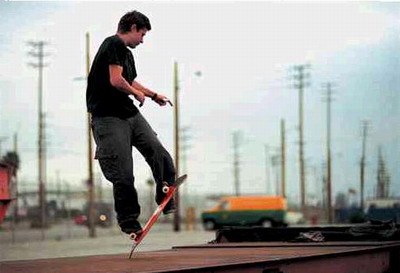
A Different Way of Seeing the Board
Mullen was born with metatarsus varus, or pigeon toes, a condition that causes both feet to point inward. In skateboarding, where foot placement controls everything, that’s a serious obstacle. Mullen didn’t work around it. He wore corrective boots and practiced obsessively until the limitation became irrelevant.
That obsessive focus became his signature. He’s credited with inventing the flat-ground ollie, the kickflip, the heelflip, the flatground 360 flip, and dozens of other foundational flat-ground tricks. The ollie alone changed the entire direction of street skating.
He’s also been inducted into the Skateboard Hall of Fame, a recognition of a career built on innovation no one else saw coming.
But what really set Mullen apart wasn’t the trick count. It was how he approached the board itself. Skateboarding filmmaker Stacy Peralta has noted that Mullen approached the skateboard as a three-dimensional object rather than a simple riding surface. Where everyone else assumed you ride on the deck, Mullen saw something with no rules attached. He could skate on the edge of it, flip it upside down, reinvent the whole premise.
That kind of thinking, where established rules don’t constrain you the way they constrain others, is something we see frequently in autistic individuals. Their brains don’t reach for the same default assumptions. That can make everyday social life harder, but it can also produce breakthroughs that neurotypical thinkers never arrive at.
Mullen also struggled with severe social anxiety. He was known for disappearing from team events, only to reappear hours later after skating alone. He’s described his inner life as intensely internal, something many autistic people recognize immediately.
The Traits That Point to the Autism Spectrum
Skateboarding wasn’t Mullen’s only obsession. As a child, he built an elaborate control center for his bedroom using Erector sets, pulleys, and strings that let him turn on the lights and open the door from his upper bunk. He became so absorbed in these projects that his parents brought dinner to his room on a tray, because he’d forget to eat.
That pattern, deep absorption in a specific domain, a near-compulsive drive to build and refine, forgetting basic needs like eating, is something researchers have noted in discussions of autism and intense focus. It’s a pattern that recurs when examining creative figures whose autism may have shaped their success.
Family history adds another layer. Mullen’s mother graduated from high school at age 14 and was an accomplished pianist. That kind of exceptional ability concentrated in a family line is consistent with patterns researchers observe in families with autistic members.
Today, Mullen is a sought-after figure in Silicon Valley and on the lecture circuit. Despite having no formal technology background, he holds a patent for a new skateboard truck design and developed the idea into the Tensor Trucks brand, which commercialized his patented truck technology. He’s a polymath who picks up mechanical and technological concepts at an unusual rate.
Like many people on the autism spectrum, Mullen has developed strategies over the years that help him navigate social situations more comfortably. But his fundamental cognitive style appears unchanged. The same brain that reimagined what a skateboard could do continues to find new angles on every problem it encounters. If stories like his have sparked your interest in supporting autistic individuals professionally, you can explore top ABA master’s programs to learn what a career in applied behavior analysis looks like.
Frequently Asked Questions
Has Rodney Mullen been officially diagnosed with autism?
No. Mullen has never received a formal autism diagnosis. He grew up in an era when high-functioning autism was poorly understood and rarely identified in children who were excelling in other areas. He has discussed identifying with traits often associated with autism, but no clinical diagnosis has been publicly confirmed.
What traits does Rodney Mullen show that are associated with autism?
Mullen has displayed several traits commonly discussed in autism research, including extreme focused interest in a narrow set of domains, an unconventional way of processing problems, social anxiety, a tendency to withdraw from groups, and a family background that may suggest a genetic component. His pattern of deep absorption in specific activities is something clinicians often note when evaluating for ASD.
What is savant-like focus in autism?
Some autistic individuals show an exceptional drive and capacity in one or more specific areas, far exceeding what’s typical. This kind of intense, narrow focus is distinct from savant syndrome as a clinical classification, but it’s a pattern that shows up frequently in autism research. You can learn more in our guide on how savant-like focus works in some autistic individuals.
Is Rodney Mullen considered high-functioning autistic?
Based on what he’s shared publicly, Mullen would likely fall into what was previously called high-functioning autism, now described as Autism Spectrum Disorder Level 1 under the DSM-5. He’s built a successful career, gives public talks, and functions independently, while still describing social challenges and an inner experience that differs significantly from the neurotypical norm.
Are there other athletes on the autism spectrum?
Yes. Several well-known athletes have been diagnosed with or identified as being on the autism spectrum. Their stories often share themes with Mullen’s, including exceptional focus, unconventional thinking, and the challenge of navigating social environments. You can read about other athletes on the autism spectrum in our dedicated feature.
Key Takeaways
- No formal diagnosis: Rodney Mullen has never been officially diagnosed with autism, but he has discussed identifying with traits often associated with ASD.
- A product of his era: He came of age before high-functioning autism was regularly identified in high-achieving individuals.
- Recognizable traits: His extreme focus, unconventional problem-solving, social anxiety, and deep absorption in specific domains are all patterns discussed in autism research.
- Family patterns: His mother’s exceptional abilities at a young age suggest a possible family connection to the autism spectrum.
- Adapted over time: Mullen has developed strategies to navigate social situations more comfortably, but his fundamental cognitive style appears unchanged.
Curious about where ASD research meets real-world practice? ABA professionals work at that intersection every day, helping individuals build on their strengths and navigate a world that doesn’t always fit their neurology. If you’re exploring what a career in applied behavior analysis might look like for you, we can help you find the right program.