Autistic people often struggle with social interaction because of differences in how their brains process communication, sensory input, and social cues. It’s not because they don’t want to connect. These neurological differences affect everything from reading facial expressions to managing overwhelming environments, and they vary widely from person to person.


If you’ve watched an autistic child struggle to join a game at recess, or seen a teenager freeze up in a group conversation, you’ve probably wondered why. And if you’re a parent, that question carries a lot of weight.
Here’s the short answer: it’s not about avoiding people. Most autistic individuals want social connections as much as anyone. What’s different is the underlying neurology: the way the brain processes language, reads social cues, handles sensory information, and predicts what other people are thinking. When those systems work differently, social interaction becomes much harder to navigate, not just uncomfortable.
Understanding why helps parents, educators, and therapists respond in ways that actually support autistic people rather than simply pushing them to “try harder.”
Why Social Interaction Is Different for Autistic People
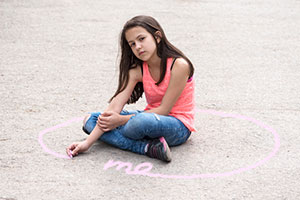 Social interaction is more complex than it looks. When two people have a conversation, they’re simultaneously managing verbal language, tone of voice, facial expressions, body language, context, and an ongoing mental model of the other person’s thoughts and feelings. Most people do this automatically, without conscious effort.
For autistic people, that automatic processing is often missing or significantly different. The brain isn’t routing signals the same way, which means what looks effortless to a neurotypical person requires active, exhausting problem-solving for someone on the spectrum.
This shows up in several specific ways.
Verbal communication delays are common in autism, especially in early childhood. When a child is still working to acquire language, social interaction becomes even harder. There’s no reliable way to express needs, respond to others, or participate in back-and-forth exchanges.
Non-verbal cues are equally challenging. A huge portion of human communication is non-verbal: a raised eyebrow, a shift in posture, a slight change in tone. Autistic individuals often have difficulty reading these cues accurately, which means they’re working with incomplete information in every social situation.
Repetitive behaviors and insistence on routine also play a role. Social situations are inherently unpredictable, which can be deeply stressful for people who rely on structure and consistency. When a conversation goes somewhere unexpected, the anxiety of that unpredictability can override everything else.
It’s also worth noting that this isn’t a desire to avoid people. Research suggests that many autistic individuals want meaningful social connections. They simply don’t have the same roadmap for doing so. That frustration, when it boils over, can sometimes look like aggression or withdrawal. But the underlying drive is often a deep wish to belong.
The Role of Theory of Mind
One of the most researched explanations for social skills differences in autism is something called Theory of Mind, the ability to recognize that other people have their own thoughts, beliefs, and perspectives that are different from your own.
Most neurotypical children pass classic false-belief tasks between ages 3 and 5. They start to understand that what they know isn’t automatically what someone else knows. They learn to predict how others might react, why someone might be upset, or how to share information another person doesn’t have.
Some research suggests that autistic people may process others’ perspectives differently, and in certain contexts, this can affect real-time social interpretation. It doesn’t mean they can’t empathize. That’s a common misconception. It means the process of modeling other people’s mental states requires more deliberate effort, and in real-time social situations, that extra processing step can cause delays, misreads, or missed cues entirely.
This is one reason why some autistic people appear to dominate conversations about their specific interests without noticing that the other person has checked out. It’s not selfishness. It’s actually hard to track what the other person is experiencing in the moment.
Sensory Processing and Social Overwhelm
Social environments are also sensory environments. A classroom is full of noise, movement, competing voices, fluorescent lighting, and physical proximity to other people. A birthday party is loud, unpredictable, and full of touch.
For many autistic individuals who experience sensory processing differences, these environments can be truly overwhelming. When the brain is working overtime to manage sensory input, there’s less bandwidth left over for the already-demanding work of social navigation.
What looks like social avoidance is sometimes sensory avoidance. A child who won’t join a group activity might be struggling with the room’s noise level, not the social interaction itself. Understanding that distinction matters a lot for how parents and educators respond.
What Social Skills Support Looks Like in ABA
The good news is that social skills can be taught, practiced, and improved. Applied behavior analysis has developed a range of evidence-based approaches to do exactly that. While ABA remains one of the most widely researched and commonly used behavioral interventions, perspectives on its use vary within the autistic community.
Several meta-analyses of social skills interventions in autistic youth have found stronger outcomes when skills are practiced in natural settings alongside peers rather than in isolated training environments. This aligns with naturalistic teaching approaches in ABA, which use real-world environments and everyday interactions as the learning context rather than isolated drills.
ABA therapists working on social skills training often target specific, observable behaviors, such as making eye contact during greetings, waiting for a turn in conversation, recognizing a friend’s facial expression of frustration, or learning how to enter an ongoing group activity. Skills are broken into small steps, practiced with real feedback, and gradually generalized into natural settings.
For high-functioning autistic individuals, social skills training can lead to meaningful improvements, not by changing who they are, but by giving them a toolkit they can reach for when they want to connect. For those with more significant support needs, the goal shifts toward comfort, communication, and reducing the anxiety that comes with social unpredictability. If you’re considering a career doing this work, you can explore top ABA master’s programs to learn what training and certification in the field looks like.
Frequently Asked Questions
Do autistic people want social connections?
Yes. Most autistic people do want meaningful social connections. The common perception that autism equals a preference for isolation isn’t accurate. Many autistic individuals deeply want to connect with others. They simply navigate social situations differently, and that gap between intent and ability can be frustrating for everyone involved.
Is poor eye contact always a sign of social disinterest?
Not at all. For many autistic people, making eye contact while processing a conversation is hard to manage, dividing cognitive resources and making listening harder. Some autistic individuals describe forcing eye contact as deeply uncomfortable or even painful. Lack of eye contact shouldn’t be interpreted as rudeness or disengagement.
Can social skills improve with therapy?
Yes, with the right support. ABA-based social skills training, especially when delivered in natural social environments alongside peers, has been shown to produce meaningful improvements. Progress varies by individual, the intensity of the intervention, and the extent to which the approach is tailored to the person’s specific needs and goals.
At what age should social skills intervention start?
Research supports early intervention in many cases, particularly during preschool years, because the brain is most adaptable during early development. That said, social skills work is beneficial at any age and can yield real gains in adolescents and adults alike.
Key Takeaways
- Social difficulties stem from neurology, not desire. Autistic people often want to connect but process communication, sensory input, and social cues differently.
- Theory of Mind plays a nuanced role. Some research suggests autistic people may process others’ perspectives differently, which can affect real-time social interpretation in certain contexts.
- Sensory overload can look like social avoidance. The environment itself often makes participation harder before social skills even come into play.
- Naturalistic ABA settings show the strongest results. Social skills practiced alongside neurotypical peers in real environments outperform isolated training.
- Earlier intervention generally helps. Research supports starting social skills work particularly during preschool years, though meaningful progress is possible at any age.
Ready to learn more about ABA programs that support autistic individuals and their families?