
Quick Answer
Kim Peek could read both pages of an open book at once, taking in each page in about ten seconds. He read an estimated 9,000 to 12,000 books, could give driving directions between major U.S. cities from memory, and could tell you the day of the week for almost any date you gave him. His IQ was 87.


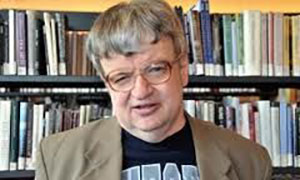
When Dustin Hoffman accepted his Oscar for Rain Man in 1989, one of the first people he thanked was Kim Peek, the real man behind the character, sometimes called the real Rain Man. It was a well-deserved acknowledgment. Peek’s abilities weren’t invented for the movie. If anything, the fictional Raymond Babbitt undersells what he could actually do.
Peek was born in Salt Lake City in 1951 with an unusually large head and significant developmental delays. He wasn’t able to walk until age four, had persistent trouble with motor skills, and couldn’t button his own shirts. He was expelled from school after a single day for disrupting class.
Around 18 months old, Peek started memorizing the books his parents read to him, reciting them back word for word. By 18, he’d landed a job calculating payroll for 160 people, a task that took him only a few hours each time, all without a calculator.
His IQ was measured at 87. His memory appeared to have no ceiling.
Here are five things Kim Peek could do that the rest of us simply can’t.
Reading Both Pages of a Book at Once
Most speed readers learn to scan a page quickly. Peek went further. He could open a book and take in both facing pages at once. Researchers have theorized he read the left page with his left eye and the right page with his right, though exactly how he pulled it off was never fully explained.
Most books took him under an hour to finish, some of the thicker ones a little longer. He spent years going through the Salt Lake City Public Library’s catalog, absorbing everything he could get his hands on. By the end of his life, estimates of how much he’d read and retained ran from about 9,000 books, documented in a detailed 2005 profile, to as many as 12,000.
Giving Driving Directions Between Major U.S. Cities
Before GPS and before Google Maps, there was Kim Peek.
Among the materials he consumed at the library were maps, atlases, and travel guides. Combining near-perfect recall with an apparent gift for spatial reasoning, Peek could work out the best route between any major U.S. city and provide it instantly, the kind of thing you’d now type into a map app. No smartphone. No app. Just recall and calculation happening faster than most of us could look something up.
Figuring Out What Day Anyone’s Birthday Was On
Ask Peek what day of the week any date fell on, and he’d tell you in seconds. Not just recent dates. Almost any date.
He could tell you, for instance, that Isaac Newton was born on a Sunday, and then note that Newton’s birthday was technically both December 25, 1642, and January 4, 1643, because two different calendar systems were in use at the time. He’d often add whatever notable historical events occurred on the same date, pulled from decades of reading newspaper archives and history books.
It wasn’t just a parlor trick. It reflected how deeply his memory was organized.
Reciting Any Shakespeare Play Verbatim
Peek loved Shakespeare. With his rapid reading ability, absorbing the complete works wasn’t difficult. Retaining what he read stuck with him for years afterward.
The trouble came at live performances. Peek would attend productions of Shakespeare’s plays and follow along with the version he had memorized. When an actor deviated from the text, even slightly, Peek would stand up to correct them. By most accounts, he was rarely wrong. It was also, by most accounts, not what the audience was expecting.
Counting Cards Well Enough to Win at Blackjack
The casino scene in Rain Man is one of the most famous in the film. In real life, it never happened. Not because Peek couldn’t do it.
Peek read a book on card counting, and by most accounts had the memory and math skills to make it work. When the film’s screenwriter suggested they test it out at an actual casino, Peek declined. He thought it would be unethical to use his abilities that way.
That restraint says something worth remembering. Peek had capabilities most people can’t imagine, and he chose to use them thoughtfully.
Kim Peek passed away on December 19, 2009, from a heart attack. He was 58. To the end, he still carried the Oscar statuette Barry Morrow had given him: a thank-you for inspiring a character who introduced the world to what a human mind can do when it works differently.
If Kim Peek’s story has you curious about other minds that work differently, we’ve profiled five creative geniuses whose autism contributed to their success.
Frequently Asked Questions
Was Kim Peek actually autistic?
Kim Peek wasn’t diagnosed with autism. Researchers who examined him later suggested his profile fit FG syndrome, a rare genetic condition, and found he’d been born without a corpus callosum, the bundle of nerve fibers connecting the two hemispheres of the brain. They’ve long wondered whether that unusual brain structure explains his memory, though they’ve never been able to draw a firm line between the two. Savant syndrome can appear in people with and without autism.
What was Kim Peek’s IQ?
Peek’s IQ was measured at 87 in 1988, which is in the low-average range. But his scores on individual subtests swung wildly, from impaired in some areas to superior in others, and the psychologists who tested him concluded that the single overall number wasn’t a fair description of what he could actually do.
How many books did Kim Peek memorize?
Estimates vary. A detailed 2005 profile of Peek by researchers who studied him for years put the figure at more than 9,000 books, and later accounts pushed his lifetime total as high as 12,000, since he kept reading up until his death in 2009. He read by scanning both facing pages at once, something researchers believe he did by reading the left page with his left eye and the right with his right, though exactly how he pulled it off was never fully explained.
What is savant syndrome?
Savant syndrome is a condition in which a person with a developmental or neurological difference displays one or more areas of exceptional ability, often alongside significant limitations elsewhere. Common savant abilities include feats of memory, rapid calculation, and artistic or musical skill. Kim Peek is one of the most extensively studied savants on record, though, unlike the popular assumption, he wasn’t autistic himself. We break down what an autistic savant actually is, and how that differs from Peek’s own diagnosis, in a separate piece.
What does Kim Peek have to do with ABA?
Kim Peek’s story is a good entry point for understanding the range of neurodevelopmental differences behavior analysts encounter in their work. Savant abilities aren’t a diagnosis or a defined treatment population on their own, but ABA principles do support individuals across a wide range of neurological and developmental profiles. Understanding that range makes for better, more individualized support. If Kim Peek’s story has you curious about the field, it’s worth taking a look at our list of the 20 best schools for an ABA master’s and what it takes to train as a behavior analyst.
Key Takeaways
- Peek’s brain was unusual in documented ways. He had no corpus callosum, and researchers later suggested he fit the profile of FG syndrome, not autism, though nobody’s proven either one explains his memory.
- He could read both pages of a book at once, one eye per page. He retained the contents of somewhere between 9,000 and 12,000 books, depending on when in his life you count.
- His calculation and recall abilities were extraordinary. He could instantly work out driving routes between major U.S. cities, name the day of the week for almost any date, and quote long stretches of Shakespeare from memory.
- Despite an overall IQ of 87, Peek’s specific cognitive strengths were extensively studied and documented. His own examiners said the overall score didn’t capture his abilities, a reminder that intelligence takes many forms.
- He chose not to use his abilities unethically. When offered the chance to count cards at a casino, he declined, calling it wrong. That choice says as much about him as his memory did.