Quick Answer
To become a BCBA® in Georgia, you’ll complete BACB-qualifying graduate education, supervised fieldwork, and the national BCBA® exam. Most candidates use Pathway 1 or Pathway 2. You’ll also need a separate license from the Georgia Behavior Analyst Licensing Board before you can practice, on top of your BACB certification.


July 1, 2015 changed things for Georgia’s children with autism, their families, and the ABA providers who serve them. That’s the date House Bill 429, better known as Ava’s Law, took effect and required covered state-regulated health plans to cover ABA therapy and other autism treatments. The final bill passed both chambers unanimously. It’s named for Ava Bullard, who credits early ABA treatment with helping her learn to communicate and speak.
The picture looks different today than it did back in 2015, in ways that matter if you’re planning a career here. Georgia now has a licensing board that’s actually issuing licenses. Under Ava’s Law as amended by SB 118, covered policies provide autism treatment coverage for individuals age 20 and younger and may limit ABA coverage to $35,000 a year. One caveat worth carrying with you: not every private health plan falls under the state mandate. Self-funded employer plans governed by federal ERISA rules sit outside it, and federal parity requirements can affect how plan limits apply.
A Note to Existing BCBA®s in Georgia (Not Applicable to New Licensure Candidates)
Georgia created state licensure for behavior analysts in 2022, regulating a field that had no state license requirement before. The Board gave ABAs who were already practicing at the time a window in which to meet licensing standards without being considered unlicensed. At its October 16, 2025 meeting, the Board extended these deadlines: behavior analysts already practicing were required to apply by April 1, 2026, and assistant behavior analysts already practicing by September 1, 2026. Both deadlines have now passed. If you’re studying toward your BCBA® or BCaBA® now, this doesn’t apply to you: you’ll simply need a Georgia license in hand before you start practicing, with no calendar deadline attached. If you were already practicing in Georgia and haven’t filed, contact the Board through the GOALS portal to check your status. Paper applications are no longer accepted.
We put the questions prospective behavior analysts ask us most often to faculty who run ABA programs around the country. Berry College in Rome is the only Georgia institution in that series, and the professor who answered has spent her whole career in this state.
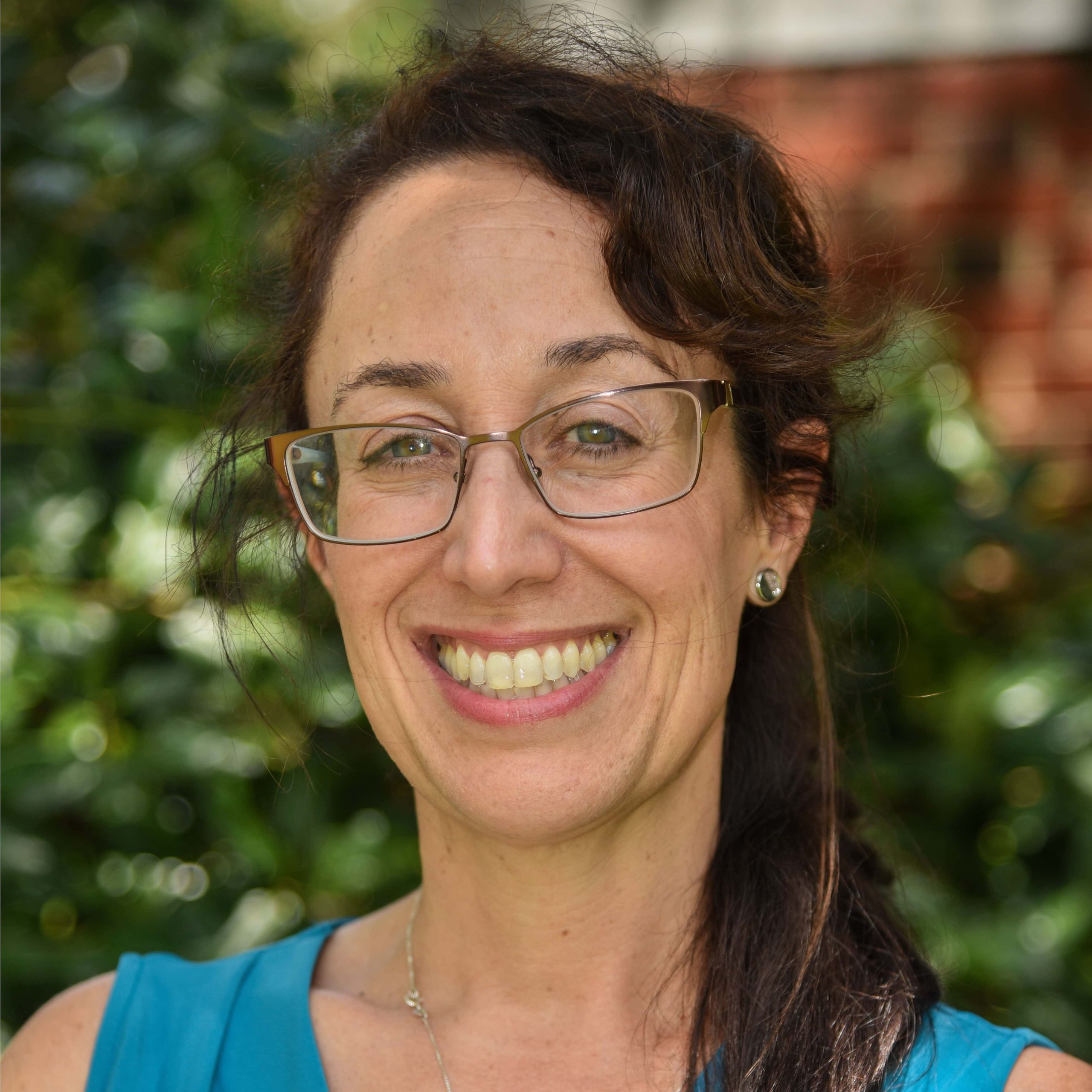
Professor of Psychology and Director of the Autism/Applied Behavior Analysis Program, Berry College
Dr. Haney earned her Ph.D. in school psychology at Georgia State University and her master’s and specialist degrees at the University of Georgia. She spent eight years as a school psychologist in Bartow and Cobb County Schools before moving into academia, and later completed supervised clinical experience in ABA at the Marcus Autism Center’s Language and Learning Clinic. Several of her students have gone on to positions at Marcus after completing summer internships.
What Does Georgia Require to Practice as a BCBA®?
BCBA® certification requirements are set by the Behavior Analyst Certification Board (BACB), but Georgia separately sets its own licensure requirements on top of that. Georgia generally requires qualifying applicants to hold active board-certified status, have passed an examination conducted by an approved certifying entity, meet the state’s graduate-education requirement, and satisfy the Board’s other application requirements.
Two credentials matter here, and picking the wrong one costs you years.
The Board Certified Behavior Analyst (BCBA®) is the graduate-level credential for independent practitioners. You can conduct assessments and design treatment plans without supervision, though your actual scope is still shaped by state law, employer policy, payer rules, and your own demonstrated competence. There’s a doctoral designation, the BCBA®-D, but it grants no additional practice authority and requires active BCBA® certification to hold.
The Board Certified Assistant Behavior Analyst (BCaBA®) is the undergraduate-level credential. BCaBAs may provide behavior-analytic services only under BCBA® supervision. If you intend to practice independently, this isn’t the credential you want.
Getting to the BCBA® means satisfying one of BACB’s eligibility pathways, completing qualifying supervised fieldwork, and passing the national exam. BACB currently recognizes four pathways. Two of them cover almost everyone coming through a university, and those are the ones below.
What Degree Do You Need to Become a BCBA® in Georgia?
Here’s where a lot of prospective students talk themselves out of the field unnecessarily, because they assume their degree is wrong. Often it isn’t.
- Pathway 1 requires a qualifying graduate degree from an APBA-accredited program, or from an ABAI-accredited or ABAI-recognized program. The accreditation verifies your coursework, so there’s no separate attestation step.
- Pathway 2 is more flexible than most people expect. You can hold a master’s degree or higher in any field from a qualifying institution, as long as you also complete the required graduate-level behavior-analytic coursework and supervised fieldwork. Your degree doesn’t have to be in behavior analysis, psychology, or education.
That’s the BACB certification rule. Georgia licensure has a separate education requirement, a master’s degree based on applied behavior analysis coursework in an approved sequence, so Pathway 2 candidates should confirm with the Georgia Board that their degree and coursework configuration satisfies the state rule before assuming BACB eligibility is enough on its own.
The other two pathways cover qualifying faculty teaching and research experience, and postdoctoral experience. They apply to a much smaller group, but they exist, and it’s worth knowing that before you assume you’re locked out.
For Pathway 2 applicants in 2026, coursework is reviewed through the BACB’s Pathway 2 Coursework Attestation process, handled by an authorized Program Contact. ABAI’s Verified Course Sequence system ended December 31, 2025. One transition detail that still matters: if you had a VCS Coordinator Coursework Attestation on record by December 31, 2025, you can continue to use it through December 31, 2026.
Pathway 2 coursework totals 315 instructional hours under the 2026 requirements:
- BACB Ethics Code and Code-Enforcement System / Professionalism: 45 hours
- Philosophical Underpinnings / Concepts and Principles: 90 hours
- Measurement, Data Display and Interpretation / Experimental Design: 45 hours
- Behavior Assessment: 45 hours
- Behavior-Change Procedures / Selecting and Implementing Interventions: 60 hours
- Personnel Supervision and Management: 30 hours
One thing to watch: the BACB is updating its certification standards effective January 1, 2027. The 315-hour coursework total holds, but the required content areas and course structure change. The 2027 changes also affect fieldwork and eligibility pathways: concentrated fieldwork supervision moves from 10% to 7.5%, the monthly fieldwork maximum rises from 130 to 160 hours, and Pathways 3 and 4 are discontinued. If your complete application is received by December 31, 2026, it can still be reviewed under the current requirements. You’ll need to meet whichever requirements are in effect when you apply, so confirm with your program rather than assuming the version you enrolled under still applies.
Several online graduate programs meet BCBA® requirements while letting you complete coursework on your own schedule and arrange fieldwork at a site near you.
What Should You Look for in a Georgia ABA Program?
Accreditation status tells you whether a program satisfies BACB’s requirements. It doesn’t tell you what the program is actually like to be in. We asked Dr. Haney what she’d want a prospective student to notice about Berry’s program:
Faculty Voice
“Berry students in the ABA/Autism program are doing really interesting research! They are earning competitive research grants internally at the college to work with faculty mentors, and they are presenting their research at state (GABA) and national (ABAI) conferences.
That GABA reference is worth chasing. The Georgia Association for Behavior Analysis runs an annual conference, and programs that send students to present are handing them something a transcript can’t show. When you’re comparing Georgia programs, ask where students present, whether faculty mentor student research, and what happens to graduates after they finish.
How Many Supervised Fieldwork Hours Do You Need?
Between 1,500 and 2,000 hours, and the total depends on how much supervision you get along the way.
Supervised Fieldwork requires 2,000 hours with at least 5% supervision in each supervisory period. Concentrated Supervised Fieldwork requires 1,500 hours with at least 10%. The trade is straightforward: more supervision, fewer total hours. BACB also permits qualifying combinations of the two, and some eligibility pathways carry their own requirements.
Each supervisory period covers one calendar month, and you can log between 20 and 130 hours in it under the 2026 requirements. Before you start accruing, three things need to be in place: a qualified supervisor, a signed supervision contract, and qualifying graduate-level behavior-analytic coursework already underway.
Georgia-based providers where you may be able to arrange supervised experience include:
- ABA Therapy Atlanta, Atlanta
- Agency for Behavioral Services, Valdosta
- Beyond Expectations, Inc., Atlanta
- Holistic Therapies and Consulting, Athens
- Milestones ABA, Columbus
- Peach Autism Center, Alpharetta
- Sterling Learning, Decatur
- Universal Learning Organization, Kennesaw
Whether a given site can actually supply qualifying fieldwork depends on the supervisor, the supervision structure, the activities you perform, and the documentation. Confirm with both the provider and your program before you count on it, and work through the supervised fieldwork requirements in full before you build a schedule around a placement.
How Hard Is It to Find Good Supervision in Georgia?
Harder outside metro Atlanta, and the reason traces back to Ava’s Law. When insurance started paying, clinics opened quickly, and not all of them arrived equipped to supervise trainees well. Dr. Haney watches this play out from northwest Georgia:
Faculty Voice
“We are in a somewhat rural area, that is just starting to see an influx of private ABA clinics as the insurance laws change. We want our students to have high quality clinical experiences, and have to be careful about which organizations are able to provide the type of clinical experience and supervision our students need.
What the Rest of Our Interview Series Shows
5 of the 61 ABA programs in our faculty interview series named insurance coverage expansion as the force reshaping services and hiring in their region. Faculty in Pennsylvania, Michigan, and Nebraska describe the same sequence Dr. Haney describes in northwest Georgia: a mandate passes, clinics open fast, and program directors have to sort out which of them can actually supervise well.
Practically, that means you should vet a placement the way a program director would. Ask how many BCBAs® are on staff and how long they’ve held certification. Ask how supervision hours get scheduled and documented. Ask whether the site has supervised trainees before. A clinic that opened last year to meet insurance demand may be a fine place to work and a poor place to train.
How Do You Take the BCBA® Exam in Georgia?
Once your coursework and fieldwork requirements are satisfied, you apply to the BACB to qualify for the BACB BCBA® certification examination. BACB contracts with Pearson VUE to deliver its examinations at authorized testing centers, and approved candidates schedule directly through Pearson. Search by state for current locations.
Georgia’s own licensing statute is broader than just the BACB exam. It requires passage of a behavior analyst examination conducted by a certifying entity, and the state recognizes BACB alongside other qualifying certifying entities the Board approves. In practice, the BACB BCBA® certification examination is the exam nearly every Georgia applicant takes, but it isn’t the only one the law contemplates.
For step-by-step detail on the full credentialing process, see our BCBA® certification guide.
Do You Need a Georgia License to Practice as a BCBA®?
Generally yes, though O.C.G.A. § 43-7A-7 sets out specific exemptions, so check whether any apply to your situation before assuming. The Georgia Behavior Analyst Licensing Board is operational and accepting applications through the state’s GOALS portal. Paper applications are no longer accepted and will be returned.
There’s a sequencing rule that catches people out. Assistant behavior analysts shouldn’t apply until their supervising behavior analyst holds a Georgia license, because O.C.G.A. § 43-7A-5(c)(4) requires assistants to practice under a licensed behavior analyst’s supervision. If you’re an assistant whose supervisor hasn’t filed, that’s the first conversation to have.
Georgia law requires applicants to hold active board-certified status. The statute recognizes the BACB or another qualifying certifying entity identified by the Board, so BACB certification is the usual route rather than the only one written into the law. Check the Georgia Secretary of State’s Behavior Analyst Licensing Board page for current application, background check, and fee requirements.
How Georgia Got Here
Ava’s Law takes effect
HB 429 requires covered state-regulated health plans to cover ABA therapy and other autism treatments.
Medicaid coverage begins
Georgia’s Medicaid program starts covering ASD services for individuals under 21.
SB 118 expands coverage
Coverage extends to individuals age 20 and younger, and the annual ABA benefit limit rises to $35,000.
Licensing board created
HB 412 establishes the Georgia Behavior Analyst Licensing Board.
VCS ends nationally
ABAI’s Verified Course Sequence system sunsets. Pathway 2 attestation replaces it.
New BACB standards take effect
Content areas and course structure change, though the 315-hour total holds.
Licensure Isn’t Only a Georgia Conversation
23 of the 61 ABA programs in our faculty interview series raised state licensure as a factor shaping where and how their graduates can practice. Georgia joins that list for the first time. Worth knowing if you might move: a license in one state doesn’t transfer automatically and each state sets its own rules, but your board certification travels with you and is what most states build their licensure requirements on.
What Do Behavior Analysts Earn in Georgia?
Start with an honest caveat, because a lot of sites skip it. The Bureau of Labor Statistics doesn’t publish a BCBA-specific wage series. The figures below come from SOC 21-1018, substance abuse, behavioral disorder, and mental health counselors, which is the broader occupational category behavior analysts are counted within. Treat them as labor market context for the field, not as BCBA® salaries.
As of May 2025, Georgia’s 9,600 workers in that category earn a median of $58,960 a year. That sits just below the national median of $59,350. Statewide, Georgia isn’t a premium market.
Atlanta is a different story. The Atlanta-Sandy Springs-Roswell metro employs 5,880 of those 9,600, and its median of $60,880 clears the national figure. Top earners there reach $95,110.
The spread across the state is wide. The 10th percentile statewide sits at $37,390, the 25th at $46,340, the 75th at $72,500, and the 90th at $90,980.
| Area | Employment | Median Wage | 90th Percentile |
|---|---|---|---|
| National | 491,930 | $59,350 | $97,590 |
| Georgia (statewide) | 9,600 | $58,960 | $90,980 |
| Atlanta-Sandy Springs-Roswell Highest | 5,880 | $60,880 | $95,110 |
| Macon-Bibb County | 160 | $56,870 | $79,030 |
| Columbus | 310 | $55,910 | $84,920 |
| Augusta-Richmond County | 510 | $55,320 | $83,370 |
| Rome | 80 | $51,990 | $81,720 |
| Savannah | 460 | $51,620 | $85,490 |
Actual BCBA® compensation varies with credential, setting, experience, and employer, and it can differ substantially from these broad occupational figures in either direction.
Rome, where Berry College trains its ABA students, posts a median of $51,990. That’s roughly $8,900 below Atlanta, and it maps onto what Dr. Haney described. Northwest Georgia is only now building the clinic base that metro Atlanta has had for years, and pay follows density.
The growth picture is where Georgia pulls ahead. State projections have employment in this category rising 24.5% between 2024 and 2034, from 8,900 positions to 11,080. That’s 2,180 new jobs and roughly 980 openings a year. The national projection over the same period is 16.8%, which puts Georgia at about one and a half times the national rate.
Where Can You Work as a BCBA® in Georgia?
ABA services in Georgia keep expanding, and the employer mix now runs from national chains to hospital-affiliated centers to university programs.
The Marcus Autism Center in Atlanta, part of Children’s Healthcare of Atlanta, is one of the better-known autism treatment and research centers in the region. Berry College maintains a partnership with it, and Dr. Haney’s students have been hired there after completing summer internships.
In June 2024, Centria Autism opened its first Georgia Life Skills Autism Academy center in Atlanta. Contemporary reporting described the facility as roughly 16,245 square feet with capacity for up to 76 clients, focused on early intervention for children age five and younger.
In March 2024, a clinic in Augusta called Autism, Advocacy, and Intervention began accepting children for ABA services, folding substantial play-based learning into its skill-building work.
In November 2023, Circle Care Services expanded into Georgia with a clinic in Marietta. Families there can access ABA therapy at home, in daycare centers, in schools, in community settings, or at the clinic itself.
The Center for Leadership in Disability at Georgia State University
The Center for Leadership in Disability (CLD) at Georgia State University is a University Center for Excellence in Developmental Disabilities. Housed in the School of Public Health, it’s one of 68 such centers in the national network funded through the Administration on Intellectual and Developmental Disabilities. Its work translates research into community practice for people with intellectual and developmental disabilities across Georgia.
Frequently Asked Questions
Does Georgia require a state license to practice as a BCBA®?
Generally yes, though Georgia law contains specific exemptions under O.C.G.A. § 43-7A-7. The Georgia Behavior Analyst Licensing Board is operational and accepting applications through the GOALS portal. Check the Georgia Secretary of State’s website for current requirements.
What does Ava’s Law require insurance companies to cover in Georgia?
Ava’s Law (HB 429), passed in 2015, requires covered state-regulated health plans to cover ABA therapy and other autism treatments. SB 118 strengthened it effective January 2019, extending coverage to individuals age 20 and younger and raising the annual ABA benefit limit to $35,000. Coverage is subject to medical necessity requirements under Georgia Code § 33-24-59.10. Self-funded employer plans governed by federal ERISA rules fall outside the state mandate.
How long does it take to become a BCBA® in Georgia?
There’s no BACB-defined completion time. In practice, most people take three to five years, covering a qualifying master’s degree and 1,500 to 2,000 hours of supervised fieldwork that can often run concurrently with coursework. Your own timeline depends on your starting education, which eligibility pathway you use, how quickly you accrue fieldwork, and when you sit for the exam.
What’s the difference between the BCBA® and BCaBA® credentials?
The BCBA® is a graduate-level credential for independent practitioners, covering assessment and treatment planning without required supervision, though state law, employer policy, and payer rules still shape your scope. The BCaBA® is an undergraduate-level credential, and BCaBAs may provide services only under BCBA® supervision. If you plan to practice independently in Georgia, the BCBA® is the credential to pursue.
What’s the job outlook for ABA professionals in Georgia?
Strong. State projections have this occupational category growing 24.5% from 2024 to 2034, adding 2,180 positions and roughly 980 openings a year, against a national rate of 16.8%. Atlanta is the largest employment hub, but demand runs statewide, including Savannah, Augusta, Columbus, and Macon.
Key Takeaways
- Ava’s Law, as amended by SB 118, requires covered state-regulated plans to provide autism treatment coverage for individuals age 20 and younger, with a permitted $35,000 annual ABA benefit limit. Self-funded ERISA plans sit outside the mandate.
- BCBA® eligibility depends on which BACB pathway you use. Under Pathway 2 your master’s degree can be in any field, provided you complete the required behavior-analytic coursework and fieldwork.
- Assistant behavior analysts need their supervisor licensed first. Georgia won’t process an assistant’s application until their supervising behavior analyst already holds a Georgia license, so confirm that before you file.
- Current fieldwork rules: 2,000 hours at 5% supervision or 1,500 at 10%, with 20 to 130 hours per supervisory period and a signed supervision contract required before you start.
- The $58,960 figure is not a BCBA® salary: it’s the May 2025 Georgia median for the broader BLS SOC 21-1018 category, against $59,350 nationally, with Atlanta at $60,880 and Rome at $51,990.
- Job growth is the real draw: 24.5% projected for 2024 to 2034, about one and a half times the national 16.8%, with roughly 980 openings a year.
- Vet your fieldwork placement carefully: the post-Ava’s-Law clinic boom means more sites, not uniformly better supervision, particularly outside metro Atlanta.
Ready to take the next step toward your BCBA® in Georgia?Compare graduate programs that meet BACB requirements and can be completed on your schedule.
2025 US Bureau of Labor Statistics salary and employment figures for Substance Abuse, Behavioral Disorder, and Mental Health Counselors, and Psychiatric Technicians for RBT-related content, reflect state and national data, not school-specific information. Note: ABA/BCBA and RBT roles are included in these broader BLS categories, and actual salaries for these professionals are frequently higher. ABA salaries can vary based on experience, location, and setting. Data accessed August 2026.