Quick Answer
The BCaBA (Board Certified Assistant Behavior Analyst) is an undergraduate-level credential that lets you practice ABA under the supervision of a BCBA. To earn it, you’ll need a bachelor’s degree with BACB-approved coursework, 1,300 hours of Supervised Fieldwork or 1,000 hours of Concentrated Supervised Fieldwork under BACB standards, and a passing score on the BCaBA exam. In states that license assistant behavior analysts, BCaBA certification is commonly required or accepted as a pathway to licensure.


So you’re exploring a career as an assistant applied behavior analyst. Maybe you’re midway through a bachelor’s degree and wondering what credentials actually matter in the field. Maybe you’re working as an RBT and want to step up without committing to a full master’s program yet.
Here’s the honest picture: BCaBA certification is the credential that defines this role. It’s what most employers expect, what many states recognize for licensure, and what unlocks your ability to supervise RBTs while you build toward the full BCBA if that’s where you’re headed.
We put some of the questions prospective assistant ABAs ask us most often directly to faculty who run BCaBA programs across the country. Their answers show up throughout this guide, alongside the requirements themselves. One of those programs is led by someone who’s since gone on to oversee an entire college.
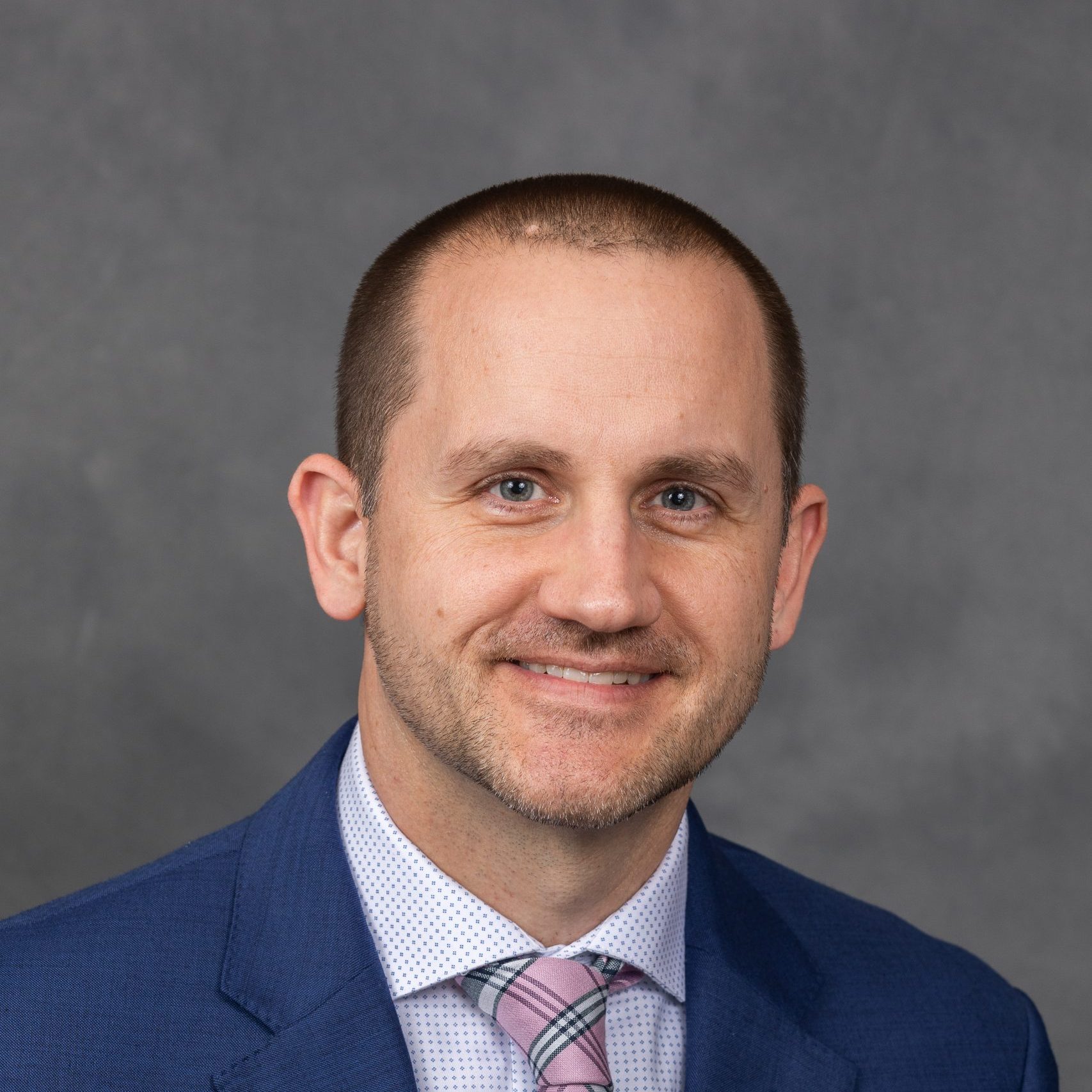
Dean, College of Arts, Sciences & Engineering, and Professor of Psychology, University of North Alabama
Dr. Zayac built UNA’s undergraduate ABA certificate around hands-on research experience for students, a focus he credits for the program’s strong record of alums moving on to master’s and doctoral ABA programs. He’s since gone on to lead the university’s entire College of Arts, Sciences & Engineering as Dean.
In This Guide
What Do Assistant Applied Behavior Analysts Actually Do?
Assistant applied behavior analysts provide ABA services under the supervision of a licensed or certified behavior analyst. The work is hands-on. You’re involved in data collection, progress monitoring, and administering assessments, always within a framework set by your supervising BCBA.
Depending on what your supervising behavior analyst assigns, you may:
- Assist in completing assessments and developing ABA therapy plans
- Collect and analyze data, and flag when interventions need adjustment
- Administer ABA assessments under the direction of the supervising BCBA
- Monitor and document patient progress
- Complete reports detailing the progress of an ABA program
- Watch for signs that a patient may need reassessment or referral
- Discontinue any treatment that appears harmful and immediately notify your supervisor
Assistant ABAs work in a wide range of settings, including schools, private practices, in-home care, and community clinics, and with diverse populations, including children and adults with autism spectrum disorders, pervasive developmental disorders, and traumatic brain injuries.
It’s also a role that draws people from adjacent fields. Many assistant ABAs are teachers’ aides, speech-language pathologists, social workers, or individuals actively working toward BCBA certification.
Is an Assistant ABA Just Following a Script?
That list of duties might make the role sound purely procedural, almost like a checklist you follow rather than a skill you build. Faculty who train BCaBAs pushed back on that framing when we asked them about it directly.
Faculty Voice
“We work hard to push our students beyond simply learning procedures or the ‘how-to’; we train them to be analysts, not just technicians.
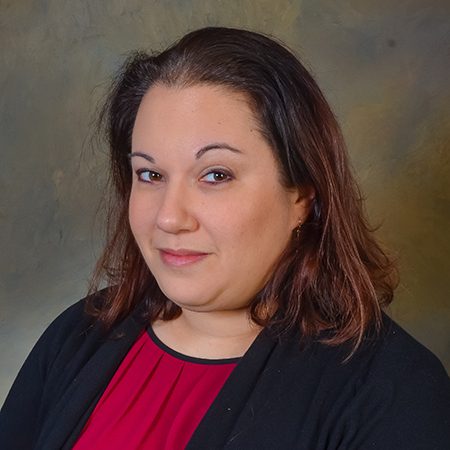
That distinction plays out in your daily task list. The data collection and progress monitoring you’re responsible for aren’t just record-keeping. You’re the person closest to the client’s day-to-day behavior, and your observations are often what tells your supervising BCBA whether a plan is working or needs to change.
What Can’t a BCaBA Do Without a Supervisor’s Sign-Off?
States that license assistant applied behavior analysts are clear about one thing: this role operates within defined limits. But exactly what those limits look like, who supervises you, how often, and what you can do independently, is set by each state’s own statute or regulation, not by one national rule. What follows describes a common pattern among states that regulate the role directly. Always check your own state’s requirements before assuming it applies to you.
In states that spell this out, supervision typically means initial direction and periodic on-site oversight from the supervising ABA, with the specific frequency and type left to the supervising behavior analyst’s professional judgment, informed by the assistant’s experience, competence, and the complexity of the treatment program. Other states set stricter or more specific ratios and documentation requirements.
Under this typical pattern, assistant ABAs are usually not permitted to:
- Initiate a treatment program before the patient has been evaluated and a plan developed by the supervising licensed behavior analyst
- Perform a patient evaluation, though they may administer specific assessments under the supervising ABA’s direction
- Analyze or interpret evaluation data, though they may participate in screening by collecting and communicating data to the supervising ABA
These limits aren’t bureaucratic hurdles. They’re the structure that keeps clients safe and gives assistant ABAs a clear developmental path as they build competence and work toward independent practice.
How Much Supervision Does a BCaBA Need Once Certified?
If you earn the BCaBA credential, you’re required to follow BACB’s supervision rules for as long as you hold that designation. BCaBAs must be supervised by a BCBA or BCBA-D (doctoral level) in good standing, and the amount of required supervision is tied to your service-delivery hours and how long you’ve been certified.
How Much Supervision Do You Need During Your First 1,000 Hours?
During your first 1,000 hours of post-certification work, you must receive supervision for at least 5% of your total behavior-analytic service hours, with a minimum of one supervision hour every two weeks.
What Changes After That?
After completing the first 1,000 post-certification hours, BCaBAs must receive supervision equal to at least 2% of their monthly behavior-analytic service hours. You also need to meet with your supervisor at least once per month, with your supervisor available for consultation between meetings. If you don’t provide behavior-analytic services in a given month, you don’t have to meet supervision requirements for that month.
BCaBA supervision requires three documents:
- A supervisor contract, signed by both parties before the supervisory relationship begins
- The BCaBA Supervision Meeting Form
- A documentation system tracking your service-delivery and supervision details, per BACB’s specifications
BACB’s full Standards for Supervision of BCaBAs are available at bacb.com.
How Do You Actually Become a BCaBA?
The BCaBA is an undergraduate-level certification awarded by the Behavior Analyst Certification Board (BACB) and recognized across the ABA industry as the benchmark credential for assistant-level practitioners.
Earning the BCaBA gives you the education and training to qualify for state licensure, where available, and for assistant-level practice under supervision. In states that license assistant behavior analysts, BCaBA certification is commonly required or accepted as a pathway to licensure. Browse the best schools for BCaBA certification to find programs that fit your goals.
Here’s what you need to earn the BCaBA.
Do You Need a Specific Bachelor’s Degree?
You’ll need a bachelor’s degree from an accredited institution in any discipline, along with BCaBA coursework approved by the BACB. You can meet this requirement through one of two paths:
- Pathway 1: A bachelor’s degree, or higher, from an ABAI-accredited program. Accreditation itself verifies that your coursework meets BACB’s content requirements, so no separate attestation is needed.
- Pathway 2: A qualifying bachelor’s degree plus the required coursework, completed at an institution with an authorized Pathway 2 Program Contact, a designated BCBA faculty member who reviews your coursework and attests to the BACB that you’ve met the content requirements.
Common degree backgrounds include applied behavior analysis, psychology, special education, counseling, and social work. The field you studied matters less than whether your BCaBA courses cover the required content areas.
We asked faculty who run these undergraduate programs just how flexible that really is in practice. One professor put it plainly:
Faculty Voice
“The Department of Psychological Science offers a Behavior Analysis Certification Preparation program… Any student who is interested in behavior analysis could declare this concentration or complete these courses.

Faculty at another program described that same openness from a different angle, pointing to the actual mix of students who show up:
Faculty Voice
“Many of the students interested in our ABA certificate are traditional students pursuing a bachelor’s degree in psychology. However, we have had an increasing number of non-traditional students who are employed by various local/regional behavior-analytic service providers or school districts.
What the Rest of Our Interview Series Shows
7 of the 12 BCaBA and undergraduate ABA programs in our faculty interview series that addressed this question described real numbers of non-traditional, already-employed, or career-change students, not just students arriving straight from high school. Diller and Zayac aren’t outliers.
Between the two, the pattern holds. Whether you’re coming straight out of a psychology major or you’re already working in a school or clinic and adding the credential to what you do, the coursework requirement doesn’t care which path got you there. It cares whether the content areas are covered.
Those BCaBA coursework content areas total 225 hours:
- Ethics and Professionalism: 30 hours
- Philosophical Underpinnings, Concepts, and Principles: 45 hours
- Measurement, Data, and Experimental Design: 30 hours
- Behavior Assessment: 45 hours
- Behavior-Change Procedures and Interventions: 60 hours
- Personnel Supervision and Management: 15 hours
BACB recognizes both on-campus and online BCaBA certification programs. If you live far from an institution offering an accredited program, or you’re working full-time, BCaBA certification online may be the most practical path. You can explore undergraduate VCS programs to compare options by accreditation status and delivery format.
What Does Supervised Fieldwork Actually Involve?
Alongside your degree, you’ll need supervised fieldwork under the close supervision of a qualified BCBA or BCBA-D in good standing. Under current BACB standards, there are two fieldwork pathways:
- Supervised Fieldwork: 1,300 hours, with supervision comprising at least 5% of your total hours
- Concentrated Supervised Fieldwork: 1,000 hours, with supervision comprising at least 10% of your total hours
BACB has revised fieldwork requirements before and is expected to again, so confirm the current numbers directly with BACB as you plan your timeline.
Your fieldwork should give you hands-on experience in:
- Conducting assessments related to the need for behavior intervention
- Designing, implementing, and monitoring skills acquisition and behavior-reduction programs
- Overseeing the implementation of behavior-analytic programs by others
- Training and designing behavioral systems and performance management
Can You Work as an RBT While You Complete It?
A lot of people ask whether their current job can count toward these hours, especially if they’re already working in the field in some capacity. Faculty who see this pattern in their own students say it’s common, and it often leads somewhere beyond the BCaBA itself.
Faculty Voice
“Each year a few take positions in a private organization as an RBT to gain clinical supervision hours towards their BCaBA. Interestingly, many of those students also go on to become BCBA as well.
How Common Is the RBT-to-BCaBA Path?
4 of the 14 BCaBA and undergraduate ABA programs in our faculty interview series specifically named RBT or behavior-technician work as a route students take into their program, alongside their regular coursework. Berry College isn’t the only one where this comes up.
If you’re weighing whether to take an RBT role while you finish your degree, that’s worth factoring in, with one caveat: not every hour you log as an RBT automatically counts toward your BCaBA fieldwork. The activities and supervision have to independently meet BACB’s fieldwork requirements, so confirm with your program or supervisor which of your RBT duties actually qualify before you assume the job is building your hours for you. Done right, though, it’s a real way to make progress toward certification while you’re still working, and it can set you up to keep going toward BCBA later if that’s where you end up wanting to go.
What’s on the BCaBA Exam?
Once your degree and fieldwork requirements are met, you’ll sit for the BCaBA certification exam, administered by Pearson VUE. The exam consists of 175 multiple-choice questions across these content areas:
- Behaviorism and Philosophical Foundations
- Measurement, Data Display, and Interpretation
- Experimental Design
- Ethical and Professional Issues
- Behavior Assessment
- Behavior-Change Procedures
- Intervention Development and Monitoring
- Supervisory Relationships
Do You Need to Check Your State’s Rules Too?
Even after you’ve earned your BCaBA, it’s worth checking your state’s specific requirements. State regulation of assistant behavior analysts varies widely. Some states license the role directly, others regulate only BCBAs, and some don’t regulate assistant-level practitioners at all.
You can find detailed state-by-state requirements in our State-by-State Guide to ABA Licensing.
Can a BCaBA Become a BCBA?
Holding the BCaBA puts you in a strong position to pursue full BCBA certification if that’s your goal. The BCBA is an independent practitioner credential. It removes the supervision requirement and gives you full authority to design, implement, and oversee ABA programs. That said, BCBA certification itself is a national credential. Whether it also gives you the legal right to practice independently in your state depends on that state’s own licensure laws, which is worth confirming as you plan your timeline.
To move from BCaBA to BCBA, you’ll need at least a master’s degree and to satisfy one of two BACB pathways. Pathway 1 means your graduate degree comes from a program accredited by ABAI or APBA, which verifies your coursework on its own. Pathway 2 means your university has an authorized Pathway 2 Program Contact, a BCBA faculty member who attests that your specific coursework meets BACB’s content requirements. Explore ABA master’s programs for career advancement to compare accredited options.
A note on program requirements: the Verified Course Sequence (VCS) system ended on December 31, 2025. As of 2026, Pathway 2 coursework is confirmed by that designated Pathway 2 Program Contact rather than through the old VCS course-by-course review. If you’re evaluating programs now, ask specifically about ABAI accreditation status, or whether the program has an active Pathway 2 Program Contact.
In addition to your degree, you’ll complete 1,500 to 2,000 hours of supervised fieldwork meeting BACB’s Experience Standards, then take and pass the BCBA exam. The BACB provides detailed information about the BCaBA-to-BCBA pathway at bacb.com.
Frequently Asked Questions
What’s the difference between a BCaBA and a BCBA?
The BCaBA is an undergraduate-level credential that requires supervision by a BCBA or BCBA-D to practice. The BCBA is a graduate-level credential for independent practitioners. BCBAs can design and oversee ABA programs without supervision and can supervise BCaBAs and Registered Behavior Technicians (RBTs). BCaBAs who want to move up typically pursue a master’s degree and sit for the BCBA exam.
Can a BCaBA supervise RBTs?
Yes. BCaBAs are authorized to supervise Registered Behavior Technicians and others who implement behavior-analytic interventions. However, BCaBAs themselves must remain under the supervision of a BCBA or BCBA-D in good standing.
How long does it take to become a BCaBA?
Most people complete the BCaBA pathway in four to five years, roughly the time it takes to finish a bachelor’s degree and complete the required supervised fieldwork hours. Some post-baccalaureate certificate programs allow individuals who already hold a bachelor’s degree to complete the required BCaBA coursework online more quickly.
Is the BCaBA required for state licensure?
It depends on your state. In states that license assistant behavior analysts, BCaBA certification is commonly required or accepted as a pathway to licensure. Some states don’t regulate assistant ABAs at all. Our State-by-State Guide to ABA Licensing covers each state’s specific requirements.
What settings do assistant ABAs typically work in?
Assistant ABAs work in schools, private ABA practices, in-home therapy settings, residential programs, and community clinics. The specific duties vary by setting and by what the supervising behavior analyst assigns, but data collection, progress monitoring, and direct client support are common across most roles.
Key Takeaways
- The BCaBA is the primary credential for assistant-level ABA practitioners. In states that license this role, BCaBA certification is commonly required or accepted as a pathway to licensure.
- The role is analytical, not just procedural. Faculty who train BCaBAs describe the goal as building analysts, not technicians running a checklist.
- Two fieldwork pathways exist. You’ll need either 1,300 hours of Supervised Fieldwork (5% supervision) or 1,000 hours of Concentrated Supervised Fieldwork (10% supervision).
- Working as an RBT can count toward those hours, but only the portions that independently meet BACB’s fieldwork requirements. Faculty report it’s a common path, and many students who take it go on to pursue BCBA as well.
- Ongoing supervision is required. BCaBAs must be supervised by a BCBA or BCBA-D in good standing at a rate of 5% of service hours during the first 1,000 post-certification hours, then 2% of monthly behavior-analytic service hours.
- BCaBAs can supervise RBTs and others implementing ABA programs, but can’t initiate treatment plans or independently interpret evaluation data.
- BCaBAs can pursue BCBA certification by completing a qualifying graduate degree and the required supervised experience hours.
Ready to explore BCaBA programs? Compare programs by accreditation status, online availability, and fieldwork placement support to find the right fit for your situation.