Quick Answer
Behavioral gerontology is the application of applied behavior analysis (ABA) to the care of aging adults. Behavior analysts in this specialty work in hospitals, nursing homes, and memory care facilities, using evidence-based techniques to address behavioral challenges like dementia-related aggression, depression, hoarding, and declining self-care skills.


If you’ve been exploring careers in ABA, you’ve probably noticed that most job postings focus on autism services. That makes sense. Demand for ABA professionals in autism treatment has grown dramatically over the past few decades. But there’s a second wave building, and it’s driven by a very different population: America’s aging adults.
Behavioral gerontology is a growing specialty within applied behavior analysis. As our population ages and the limits of medication-only treatment become clearer, behavior analysts are stepping into geriatric care settings in ways that simply didn’t exist a generation ago. If you’re drawn to working with older adults, or you’re already in a care setting and want to understand what behavioral approaches can offer, this guide covers what the work actually looks like, what training you’ll need, and what you can expect to earn.
This guide draws on insight from Dr. Stephanie Peterson of Western Michigan University, one of a handful of programs nationally with dedicated behavioral gerontology expertise on faculty.

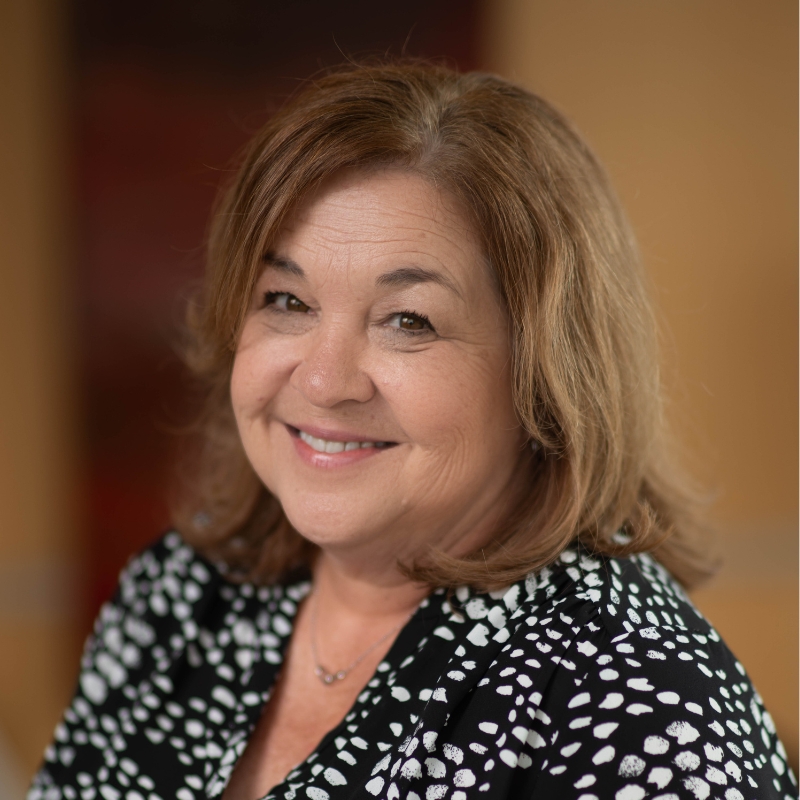
Stephanie Peterson, Ph.D., BCBA-D
Professor of Psychology and Associate Dean, College of Arts and Sciences, Western Michigan University
Peterson spent eight years chairing WMU’s Department of Psychology and led the university’s Autism Center of Excellence for the same stretch. She’s served two terms on the BACB’s Board of Directors and now chairs Michigan’s state licensing board for behavior analysts. WMU is also one of the few programs in the country with faculty who specialize in behavioral gerontology, which made her a natural fit to help frame this guide.
What Is Behavioral Gerontology?
Behavioral gerontology applies the principles of applied behavior analysis to the challenges that come with aging. That means behavior analysts examine the antecedents (triggers) and consequences (outcomes) of behavior in elderly patients, then design interventions to improve quality of life.
The conditions most commonly addressed in geriatric ABA include Alzheimer’s disease and dementia, depression and anxiety, declining hygiene and self-care, confusion, paranoia, and obsessive or compulsive behaviors. These aren’t entirely different from the challenges addressed in autism treatment. Many of the same ABA techniques apply. The key difference is the population and the context. Elderly patients often live in shared residential settings, have complex medical histories, and may have cognitive decline that affects how traditional talk therapies work.
That’s where ABA’s emphasis on environment and behavior, not cognition alone, makes it particularly well-suited for geriatric care.
Why Is This Specialty Growing So Fast?
By 2050, Census Bureau projections show the number of Americans age 65 and older climbing from 58 million in 2022 to roughly 82 million, a 42 percent increase that pushes this age group from 17 percent to 23 percent of the total population. And with longer lifespans comes a higher prevalence of age-related behavioral and cognitive challenges, including dementia, which affects roughly 10 percent of adults over 65.
For decades, most behavioral problems in older patients were treated primarily with medication. That approach is shifting. Research published by the American Psychological Association highlights the growing recognition of behavioral health needs in older Americans. And at least one peer-reviewed review has found that environmental variables can meaningfully influence behavior in elderly populations, not just medical conditions, and that behavioral approaches may reduce problem behaviors without the side effects that come with adding yet another drug to an already complex medication regimen.
ABAs are especially well-positioned for this work. Rather than prescribing or treating underlying medical conditions, they analyze the context in which problematic behaviors occur and modify the environment or consequences to bring about change.
Are ABA Graduate Programs Already Preparing Students for This Work?
More than you might expect. We went back through all 71 university interviews in our ABA Professor Interview Series to see how often gerontology, geriatric practice, or aging populations came up.
What We Found Across 71 Faculty Interviews
Every professor in the series answers the same fixed set of questions, including: "What do you feel are the most pressing issues in ABA today, and how does the program at your school prepare graduates to address these issues?" Gerontology and aging were never on the list. Even so, professors from 10 of the 61 university programs brought it up on their own, whether as a faculty research area, a funding priority, or a population their graduates go on to serve.
Some programs go well beyond a passing mention. At Western Michigan University:
Faculty Voice
“We also have faculty with expertise in behavioral gerontology, from whom students can take courses and conduct research. This prepares students to work with populations other than children with autism.
Fresno State takes a similar approach, letting students build a gerontology emphasis into their coursework directly:
Faculty Voice
“Students can take additional classes to emphasize in gerontology, mental health (as related to social work practice), and education.

And at the University of Northern Colorado, the philosophy runs even broader, treating geriatrics as one part of a much wider view of what ABA is for:
Faculty Voice
“Although we do cover ABA applications to students with autism, we take a broad view of ABA, including its uses in fields such as mental health, geriatrics, and industry.
Put together, these three programs show a real range of how gerontology shows up in ABA training today. Some build it into dedicated coursework and faculty research. Others treat it as one application among several within a broader curriculum. Either way, it’s clearly on more programs’ radar than the autism-only stereotype of the field would suggest.
Is Training Keeping Pace With the Need?
Not everyone thinks the field is moving fast enough. At the University of Nevada, Reno:
Faculty Voice
“The need for gerontological training and major Behavioral services for the elderly Now.

That tension is worth sitting with. Coursework and research opportunities in gerontology are real and growing, but the demand curve is steep enough that faculty in the field are actively flagging a gap between what’s being trained today and what elderly patients need right now. For someone weighing this specialty, that’s less a warning sign than an opening: a growing need with a workforce that hasn’t fully caught up yet tends to mean more opportunity for the people who get in early.
How Do Behavior Analysts Actually Work With Aging Adults?
The core framework is the same one used across all ABA populations: the ABCs of behavior analysis.
Antecedent
The situation or prompt that comes right before a behavior.
Behavior
The action that follows.
Consequence
The outcome that reinforces or discourages that behavior.
In geriatric care, identifying the right antecedent-behavior-consequence chain often takes careful observation. An elderly patient who becomes agitated every afternoon might be reacting to a shift change in nursing staff, a scheduled activity they find distressing, or an unaddressed pain trigger.
One of the most effective tools behavior analysts use in geriatric settings is the token economy. Patients earn tokens for engaging in appropriate behaviors: maintaining hygiene, participating in group activities, staying calm in stressful situations. Those tokens can later be exchanged for preferred activities or items. It sounds simple, but it works. In one study, 80 chronic geriatric mental health patients were split between a token-economy ward and a general-milieu ward and followed for six months. Both wards saw declines in unusual behavior, and incontinence dropped shortly after patients transferred into the study, so the improvements can’t be credited to the token economy alone. Even so, the results were an early sign that structured behavioral programs, not medication alone, could shift outcomes for this population.
Another key tool is the Functional Behavior Assessment (FBA). Before designing any intervention, the behavior analyst interviews the patient, reviews medical and behavioral records, and observes daily routines to identify what’s driving the problematic behavior. A review of behavior-analytic research on dementia confirms that this kind of systematic assessment is central to effective treatment in older populations.
One well-known example: dementia patients in two residential care facilities kept getting lost looking for their rooms. Standard room numbering meant nothing to patients who couldn’t hold onto new short-term memories. The ABA team recognized, however, that many dementia patients retain access to older memories clearly. Their solution was to mark each room with a personalized shadow box containing familiar memorabilia from the patient’s past. Personalized cues like this have been studied as a way to help residents with dementia recognize their own rooms and reduce wayfinding confusion, without relying on medication.
| Tool | What It Does | Example |
|---|---|---|
| Token Economy | Reinforces appropriate behavior with earned tokens exchangeable for preferred items or activities | Six-month ward study tracking hygiene, group participation, and calm behavior |
| Functional Behavior Assessment | Identifies what’s driving a problem behavior before designing an intervention | Interviews, record review, and daily observation to isolate triggers |
| Environmental Memory Cues | Uses personalized, familiar objects to support recognition and reduce confusion | Shadow boxes outside dementia patients’ rooms to aid wayfinding |
Those solutions get documented in a Behavior Intervention Plan (BIP), which may include direct therapy sessions, environmental modifications, caregiver training, and structured routines. The behavior analyst doesn’t just design the plan and disappear. They monitor progress and adjust the approach as the patient’s needs evolve.
What Can You Expect to Earn in This Field?
If you’re considering this as a career path, salary and job availability are reasonable things to want to know.
The BLS doesn’t track ABA or BCBA salaries as their own category. The closest available benchmark is Substance Abuse, Behavioral Disorder, and Mental Health Counselors (SOC 21-1018), a broader counselor occupation, so treat these figures as a general labor-market reference point rather than BCBA-specific data. As of May 2025, the national median salary for that broader occupational group was $59,350. The 10th-percentile wage was $38,940, and the 90th-percentile wage was $97,590. For a broader look at how compensation varies across states, the ABA salaries by state guide breaks it down in detail.
Job growth projections for this field are strong. National employment for this occupational category is projected to grow 16.8% from 2024 to 2034, adding about 81,000 positions and roughly 48,300 average annual openings, well above the average for all occupations. That projection covers the entire broader counselor occupation rather than geriatric-focused roles specifically, but demand for behavioral health specialists working with older adults is part of what’s driving it.
Work settings for behavioral gerontologists span a few different environments:
Long-Term & Memory Care
Skilled nursing and memory care facilities focused on dementia and cognitive decline.
Hospital Behavioral Health
Inpatient units addressing acute behavioral crises in older patients.
Adult Day Programs
Structured daytime programs supporting independence for aging adults living at home.
Home-Based Care
In-home behavior support for patients who prefer to age in place.
Some behavior analysts split their time between direct patient care and supervising other staff who implement behavior plans.
What Education and Credentials Do You Need?
Most people build toward this specialty in a fairly consistent order:
Earn a master’s degree in applied behavior analysis, psychology, or a related field.
Complete the coursework and supervised fieldwork hours required for BCBA certification.
Pass the national certification exam through the Behavior Analyst Certification Board (BACB).
Check your state’s licensure requirements separately. BCBA certification and state authorization to practice are two different things, and both the requirements and exemptions vary by jurisdiction. Our state-by-state guide to ABA licensing breaks down what’s required where.
A background in biology, psychology, gerontology, or pre-medicine at the undergraduate level can give you a meaningful advantage when applying to geriatric-focused ABA roles. Some colleges offer gerontology concentrations within their behavioral science programs.
Can You Specialize in Gerontology During Your ABA Degree?
At a growing number of schools, yes. Going back to our review of the full interview series, 4 of the 10 programs that mentioned gerontology at all went further and described dedicated coursework or research opportunities in it, not just a passing reference to the population.
Where Gerontology Shows Up in the Curriculum
Western Michigan University, Fresno State University, the University of Florida, and Jacksonville State University all described dedicated gerontology-focused coursework or research opportunities within their ABA programs, based on what their faculty told us directly.
If you already know you want to work with older adults, it’s worth asking any program you’re considering whether gerontology coursework or a faculty research lab in this area actually exists, rather than assuming it does.
If you’re not yet in a degree program and want to test the waters, many hospitals and long-term care facilities have volunteer programs that offer early exposure to geriatric patient populations. The work won’t directly involve behavior analysis, but it’s a valuable context for understanding the environment you’d be entering.
One important practical note: many healthcare and long-term care employers require background checks, though specific requirements vary by state, facility, and role. Keep that in mind as you plan your career path.
Frequently Asked Questions
What does a behavioral gerontologist actually do day-to-day?
Most behavioral gerontologists split their time between conducting assessments, designing and monitoring behavior intervention plans, and training other caregivers to implement those plans consistently. Direct patient therapy is part of the role, but so is supervisory and consultative work that keeps interventions running across shifts and staff.
What’s the difference between behavioral gerontology and traditional geriatric care?
Traditional geriatric care tends to rely heavily on medication to manage behavioral symptoms. Behavioral gerontology takes a different approach, identifying the environmental and situational triggers behind problem behaviors and modifying those conditions. It’s not a replacement for medical care, but it’s often a complement to it, particularly for behaviors that don’t have clear pharmacological solutions.
What salary can a behavioral gerontologist expect?
Salaries vary based on setting, credentials, and location. There’s no BCBA-specific salary data at the national level, but the closest available benchmark, the broader Substance Abuse, Behavioral Disorder, and Mental Health Counselors category (SOC 21-1018), had a median of $59,350 as of May 2025.
Do I need a BCBA to work in behavioral gerontology?
It depends on the position and the state. BCBA certification is a common professional credential for behavior analysts working in this space, and many hospitals and licensed care facilities expect applicants to hold it or be actively working toward it. Some entry-level or support roles have different requirements. Beyond BACB certification, many states separately regulate or license behavior-analytic practice, so it’s worth checking what your state requires in addition to the BCBA.
Is behavioral gerontology a good career choice long-term?
The demographics make a compelling case. The U.S. population age 65 and older is projected to grow from 58 million in 2022 to roughly 82 million by 2050, and behavioral health needs in that population are significant and growing. Ten of the 61 university programs in our own interview series already cite work in this area, which suggests the training pipeline is catching up to the need. ABAs who build expertise in geriatric settings now are positioning themselves for a specialty area where demand is only going to increase.
Key Takeaways
- Behavioral gerontology applies ABA principles to aging. This includes dementia, depression, declining self-care, and behavioral outbursts in residential care settings.
- The specialty is growing fast. By 2050, roughly 23% of Americans will be 65 or older, and demand for behavioral health specialists in geriatric care is projected to accelerate well above average.
- University programs are already building capacity. 10 of the 61 programs in our Faculty Voice interview series cited gerontology or geriatric work, and 4 of those offer dedicated coursework or research in it.
- Core ABA tools translate directly to geriatric populations. Token economies, Functional Behavior Assessments, and Behavior Intervention Plans all have documented effectiveness in elderly care settings.
- Advanced roles commonly involve a master’s degree and BCBA certification. State licensing and employer requirements vary, so check what your state requires beyond the BCBA. A background in gerontology, psychology, or pre-medicine strengthens your candidacy.
- Salary starts around $38,940 and reaches $97,590 or more. The national median was $59,350 as of May 2025, with 16.8% projected job growth through 2034.
Ready to Build the Credentials for a Career in Behavioral Gerontology?Explore graduate ABA programs from accredited schools and find the right fit for your goals.
2025 US Bureau of Labor Statistics salary and employment figures for Substance Abuse, Behavioral Disorder, and Mental Health Counselors reflect state and national data, not school-specific information. Note: ABA/BCBA roles are included in this broader BLS category, and actual salaries for these professionals are frequently higher. ABA salaries can vary based on experience, location, and setting. Data accessed August 2026.