
Was Isaac Newton autistic? There’s no way to know. He lived more than 300 years ago and was never evaluated. But researchers and historians have identified several traits in his behavior that resemble what we recognize today as autism spectrum disorder. This is historical interpretation, not clinical assessment, and any connection to ASD is speculative.


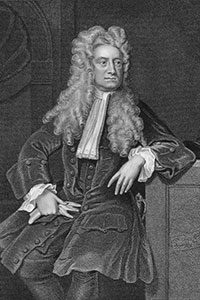
No one has ever argued that Isaac Newton was normal. While still an undergraduate student at Cambridge, he carefully slid a blunt needle into his eye socket and pressed it against the back of the sclera, distorting the shape of the lens and recording the visual patterns it created in a notebook. Alarming as that sounds, there was real method behind it. Newton understood that his observations about light depended on the reliability of his instruments, and he considered his own eyes to be among them.
That kind of ruthless, unsentimental logic (the experiment matters more than the discomfort, and curiosity wins over social convention) is something many parents and professionals working with autistic people will recognize immediately.
So was Newton’s genius tied to autism? Here’s what we know.
Newton’s Behavior Through a Modern Lens
Autism wasn’t a recognized diagnosis until the 20th century, so there’s no clinical record to draw from. What we do have are historical accounts of Newton’s behavior, and some of them share traits with what ABA therapists and clinicians see today.
Newton was famously difficult to be around. Colleagues described him as prickly, aloof, and completely indifferent to social niceties. He had little interest in relationships outside of his work, rarely engaged in small talk, and was known to give curt, impatient replies to people who asked questions he found beneath him.
He also had a remarkable capacity for obsessive focus. He would work for days on a single problem, forgoing meals and sleep. His notebooks from the period when he developed calculus and his theory of gravitation show the same problems examined and re-examined dozens of times from slightly different angles, the kind of repetitive, deep engagement that characterizes the intellectual style of some autistic people.
The Case for ASD: What the Evidence Suggests
Modern researchers have drawn specific parallels between Newton’s documented behavior and ASD traits. Simon Baron-Cohen, a professor of developmental psychopathology at Cambridge University, has suggested that Newton may have had what was then called Asperger syndrome. That term is no longer used as a separate diagnosis under DSM-5. It’s now classified under the broader autism spectrum. Baron-Cohen has been explicit that this is a hypothesis based on historical interpretation, not a clinical finding.
Some research has also explored potential overlaps between autism-related cognitive traits, such as strong systemizing ability and intense focus on patterns, and certain kinds of exceptional aptitude. This is an active area of study, and the findings are nuanced rather than definitive.
Newton’s obsessive streak fits some of these patterns. He compiled a detailed list of all the sins he’d committed prior to Whitsunday 1662, all 48 of them, recorded in precise, systematic detail. It’s the kind of cataloguing behavior that carries its own internal logic: orderly, methodical, and completely unselfconscious about how it might look to others.
The Case Against: Why a Diagnosis Isn’t So Simple
Here’s where it gets more complicated. Even as a young man, when autistic traits are often more visible in childhood, Newton wasn’t entirely isolated. He got into water fights on the Sabbath. He played pranks on neighbors and classmates. He had a reading list that ranged from Christian theology to pie-baking recipes, suggesting a breadth of interest that doesn’t quite fit a narrow fixation pattern.
He was also social enough to succeed in politics. Newton was elected to Parliament in 1689 and later became both Warden and Master of the Royal Mint, positions that required real interpersonal skill, persuasion, and institutional navigation.
And there’s another possible explanation for some of his behavior. Some analyses have suggested that Newton’s hair contained elevated mercury levels, a known hazard for scientists of his era who worked with heavy metals. Mercury poisoning can cause irritability, social withdrawal, and behavioral changes that resemble ASD symptoms. Researchers generally treat this as a contributing factor worth considering, though the evidence doesn’t allow for firm conclusions either way.
Why the Question Still Matters
Whether or not Newton had ASD, the broader point is worth sitting with. Apples have been falling from trees since the beginning of human history. Every element that led to Newton’s theory of gravitation was observable to anyone who looked. What set Newton apart was the way his mind processed what he saw: the capacity for sustained, intense focus on a single problem, the willingness to discount social expectations in favor of pure inquiry, and the ability to see patterns that everyone else overlooked.
Those traits show up in some people on the autism spectrum. And Newton isn’t alone. Historians and researchers have raised similar speculative questions about other transformative thinkers across history. The point isn’t to claim neurodivergence as the secret behind every major discovery. It’s to recognize that minds that work differently can perceive the world differently, and that difference has sometimes changed everything.
For families and professionals in the ABA field, that’s worth remembering every day. If you’re considering a career supporting autistic individuals, you can explore top ABA master’s programs to learn what training and certification in applied behavior analysis looks like.
Frequently Asked Questions
Was Isaac Newton officially diagnosed with autism?
No. Newton lived in the 17th and 18th centuries, long before autism was recognized or diagnosed. Any discussion of Newton and ASD is retrospective and speculative, based on historical accounts of his behavior rather than clinical records.
What traits of Newton’s are most associated with autism?
Researchers have noted his intense social difficulties, obsessive focus on narrow topics, apparent indifference to social norms, and highly systematic behavior, including his detailed cataloguing of personal sins and his relentless re-examination of the same mathematical problems. These traits share some characteristics with ASD, though the comparison is necessarily speculative.
Who suggested Newton may have had autism?
Simon Baron-Cohen, a professor at Cambridge University who specializes in autism research, has suggested Newton may have had what was formerly called Asperger syndrome, now classified under the broader autism spectrum in DSM-5. Baron-Cohen has been explicit that this is a hypothesis based on historical interpretation, not a clinical finding.
Could mercury poisoning explain Newton’s behavior?
Possibly, in part. Some analyses have suggested Newton’s hair contained elevated mercury, a known occupational hazard for scientists who worked with heavy metals in his era. Mercury poisoning can cause irritability, social withdrawal, and behavioral changes that overlap with ASD symptoms. Researchers generally consider it a plausible contributing factor, though the evidence doesn’t allow for firm conclusions either way.
Key Takeaways
- No retroactive diagnosis is possible — Newton was never clinically evaluated for autism, and any connection to ASD is speculative, based on historical interpretation of his behavior.
- Baron-Cohen’s hypothesis — Researcher Simon Baron-Cohen has suggested Newton may have had what was formerly called Asperger syndrome, now classified under the broader autism spectrum in DSM-5.
- Mercury poisoning as an alternative — Some analyses have suggested elevated mercury levels in Newton’s hair, pointing to possible mercury poisoning as a contributing factor for some behavioral traits, though this too is inconclusive.
- The bigger picture — The point isn’t a diagnosis. It’s a reminder that minds that work differently have, throughout history, sometimes produced humanity’s most important breakthroughs.
Interested in working with individuals on the autism spectrum? Explore ABA programs that can prepare you to make a real difference.