Nikola Tesla likely exhibited traits associated with autism spectrum disorder, but whether he would meet today’s clinical criteria is something we’ll never know for certain. Any retrospective discussion of historical figures and modern diagnoses should be understood as speculative. What we do know is that his life offers a fascinating lens for understanding how autistic traits and extraordinary genius can intersect.


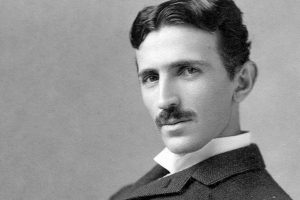
Nikola Tesla’s name was nearly forgotten for most of the 20th century. Eclipsed by Edison, Westinghouse, and Marconi — contemporaries who were better at commercializing their work — Tesla died broke and alone in a New York hotel room in 1943. Interest in Tesla resurged in the 21st century, particularly after his name was adopted by a major electric vehicle company.
But for anyone who’s spent time studying Tesla’s life and behavior, there’s been a long-running question: was Nikola Tesla autistic?
The honest answer is nuanced. We can’t diagnose historical figures with certainty, and autism wasn’t even a recognized diagnosis during Tesla’s lifetime. What we can do is look at the documented patterns in his behavior, his thinking, and his relationships, and examine them through what we now understand about autism spectrum disorder.
Tesla’s Behavioral Traits: What the Record Shows
Tesla’s contemporaries documented behavioral patterns throughout his life that overlap with traits associated with ASD.
His daily routine was famously rigid. He ate dinner at precisely 8:10 p.m., always at the same restaurant, always served by the same headwaiter. He had a profound aversion to jewelry, particularly pearl earrings on women, and became deeply unsettled when confronted with them. He had an obsessive relationship with the number three. He reportedly walked around a block three times before entering a building and wiped his plates with exactly 18 napkins (divisible by three) before meals.
His sensory experiences were also unusual. He reported a hypersensitivity to light and sound that became debilitating at times, describing sensations that would be recognized today as sensory processing differences. He also experienced vivid mental imagery and perceptual experiences with a clarity that he said he sometimes couldn’t distinguish from reality. He described using this early in his life to mentally “build and test” inventions before ever picking up a pencil.
His memory was extraordinary. Tesla could reportedly memorize entire books and recite them word for word, and he spoke eight languages fluently. He demonstrated complex integral calculus in his head as a young man, something that astonished his professors. His early ability to perform these feats was not taught. It appeared to be innate.
These traits — rigid routines, sensory sensitivities, exceptional memory, intense focus on specific areas of interest, and unusual perceptual experiences — overlap with features clinicians now associate with autism spectrum disorder.
Where It Gets More Complicated
Here’s where the picture gets less straightforward.
Tesla was also known for his charm and social grace. He was a showman. He demonstrated his inventions with theatrical flair at Madison Square Garden, and he cultivated friendships with some of the most celebrated figures of his era, including Mark Twain. His long-time secretary described him as having a “gentlemanly bearing.” He wasn’t someone who struggled to speak, engage, or hold a room.
That social fluency doesn’t rule out ASD. Plenty of autistic individuals develop strong social skills, especially in structured or professional contexts. But it does complicate a straightforward retrospective diagnosis. The early-childhood social and communication difficulties that are central to modern ASD diagnostic criteria weren’t well-documented in Tesla’s case. That gap in the record matters.
Some researchers who have examined his life, including Temple Grandin, consider it likely that he had autistic traits. Grandin’s perspective is frequently cited in discussions of historical figures and autism. But even she frames it as likely, not certain.
The reality is that we’re working with fragmentary historical records, applying a 21st-century diagnostic framework to a 19th-century life. That’s always going to produce an incomplete picture.
The Autism-Genius Connection: What Research Actually Says
The interest in Tesla’s possible autism isn’t just biographical curiosity. It touches on something researchers have been investigating for decades: the relationship between autism and exceptional cognitive ability.
The scientific record on this is genuinely interesting. Studies have found that families with higher rates of autism also tend to have higher rates of exceptional mathematical and scientific ability. The traits that can create challenges in social settings — intense focus, pattern recognition, attention to detail, preference for systems over people — can also fuel extraordinary intellectual output.
Tesla’s mother is a telling example. She reportedly had a near eidetic memory and was creative in practical problem-solving around the home. Tesla himself credited her directly for some of his own abilities. That kind of shared cognitive profile across a family is exactly what researchers studying the genetics of autism have described.
The overlap between certain autistic cognitive traits and exceptional ability in specific domains is real, but correlation does not establish diagnosis or causation. Tesla’s documented traits resemble patterns researchers describe in this area, but resemblance isn’t equivalence.
None of this means autism causes genius, or that all autistic people are savants. The vast majority of people with ASD don’t have extraordinary intellectual gifts any more than neurotypical people do. But the connection is worth taking seriously.
Why This Conversation Matters
There’s a reason these retrospective discussions about Tesla, Einstein, Newton, and other historical figures keep circulating. It’s not just academic.
For many families raising children with ASD, and for autistic individuals navigating a world that wasn’t designed with them in mind, seeing a connection between autism and some of history’s greatest minds carries genuine meaning. It doesn’t change a diagnosis or make the daily challenges easier. But it offers something: a different frame for understanding what autistic thinking can produce.
It’s worth being careful here, though. The “autistic genius” narrative, while inspiring, can inadvertently create pressure. The idea that autism is only valuable when it produces extraordinary output isn’t the right takeaway. The value of every autistic person isn’t contingent on genius-level ability.
What Tesla’s story actually demonstrates is something more fundamental: that neurological difference isn’t inherently deficit. His rigid routines, sensory sensitivities, and intense focus weren’t bugs in his operating system. For him, they were features. Whether we’d give his profile a formal ASD diagnosis today is ultimately beside the point.
Frequently Asked Questions
Did Nikola Tesla have autism?
Tesla was never diagnosed with autism. The diagnosis didn’t exist during his lifetime. Looking back at documented accounts of his behavior, many of his traits overlap with what we now recognize as autism spectrum disorder, including rigid routines, sensory sensitivities, extraordinary memory, and intense focus on specific interests. Some researchers who’ve examined his life consider it likely that he had autistic traits, but a definitive retrospective diagnosis isn’t possible.
What autistic traits did Tesla show?
Tesla’s most documented autism-consistent traits included an extreme adherence to daily routines, sensory sensitivities to light and sound, an obsession with the number three, exceptional memory, and an intense, nearly exclusive focus on his work and interests. He also reportedly experienced vivid mental imagery and perceptual experiences that he used as a design tool. That kind of unusual cognitive feature is something some researchers associate with certain autistic profiles.
Was Tesla good at socializing?
This is one reason his case is complicated. Unlike the stereotype of autism involving profound social difficulty, Tesla was known as charming, articulate, and socially engaging in professional and public settings. He maintained close friendships and was admired for his bearing. That said, he was also a recluse in daily life and had few intimate personal relationships. Many autistic individuals are capable of strong social performance in structured contexts while still experiencing the core features of ASD in other areas of life.
Is there a connection between autism and genius?
Research does show meaningful overlap between certain autistic cognitive traits — intense focus, pattern recognition, exceptional memory in specific domains — and extraordinary intellectual achievement in fields like mathematics, physics, and music. Families with higher rates of autism also tend to show higher rates of exceptional ability in these areas. That said, correlation doesn’t establish causation, autism doesn’t cause genius, and most autistic people don’t have savant-level abilities. The connection is real but easily overstated.
Who else has suggested Tesla may have been autistic?
Temple Grandin, the autistic scientist and author, is among those whose perspective on Tesla is frequently cited in discussions of historical figures and autism. Other researchers and writers studying the intersection of neurodiversity and exceptional achievement have made similar observations about Tesla’s profile. None of these represents formal clinical conclusions. They’re informed perspectives on a question that can’t be definitively answered.
Key Takeaways
- Tesla’s documented traits overlap with ASD. Rigid routines, sensory sensitivities, exceptional memory, and intense focus are all well-documented in his case. A formal retrospective diagnosis, however, isn’t possible.
- His social fluency complicates the picture. Tesla was charming and publicly engaging, which doesn’t rule out ASD but does add nuance to any retrospective analysis.
- Some researchers consider it likely. Temple Grandin and others have identified Tesla as a probable historical figure with autistic traits, though all frame it as speculative.
- The autism-genius connection is real but nuanced. Research supports overlap between certain autistic cognitive traits and exceptional ability in specific domains. Correlation doesn’t establish causation.
- The deeper takeaway isn’t about diagnosis. Tesla’s story is most valuable as a reminder that neurological difference isn’t the same as deficit.
Ready to explore a career in applied behavior analysis? ABA professionals work with autistic individuals across every stage of life, from early intervention through adulthood.