Quick Answer
California doesn’t license behavior analysts, so there’s no state licensure application after you certify. Through the BACB’s university-training routes you’ll need a qualifying master’s degree, qualifying behavior-analytic coursework, 1,500 to 2,000 hours of supervised fieldwork, and a passing BCBA exam score.


California posted 20,258 jobs requesting BCBA or BCBA-D certification in 2025, more than any other state and about two and a half times second-place New Jersey. That’s from the BACB’s own demand report, and it’s one of the few numbers in this space that counts behavior analysts specifically rather than approximating them.
For wider context, California also has 75,610 people working as substance abuse, behavioral disorder, and mental health counselors, the broad BLS category that ABA work gets counted inside. Treat that one carefully. It takes in plenty of people who aren’t behavior analysts, because BLS has no occupation code for BCBAs at all. It tells you the market is big. It doesn’t tell you how many BCBAs are in it.
Here’s what does surprise people. California has no license for behavior analysts. No board, no application, no state credential. You’d expect the country’s largest behavioral health workforce to have one. What it has instead is an insurance mandate that drove up demand and a national certification that became the standard employers hire against.
We put the questions prospective California BCBAs ask us most often to faculty who run ABA programs in the state. Four California programs are part of our faculty interview series, and their answers run through this guide alongside the requirements themselves.
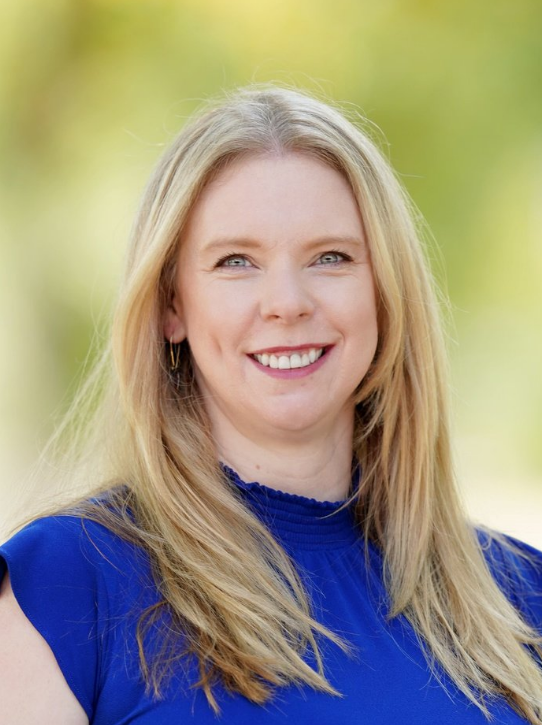
Marianne L. Jackson, Ph.D, BCBA-D
Professor of Psychology and Coordinator, M.A. in Applied Behavior Analysis, California State University, Fresno
Dr. Jackson coordinates Fresno State’s master’s program in applied behavior analysis, one of the few in California that runs its own campus-based practicum with faculty and BCBA supervision rather than sending students to outside placements. She requires every student to complete a master’s thesis, a stance she ties directly to protecting the quality of the field as demand accelerates.
In This Guide
Why Doesn’t California License Behavior Analysts?
California doesn’t license behavior analysts as a distinct profession. It isn’t for lack of trying. A serious attempt made it almost all the way through the legislature and then died.
What Happened to Assembly Bill 1715?
In January 2016, Assembly Majority Floor Leader Chris Holden introduced Assembly Bill 1715, which proposed a Behavior Analyst Act and would have put licensing under the Board of Psychology. The California Association for Behavior Analysis (CalABA) backed it hard.
Holden argued that California needed to protect “autistic children, as well as others who can benefit from behavior analytic services, from those who falsely claim they are qualified to practice behavior analysis.”
Opposition came from FACT (Family, Adult, and Child Therapies), California’s Association of Regional Center Agencies, and the Behavioral Intervention Association. Legislative materials record scope as a central objection. The bill described the practice of behavior analysis as modifications intended to produce “socially significant improvements” in human behavior, language broad enough that opponents argued it would pull a wide range of practitioners under new state requirements and squeeze a provider network already stretched thin.
The vote counts tell you how close it got. Business and Professions Committee, 14-0. Appropriations, 15-1. Full Assembly, 74-1. CalABA announced in June 2016 that it and the author had decided not to move forward, and the bill ultimately died in the Senate.
No licensing law has replaced it. California did enact SB 402, effective January 1, 2026, which created statutory definitions for qualified autism service providers, professionals, and paraprofessionals. That’s coverage and credentialing structure, not professional licensure, and the distinction matters when you’re planning a career here.
How Did Senate Bill 946 Change the Market?
Senate Bill 946 took effect July 1, 2012. It requires applicable healthcare service plan contracts and health insurance policies to cover behavioral health treatment for individuals with pervasive developmental disorder or autism. Read that scope carefully, because it’s narrower than “developmental disorders” generally. ABA is expressly named in the statutory definition of behavioral health treatment.
The mandate also requires covered plans and insurers to maintain an adequate network that includes qualified autism service providers who supervise or employ qualified autism service professionals and paraprofessionals.
Expanded coverage almost certainly contributed to demand for qualified providers. We’d stop short of calling it the reason California’s workforce looks the way it does, because population size, school systems, regional center services, and Medi-Cal spending all pull in the same direction. It’s one force among several, and it’s the one written into statute.
The demand numbers show something more nuanced than “California is booming,” though. The BACB’s US Employment Demand for Behavior Analysts: 2010-2025 report puts California first with 20,258 BCBA postings, ahead of New Jersey at 8,139, Texas at 7,792, Massachusetts at 7,315, and North Carolina at 6,874. Those five states together account for 38% of national demand, and California alone is 15% of it.
But California grew just 3% from 2024 to 2025, while national demand rose 28%. North Carolina grew 63%. New Jersey grew 58%. Texas grew 32%. California is the biggest market and the slowest-growing of the top five, which is a mature market rather than a stalling one. Worth understanding if you’re deciding where to build a career. California is where the jobs are. It isn’t where they’re appearing fastest.
Assistant-level demand moved the other way entirely. California BCaBA postings fell from 2,610 to 1,612, down 38%, though the state still leads that category nationally too.
California’s Supply Gap, in Numbers
As of August 2026, BACB certificant data shows California with 10,813 BCBAs and 353 BCBA-Ds, about 11,166 certified behavior analysts. Set that against 20,258 job postings in 2025 and you get roughly 1.8 postings per certified behavior analyst, tighter than the national ratio of 1.65. California holds about 14% of the country’s certified behavior analysts and generates 15% of its demand.
At the assistant level the gap is far wider. California has just 193 certified BCaBAs against 1,612 postings, roughly 8 postings per certificant, even after demand dropped 38%. Job postings aren’t the same as unfilled positions, since one posting can be filled quickly and one person can field several offers. As a measure of hiring pressure, though, the direction is hard to misread.
What Our Faculty Interviews Show About Demand
14 of the 61 ABA programs in our faculty interview series raised workforce shortage or accelerating demand without being asked about it directly. Three of the four California programs in the series were among them. The staffing gap isn’t a marketing line, it’s what program directors say when you ask what keeps them up at night.
So What Counts as Credentialed in California?
No California law creates a professional license specifically for applied behavior analysts. The BCBA credential is what fills that space in practice, and in at least one place it’s written into regulation. Under Title 17 of the California Code of Regulations, a regional center classifies an individual as a Behavior Analyst for that vendor category when the person is recognized by the BACB as a BCBA.
Other settings set their own terms. School districts, insurers, and Medi-Cal each run their own credentialing, and what they ask for varies. CalABA’s own guidance says an increasing number of regional centers and school administrators require the certification of anyone providing behavioral intervention to their consumers and students. So BCBA is the credential that opens the most doors here, but it isn’t a universal legal requirement for all ABA work in every setting.
For how the rest of the country handles this, see our state-by-state guide to ABA licensing. California is the outlier, not the norm.
How Do You Become a BCBA in California?
With no California license to apply for, certification runs entirely through the national Behavior Analyst Certification Board. The BACB currently recognizes four eligibility pathways. Pathways 1 and 2 are the ones that matter if you’re headed into a university graduate program, and they’re what this guide covers.
Do You Need a Specific Master’s Degree?
You need a master’s degree or higher for either pathway. What differs is where the degree comes from and how your coursework gets verified.
Pathway 1: A qualifying master’s or doctoral degree from a program accredited by the Association for Behavior Analysis International (ABAI), accredited by the Association of Professional Behavior Analysts (APBA), or recognized by ABAI under an eligible Tier 1, 2a, or 2b designation. The accredited degree handles your degree and coursework requirements. You’ll still need qualifying supervised fieldwork and a passing exam score. Browse our list of top ABA master’s programs to compare accredited options.
Pathway 2: A master’s degree or higher in any field from a qualifying institution, plus 315 hours of qualifying graduate-level behavior-analytic coursework. Your major doesn’t have to be behavior analysis. The coursework does have to cover these content areas:
- BACB Ethics Code, Code-Enforcement System, and Professionalism: 45 hours
- Philosophical Underpinnings, Concepts, and Principles: 90 hours
- Measurement, Data Display and Interpretation, and Experimental Design: 45 hours
- Behavior Assessment: 45 hours
- Behavior-Change Procedures, Selecting and Implementing Interventions: 60 hours
- Personnel Supervision and Management: 30 hours
Here’s the part that trips people up, and it changed recently. Pathway 2 coursework now runs through the BACB’s Pathway 2 Coursework Attestation System. ABAI discontinued the Verified Course Sequence system at the end of 2025.
Since January 1, 2026, an institution using Pathway 2 has to have an approved Pathway 2 Program Contact. That’s a full-time faculty member in the department housing the program who holds active BCBA or BCBA-D certification. That person reviews your qualifying coursework and submits the attestation to the BACB. It isn’t your chair or dean signing off, though the institution does confirm who the Program Contact is. Before you enroll anywhere claiming a Pathway 2 route, ask whether they have an approved Program Contact in place.
If you already have a VCS Coordinator Coursework Attestation that was submitted to the BACB by December 31, 2025, you can still use it toward an application through December 31, 2026. After that it’s gone.
There’s a second date worth putting in your calendar. Pathway 2 stays open through December 31, 2031. Beginning January 1, 2032, Pathway 1 becomes the only BCBA eligibility pathway, and qualifying degrees will have to come from programs accredited by ABAI or APBA. ABAI Tier 2a and 2b recognition won’t be enough on its own at that point. If your timeline runs long, that changes which programs are worth your money. The BACB keeps the current rules on its university training requirements page. Flexible options exist either way, including strong online ABA programs you can complete remotely.
How Do You Get Supervised Fieldwork Hours in California?
You’ll complete a supervised fieldwork period alongside or after your coursework. Two options:
- 2,000 hours of Supervised Fieldwork, with supervision totaling at least 5% of fieldwork hours in each supervisory period
- 1,500 hours of Concentrated Supervised Fieldwork, with supervision totaling at least 10% of fieldwork hours in each supervisory period
You can start accruing once you’ve met the BACB’s fieldwork-start requirements. That means beginning qualifying coursework where required, working with a qualified supervisor, and having the supervision contract in place before you log anything. The contract part catches people out. Hours worked before it’s signed don’t count. Each calendar-month supervisory period allows between 20 and 130 hours.
Qualifying activities include observation and data collection, staff and caregiver training, conducting assessments, client meetings, graphing and analyzing data, reviewing research literature, and writing or revising behavior programs. Doing one of those things doesn’t automatically make the hour count, though. It has to be behavior-analytic work meeting BACB’s standards.
In practice this is the requirement that decides how long your path takes and what it costs you. Whether your program helps you find a placement, and whether that placement pays, varies enormously.
How Many Programs Pay for Fieldwork?
9 of the 61 programs in our faculty interview series described paid supervised fieldwork, funded practicum placements, stipends, or tuition coverage. Two are California programs. Sacramento State describes funded internships with regional ABA providers, and when we interviewed Carolynn Kohn at University of the Pacific she described a salaried clinical stipend paired with substantial tuition coverage. Ask every program you’re considering whether placement is paid, because most don’t volunteer it.
California has a large behavioral health workforce and a lot of ABA providers, which helps when you’re hunting for a placement. Be careful how much weight you put on that, though. The BLS employment figures cited elsewhere in this guide count counselors, not qualified BCBA fieldwork supervisors, and nobody publishes a supervisor count. Ask programs directly how they arrange and verify placements. Where graduates end up afterward is a fair question to ask too.
Faculty Voice
“The majority of our graduates stay in CA, mostly because jobs are abundant here… As part of the California State University system, we aim to prepare educated and responsible behavior analysts to contribute to California’s schools, economy, and future.
What’s on the BCBA Exam?
Once you’ve satisfied your eligibility requirements, Pearson VUE delivers the BCBA examination at authorized testing centers across California.
The exam contains 185 multiple-choice questions. 175 are scored and 10 are unscored pilot items you won’t be able to identify. The scored questions break down across nine content domains:
- Behaviorism and Philosophical Foundations: 5%
- Concepts and Principles: 14%
- Measurement, Data Display, and Interpretation: 12%
- Experimental Design: 7%
- Ethical and Professional Issues: 13%
- Behavior Assessment: 13%
- Behavior-Change Procedures: 14%
- Selecting and Implementing Interventions: 11%
- Personnel Supervision and Management: 11%
You’ll normally get your result at the testing site right after you finish. The credential runs on a two-year recertification cycle requiring 32 CEUs, including four ethics CEUs, plus three supervision CEUs if you supervise others.
Do You Apply for a State License After That?
No. California has no behavior-analyst license, so there’s no licensure application waiting for you at the end.
We’re keeping this section here on purpose, because it’s the question people arrive with. If you’ve read a national guide or talked to a colleague in Nevada or Arizona, you’ve been told to expect a licensure step. In California there isn’t one, and that absence is easy to mistake for something you’ve missed.
What that doesn’t mean is that there’s no paperwork. Depending on where and how you work, you may run into regional center vendorization, qualified autism service provider requirements, Medi-Cal enrollment, payer credentialing, school district requirements, or background checks. Some of those are genuine California application processes with their own forms and timelines. They just aren’t professional licensure, and they attach to the setting and funding source rather than to you as a practitioner.
So the honest answer is that BCBA certification is the credential that matters most, and what else you’ll need depends on who’s paying for the services you deliver. Find that out early, because it shapes your first year more than most people expect.
If you might work across state lines or relocate later, licensure comes back into play. Our state-by-state guide to ABA licensing covers what each state requires.
Where Do BCBAs Actually Work in California?
California has a large ABA provider network operating across private insurance, regional centers, Medi-Cal, and school systems. Private agencies and school districts are two of the biggest employers, though they’re not the only tracks. Health systems, universities, and regional center vendors all hire too.
Regional centers are worth understanding early. The Department of Developmental Services contracts with 21 community-based nonprofit regional centers that coordinate services across the state, and a lot of California ABA work is funded through them.
Where Graduates Land, According to Program Faculty
30 of 61 programs in our interview series named school districts as a destination for their graduates, and 30 of 61 named private practice or private agencies. All four California programs in the series named both. These are our own interview findings rather than statewide labor data, but the pattern is worth knowing: your fieldwork setting tends to shape which track you’re positioned for.
Some of the larger providers operating in the state:
The Center for Autism and Related Disorders (CARD) is one of the largest ABA treatment providers in the country, offering center-based one-on-one services for children, adolescents, and adults.
Dream Big provides center-based early intervention and autism services in a play-based, open environment, with a number of Southern California locations.
Butterfly Effects is a large national ABA provider serving clients in communities across California.
Evolution has offered ABA services since 2016, providing one-on-one therapy, functional behavior assessments, and caregiver collaboration in San Clemente.
Behavior Frontiers operates in the San Diego and Sacramento areas, delivering home-based and center-based services through California regional centers.
Provider footprints and staffing change fast, so check each organization’s current location directory before you plan around it.
What Does a BCBA Earn in California?
One thing to get straight before the numbers. BLS has no occupation code for BCBAs. What it tracks is a wider category, substance abuse, behavioral disorder, and mental health counselors (SOC 21-1018), which includes a lot of people who aren’t behavior analysts. Everything below is context for the market you’d be entering, not a BCBA paycheck. Treat it as a floor and a shape rather than a forecast of your offer letter.
With that said, the May 2025 picture is interesting, and not in the direction people expect.
California’s median annual wage for that category is $59,250. The national median is $59,350. Essentially level.
The difference sits at the ends. California’s 10th percentile is $44,640 against $38,940 nationally, so the floor is meaningfully higher here. The 90th percentile reaches $111,080 against $97,590 nationally. Better at entry, considerably better at the top, ordinary in the middle. Cost of living eats into all of it, particularly in the Bay Area.
Where individual BCBA pay lands relative to these figures depends on your credential, setting, employer, region, and experience, and there’s no rigorous California BCBA-specific dataset we’d point you to for that comparison. For national context, see our ABA career salary overview.
Which California Metros Pay the Most?
Metro variation inside California is wider than the gap between California and the country. Every California metro area in the May 2025 BLS data for SOC 21-1018, ranked by median wage:
| Metro Area | Employment | 10th Percentile | Median | 90th Percentile |
|---|---|---|---|---|
| California statewide | 75,610 | $44,640 | $59,250 | $111,080 |
| San Luis Obispo-Paso Robles | 350 | $45,880 | $80,770 | $103,110 |
| Salinas | 620 | $45,430 | $73,940 | $107,820 |
| El Centro | 220 | $43,990 | $73,620 | $97,580 |
| Hanford-Corcoran | 190 | $44,540 | $72,960 | $99,970 |
| Stockton-Lodi | 1,260 | $45,470 | $72,770 | $127,730 |
| San Jose-Sunnyvale-Santa Clara | 2,550 | $47,930 | $72,550 | $123,600 |
| San Francisco-Oakland-Fremont | 9,520 | $48,050 | $68,400 | $132,510 |
| Vallejo | 670 | $42,220 | $66,940 | $132,340 |
| Oxnard-Thousand Oaks-Ventura | 1,330 | $43,750 | $64,910 | $104,420 |
| Santa Rosa-Petaluma | 870 | $46,940 | $63,980 | $128,210 |
| Santa Maria-Santa Barbara | 860 | $45,070 | $63,010 | $109,370 |
| Chico | 380 | $43,530 | $62,780 | $79,520 |
| Modesto | 1,390 | $45,960 | $62,700 | $120,480 |
| Napa | 240 | $46,290 | $62,580 | $103,150 |
| Visalia | 710 | $41,950 | $62,500 | $115,910 |
| Yuba City | 270 | $43,200 | $62,030 | $101,340 |
| Sacramento-Roseville-Folsom | 4,360 | $43,930 | $61,050 | $127,270 |
| Merced | 420 | $43,680 | $60,780 | $99,270 |
| Fresno | 2,150 | $40,370 | $59,790 | $98,400 |
| Bakersfield-Delano | 1,730 | $42,890 | $59,620 | $95,160 |
| Santa Cruz-Watsonville | 530 | $45,120 | $58,790 | $102,200 |
| Riverside-San Bernardino-Ontario | 6,980 | $40,900 | $57,880 | $103,450 |
| San Diego-Chula Vista-Carlsbad | 6,500 | $45,910 | $57,660 | $103,560 |
| Redding | 350 | $41,830 | $56,340 | $96,180 |
| Los Angeles-Long Beach-Anaheim | 26,960 | $44,270 | $51,910 | $103,650 |
Two things stand out. Los Angeles-Long Beach-Anaheim employs 26,960 people in this category, more than a third of the state total, and posts the lowest median of any California metro at $51,910. Volume and wages move in opposite directions there. San Francisco-Oakland-Fremont, meanwhile, has the highest 90th percentile in the state at $132,510, so the Bay Area ceiling is real even though its median sits below several Central Valley metros.
Chasing top-end earnings? The Bay Area, Stockton-Lodi, and Vallejo have the highest ceilings. Want the strongest typical wage? San Luis Obispo-Paso Robles, Salinas, and El Centro lead on median.
How Fast Is the Field Growing Here?
Employment for substance abuse, behavioral disorder, and mental health counselors in California is projected to grow 26.1% between 2024 and 2034, from 76,500 positions to 96,500. That works out to roughly 8,640 job openings a year.
Nationally, BLS projects about 17% growth for the same occupation over the same 2024 to 2034 period, with roughly 48,300 openings a year. So California is growing at around one and a half times the national rate.
We’d be careful about assigning a single cause to that gap. Insurance coverage, population, regional center funding, and school system demand all contribute, and the projection data doesn’t isolate any one of them.
Frequently Asked Questions
Does California require a state license for ABA professionals?
California doesn’t issue a professional license specifically for behavior analysts. BCBA certification is recognized in state regulation, including the regional center Behavior Analyst vendor category under Title 17, but requirements vary by setting and payer. California also recognizes certain other nationally certified and state-licensed qualified autism service providers.
Can I start earning supervised fieldwork hours while still in school?
Yes, once you meet the BACB’s fieldwork-start requirements. You’ll need qualifying coursework underway where required, a qualified supervisor, and a signed supervision contract in place before you log anything. Current rules allow 20 to 130 qualifying hours per calendar-month supervisory period. Supervisor availability varies by region and program, so confirm placement arrangements directly with any school you’re considering.
What changed with the ABAI Verified Course Sequence (VCS) system?
ABAI discontinued VCS at the end of 2025. From January 1, 2026, Pathway 2 uses a BCBA Pathway 2 Coursework Attestation submitted by an approved Pathway 2 Program Contact, a full-time faculty member holding active BCBA or BCBA-D certification. If your VCS Coordinator Coursework Attestation was submitted by December 31, 2025, you can still use it through December 31, 2026.
Is Pathway 2 going away too?
Yes. Pathway 2 stays available through December 31, 2031. From January 1, 2032, Pathway 1 is the only BCBA eligibility pathway, and qualifying degrees will need to come from programs accredited by ABAI or APBA. ABAI Tier 2a and 2b recognition alone won’t qualify at that point.
How many BCBA job openings are there in California?
Employers posted 20,258 jobs requesting BCBA or BCBA-D certification in California during 2025, according to the BACB’s US Employment Demand for Behavior Analysts report. That’s the most of any state and roughly 15% of national demand. Growth was modest at 3% year over year, well below the 28% national increase, which reflects a market that’s already large rather than one that’s slowing. For scale, BACB certificant data showed about 11,166 certified BCBAs and BCBA-Ds in California as of August 2026, so postings outnumber certificants by close to two to one.
What’s the BCBA salary in California?
BLS doesn’t publish a BCBA-specific California salary. For context, the broader SOC 21-1018 category had a May 2025 California median of $59,250, with a 10th percentile of $44,640 and a 90th percentile of $111,080. Metro medians in that category range from $51,910 in Los Angeles-Long Beach-Anaheim to $80,770 in San Luis Obispo-Paso Robles. These aren’t BCBA-specific figures, so treat them as market context.
Does California insurance cover ABA therapy?
Applicable California health plans and insurance policies must cover behavioral health treatment for individuals with pervasive developmental disorder or autism, subject to the statute’s provisions and which plans it applies to. Behavioral health treatment expressly includes ABA and evidence-based behavior intervention programs. Covered plans and insurers also have to maintain an adequate network that includes qualified autism service providers.
Key Takeaways
- No behavior-analyst license exists in California. There’s no licensure application after certification, though regional center vendorization, Medi-Cal enrollment, payer credentialing, and district requirements can each apply depending on your setting.
- The BACB has four eligibility pathways. Pathways 1 and 2 are the university-training routes most graduate students use.
- Pathway 2 accepts a master’s degree in any field, paired with 315 hours of qualifying behavior-analytic coursework and supervised fieldwork.
- VCS ended after 2025. Pathway 2 now runs on the BACB Pathway 2 Coursework Attestation, submitted by an approved Pathway 2 Program Contact. VCS attestations filed by December 31, 2025 remain usable through December 31, 2026.
- From January 1, 2032, Pathway 1 is the only route. Qualifying degrees must be accredited by ABAI or APBA, and ABAI Tier 2a or 2b recognition alone stops counting.
- California leads the country for BCBA demand. 20,258 job postings requesting BCBA or BCBA-D certification in 2025, about two and a half times second-place New Jersey, and 15% of national demand.
- Biggest market, slowest growth of the top five. California demand rose 3% from 2024 to 2025 while national demand rose 28%. A mature market, not a stalling one.
- Supply hasn’t caught up. California has about 11,166 certified BCBAs and BCBA-Ds against 20,258 postings, roughly 1.8 postings per certificant. At the assistant level it’s 193 BCaBAs against 1,612 postings.
- The 75,610 figure is not a BCBA count. It’s California employment in the much broader SOC 21-1018 counselor category, about two and a half times the next largest state.
- The $59,250 median is category context, not BCBA pay. California is level with the national median but higher at both the 10th and 90th percentiles.
- Metro choice moves the number more than state choice does. Category medians run from $51,910 in Los Angeles to $80,770 in San Luis Obispo-Paso Robles.
Ready to take the next step? Compare California ABA graduate programs by accreditation status, fieldwork placement support, and online availability to find the one that fits your timeline.
2025 US Bureau of Labor Statistics salary and employment figures for Substance Abuse, Behavioral Disorder, and Mental Health Counselors, and Psychiatric Technicians for RBT-related content, reflect state and national data, not school-specific information. Note: ABA/BCBA and RBT roles are included in these broader BLS categories, and actual salaries for these professionals are frequently higher. ABA salaries can vary based on experience, location, and setting. Data accessed August 2026.