Quick Answer
ABA graduate programs enroll a genuine mix of traditional and non-traditional students. Teachers and special educators make up the single largest group of career-changers, appearing in 43% of the 61 programs we surveyed. About a third of programs still describe their cohorts as mostly traditional, straight from undergrad. RBTs, career-changers, and full-time working professionals make up the rest.


If you’re weighing whether an ABA graduate program is really built for someone with your background, the honest answer is that it depends on the program. Still, the range of people who actually enroll is wider than most prospective students assume.
We asked this question directly to more than 70 professors from 61 different ABA graduate programs across the country, as part of our ongoing faculty interview series: what does your actual student population look like? Read together, their answers paint a more textured picture than the usual “career changers welcome” marketing copy. Career changers really dominate some programs. Others are still overwhelmingly traditional. And the single biggest non-traditional group isn’t the one most people guess first.
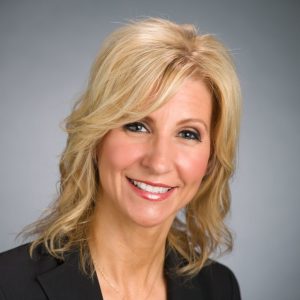
Sharon A. Reeve, Ph.D., BCBA-D, LBA-NY
ABA Program Faculty, Caldwell University
Dr. Reeve teaches in Caldwell University’s ABA master’s program, which is ABAI-accredited. Her own admissions experience runs counter to the assumption that career changers mostly come from teaching or psychology. Business is the background she most often sees switching into ABA, and she treats it as a genuine asset rather than a gap to close, since managing budgets and funding sources carries directly into behavior-analytic practice.
In This Guide
- Teachers: the largest career-changer group
- Are most programs still traditional?
- RBTs and paraprofessionals moving up
- Career-changers from unrelated fields
- Working full-time while enrolled
- International students and selective cohorts
- What this means for your application
- Frequently asked questions
- Key takeaways
Teachers Are the Largest Career-Changer Group, By Far
When asking professors about their student population, we found 61 of 26 schools, or 43%, specifically named teachers and special educators as a significant source of career-changers. That’s more than three times the number of professors who named any other single career-changer category in our interviews. It makes sense once you think about it. Many special educators already have experience working alongside behavior analysts and with IEPs or behavior plans, and some decide they want to be the one writing the plan instead of implementing someone else’s.
Faculty Voice
“We have many students that have started in the field as RBTs that decide they want to pursue their BCBA certification. The last couple of years, we have seen an increase in teachers deciding to pursue their certification.
Other programs described the same pattern from a different angle, teachers not just showing up occasionally but actively returning to school once they’re already deep into a classroom career:
Faculty Voice
“The majority of our students come from undergraduate programs where they completed coursework and practicum experiences in applied behavior analysis. However, we have been seeing more teachers interested in returning to graduate school to become BCBAs.

Are Most Programs Still Mostly Traditional?
It’s worth saying plainly, since it cuts against the popular narrative: professors from 21 of the 61 programs we surveyed, 35%, described their students as mostly traditional, meaning a bachelor’s degree finished recently and a fairly narrow age range. If you’re coming straight from undergrad with no field experience yet, you’re not the exception in this data. You’re arguably still the norm at a meaningful share of programs.
Faculty Voice
“The majority of students are traditional or a small extension from traditional (ages 22-28, some with a masters degree, some with previous clinical or research experience).


That said, “traditional” at most of these programs still tends to mean 22 to 28 years old, sometimes already holding a master’s or research experience, not necessarily 21-year-olds walking straight off a graduation stage. If a fresh bachelor’s degree in ABA or a closely related field is what you’re bringing to the table, you’re squarely in this group at plenty of programs.
RBTs and Paraprofessionals Moving Up the Ladder
Professors from 8 of the 61 programs (13%) specifically named Registered Behavior Technicians and paraprofessionals as common applicants. It’s a natural pipeline. Someone spends a year or two doing direct-service work, decides they want to design the intervention rather than just run it, and sees graduate school as the next step.
Faculty Voice
“We see both traditional and non-traditional students graduating from our program. Our students range in ages and abilities from new undergrads to those with many years of field experience.
The RBT credential is a paraprofessional certification, and some RBTs later pursue the additional education, supervised fieldwork, and examination required for BCBA certification. BACB certification requirements are separate from state licensure requirements. Whether a behavior analyst must hold a state license or meet additional requirements depends on the jurisdiction.
Career-Changers From Completely Unrelated Fields
Beyond teachers, faculty members from 7 of the 61 programs (12%) specifically described career-changers coming from fields with no obvious overlap with ABA at all.
Faculty Voice
“Many of them are career changers or individuals who are in the field, looking to advance from a direct care role into management roles.
Others come from careers that have nothing to do with human services at all until something personal pulls them in:
Faculty Voice
“Some are career changers, but about one-third have spent their careers in related fields (e.g., teachers, SLPs, School Psychologists), and have been inspired to become BCBAs because they have worked with BCBAs.
The Fields We Heard Named Most Often
Beyond teaching, professors in our interview series specifically named business, pharmacy sciences, healthcare, criminal justice, and military service as backgrounds their career-changing students came from. A few programs described applicants inspired by direct exposure, working with a BCBA, parenting a child who received ABA services, or supervising RBTs without being one, rather than any formal connection to the field at all.
Students Working Full-Time While They Study
Faculty from 4 of the 61 programs, 7%, specifically called out full-time employment as a defining feature of their student population, not a side note but the norm for how most of their students actually get through the degree.
Faculty Voice
“Many of the students studying ABA are employed full time. Some are already working in the field of behavior analysis while others are employed in other occupations.
This is worth factoring into how you compare programs. If you’re working full time, check whether a program offers evening, asynchronous, or otherwise work-compatible scheduling rather than assuming it will. Program formats vary, so it’s worth confirming that the schedule matches your actual life before you enroll.
International Students and Selective Applicant Pools
Two smaller but real patterns showed up across the interviews. Faculty from 5 of the 61 programs (8%) specifically noted a meaningful international or bilingual student population. Separately, four programs (7%) described themselves as unusually selective. In our interviews, these tended to be the more research-intensive programs with strong PhD pipelines that expect prior coursework or lab experience before admission.
Pulling all of this together, one answer captured just how varied a single cohort can be:
Faculty Voice
“National University provides accelerated coursework for the non-traditional learner. Non-traditional students come to NU with different needs, skill sets and a variety of life situations.
What This Means If You’re Considering a Program
None of these categories are exclusive, and no single program looks exactly like this national picture. But the range itself should be reassuring if you’ve been holding back because you don’t fit some imagined “typical ABA student” profile. Our interviews didn’t reveal a single student profile shared across programs.
Questions worth asking yourself before you apply:
- Are you looking for a program built around full-time students, or one designed for people working while they study? The class schedule usually tells you which.
- If you’re coming from teaching, direct-care work, or another adjacent field, does the program give any credit or flexibility for that experience?
- If you’re coming from a field with zero overlap, does the program expect prior ABA coursework, or is it truly open to a cold start?
- If a PhD is a possibility down the road, does the program’s applicant pool skew as selective as the research-focused programs described above?
Whatever your starting point, our guide to the practical steps to becoming an ABA therapist walks through the process from wherever you’re starting, and it’s worth reading alongside this page rather than instead of it.
Frequently Asked Questions
Do most ABA graduate students already work in the field?
Our interviews don’t establish what percentage of ABA graduate students nationally already work in the field. What they do show is that RBTs and paraprofessionals were specifically mentioned at 13% of the programs we surveyed, while full-time employment was highlighted at 7%. Those categories can overlap and describe program-level interview responses, not shares of individual students.
Can I switch to ABA from a completely unrelated career?
Yes. Programs in our interview series specifically named applicants coming from business, pharmacy sciences, healthcare, criminal justice, and military backgrounds, among others. Some were inspired by direct personal exposure to ABA rather than any professional connection to the field.
Are ABA graduate programs mostly for recent college graduates?
At a real share of them, yes. 35% of the programs we surveyed described their student population as mostly traditional, generally ages 22 to 28, and sometimes already holding a master’s degree or research experience. If you’re coming straight from undergrad, you’re not out of place.
Do I need a specific undergraduate degree to apply?
It depends on the program. Some ABA master’s programs accept applicants with bachelor’s degrees in a wide range of fields. In contrast, others require a related undergraduate major or prerequisite coursework in areas such as psychology, statistics, or research methods. Check each program’s current admissions requirements before applying.
Do ABA graduate programs accept international students?
Some do. Faculty from 5 of the 61 programs we surveyed specifically noted a meaningful international or bilingual student population in their cohorts. Admission as an international student doesn’t necessarily mean the student will be eligible for BACB certification. BACB eligibility depends in part on where the applicant resides, and those rules can change.
Key Takeaways
- Teachers are the single largest non-traditional group, named by 43% of programs, more than any other career-changer category.
- Traditional students still make up a real share of enrollment, described as the norm at 35% of programs we surveyed.
- RBTs represent a natural, well-worn pipeline into graduate study, not an unusual path.
- Career-changers come from surprisingly varied fields, including business, healthcare, criminal justice, and the military.
- Full-time work while enrolled is common but not universal, so confirm a program’s class schedule matches your actual life before you apply.
Ready to see which programs fit where you’re starting from?
Compare ABA master’s programs designed for traditional students, career changers, and everyone in between.