Quick Answer
ABA graduate program alumni most often land in school districts, as stated by professors from 63% of the programs we surveyed, narrowly ahead of private clinics and ABA agencies at 49%. Hospitals, PhD and academic tracks, government and nonprofit agencies, private practice ownership, and organizational behavior management make up the rest of where graduates go, according to the professors who train them.


Ask most people where an ABA graduate ends up working, and “autism clinic” is usually the first answer. That’s not wrong, exactly, but it’s not the full picture either, and it’s not even the most common answer among the professors we asked.
We put this question directly to more than 70 professors across 61 ABA graduate programs nationwide, as part of our ongoing faculty interview series, and received an answer on this particular question from 59 of them: where are your graduates actually going? Read together, their answers describe a field that spreads out across schools, clinics, hospitals, research, government work, and a handful of niche practice areas most prospective students never hear about until they’re already enrolled.
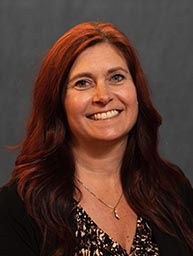
Krista Clancy, Ph.D., BCBA, LBA
ABA Program Faculty, Wayne State University
Dr. Clancy has watched Wayne State’s community partnerships turn fieldwork placements directly into job offers, graduate after graduate, a pattern she attributes to the program’s ongoing relationships with local service providers rather than any single standout hire. It’s the kind of outcome that’s easy to claim and harder to actually show, which is part of why her program’s perspective is represented here.
In This Guide
- School districts: the most-cited destination
- Private clinics and ABA agencies
- Hospitals and medical settings
- Graduate study and academia
- Government agencies and nonprofits
- Starting your own practice
- OBM and other niche practice areas
- What this means for choosing a program
- Frequently asked questions
- Key takeaways
Before getting into specifics, it’s worth hearing how one professor summed up the balance she sees in her own program, since it frames everything that follows:
Faculty Voice
“There’s a fairly even mix of graduates who join (or open) private practices, and those who advance their careers within school systems, both public and private.
School Districts Are the Most Commonly Cited Destination
Of the 59 professors who answered this question, 37, or 63%, specifically named school districts as a place their graduates go. That’s the single most-mentioned setting in our interviews, ahead of private clinics. Several professors described students who were already working in education, including as teachers or behavior specialists, before or during graduate study.
Faculty Voice
“Most of the part time students in the MA program have jobs in local school districts, hospitals, or in private practices. After they graduate, most of the full time students have been getting jobs in local private schools, private practices, or ABA companies.

Other programs described graduates spreading across an even wider range of school-adjacent and public-sector roles than “teacher” or “behavior specialist” alone:
Faculty Voice
“Many work in behavior analysis practices or start their own practices. Some have gone to work in pediatric groups. Many become or remain employed as teachers, behavior specialists, administrators, or others in school districts. A number work with veterans and active duty military personnel.

Private Clinics and ABA Agencies Are a Close Second
Professors from 29 of the 59 programs, 49%, specifically named private clinics or ABA agencies as a graduate destination. At some programs, this is clearly the dominant path rather than one option among several:
Faculty Voice
“A few graduates are going into school systems but the majority join private practices.

That variation between programs is worth sitting with. Two schools can produce equally qualified graduates and still feed almost opposite job markets, depending on the region, the program’s clinical partnerships, and what’s actually hiring nearby.
Hospitals and Medical Settings
Faculty from 10 of the 59 programs, 17%, specifically named hospitals or broader medical settings, less common than schools or clinics, but a real and recurring destination, especially for programs that build hospital placements directly into training.
Faculty Voice
“We encourage our students to experience a variety of settings and students will work in the home, hospital, clinic, and school settings during our program. We encourage this multiple exemplar training to finesse student skills and facilitate the application of behavior analysis in different contexts.


Graduate Study and Academia
Professors from 9 of the 59 programs, 15%, specifically mentioned graduates continuing into PhD study or academic careers. In our interviews, this path appeared more prominently at some research-oriented programs than at others.
Faculty Voice
“Most continue working in school settings, either as teachers or as behavior analyst consultants, but some do pursue agency or independent work. A large proportion of our graduates (about 25%) are admitted to our PhD program.

That 25% figure is specific to one program and shouldn’t be read as typical. It’s a useful reminder that if a doctorate is on your radar, the individual program’s track record matters more than any national average.
Government Agencies and Nonprofits
Professors from 5 of the 59 programs, 8%, identified government agencies or nonprofit organizations as a graduate destination, a smaller share, but a meaningful one for students specifically interested in public-sector or mission-driven work rather than private clinical practice.
Starting Your Own Practice
Professors from 4 of the 59 programs that responded to this question, 7%, specifically mentioned graduates going on to open their own practice or agency. It’s not the most common outcome. Opening an independent practice may require professional certification, state licensure or other authorization, appropriate clinical experience, and compliance with applicable business requirements, depending on the jurisdiction, but multiple professors named it as a real path their alumni have taken.
Faculty Voice
“Some of our alumni have gone on to start their own companies, and some work in public schools or choose to remain at smaller agencies that provide services to underrepresented groups.
OBM and Other Niche Practice Areas
Faculty from a small number of programs, 2 of 59, specifically named organizational behavior management, applying behavior-analytic principles to workplace performance and management rather than clinical service delivery. It’s a small slice of where graduates go overall, but it’s also one of the areas prospective students are least likely to know exists before they start researching graduate programs. The same is true of behavioral gerontology, applying ABA principles to aging and elder care, which came up in individual interviews without showing up as a large enough category to carry its own percentage here.
Programs Often Describe a Genuine Mix, Not One Path
Several professors were explicit that their graduates don’t cluster into a single outcome. One program put the split at roughly half toward clinical practice, a third staying in schools, and the remainder split between doctoral study, government work, and nonprofits, a pattern echoed less precisely across many other interviews. If a program can’t tell you where its recent graduates actually landed, that’s worth asking about directly.
If either of these specialty paths interests you, our guides to organizational behavior management and behavioral gerontology go into what those careers actually look like day to day.
What This Means for Choosing a Program
None of this tells you where you personally will end up, and a program’s overall pattern doesn’t guarantee your own path will match it. But it does tell you what questions are worth asking before you commit to one.
Questions worth asking any program you’re considering:
- Where have your last two or three graduating cohorts actually gone? Ask for specifics, not just categories.
- If you want to work in schools, does the program build in school-based practicum placements, or would you need to arrange that yourself?
- If a PhD is a real possibility, how many recent graduates have gone on to doctoral programs, and where?
- If a niche area like OBM or gerontology interests you, does the program offer any coursework or practicum exposure in it, or would you be building that path largely on your own?
Frequently Asked Questions
Do most ABA graduates work in schools or clinics?
Among the programs we surveyed, school districts were mentioned slightly more often than private clinics, 63% versus 49%. That reflects how often professors named each setting when describing their graduates, not a claim about what percentage of individual graduates nationally choose one over the other, and many programs feed both.
Can ABA graduates go into research or academia?
Yes. Fifteen percent of the programs we surveyed specifically mentioned graduates continuing into PhD study or academic careers, though our interviews suggest this path may be more prominent at research-oriented programs than at clinically focused ones.
Do ABA graduates work in hospitals?
Some do. Seventeen percent of the programs we surveyed named hospitals or medical settings as a graduate destination, often tied to programs that build hospital-based practicum placements into training.
Can I start my own ABA practice right after graduating?
It happens, but it’s uncommon straight out of a master’s program. Requirements for opening an independent practice vary by jurisdiction, including certification, licensure, scope-of-practice, and business requirements, so check what applies in your state before assuming this is a near-term option.
What career paths beyond autism services can ABA graduates pursue?
Organizational behavior management and behavioral gerontology both came up in our interviews as real, if less common, destinations. See the sections above for what our interview series revealed about each.
Key Takeaways
- School districts were the single most-cited destination, named by 63% of the programs we surveyed, narrowly ahead of private clinics at 49%.
- Where a program’s graduates land varies significantly by school, so ask any program you’re considering for specifics on recent graduating cohorts.
- Hospitals, government agencies, and nonprofits were less frequently mentioned but appeared as recurring graduate destinations, each a real if smaller path.
- Opening your own practice is possible but uncommon early on, and it typically follows a period of clinical and supervisory experience first.
- Niche areas like organizational behavior management and behavioral gerontology exist well outside the autism-services path most people assume is the only option.
Ready to find a program that fits where you want to end up?
Compare ABA master’s programs and see which ones align with your career goals.